2027 Accredited Online Environmental Science Degree Programs With No GRE or GMAT Requirements

Co-Founder and Chief Data Scientist
Choosing an online environmental science degree is harder when admissions pages all sound similar, especially if you want to avoid the GRE or GMAT. The stakes are practical: the U. S. Bureau of Labor Statistics projects 7% growth for environmental scientists and specialists from 2023 to 2033, faster than the average for all occupations.
This guide is for working adults, career changers, and recent graduates comparing accredited online programs without standardized test barriers. You will learn which programs to consider, how admissions works without test scores, and how to judge cost, quality, and career fit.
Key Things You Should Know
- Many accredited online environmental science master's programs now state that GRE or GMAT scores are not required, but applicants are still evaluated on GPA, prerequisites, résumé strength, recommendations, and fit with the program.
- No-GRE does not mean low quality: accreditation is tied to institutional oversight, faculty standards, student services, and academic review, not whether a school uses standardized tests.
- Cost and outcomes still matter: graduate students may be eligible for up to $20,500 per year in federal Direct Unsubsidized Loans, while the BLS reported a May 2024 median annual wage of $80,060 for environmental scientists and specialists.
Which Accredited Online Environmental Science Degree Programs Do Not Require the GRE or GMAT?
For this topic, "no GRE or GMAT" usually refers to graduate admissions. Online bachelor's programs in environmental science generally do not ask for graduate entrance exams, while master's programs may be test-free, test-optional, or waiver-based.
The programs below are examples of accredited U.S. online or primarily online environmental science, environmental policy, environmental management, or sustainability-related graduate options that publicly emphasize admissions pathways without GRE or GMAT requirements. Admissions policies can change, so applicants should confirm the current requirement directly with the school before applying.
| School | Online degree or related program | Accreditation type to verify | GRE/GMAT status to confirm | Best fit |
| Johns Hopkins University | MS in Environmental Sciences and Policy | Institutional accreditation | GRE not required | Students interested in science-informed policy, regulation, and environmental analysis |
| University of Illinois Springfield | MS in Environmental Sciences | Institutional accreditation | GRE not required or not listed as a standard requirement | Students seeking a science-focused public university option |
| Oregon State University | Professional Science Master's in Environmental Sciences | Institutional accreditation | GRE not required or not listed as a standard requirement | Students who want applied environmental science with professional skill development |
| University of Denver | MS in Environmental Policy and Management | Institutional accreditation | GRE/GMAT not required | Working adults targeting environmental leadership, compliance, or management roles |
| Southern New Hampshire University | MS in Environmental Science | Institutional accreditation | GRE/GMAT not required | Students prioritizing flexible scheduling and broad environmental science coursework |
| Unity Environmental University | MS in Environmental Studies and Sustainability | Institutional accreditation | GRE/GMAT not required | Students focused on sustainability, conservation, and applied environmental problem-solving |
| American Public University | MS in Environmental Policy and Management | Institutional accreditation | GRE/GMAT not required | Military-affiliated students, working adults, and policy-oriented applicants |
| Arizona State University | Online environmental or sustainability-related graduate programs | Institutional accreditation | GRE often not required, depending on the program. | Students comparing large-scale online university options with multiple environmental pathways |
When comparing these options, pay close attention to the degree title. A science-heavy MS in Environmental Science may emphasize ecology, hydrology, GIS, statistics, and research methods, while environmental policy or management programs may focus more on compliance, sustainability strategy, public administration, and decision-making.
If you are still choosing between environmental science and other university majors, compare the coursework and career outcomes before assuming that the most flexible admissions policy is the best academic fit.
A useful distinction is whether a program is test-free, test-optional, or waiver-based. These labels affect whether submitting scores can help, whether you need to request an exception, and how much weight the rest of your application carries.
| Admissions policy | What it means | Should you submit scores? | What matters instead |
| Test-free | The program does not use GRE or GMAT scores in admissions. | No, because scores are not reviewed. | GPA, prerequisites, statement, résumé, recommendations, and academic fit |
| Test-optional | You may submit scores, but they are not required. | Only if scores are strong and improve your profile. | Academic record, professional experience, writing quality, and readiness for quantitative work |
| Test waiver | The program normally asks for scores but may waive them for qualified applicants. | Submit only if you do not qualify for a waiver or if scores offset another weakness. | Minimum GPA, prior graduate work, professional experience, or relevant credentials |
Why Have Accredited Online Environmental Science Degree Programs Eliminated GRE and GMAT Requirements?
Many programs have moved away from standardized tests because environmental science admissions committees can often evaluate readiness more directly through transcripts, prerequisites, work history, writing samples, and evidence of quantitative preparation. For online programs serving working adults, test requirements can also delay applications and add costs without clearly improving fit.
This trend does not mean programs have stopped caring about academic ability. Instead, many schools now use a more holistic review model that looks at whether the applicant can succeed in graduate-level science, statistics, research, policy analysis, or technical communication.
Several forces explain the shift away from GRE and GMAT requirements:
- Access and equity: Test preparation, registration fees, and travel can create barriers for qualified applicants, especially working adults and first-generation graduate students.
- Better evidence of readiness: A transcript showing recent success in biology, chemistry, statistics, GIS, or environmental policy can be more relevant than a general test score.
- Online education growth: Online programs often attract applicants with professional experience, military service, or prior technical training that may not be reflected in standardized test performance.
- Employer alignment: Environmental employers usually care more about field methods, data analysis, compliance knowledge, project communication, and software skills than graduate entrance exam scores.
Quantitative ability still matters, particularly in programs with environmental modeling, statistics, spatial analysis, or risk assessment. Students who want to build stronger math preparation before graduate study may compare options such as an online bachelor in mathematics or targeted prerequisite coursework rather than relying on a test score to demonstrate readiness.
What Admissions Criteria Matter Most Without GRE or GMAT Scores?
Without GRE or GMAT scores, the rest of your application carries more weight. Admissions teams are trying to answer a practical question: can this applicant complete graduate-level environmental coursework and contribute meaningfully to the program?
The most important admissions factors usually include the following:
- Undergraduate GPA: A strong GPA, especially in science, math, policy, or technical courses, helps demonstrate academic readiness.
- Prerequisite coursework: Programs may expect prior study in biology, chemistry, ecology, geology, statistics, environmental science, economics, or public policy, depending on the curriculum.
- Statement of purpose: A focused statement should explain why the program fits your goals, what environmental problems you want to work on, and how your background prepares you.
- Résumé or CV: Relevant work, internships, research, military experience, volunteer projects, fieldwork, GIS use, lab exposure, or compliance experience can strengthen your case.
- Letters of recommendation: Strong letters should speak to your analytical ability, writing, maturity, persistence, and readiness for independent online learning.
- Writing ability: Environmental professionals often write reports, permits, assessments, grant materials, and policy briefs, so clear writing can matter as much as test scores.
If your GPA is below the preferred range, do not assume a no-GRE program is out of reach. You can often improve your application by completing prerequisite courses, earning strong grades in recent science or statistics classes, explaining academic improvement, and highlighting relevant work experience.
The table below shows how common admissions materials function when standardized tests are not required. Use it to identify which parts of your application need the most attention.
| Application element | What it helps prove | How to strengthen it |
| Transcript | Academic readiness and prerequisite coverage | Complete missing science, math, or statistics courses before applying |
| Statement of purpose | Program fit and career direction | Connect your goals to specific courses, faculty interests, or applied projects |
| Résumé | Professional maturity and relevant exposure | Quantify projects, software skills, field experience, compliance tasks, or leadership |
| Recommendations | Credibility from supervisors or faculty | Choose recommenders who can describe your work quality in detail |
| Writing sample, if requested | Communication and analytical thinking | Submit polished technical, research, or policy writing when allowed |
No-GRE and no-GMAT programs are often easier to apply to, but they are not automatically easier to get into. Removing a test requirement reduces time, cost, and logistical barriers; it does not remove academic standards.
The practical difference is that the admissions committee has fewer numerical shortcuts. If you do not submit test scores, your transcript, experience, recommendations, and statement must do more work.
A strong applicant with relevant coursework and a clear career goal may benefit significantly from no-test admissions, while an applicant with weak prerequisites may still face denial, conditional admission, or a request for additional coursework.
Applying without test scores makes the most sense when the rest of your profile is strong. Before deciding whether to submit optional scores, use this quick decision process:
- Check whether the program is test-free, test-optional, or waiver-based.
- Compare your GPA and prerequisites with the program's preferred applicant profile.
- Submit optional scores only if they are clearly stronger than the rest of your academic record.
- If your quantitative background is thin, strengthen it with recent statistics, GIS, chemistry, or data analysis coursework instead of relying only on an entrance exam.
- Ask admissions whether scores are used for funding, placement, or only admission.
In many cases, time spent preparing a stronger statement, résumé, and prerequisite plan will have more value than taking an optional standardized test. However, taking the GRE may still make sense if a specific program recommends it for applicants with low GPAs, limited science coursework, or international transcripts that are difficult to evaluate.
Skipping the GRE or GMAT does not, by itself, reduce academic quality or accreditation. Accreditation evaluates whether an institution meets recognized standards for governance, faculty qualifications, academic support, learning outcomes, student policies, and financial stability. It is not awarded or removed based on one admissions test.
For environmental science, the most important baseline is institutional accreditation from a recognized accreditor. Specialized accreditation is less common for environmental science than it is in fields such as engineering, nursing, or counseling. If a program is actually environmental engineering, ABET accreditation may be relevant; if it is environmental science, policy, or management, institutional accreditation is usually the key quality checkpoint.
Use this table to separate admissions flexibility from academic quality. A program can be test-free and rigorous or test-required and poorly suited to your goals.
| Quality signal | Why it matters | What to verify |
| Institutional accreditation | Confirms recognized oversight of the college or university | Accreditor name, current status, and whether the online program is covered |
| Curriculum depth | Shows whether the degree supports your target role | Courses in science, policy, statistics, GIS, field methods, compliance, or sustainability |
| Faculty qualifications | Indicates academic and professional expertise | Faculty research, industry experience, publications, and advising availability |
| Student support | Online learners need accessible advising and technical help | Career services, library access, tutoring, disability services, and online orientation |
| Capstone, thesis, or applied project | Helps translate coursework into portfolio evidence | Project expectations, employer partnerships, research options, and presentation requirements |
Employers generally do not evaluate candidates based on whether they took the GRE. They are more likely to look at the institution, degree relevance, technical skills, work samples, internships, certifications, software experience, and whether the applicant can solve environmental problems responsibly.
No-GRE and no-GMAT online environmental science programs are especially useful for applicants whose real strengths are not captured by standardized tests. That includes working professionals, career changers, military-affiliated students, parents, and recent graduates who already have strong coursework or relevant experience.
These programs may be a strong fit for several types of students:
- Working environmental technicians or compliance staff who want graduate credentials without pausing their careers for test preparation.
- Career changers with backgrounds in biology, geology, public health, urban planning, agriculture, engineering, data analysis, or public administration.
- Recent graduates with solid GPAs and research or internship experience who do not want to spend extra money on exams that are not central to their goals.
- Military-affiliated students whose training, logistics experience, or environmental health and safety exposure supports a graduate application.
- Applicants who are stronger writers, researchers, or practitioners than standardized test takers.
These programs may be less ideal if you need extensive hands-on lab training, want a heavily research-based doctoral pathway, or lack the science prerequisites required for graduate-level coursework. In those cases, an on-campus program, post-baccalaureate science courses, or a lower-cost stepping-stone credential may be a better route.
If you are still early in your education and want a shorter credential before committing to a bachelor's or master's program, comparing easy associate degrees that pay well can help you think through cost, time, and career entry points before choosing a longer environmental science pathway.
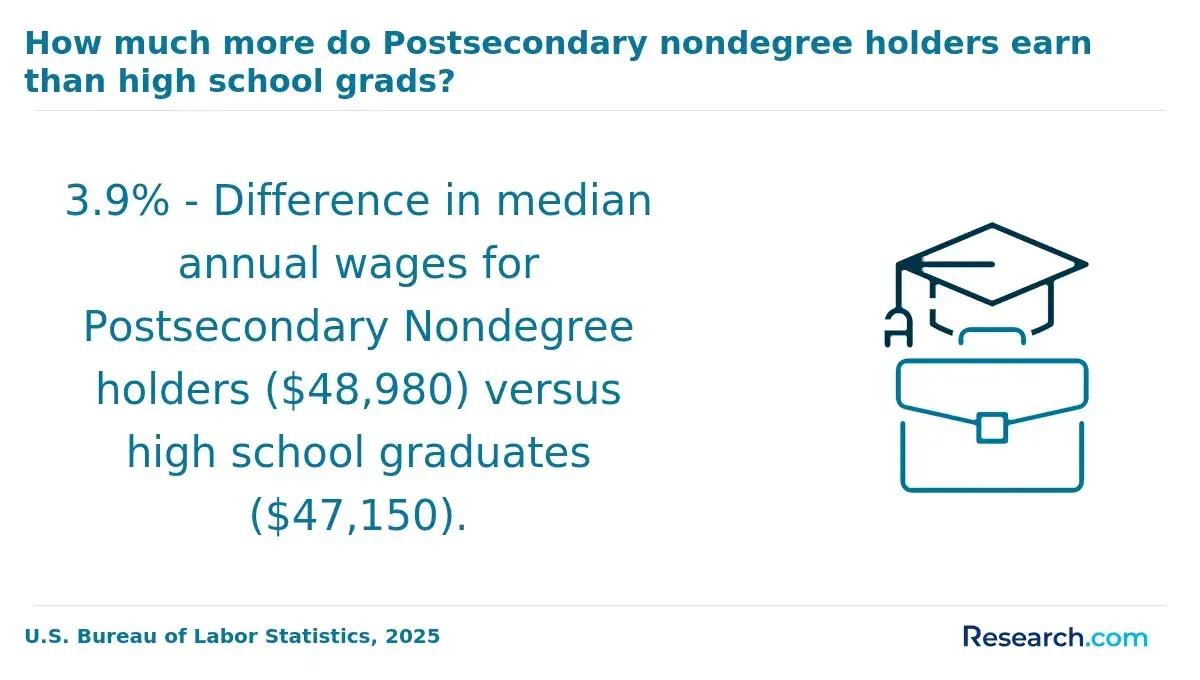
No-GRE admissions can save applicants the cost and time of test preparation, but it should not distract from the larger financial decision: total program cost. Tuition varies widely by institution, residency policy, credit requirements, technology fees, course load, and whether the program charges online students a flat rate.
Graduate students should also understand borrowing limits. For current federal aid policy, eligible graduate and professional students may borrow up to $20,500 per year through Direct Unsubsidized Loans, before considering Grad PLUS Loans. That figure is useful because it helps you compare annual program cost with borrowing capacity, but it should not be treated as a recommendation to borrow the maximum.
When reviewing tuition pages, look beyond the per-credit number. The true cost of an online environmental science degree may include several categories:
- Tuition per credit multiplied by the total number of required credits.
- Online learning, technology, graduation, laboratory, or proctoring fees.
- Books, software, GIS tools, data platforms, field equipment, or travel for any required residency or field component.
- Lost income or reduced work hours if the course load is intensive.
- Interest costs if you use federal or private loans.
The table below summarizes the financial comparison points that matter most when test requirements are removed. Use it to avoid choosing a program only because the application is convenient.
| Cost factor | Why it matters | Question to ask the school |
| Total credits required | A low per-credit rate can still lead to a high total cost if the program requires more credits | What is the full tuition estimate for the entire degree? |
| Residency pricing | Some public universities charge different rates for in-state and out-of-state students | Do online students pay the same rate regardless of state residency? |
| Employer tuition support | Environmental agencies, utilities, consulting firms, and public employers may offer reimbursement | Can the program provide invoices or course documentation for employer reimbursement? |
| Transfer or prior graduate credit | Accepted credits can reduce cost and completion time | How many graduate credits can transfer, and what are the limits? |
| Scholarships and assistantships | Online students may have fewer assistantship options than on-campus students | Are online students eligible for institutional scholarships or departmental aid? |
Financial comparison is also a quality check. Just as students evaluating CACREP online counseling programs need to compare accreditation, licensure fit, and total cost together, environmental science students should weigh admissions flexibility alongside curriculum, support, and long-term career value.
Employers do not usually label graduates by whether their program required the GRE. Career outcomes depend more on the degree's relevance, the student's prior experience, technical skills, location, and the type of environmental work they pursue.
The BLS reported a May 2024 median annual wage of $80,060 for environmental scientists and specialists. That median is not a promised salary for graduates, but it gives applicants a realistic benchmark for roles where environmental analysis, compliance, sampling, reporting, and regulatory knowledge are central.
Graduates may pursue or advance in roles such as:
- Environmental scientist or specialist, working on sampling, assessments, remediation support, or environmental impact analysis.
- Environmental compliance specialist, helping organizations follow air, water, waste, and occupational environmental regulations.
- Sustainability analyst or coordinator, supporting emissions tracking, resource efficiency, reporting, and corporate sustainability initiatives.
- Conservation or natural resource specialist, working with agencies, nonprofits, land trusts, or consulting firms.
- Environmental policy analyst, evaluating regulations, public programs, climate adaptation plans, or land-use decisions.
- GIS or environmental data analyst, mapping environmental conditions and supporting data-driven decisions.
Current hiring trends favor applicants who can combine environmental knowledge with technical tools. GIS, remote sensing, statistics, Python or R, environmental permitting, data visualization, and climate risk analysis can improve competitiveness, especially when paired with a capstone or portfolio project.
Online students should be intentional about experience. If the program does not require fieldwork, look for internships, volunteer monitoring programs, employer projects, local agency collaborations, or capstones that produce real work samples. In environmental careers, a portfolio can make an online degree feel much more concrete to employers.
The biggest mistake is treating "no GRE required" as the main selection criterion. Admissions flexibility is valuable, but it does not replace program fit, academic preparation, affordability, or career alignment.
Avoid these common mistakes when applying:
- Ignoring prerequisites: If the program expects prior science, math, statistics, or policy coursework, address gaps before the committee has to guess.
- Using a generic statement of purpose: A vague essay about caring for the environment is weaker than a specific explanation of your goals, experience, and program fit.
- Choosing recommenders by title only: A supervisor or professor who knows your work well is usually stronger than a prestigious contact who writes in generalities.
- Overlooking accreditation: Confirm institutional accreditation and whether the online program is included under that accreditation.
- Assuming no-GRE means low selectivity: Some test-free programs still use GPA thresholds, prerequisite reviews, writing evaluations, or competitive cohort limits.
- Failing to explain academic weaknesses: If your GPA dipped because of a specific circumstance, explain briefly and show evidence of later improvement.
- Not asking about online requirements: Some programs may include synchronous sessions, field intensives, labs, or capstone presentations that affect scheduling.
- Comparing only tuition per credit: Total credits, fees, travel, software, and borrowing costs can change the real price substantially.
A strong application should make the admissions decision easy. It should show that you understand the field, can handle the coursework, have a reason for choosing that exact program, and know how the degree supports your next career step.
How Should Students Compare Accredited Online Environmental Science Degree Programs Without GRE or GMAT Requirements?
The best no-GRE online environmental science program is not simply the one with the easiest application. It is the program that gives you the right mix of accreditation, curriculum, flexibility, affordability, support, and career relevance.
Use this step-by-step process before applying:
- Confirm institutional accreditation through the school and accreditor, not just marketing copy.
- Identify whether the degree is science-focused, policy-focused, management-focused, sustainability-focused, or data-focused.
- Compare required courses with your target roles, especially GIS, statistics, ecology, environmental law, climate risk, toxicology, hydrology, or compliance.
- Ask whether the program is asynchronous, synchronous, hybrid, cohort-based, or self-paced.
- Calculate total program cost, including fees, books, software, travel, and expected borrowing.
- Review faculty expertise and whether online students can access advising, research guidance, or capstone mentorship.
- Ask about career services for online students, including internship support, employer connections, résumé help, and portfolio development.
- Check transfer credit rules, leave-of-absence policies, and maximum completion time.
- Compare admissions criteria beyond test scores, including GPA, prerequisites, recommendations, and writing requirements.
- Speak with admissions or program staff and ask direct questions about outcomes, online support, and workload expectations.
Program format deserves special attention. Some students want the fastest route, while others need a slower part-time structure because they work full time or have caregiving responsibilities.
If speed is a major priority, it can be helpful to compare how accelerated online formats work in other fields, such as an accelerated business degree, and then ask environmental science programs whether similar pacing is realistic for lab, field, or project-based coursework.
Before enrolling, ask each school these final questions: What percentage of online students finish the program? What support is available if I struggle in quantitative courses? Are field experiences required or optional? Can I complete a capstone tied to my employer or local community? What kinds of roles do graduates typically pursue? The answers will tell you more than the GRE policy alone.
Other Things You Should Know About Environmental Science
No. Environmental science usually emphasizes natural science, data, ecosystems, chemistry, geology, and environmental systems. Environmental studies is often broader and may include policy, ethics, social science, economics, planning, or sustainability.
Yes, but formats vary. Some programs use local field assignments, virtual labs, short residencies, employer-based projects, or capstones instead of traditional campus-based field courses. Always ask how field or lab requirements are completed online.
They can be useful when they match the job. Common examples include GIS credentials, OSHA training, hazardous materials training, sustainability credentials, or specialized compliance certifications. Requirements vary by employer and role.
Most environmental science roles do not require a universal license, but some specialized jobs may involve state rules, professional geologist licensing, engineering licensure, or certifications tied to hazardous materials, wetlands, or safety work. Check requirements for your target role and state.
- Online Master’s Programs No GMAT Required (GMAT Waivers) https://www.onlineeducation.com/faqs/online-masters-degrees-no-gmat-required
- How to Find Entry Level Jobs with an Environmental Science Degree https://facs.com/blog/how-to-find-entry-level-jobs-with-an-environmental-science-degree/
- Applying to MBAs with a GMAT (or GRE) Waiver https://menlocoaching.com/gmat/gmat-gre-test-waivers/
- Exploring No-GMAT Online MBA Programs https://www.aiuniv.edu/degrees/business/articles/exploring-no-gmat-online-mba-degree-programs
- NEHA/AAS Environmental Health Scholarships https://www.neha.org/scholarships
- 2025 Most Affordable Online Environmental Science Degrees https://www.onlineu.com/most-affordable-colleges/environmental-science-degrees
- Best Online MBAs Without GMAT Requirement | OnlineMBA.com https://www.onlinemba.com/rankings/best-online-mba/no-gmat/
- MBA Programs that Don’t Require GMAT, GRE or EA Test Scores https://www.clearadmit.com/mba-programs-that-dont-require-gmat-gre-or-ea-test-scores/
- MBA Programs Offering GMAT/GRE Test Waivers https://www.mbamission.com/blog/mba-programs-offering-gmat-gre-test-waivers/
- 2026 Environmental Science & Sustainability Scholarships https://www.fastweb.com/college-scholarships/articles/scholarships-that-help-our-environment