2027 Fastest Accredited Online Environmental Science Programs: Accelerated Degrees and Completion Times

Co-Founder and Chief Data Scientist
Choosing the fastest accredited online environmental science degree is really a question of speed, transfer credit, workload, and credibility. The U. S. Bureau of Labor Statistics reports a May 2024 median annual wage of $80,060 for environmental scientists and specialists, making program quality and timing important for career changers and working adults. This guide explains which online formats can shorten graduation, what "accelerated" actually means, and how prerequisites, lab or fieldwork, course load, and transfer policies can change an advertised timeline into a realistic plan.
Key Things You Should Know
- The fastest realistic path is usually a bachelor's-completion program: students entering with about 60 to 90 transferable credits may finish an accredited online environmental science or closely related degree in roughly 12 to 24 months.
- Accelerated online terms commonly run 5 to 8 weeks, but shorter terms compress the same credit requirements; a 120-credit bachelor's degree still requires transfer credit, year-round enrollment, or heavy course loads to finish quickly.
- Many accredited online bachelor's programs accept up to 90 transfer credits, but residency rules, science prerequisites, lab requirements, fieldwork, and major-course sequencing can prevent all credits from applying toward graduation.
Which Colleges Offer the Fastest Accredited Online Environmental Science Programs?
The colleges below offer accredited online environmental science, environmental studies, environmental management, or sustainability-focused bachelor's options that can be completed faster than a traditional four-year campus pathway for the right student. The fastest options are usually not "one-size-fits-all" programs; they are schools with short terms, frequent start dates, generous transfer policies, and enough upper-division environmental coursework available online.
This table compares institutions by format, accreditation, transfer potential, and likely speed. Use it as a starting point, then confirm the current catalog, transfer evaluation, lab expectations, and graduation residency rules directly with each school.
| College | Online program area | Institutional accreditation | Format that may speed completion | Fastest realistic fit |
| Southern New Hampshire University | BS in Environmental Science | New England Commission of Higher Education | Eight-week online terms and transfer-friendly bachelor's structure | Best for students bringing substantial general education or associate-degree credits |
| Unity Environmental University | Online environmental science, sustainability, and climate-focused programs | New England Commission of Higher Education | Short online terms, environmental specialization, and frequent starts | Best for students who want an environment-focused institution and can handle compressed terms |
| American Public University | BS in Environmental Science | Higher Learning Commission | Online monthly starts, transfer-credit review, and flexible course scheduling | Best for military-affiliated, working adult, or transfer students seeking frequent entry points |
| University of Arizona Global Campus | BA in Environmental Studies or related online pathway | WASC Senior College and University Commission | Sequential accelerated online courses and transfer-credit options | Best for adult learners who prefer taking one compressed course at a time |
| Arizona State University Online | Online environmental science or sustainability-related degree options | Higher Learning Commission | Seven-and-a-half-week online sessions and multiple annual starts | Best for students who want a large public research university and can plan around science sequencing |
| Oregon State University Ecampus | BS in Environmental Sciences | Northwest Commission on Colleges and Universities | Fully online delivery from a university with strong natural sciences offerings | Best for students prioritizing scientific depth over the absolute shortest timeline |
In practice, the "fastest" accredited online environmental science program is usually the one that accepts the most applicable credits and offers the required upper-division courses when you need them. A student with 90 accepted credits may move quickly through major requirements, while a first-time college student must still complete the full bachelor's curriculum.
Be cautious when comparing environmental science with adjacent majors. Environmental studies and sustainability degrees may be faster or more flexible because they can include more policy, management, or social science coursework, while a BS in environmental science may require more biology, chemistry, statistics, GIS, and lab-based courses.
How Long Does It Take to Complete an Accredited Online Environmental Science Degree?
An accredited online environmental science bachelor's degree usually requires about 120 semester credits, or the quarter-credit equivalent. "Completion time" means the period from your first enrolled term to degree conferral, not just the number of weeks in an individual course.
The table below shows how starting credit and enrollment intensity affect realistic timelines. This is often more useful than an advertised "finish faster" claim because two students in the same program can graduate years apart.
| Student starting point | Typical credit position | Common online format | Realistic completion range | Main timeline risk |
| First-time bachelor's student | 0 to 15 credits | Full-time, year-round online enrollment | About 3 to 4 years | Science sequencing, lab courses, and heavy workload |
| Some college, no degree | 30 to 60 credits | Accelerated 5- to 8-week terms | About 2 to 3 years | Credits may transfer as electives instead of requirements |
| Associate-degree transfer student | 60 to 75 credits | Bachelor's-completion pathway | About 18 to 30 months | Missing prerequisites in chemistry, biology, math, or statistics |
| High-credit transfer student | 75 to 90 credits | Upper-division online major courses | About 12 to 24 months | Residency requirements and limited course rotation |
| Part-time working adult | Varies | One course per term or two courses per semester | About 3 to 6 years | Course load may be sustainable but slower |
Students comparing environmental science with other quantitative majors should also look at math readiness. For example, an online bachelor in mathematics may have different sequencing challenges, but environmental science still commonly requires statistics, data analysis, chemistry, and sometimes calculus or GIS.
A shorter course term does not reduce the academic work. A three-credit course that meets over 8 weeks may require roughly twice the weekly pace of a 16-week course, especially when readings, lab reports, discussion boards, exams, and projects are compressed.
How Do Accelerated and Competency-Based Online Environmental Science Programs Work?
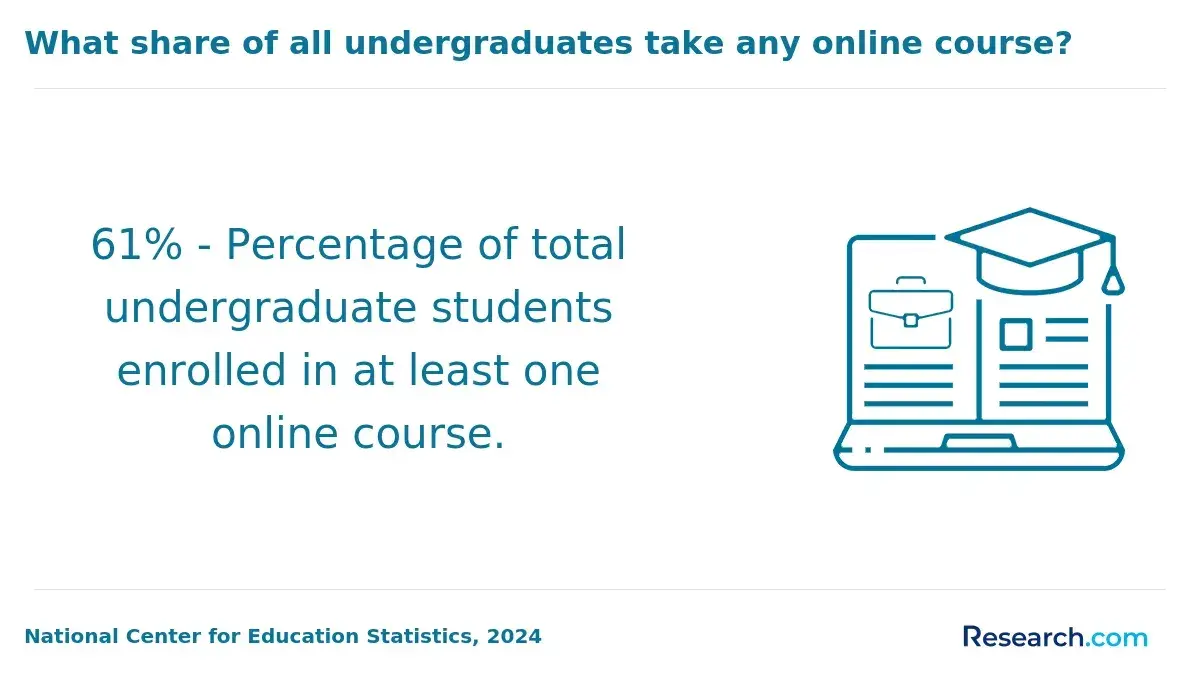
Accelerated online environmental science programs work by changing the calendar, the enrollment model, or the way progress is measured. They do not remove the required learning outcomes, credit totals, or institutional accreditation standards.
The most common accelerated formats are listed below. Each can shorten time to graduation, but each also changes how much work you must complete each week.
- Short-course terms: Five-, seven-and-a-half-, or eight-week terms let students complete more course cycles each year, especially if the school offers year-round enrollment.
- Sequential one-course-at-a-time models: Some adult-focused programs let students focus on one course at a time in a compressed format, which can help with scheduling but still requires steady weekly output.
- Overlapping full-time schedules: Students may take two accelerated courses per term or stack multiple sessions across the year, which can shorten the calendar but increase burnout risk.
- Bachelor's-completion pathways: These programs are designed for transfer students who have already finished much of the general education curriculum.
- Competency-based education: Students progress by demonstrating mastery rather than waiting for a fixed term to end, but true competency-based environmental science bachelor's options are less common than in business, IT, or health administration.
The same scheduling logic used in an accelerated business degree applies here, but environmental science has a bigger lab and field-methods component. That means a program may be fast on paper but slower in practice if required science courses are offered only in certain terms.
Competency-based formats can be powerful for students with strong prior knowledge, but they are not always the best fit for lab-heavy scientific learning. If a school advertises self-paced progress, ask whether environmental science major courses, labs, capstones, and field experiences are also self-paced or only the general education courses.
At minimum, an online environmental science degree should come from an institution accredited by an agency recognized by the U.S. Department of Education or the Council for Higher Education Accreditation. Institutional accreditation affects transfer credit, federal financial aid eligibility, employer recognition, and graduate-school admission.
Environmental science differs from some professional fields because there is no single universal programmatic accreditor required for most entry-level environmental scientist jobs. Unlike fields with profession-specific expectations, such as CACREP online counseling programs, environmental science students should usually focus first on institutional accreditation, curriculum rigor, faculty expertise, and lab or field preparation.
Before enrolling, verify accreditation through official sources and ask the school how accreditation applies to your intended outcome. This is especially important if you plan to pursue graduate school, government employment, environmental health roles, teaching credentials, or state-regulated positions.
A practical accreditation check should include the following steps because each one affects whether a fast degree will still be useful after graduation.
- Confirm that the institution is currently accredited, not merely a candidate for accreditation or formerly accredited.
- Check whether the online program is covered by the same institutional accreditation as the campus programs.
- Ask whether the degree title on the transcript will indicate online study; in many accredited programs it does not, but policies vary.
- Review whether graduate schools or employers in your target field require specific prerequisites, lab sciences, GIS coursework, or field experience beyond the degree title.
- Document all answers in writing before you commit, especially if you are transferring credits or using employer tuition assistance.
Transfer credit is the biggest reason one accredited online environmental science student can finish in 18 months while another needs four years. Many bachelor's programs allow up to 90 transfer credits, but the crucial question is how many credits apply to general education, major prerequisites, upper-division requirements, and electives.
Students who already completed community college coursework, military training, AP or IB exams, CLEP exams, or industry training should request an official transfer evaluation before enrolling. Those credits can save time only if the school applies them to actual degree requirements.
The table below summarizes common credit sources and how they may affect completion time. It also shows why "up to 90 credits accepted" does not always mean "90 credits closer to graduation."
| Credit source | How it may shorten the degree | Common limitation | Best use for fast completion |
| Associate degree | May complete much of general education and lower-division electives | Science and math prerequisites may still be missing | Strongest option for bachelor's-completion students |
| Prior college coursework | Can reduce total credits remaining | Older science courses may not satisfy current major requirements | Useful if syllabi and transcripts are available for review |
| AP, IB, or CLEP exams | May satisfy general education or introductory requirements | Score thresholds vary by school | Helpful for reducing non-major coursework |
| Military or workforce training | May convert into elective or technical credit | Often does not replace upper-division environmental science courses | Best for filling elective space |
| Prior learning assessment portfolio | May award credit for documented college-level learning | Portfolio review takes time and may carry fees | Best for experienced environmental, safety, or compliance workers |
If speed is your priority, consider whether an associate degree first is a better route than entering a bachelor's program with scattered credits. Some students researching easy associate degrees that pay well may find that a transfer-focused science or general studies associate degree creates a cleaner path into an online environmental science bachelor's program.
To shorten your timeline without creating transfer problems, follow a deliberate sequence. These steps can prevent the common mistake of paying for courses that do not apply to the degree.
- Send all transcripts before enrolling, including community college, military, dual-enrollment, and exam-credit records.
- Ask for a degree audit showing exactly which requirements remain, not just a total transfer-credit number.
- Identify missing prerequisites in biology, chemistry, statistics, GIS, or environmental policy before your first term.
- Ask whether any major courses must be taken at the institution to satisfy residency or upper-division requirements.
- Build a term-by-term graduation plan and confirm that required courses are offered in the sessions you need.
Admission requirements for accelerated online environmental science programs vary, but most bachelor's options require a high school diploma or equivalent, official transcripts, and proof of college readiness. Transfer applicants may also need a minimum college GPA, while bachelor's-completion pathways may expect a certain number of prior credits.
Frequent start dates can make a program feel faster, but they do not automatically shorten the degree. They mainly reduce the waiting time before your first course or after a missed term.
Students should pay special attention to the requirements below because each one can affect whether they can start immediately or must spend extra terms catching up.
- Official transcripts: Delayed transcripts can postpone admission, financial aid packaging, and transfer-credit evaluation.
- Science prerequisites: Biology, chemistry, geology, and ecology courses may need labs or sequential enrollment.
- Math readiness: Placement into college algebra, statistics, or calculus can affect access to later environmental data courses.
- Technology requirements: Online science courses may require GIS software, lab kits, webcams, proctoring tools, or specific computer specifications.
- Fieldwork access: Some courses may require local observations, sampling activities, field journals, or approved community-based projects.
- Transfer deadlines: A late credit evaluation can force you into a slower first-term schedule.
Start-date models also differ. Rolling admissions may allow monthly or near-monthly entry, while public universities may use spring, summer, and fall starts. Accelerated terms are helpful when they are paired with consistent course availability; otherwise, a required course offered once per year can slow even a highly motivated student.
The cost of a fast online environmental science degree depends on tuition rate, credits remaining, fees, transfer credits, lab materials, books, technology, and how many terms you need. Faster completion can reduce living-expense exposure and opportunity cost, but it does not always reduce tuition if the school charges by credit.
For a national cost benchmark, the College Board's 2024 pricing data reported average published tuition and fees of $11,610 for in-state students at public four-year institutions for the 2024-25 academic year. Online programs can be lower, similar, or higher than that benchmark depending on residency rules and institutional pricing.
When comparing costs, separate price per credit from total credits remaining. A school with a higher per-credit rate may still be competitive if it accepts more transfer credit, while a lower-priced school may cost more overall if it requires more repeated coursework.
- Public in-state benchmark from College Board 2024-25 data: $11,610 for average published tuition and fees at public four-year institutions.
- Federal Pell Grant maximum for the 2024-25 award year: $7,395 for eligible undergraduate students.
- Typical bachelor's credit requirement to budget around: about 120 semester credits, minus accepted transfer credits.
- Common extra costs to confirm: lab kits, field supplies, GIS software, proctoring, graduation fees, textbooks, and transcript fees.
Financial aid may be available if the institution and program are eligible for federal aid and you meet student-aid requirements. Complete the FAFSA, compare net price rather than sticker price, and ask whether accelerated enrollment changes aid disbursement, satisfactory academic progress rules, or annual loan limits.
Employer tuition assistance, military education benefits, state grants, and scholarships can also reduce out-of-pocket cost. However, reimbursement policies sometimes require minimum grades, approved majors, or continued employment, so read the fine print before choosing the fastest schedule.
You can work full time while completing an accelerated online environmental science degree, but the schedule must be realistic. The main challenge is not logging into class; it is sustaining weekly reading, quantitative assignments, lab reports, group projects, field observations, and exams during compressed terms.
The table below compares common enrollment loads for working adults. It can help you decide whether speed or sustainability should be the priority in your graduation plan.
| Enrollment pace | Typical course load | Best fit | Timeline effect | Risk |
| Part-time steady pace | One course per accelerated term | Full-time workers with family or travel obligations | Slower, often 3 or more years depending on credits remaining | Momentum can fade if courses are skipped |
| Moderate accelerated pace | Two courses in some terms | Organized students with predictable work schedules | Can shorten completion by several terms | Science courses may be difficult to pair |
| Full-time year-round pace | Multiple courses across all available sessions | Students with strong support systems or flexible work | Fastest for students without major transfer gaps | Higher burnout and lower margin for emergencies |
| Stop-and-start pace | Courses taken when time allows | Students with seasonal work, deployment, or caregiving demands | Often extends completion substantially | Program requirements may change over time |
Environmental science can be more time-sensitive than some online majors because certain assignments require observation, data collection, or lab preparation. If you work irregular shifts, ask whether labs and field activities are asynchronous, locally completed, or tied to specific windows.
A manageable acceleration plan should include weekly study blocks, backup time for field activities, and a strategy for harder courses. Many students move fastest when they avoid pairing chemistry, statistics, GIS, or capstone courses with another demanding science course in the same short term.
Accelerated online environmental science degrees can be respected by employers and graduate schools when they come from accredited institutions and include the coursework, projects, lab exposure, and field preparation expected for the student's goal. The delivery mode matters less than whether the degree is credible, relevant, and supported by evidence of skills.
The BLS projects employment for environmental scientists and specialists to grow 7% from 2023 to 2033, which is faster than the average for all occupations. That does not guarantee a job, but it suggests continuing demand for professionals who can work with environmental regulations, data, sampling, sustainability planning, and remediation issues.
Employer expectations are also changing. GIS, remote sensing, data visualization, environmental compliance platforms, and AI-supported analysis are increasingly relevant, so students should look for programs that build technical and applied problem-solving skills rather than only broad environmental awareness.
Program reputation should be evaluated in relation to your career direction. Students still exploring broader university majors may want to compare environmental science with sustainability, public health, biology, geology, data science, or environmental engineering pathways before committing to the fastest available option.
Graduate schools may care about prerequisites more than speed. If you plan to pursue ecology, environmental engineering, hydrology, toxicology, public health, or law, confirm whether the online bachelor's includes the required lab sciences, statistics, calculus, research methods, or faculty recommendations needed for competitive applications.
How Should You Compare the Fastest Accredited Online Environmental Science Programs?
The best fast program is the one that gets you to a legitimate credential without creating avoidable academic, financial, or career problems. Compare programs using your actual credits, weekly availability, target jobs, and graduate-school plans rather than relying on a single advertised completion estimate.
Use the following checklist when speaking with admissions advisors. These questions focus on the factors most likely to change your real graduation date.
- How many of my credits apply to degree requirements, and how many transfer only as electives?
- What is the minimum number of credits I must complete at your institution to graduate?
- Are all major courses available online, and how often are required courses offered?
- Are labs completed online, through kits, through local fieldwork, or at scheduled in-person sessions?
- Can I take courses year-round, and is there a maximum course load per term?
- What happens if I fail or withdraw from a course that is only offered once or twice per year?
- Does the program prepare students for my intended job, certification, graduate program, or state requirement?
- What is the total estimated cost after transfer credits, fees, books, lab materials, and technology expenses?
Common mistakes can add months or years to an accelerated plan. Avoiding them is often more valuable than choosing the shortest advertised timeline.
- Mistake: Assuming "accelerated" means easier. Better approach: Treat short terms as more intense versions of standard courses.
- Mistake: Choosing a school before transfer evaluation. Better approach: compare degree audits from multiple accredited schools.
- Mistake: Ignoring prerequisites. Better approach: identify biology, chemistry, math, statistics, and GIS requirements before enrollment.
- Mistake: Overlooking fieldwork. Better approach: ask exactly how labs, sampling, and field observations work for online students.
- Mistake: Focusing only on speed. Better approach: balance completion time with accreditation, curriculum quality, career relevance, and total cost.
If two programs look equally fast, choose the one with clearer transfer policies, stronger science coursework, better advising, transparent costs, and a schedule you can maintain. A degree finished quickly but poorly aligned with your goals may be less valuable than a slightly slower program that builds the right foundation.
Other Things You Should Know About Environmental Science
It can be academically equivalent when the institution is accredited and the online program follows the same degree requirements. The main differences are delivery format, lab logistics, fieldwork arrangements, and how students interact with faculty and classmates.
Many BS programs require lab-based science courses. Online students may use lab kits, simulations, local field observations, approved community sites, or transfer previously completed campus lab courses, depending on the school.
Environmental science is usually stronger for technical, scientific, or graduate-school pathways, while environmental studies may offer more flexibility in policy, communication, sustainability, or management. The faster option is not always the better fit.
Many entry-level environmental roles accept a bachelor's degree, especially when applicants have GIS, sampling, compliance, data, internship, or field experience. Research-heavy, engineering, or specialized scientific roles may require graduate study or additional credentials.
- Earth/Environmental Science https://virtuallabs.merlot.org/vl_ee_science.html
- Most Popular Online Environmental Science Degrees 2025 https://www.onlineu.com/degrees/environmental-science
- Explore UM | University of Manitoba - Environmental Science (BEnvSC) https://umanitoba.ca/explore/programs-of-study/environmental-science-benvsc
- Online Environmental Science Degree | BS Environmental Science | University of Phoenix https://www.phoenix.edu/online-liberal-arts-degrees/environmental-science-bachelors-degree.html