2027 Fastest Accredited Online Environmental Science Degree Programs That Accept Transfer Credits

Co-Founder and Chief Data Scientist
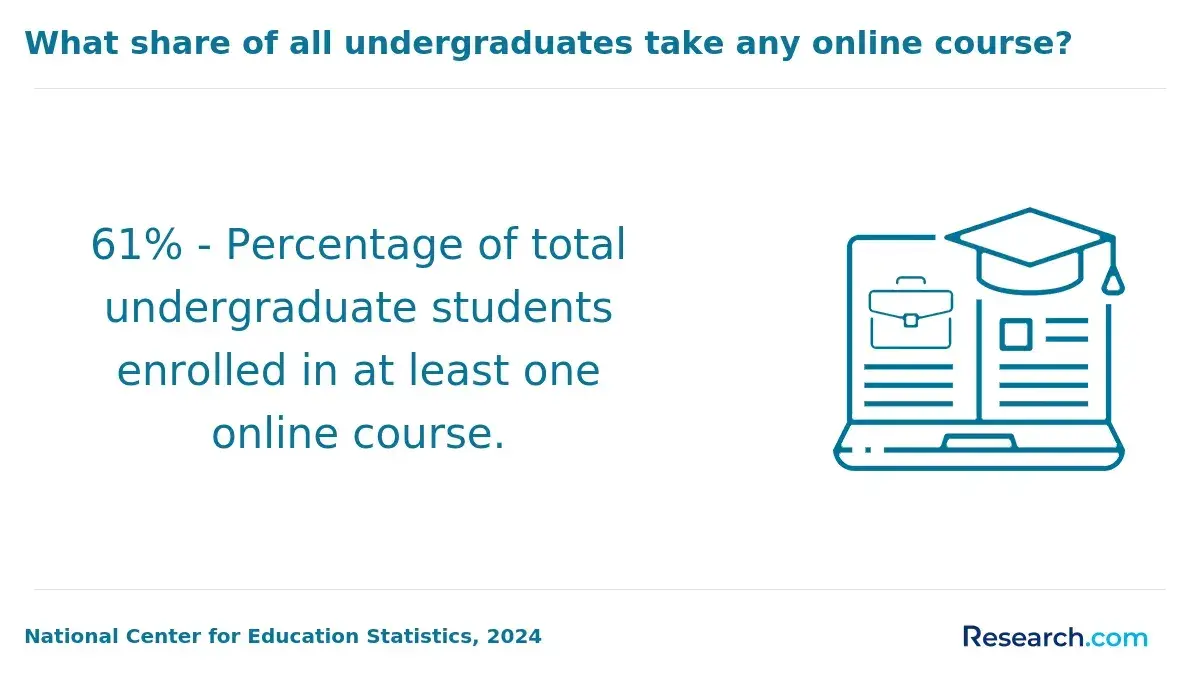
If you already have college credits, the fastest path to an accredited online environmental science degree is not the shortest advertised program; it is the program that applies the most of your credits to graduation requirements. NCES reported in its 2024 Condition of Education that more than half of U. S. postsecondary students took at least one distance education course in fall 2022, making online transfer pathways more mainstream.
This guide helps transfer students and degree completers compare legitimate fast options, estimate realistic completion times, verify accreditation, understand credit limits, and avoid costly enrollment mistakes.
Key Things You Should Know
- The fastest realistic route is usually a 120-credit online bachelor's program that accepts up to 90 transfer credits and requires about 30 credits in residence; for full-time students, that can mean roughly 12 to 18 months after transfer evaluation.
- Transfer-friendly accredited options to compare first include Southern New Hampshire University, Unity Environmental University, Wilmington University, and American Public University because they commonly allow large transfer blocks; Oregon State University and Arizona State University may be strong choices but can take longer if upper-division science, lab, or residency requirements remain.
- The number that matters is not the maximum credits accepted by the university; it is the number that applies to environmental science major requirements, lab science prerequisites, upper-division coursework, general education, electives, and the school's residency rule.
What Are the Fastest Accredited Online Environmental Science Degree Programs That Accept Transfer Credits?
The fastest accredited online environmental science degree programs for transfer students are usually bachelor's programs with three traits: institutional accreditation, a clear transfer-credit pathway, and flexible terms such as 5-week, 7-week, 8-week, or monthly-start online courses. These programs are best for students who already completed general education, associate degree coursework, military education, or previous science credits and now need a bachelor's credential for career mobility or graduate study.
Because "fastest" depends on your transcript, the most useful comparison is not a simple ranking. The table below highlights transfer-friendly online environmental science and closely related programs that may shorten time to graduation when prior credits apply cleanly to degree requirements.
| School | Online program | Accreditation status to verify | Transfer-friendly feature | Why it may be fast | Best fit |
| Southern New Hampshire University | BS in Environmental Science | Institutionally accredited by NECHE | Commonly accepts up to 90 transfer credits toward a bachelor's degree | 8-week online terms and a large elective/general education transfer window can reduce remaining credits | Students with broad prior college credit who need a flexible degree-completion format |
| Unity Environmental University | BS in Environmental Science or related environmental programs | Institutionally accredited by NECHE | Commonly accepts substantial transfer credit, often up to 90 credits depending on evaluation | Short online terms and environmental-specialized curriculum may help focused transfer students move quickly | Students who want an environmentally focused institution and accelerated online pacing |
| Wilmington University | BS in Environmental Science and Policy | Institutionally accredited by MSCHE | Commonly allows up to 90 transfer credits for bachelor's programs | Flexible online courses can work well for students who already completed lower-division requirements | Students interested in the science-policy side of environmental work |
| American Public University | BS in Environmental Science | Institutionally accredited by HLC | Commonly accepts up to 90 transfer credits, including evaluated military and prior college credit | Frequent course starts can reduce waiting time between terms | Military-affiliated students, adult learners, and students with mixed transfer sources |
| Oregon State University Ecampus | BS in Environmental Sciences | Institutionally accredited by NWCCU | Accepts transfer credit, but upper-division and final-credit rules matter | Strong online science curriculum, though major sequencing may extend completion | Students prioritizing a research university brand and robust science preparation |
| Arizona State University Online | BS in Environmental Science or related environmental programs | Institutionally accredited by HLC | Transfer credit is evaluated course by course | 7.5-week sessions may accelerate progress if needed courses are available in sequence | Students who want a large public university with broad online student support |
For a transfer student, the best first move is to request an unofficial transfer review before applying or paying enrollment fees. If you are still deciding whether environmental science is the right field, comparing it with other university majors can help you weigh career fit, salary potential, graduate-school plans, and course intensity before committing.
These programs are not identical. A school that accepts 90 credits may still require you to complete specific environmental chemistry, biology, GIS, statistics, field methods, or capstone courses. That is why the fastest program for one student may not be the fastest for another student with a different transcript.
How Fast Can You Complete an Online Environmental Science Degree With Transfer Credits?
With transfer credits, an online environmental science bachelor's degree can often be completed in about 1 to 2 years, but only when the transferred credits satisfy the right categories. A student who transfers 90 applicable credits into a 120-credit program generally has about 30 credits left; at 12 credits per term across accelerated sessions, that can be completed in roughly a year, while a working adult taking 6 credits per term may need closer to 18 to 24 months.
The table below shows realistic completion ranges based on credits that actually apply to the degree, not merely credits appearing on your transcript. It assumes a 120-semester-credit bachelor's degree, which is the common U.S. model.
| Applicable transfer credits | Estimated credits remaining | Possible full-time timeline | Possible part-time timeline | Main risk to speed |
| 90 credits | 30 credits | 12 to 18 months | 18 to 30 months | Major labs, capstone, or upper-division courses must still be completed |
| 75 credits | 45 credits | 15 to 24 months | 24 to 36 months | Some credits may fill electives instead of science requirements |
| 60 credits | 60 credits | 2 years | 3 to 4 years | Associate degree may not align with environmental science prerequisites |
| 30 credits | 90 credits | 3 years | 4 or more years | Student still needs most general education and major coursework |
| 0 credits | 120 credits | 3.5 to 4 years | 5 or more years | Acceleration depends on course load and term structure |
Several factors can change the timeline quickly. Before choosing a program, ask the school to show how your credits map to the degree audit, not just how many credits were accepted.
- Science prerequisites: Biology, chemistry, ecology, statistics, and geology courses may need specific lab components.
- Upper-division requirements: Many programs require a minimum number of 300- or 400-level environmental science credits.
- Course sequencing: Some advanced courses may only run once or twice per year, even in online programs.
- Field or lab expectations: Online programs may use virtual labs, mailed lab kits, local field assignments, or intensive campus sessions.
- Capstone timing: A required capstone, research project, or internship may not be available every term.
The fastest legitimate path is usually to transfer the maximum useful credits, take year-round accelerated sessions, and avoid changing concentrations after enrollment. The slowest path is enrolling before seeing a completed degree plan.
How Many Transfer Credits Can You Apply Toward an Online Environmental Science Degree?
Many transfer-friendly bachelor's programs allow up to 90 transfer credits, which can leave about 30 credits to complete at the degree-granting institution. However, environmental science students need to pay close attention to whether transferred credits count as general education, electives, lower-division science, upper-division science, or major-specific requirements.
The table below explains the difference between headline transfer limits and the credits that actually reduce your time to graduation.
| Transfer-credit concept | What it means | Why it matters for speed |
| Maximum transfer credits | The highest number of credits the institution may accept toward a bachelor's degree | A 90-credit maximum is helpful only if those credits fit your degree plan |
| Applicable transfer credits | Credits that satisfy specific graduation requirements | This number determines how many courses you still need |
| Elective credits | Credits that count toward the total but not the major | Useful, but they may not replace environmental science requirements |
| Major credits | Courses required for the environmental science degree | These often determine the true remaining timeline |
| Residency credits | Credits that must be completed at the school awarding the degree | Even if you have many credits, you may still need 30 or more credits at the new institution |
Transfer evaluations usually follow a hierarchy. Schools first check accreditation and transcript legitimacy, then match courses to degree requirements, then decide how older credits, grades, labs, and upper-division requirements apply.
- Ask for a written degree audit showing completed, in-progress, and remaining requirements.
- Confirm whether older science credits expire or need department review.
- Check whether community college science courses satisfy bachelor's-level lab requirements.
- Ask whether transfer credits can cover the environmental science core or only general education.
- Confirm how many credits must be completed after admission to remain eligible for graduation honors, financial aid status, or institutional residency.
A common mistake is assuming an associate degree automatically covers the first two years of an environmental science bachelor's program. It may do so if the associate degree was designed for transfer and includes the right biology, chemistry, statistics, and lab science sequence; otherwise, it may mainly reduce electives and general education.
Accreditation is what separates a legitimate fast online environmental science degree from a risky shortcut. For most U.S. environmental science bachelor's degrees, institutional accreditation is the essential baseline because it affects transferability, federal financial aid eligibility, employer recognition, and graduate-school review.
Use the following process before applying. It is especially important for accelerated programs because speed should never replace verification.
- Search the school in the U.S. Department of Education's Database of Accredited Postsecondary Institutions and Programs.
- Confirm that the accreditor is recognized for institutional accreditation, such as HLC, NECHE, MSCHE, NWCCU, SACSCOC, or WSCUC.
- Check that the online campus, extension division, or global campus is covered under the same institutional accreditation.
- Look for any public probation, warning, teach-out, or accreditation action notices.
- Ask graduate schools or target employers whether they accept degrees from that institution if you plan to pursue a specialized role.
Environmental science usually does not have one universal programmatic accreditor required for entry-level employment. This differs from fields where programmatic accreditation can be central to licensure; for example, students researching CACREP online counseling programs often need to consider state licensing rules in a way environmental science students usually do not.
Red flags include schools that advertise "life experience degrees" without documented assessment, refuse to identify their accreditor, promise graduation in a few months with little coursework, or pressure you to enroll before providing a transfer evaluation. A legitimate fast program should be transparent about remaining credits, tuition, faculty, labs, academic calendar, and graduation requirements.
Transfer credits for an online environmental science degree can come from several sources. The strongest credits are usually recent college courses from accredited institutions that closely match the receiving school's curriculum, but other credit types may also reduce your remaining course load.
The table below summarizes common transfer-credit sources and how they may apply to an environmental science degree.
| Credit source | How it may apply | Common limitation | Speed value |
| Community college coursework | General education, introductory biology, chemistry, geology, statistics, and electives | Upper-division major requirements usually must be completed at a four-year level | High if courses follow a transfer pathway |
| Previous four-year college coursework | Major, elective, and upper-division credits if course content matches | Old science courses may need review | High for former STEM students |
| Associate degree | May satisfy blocks of general education or lower-division requirements | Applied associate degrees may transfer less cleanly than transfer-oriented degrees | High when aligned with environmental science |
| AP, IB, or dual enrollment | Introductory college-level requirements | Minimum scores and transcript rules vary | Moderate to high for recent students |
| Military training | Electives, technical credits, leadership, or science-related training after ACE review | May not replace core environmental science courses | High for military-affiliated students with extensive records |
| Professional certifications | Possible elective or prior learning credit | Requires documentation and faculty review | Moderate, depending on school policy |
If you plan to start with a lower-cost credential before transferring, choose courses that serve a bachelor's degree plan, not just a quick credential. Some students compare easy associate degrees that pay well, but environmental science transfer students should prioritize math, lab science, writing, and statistics because those courses are harder to replace later.
The best transfer strategy is to collect all official transcripts before contacting schools. Include community colleges, four-year institutions, dual enrollment, AP or IB score reports, Joint Services Transcripts, Community College of the Air Force records, and documentation for prior learning assessment if the school accepts it.
Residency requirements are one of the biggest reasons a student with many credits may still need a year or more to graduate. In this context, "residency" usually does not mean living near campus; it means completing a minimum number of credits through the institution awarding the degree.
The table below shows how residency and major rules can affect transfer students even when a university accepts a large number of credits.
| Requirement | Typical policy pattern | Effect on transfer students |
| Institutional residency | Often about 30 credits at the degree-granting school for a 120-credit bachelor's degree | Creates a practical floor for how fast you can finish |
| Upper-division residency | Some programs require advanced credits to be completed at the institution | May limit how many junior- and senior-level courses transfer |
| Major core | Environmental science core courses may need exact matches | Prior credits may become electives if course content differs |
| Lab science | Labs may need to be equivalent in contact hours and learning outcomes | Online students may need approved lab kits, virtual labs, or local fieldwork |
| Capstone or internship | Usually completed through the institution near the end of the degree | Cannot usually be transferred in |
Major requirements matter because environmental science is interdisciplinary. A strong degree may include biology, chemistry, ecology, GIS, data analysis, environmental policy, climate science, and field methods. This is different from a more linear online STEM curriculum such as an online bachelor in mathematics, where course sequencing may be driven more heavily by prerequisite chains.
Before enrolling, ask the academic advisor to identify the slowest remaining requirement. If one required course is offered only in spring, your graduation date may depend more on that course than on the total number of credits left.
Prior learning, CLEP exams, military training, and professional certifications can help some students finish faster, but they rarely replace the full environmental science major. They are most useful for general education, electives, introductory requirements, and documented professional knowledge.
These options can be worth pursuing when the school has a clear credit-for-prior-learning policy. They are less useful if the program's remaining requirements are mostly upper-division science courses.
- CLEP exams may satisfy general education areas such as composition, social science, humanities, or introductory math, depending on the school's score policy.
- DSST exams may help military-affiliated and adult learners cover selected lower-division requirements.
- ACE-reviewed military training can sometimes apply as elective, technical, leadership, or science-related credit.
- Portfolio assessment may award credit for documented workplace learning, but it usually requires evidence, reflection, and faculty review.
- Certifications in areas such as hazardous materials, GIS, sustainability, water quality, or occupational safety may support prior learning credit if the institution recognizes them.
The main trade-off is time versus certainty. Studying for exams or building a prior learning portfolio can save money and credits, but it can also delay enrollment if the school applies little of that credit. Ask whether the credits will count toward named degree requirements before spending time or fees on assessment.
A practical approach is to use prior learning credit only after the school identifies exactly where it fits. If you need 30 residency credits and every remaining course is required in the major, extra exam credits may not accelerate graduation at all.
The cost of a fast online environmental science degree depends on tuition per credit, remaining credits after transfer, fees, books, lab materials, technology requirements, and financial aid. Transfer credits can reduce cost substantially because they reduce the number of credits you must buy from the new institution, but the lowest sticker price is not always the best value if the program accepts fewer applicable credits.
College Board's 2024 Trends in College Pricing reported average published tuition and fees of $11,610 for in-state students at public four-year institutions and $43,350 at private nonprofit four-year institutions for 2024-25. For online transfer students, this matters because a 30-credit completion plan can be dramatically different from a 60-credit completion plan, even at the same tuition rate.
- 30 remaining credits at $350 per credit: $10,500 before fees, books, aid, or tuition discounts.
- 45 remaining credits at $350 per credit: $15,750 before fees, books, aid, or tuition discounts.
- 60 remaining credits at $350 per credit: $21,000 before fees, books, aid, or tuition discounts.
Financial aid can also change the net cost. The maximum federal Pell Grant for the 2024-25 award year is $7,395 for eligible students, but awards depend on enrollment intensity, Student Aid Index, cost of attendance, and federal rules. Students should file the FAFSA, ask about transfer scholarships, and compare total remaining program cost rather than per-credit tuition alone.
Use this checklist to compare cost realistically before enrolling.
- Request a final or near-final transfer evaluation before committing.
- Calculate cost based on remaining required credits, not the full published program cost.
- Ask whether online students pay technology, lab, graduation, transcript, proctoring, or course material fees.
- Check whether accelerated terms affect financial aid disbursement or satisfactory academic progress.
- Compare tuition discounts for military students, employer partners, community college graduates, or in-state online students.
- Estimate opportunity cost if a cheaper program takes an extra year because fewer credits apply.
The best-value program is often the one with the lowest total cost to graduation, not the lowest tuition per credit. A program that accepts 90 useful credits at a moderate tuition rate can be cheaper than a lower-tuition program that requires you to retake major courses.
Accelerated, competency-based, and self-paced formats all promise flexibility, but they work differently. Environmental science students should be especially careful because lab science, fieldwork, GIS software, statistics, and capstone requirements may limit how self-paced the degree can be.
The table below compares common fast online formats and how well they usually fit environmental science transfer students.
| Format | How it works | Speed advantage | Potential drawback | Best for |
| Accelerated terms | Courses run in shorter sessions, often 5 to 8 weeks | Students can complete more courses across the year | Weekly workload can be intense, especially for lab or writing-heavy courses | Organized students with predictable study time |
| Traditional online semesters | Courses follow 15- or 16-week terms | More time to absorb technical science content | Fewer start dates may slow progress | Working students who need steadier pacing |
| Competency-based education | Students progress by demonstrating mastery | Can be fast for students with prior knowledge | Less common for full environmental science bachelor's programs | Experienced adult learners in programs that clearly map competencies to credits |
| Self-paced courses | Students move through course materials with flexible deadlines | Can reduce waiting time for motivated students | Science labs and instructor-graded projects may still have fixed timelines | Independent learners with strong time management |
| Cohort-based online programs | Students move through a planned sequence together | Predictable schedule and advising | Less flexible for transfer students who need only selected courses | Students who value structure over maximum speed |
Business programs often have more widely available acceleration models, which is why students comparing formats may see many examples of an accelerated business degree. Environmental science can still be accelerated, but the natural science components make course availability, labs, and prerequisites more important.
If speed is your top priority, ask whether you can take overlapping accelerated terms, year-round courses, or multiple sessions per semester. If quality and graduate-school preparation are your top priorities, make sure acceleration does not cause you to skip foundational science, research methods, statistics, or GIS skills that employers and graduate programs may expect.
Are Fast Accredited Online Environmental Science Degrees Respected by Employers and Graduate Schools?
Fast accredited online environmental science degrees can be respected by employers and graduate schools when they come from properly accredited institutions and include credible science preparation. The online format itself is usually less important than accreditation, curriculum rigor, transcripted coursework, lab or field experience, internships, projects, and the relevance of your skills.
The labor market context is favorable but not automatic. The U.S. Bureau of Labor Statistics reported a median pay of $78,980 for environmental scientists and specialists in May 2023 and projected 7% employment growth from 2023 to 2033, which is faster than the average for all occupations. This does not guarantee an individual outcome, but it shows why students are looking for faster ways to complete relevant credentials.
Employers may look for practical skills beyond the degree title. Strong online students should try to graduate with evidence of applied work, not just completed courses.
- GIS mapping or spatial analysis projects
- Environmental sampling, lab, or field methods experience
- Data analysis using spreadsheets, statistics tools, or programming basics
- Knowledge of environmental regulation, compliance, and reporting
- Climate, sustainability, water quality, waste management, or conservation coursework
- Internship, capstone, research, or community-based environmental project experience
Graduate schools may accept online degrees from accredited institutions, but they can require prerequisite coursework, minimum grades, faculty recommendations, research preparation, or specific lab sciences. If you plan to pursue environmental engineering, ecology, public health, law, or a research-based master's program, confirm prerequisites before choosing the fastest bachelor's path.
Fast is a good goal when it removes unnecessary repetition. It becomes risky when it leaves you without the science depth, field experience, or quantitative skills needed for your next step.
Other Things You Should Know About Environmental Science
Possibly, but usually only if you transfer about 90 applicable credits into a 120-credit program and can study full time year-round. You also need all remaining courses to be available in the right sequence.
Not always. Schools may accept credits from accredited institutions but apply them as electives if they do not match environmental science requirements. Older science courses, low grades, quarter credits, and non-lab courses may need extra review.
It can be, especially if the program includes lab work, field assignments, GIS, internships, or capstone projects. If you want a highly field-intensive role, ask how the online program documents hands-on experience.
Not automatically. Choose the school that applies the most credits to your degree requirements, has proper accreditation, offers the remaining courses when you need them, and supports your career or graduate-school goals.
- Dual College Credit Program - Syracuse Academy of Science Charter School https://www.sascs.org/academics/programs/dual-college-credit-program
- Transferology https://www.transferology.com/
- Transfer Credit Policies at Online Colleges: What Students Need to Know | Credit Transfer Process https://credittransferprocess.com/online-college-transfer-policies/
- 2025 Most Affordable Online Environmental Science Degrees https://www.onlineu.com/most-affordable-colleges/environmental-science-degrees
- Strong Programs in Environmental Studies https://toptieradmissions.com/strong-programs-in-environmental-studies/
- Top Online Schools That Accept Transfer Credits https://www.edvisorly.com/student-guides/online-schools-that-accept-transfer-credits