2027 Accredited Online Environmental Science Degree Programs for Working Adults: Flexible, Part-Time, and Self-Paced Options

Co-Founder and Chief Data Scientist
Choosing an online environmental science degree while working full time means weighing accreditation, lab requirements, tuition, weekly workload, and career return. The decision matters because the U.S. Bureau of Labor Statistics reports a 2024 median pay of $80,060 for environmental scientists and specialists, but roles, salaries, and requirements vary by employer.
This guide is for adults comparing flexible, part-time, asynchronous, and self-paced programs. You will learn how to judge program quality, estimate cost and time, use transfer credits, and choose a format that fits your schedule and long-term goals.
Key Things You Should Know
- Accreditation should come first: choose a U.S. institution accredited by an agency recognized by the U.S. Department of Education, then confirm whether the environmental science curriculum includes labs, GIS, field methods, statistics, and internship options.
- For working adults, 6 credits per term often means about 12 to 18 hours of weekly coursework, while full-time study can require 30 or more hours; self-paced programs add flexibility but may still have course-completion windows.
- A bachelor's degree usually requires about 120 credits, and transfer-friendly programs may accept roughly 60 to 90 prior credits, which can reduce both tuition exposure and completion time if your previous coursework applies to the major.
What Is an Accredited Online Environmental Science Degree Program and Why Does Accreditation Matter?
An accredited online environmental science degree is a college program delivered fully or mostly online by an institution that has passed an external quality review. Environmental science programs typically combine biology, chemistry, ecology, geology, environmental policy, statistics, geographic information systems, and field or lab-based methods. At the bachelor's level, the degree prepares students for entry-level environmental roles or graduate study. At the master's level, it may support advancement into analysis, compliance, sustainability, natural resource management, or environmental consulting.
For working adults, accreditation is not a small detail. It affects whether you can receive federal financial aid, transfer credits, apply to graduate programs, and present the credential confidently to employers. Institutional accreditation is the main requirement to verify. Programmatic accreditation is less common in environmental science than in fields such as nursing, engineering, teaching, or counseling, so do not assume that the absence of a special environmental science accreditor automatically means a program is weak.
Use this table to separate the types of quality signals you may see when reviewing schools. The distinction matters because some signals affect aid and credit transfer, while others are useful but not substitutes for accreditation.
| Quality signal | What it means | Why it matters for working adults |
| Institutional accreditation | The college or university has been reviewed by a recognized accrediting agency | Usually required for federal aid, credit transfer, employer recognition, and graduate admission |
| Program curriculum alignment | The major includes core environmental science skills such as labs, GIS, statistics, policy, and field methods | Helps ensure the online format still builds job-relevant technical ability |
| State authorization | The school is allowed to enroll online students from your state | Important if you live outside the school's home state or plan to complete fieldwork locally |
| Employer and graduate-school acceptance | The credential is recognized by relevant employers or graduate programs | Reduces the risk of spending time and money on a degree with limited career value |
If you are still comparing Environmental Science with other university majors, look at both career fit and delivery format. Environmental science is strongest for students who like applied science, data, field conditions, regulatory questions, and problem-solving around land, water, air, and ecosystems.
Before applying, verify accreditation directly rather than relying only on marketing pages. A careful review should include the school's accreditation page, the accreditor's directory, the federal accreditation database, state authorization information, and any program-specific disclosures about internships or field requirements.
Which Flexible Environmental Science Degree Formats Are Best for Working Adults: Part-Time, Full-Time, or Self-Paced?
The best format depends on how predictable your work schedule is, how quickly you want to finish, how much tuition you can pay each term, and whether you need fixed deadlines to stay on track. "Online" does not automatically mean self-paced, and "flexible" does not always mean you can submit work whenever you want.
The table below compares common online formats from the perspective of a working adult. Use it to match the program structure to your real weekly schedule, not your ideal schedule.
| Format | Typical structure | Best fit | Main trade-off |
| Part-time asynchronous | Courses open weekly, with deadlines but no required live class time | Full-time workers, parents, shift workers, and students who need evening or weekend study time | Longer time to graduation than full-time study |
| Full-time online | Multiple courses per term, often with weekly deadlines and group projects | Students who can reduce work hours or want a faster path to graduation | Higher weekly workload and greater burnout risk |
| Self-paced or competency-based | Students progress through modules after demonstrating mastery | Motivated adults with prior college experience, strong time management, and predictable study blocks | Less external structure; some programs have subscription terms or completion limits |
| Synchronous online | Live virtual classes at set times | Students who want instructor interaction and scheduled accountability | Harder for rotating shifts, caregiving schedules, or travel-heavy jobs |
| Hybrid or low-residency | Online courses plus occasional campus labs, field weekends, or intensives | Students who want hands-on learning and can travel occasionally | Requires planning for transportation, time off, and possible lodging |
Part-time study is usually the safest starting point for adults working full time. Under the federal credit-hour standard, a 3-credit course often represents about 6 to 9 hours of work per week when class time, reading, assignments, labs, and study are included. Two courses can therefore become a serious second job, especially in science courses with lab reports, data analysis, or field observations.
Self-paced study can be excellent if you are disciplined and already comfortable with online learning. It can be risky if you need instructor reminders, peer interaction, or weekly accountability. Before choosing a self-paced option, ask how long you have to finish each course, whether tuition is charged by credit or subscription period, what happens if you do not complete a course on time, and how lab or field requirements are handled.
Full-time online study makes sense when your job is part time, seasonal, or flexible enough to absorb deadlines. It may not be the best choice if you work unpredictable overtime, travel often, or have major caregiving responsibilities. The right format is the one you can sustain for several terms, not just the one that looks fastest on paper.
What Are the Admission Requirements for Accredited Online Environmental Science Degree Programs?
Admission requirements vary by degree level, but most online environmental science programs look for evidence that you can handle college-level science, math, writing, and independent study. Bachelor's programs are usually more accessible to first-time or transfer students, while master's programs may require a prior bachelor's degree and prerequisite coursework in science or quantitative methods.
Use the table below to understand the documents and prerequisites you may need. It can help you avoid applying to a program that looks flexible online but is not realistic for your academic background.
| Program level | Common requirements | What working adults should check |
| Associate degree or transfer pathway | High school diploma or equivalent, placement testing, general education courses | Whether credits transfer cleanly into a bachelor's environmental science major |
| Bachelor's degree | High school transcript, prior college transcripts if applicable, minimum GPA, math placement, possible science prerequisites | Whether prior credits apply to major requirements or only electives |
| Bachelor's completion program | Prior college credits, sometimes an associate degree, minimum GPA, completed general education courses | Whether upper-division science labs are available online or require local arrangements |
| Master's degree | Bachelor's degree, transcripts, statement of purpose, resume, recommendations, prerequisite science or statistics courses | Whether professional experience can strengthen your application if your undergraduate major was not environmental science |
Admissions teams may advertise "no test required" or "transfer-friendly," but those phrases do not answer the most important question: how many credits will actually count toward your degree plan. Ask for an unofficial transfer evaluation before enrolling whenever possible.
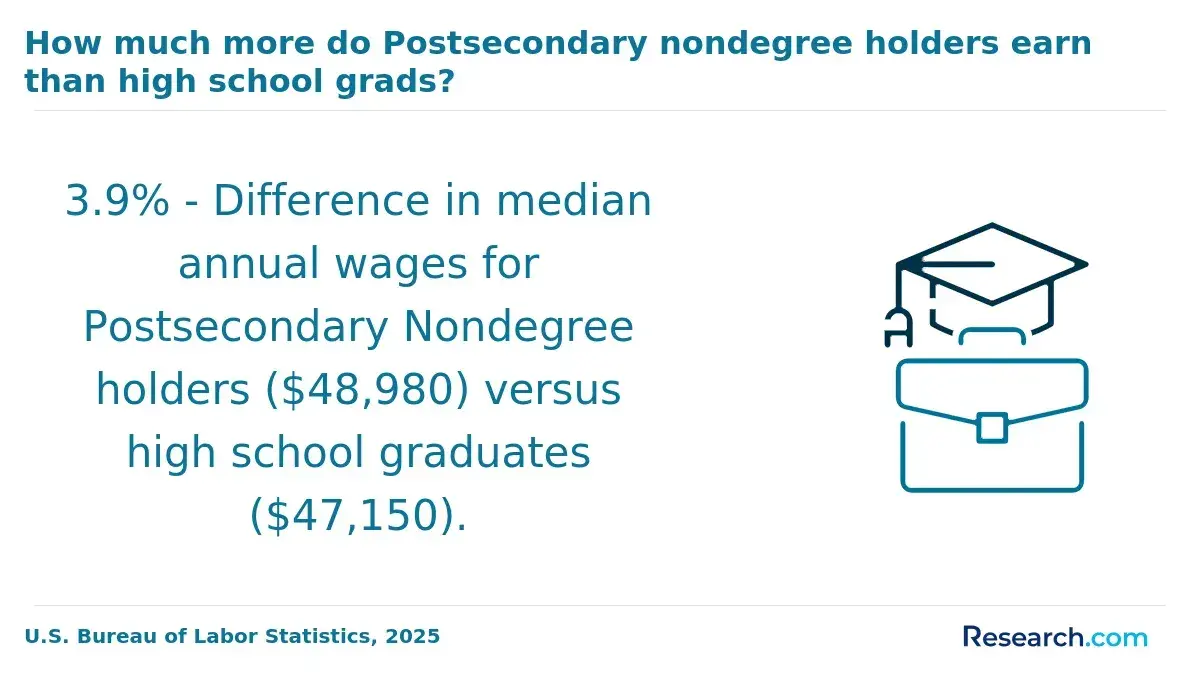
If you are not ready for a four-year science degree, it can be practical to compare shorter credentials or easy associate degrees that pay well before committing to a bachelor's program. That route may help you build college momentum, complete general education courses, and reduce the cost of later transfer.
Working adults should also prepare a short explanation of their goals. Environmental science programs often value applicants who can connect the degree to a clear interest, such as water quality, conservation, environmental compliance, climate resilience, public health, sustainability, or natural resource management.
The cost of an online environmental science degree depends on institution type, residency status, transfer credits, fees, course load, and lab or field requirements. Online students may save on commuting and relocation, but they can still face technology fees, lab kits, proctoring fees, software subscriptions, books, and travel for field experiences.
For a national benchmark, the College Board reported average published tuition and fees for the 2024-25 academic year of $11,610 at public four-year in-state institutions, $30,780 at public four-year out-of-state institutions, and $43,350 at private nonprofit four-year institutions. Online programs can be cheaper or more expensive than these averages, so use them as context rather than as a program-specific estimate.
Here are the cost categories to compare when schools send you tuition information. Looking only at per-credit tuition can lead to a misleading affordability comparison.
- Tuition per credit or per term, including whether online students pay in-state, out-of-state, or a flat online rate
- Mandatory university, technology, online learning, lab, proctoring, and graduation fees
- Books, digital course materials, GIS software, statistics tools, lab kits, and field equipment
- Travel expenses for required campus intensives, fieldwork, internships, or proctored exams
- Lost income or reduced work hours if you choose a full-time or accelerated schedule
Financial aid may be available if the school is properly accredited and you meet eligibility rules. The federal Pell Grant maximum for the 2024-25 award year is $7,395, which can make a meaningful difference for eligible undergraduates but may not cover the full cost of attendance. Adults should also check employer tuition assistance, military and veteran benefits, state grants, scholarships for STEM or environmental fields, and payment plans.
Be cautious about borrowing more because an online program feels convenient. A better affordability test is to compare total remaining credits, net price after grants and scholarships, monthly cash-flow impact, and likely career value. A slower part-time plan can sometimes be financially smarter than a faster full-time plan if it lets you keep employer benefits and avoid larger loans.
A traditional bachelor's degree in environmental science usually requires about 120 credits. Full-time students often finish in about four years from the start of college, while working adults commonly take longer because they enroll part time, pause during busy work periods, or transfer in credits from prior study.
The table below shows how course load affects time and workload. These are planning estimates, not guarantees, because environmental science courses with labs or field assignments may require more time than lecture-only courses.
| Enrollment pace | Typical credits per term | Approximate weekly workload | Best use case |
| Light part-time | 3 to 6 credits | 6 to 18 hours | Full-time workers with family responsibilities or unpredictable schedules |
| Standard part-time | 6 to 9 credits | 12 to 27 hours | Adults who can commit several evenings and one weekend block each week |
| Full-time | 12 to 15 credits | 30 or more hours | Students with reduced work hours or strong support at home |
| Accelerated or self-paced | Varies by model | Highly variable | Experienced students who can complete intensive work in concentrated periods |
Transfer credits can shorten the timeline more than any other factor. General education courses, introductory science courses, math, statistics, writing, and electives are often the easiest to transfer. Upper-division environmental science courses may be harder to substitute because schools want to ensure you complete their required major sequence.
Follow these steps before enrolling if your goal is to graduate faster without wasting credits. This process is especially important for adults who have attended multiple colleges or completed military, professional, or community college training.
- Request official transcripts from every college you attended, even if you completed only one course.
- Ask each target school for a written or unofficial transfer-credit evaluation before you commit.
- Confirm which credits apply to general education, major requirements, prerequisites, and electives.
- Ask whether prior learning, military training, certifications, or professional experience can be evaluated for credit.
- Build a term-by-term plan showing course availability, prerequisites, lab requirements, and expected graduation date.
Accelerated models can work well, but they should be evaluated carefully. Programs in other fields, such as an accelerated business degree, may rely heavily on short terms and compressed assignments, while environmental science may also require labs, field data, and technical projects that are harder to rush.
A strong online environmental science program should be flexible enough for adults but rigorous enough to build real scientific, analytical, and professional skills. The best comparison goes beyond tuition and asks whether the curriculum, schedule, support, and outcomes match your goals.
Use the following checklist as a practical screening tool. It is designed to help you separate genuinely adult-friendly programs from programs that simply put campus courses online.
- Accreditation is clearly listed, verifiable, and current.
- The curriculum includes biology, chemistry, ecology, environmental policy, statistics, GIS, research methods, and applied environmental problem-solving.
- Online courses are offered frequently enough that part-time students can progress without waiting a full year for required classes.
- Lab and field requirements are explained before enrollment, including whether they are virtual, local, hybrid, or campus-based.
- Transfer-credit policies are transparent, and the school provides a degree audit before you enroll.
- Faculty have relevant academic or professional experience in environmental science, sustainability, ecology, policy, or related fields.
- Career services support online students with resumes, internships, employer connections, and graduate-school planning.
- Total cost is clear, including fees, materials, lab costs, software, and possible travel.
Watch for red flags that can cost time or money. These include vague accreditation language, unclear lab requirements, no posted course rotation, pressure to enroll before receiving a transfer evaluation, unusually high fees, or promises about jobs and salaries that no school can guarantee.
Do not confuse institutional accreditation with field-specific accreditation used in other professions. For example, CACREP online counseling programs are relevant to counseling licensure pathways, but environmental science programs are usually evaluated through institutional accreditation and curriculum quality rather than a single required programmatic accreditor.
A good final test is to ask, "Would this program still look credible if it were not online?" If the answer is yes because the science curriculum, faculty, student support, and outcomes are strong, then the online format is a delivery advantage rather than the only selling point.
An environmental science degree can lead to roles in environmental consulting, government agencies, laboratories, utilities, energy companies, conservation organizations, sustainability teams, and regulated industries. Job titles vary widely because environmental work sits at the intersection of science, policy, compliance, data, and field operations.
The U.S. Bureau of Labor Statistics reports a 2024 median annual wage of $80,060 for environmental scientists and specialists. That figure is a national median, not a starting salary or a guarantee. Pay depends on location, employer type, degree level, technical skills, travel requirements, and whether the role focuses on field sampling, compliance, data analysis, remediation, or project management.
The table below summarizes common career directions. Use it to connect program features, such as GIS or field methods, with the types of work you may want after graduation.
| Career path | Typical responsibilities | Program features that help |
| Environmental scientist or specialist | Assess environmental risks, collect and interpret data, prepare reports, support compliance or remediation work | Ecology, chemistry, statistics, GIS, field methods, technical writing |
| Environmental compliance specialist | Help organizations meet environmental regulations, maintain permits, document procedures, and prepare audits | Environmental law, policy, risk assessment, communication, data management |
| GIS or environmental data analyst | Use spatial data, maps, remote sensing, and databases to study environmental patterns | GIS, statistics, programming basics, remote sensing, data visualization |
| Sustainability coordinator | Track resource use, support emissions or waste-reduction initiatives, and communicate sustainability goals | Sustainability, policy, project management, analytics, stakeholder communication |
| Conservation or natural resource technician | Support habitat management, monitoring, restoration, and field surveys | Ecology, field methods, species identification, data collection, safety training |
Current trends are making technical skills more important. Employers increasingly value GIS, environmental data analysis, remote sensing, climate-risk assessment, regulatory documentation, and the ability to communicate findings to nontechnical audiences. AI and automation may speed up mapping, reporting, and pattern detection, but professionals still need scientific judgment, field awareness, ethics, and regulatory context.
The degree is a good fit if you want applied science work with real-world impact and can tolerate a mix of field, office, lab, and reporting tasks. It may be a poor fit if you dislike science courses, want a job with no outdoor or site-based work, or expect the degree alone to qualify you for every environmental role without additional experience or technical training.
Balancing a science degree with full-time work requires a realistic plan before the first term begins. Environmental science is rewarding, but it can be reading-heavy, writing-heavy, and data-heavy, with labs or field assignments that do not always fit neatly into short study sessions.
The most effective plan starts with your actual calendar. Working adults should map weekly work shifts, commute time, caregiving, sleep, meals, exercise, and recovery time before choosing course load. If the schedule works only when nothing goes wrong, it is probably too aggressive.
Use these steps to create a sustainable study plan. They are especially useful for students taking asynchronous or self-paced courses where no one is forcing you to log in at a specific time.
- Start with one science course and one lighter course if you are returning to college after a long break.
- Reserve recurring study blocks, such as two weeknights and one longer weekend session, before the term starts.
- Review every syllabus during the first week and mark labs, exams, field observations, and major reports on one calendar.
- Tell your supervisor early if you may need limited schedule flexibility during exam weeks or field assignments.
- Use small time windows for reading, flashcards, or discussion posts, but protect longer blocks for lab reports and data analysis.
- Reassess your course load after the first term instead of assuming the same pace will work every semester.
Common mistakes include enrolling full time to "finish faster," assuming asynchronous means deadline-free, ignoring family support needs, and waiting until a major assignment is due to ask for help. A better strategy is to complete the first term successfully, then add credits only if your grades, health, finances, and family schedule remain stable.
If your job has seasonal busy periods, look for programs with multiple start dates, shorter terms, stop-out policies, or lighter summer options. Flexibility is most valuable when it helps you stay enrolled through difficult months, not just when it lets you start quickly.
Online students should receive more than recorded lectures and a login. A strong program gives working adults access to academic advising, faculty communication, tutoring, library resources, career support, technical help, and clear policies for labs, exams, and fieldwork.
Science programs also need subject-specific support. Environmental science students may need help with chemistry, statistics, GIS, scientific writing, data interpretation, and research methods. If those supports are available only during standard business hours, they may not be useful for adults studying at night or on weekends.
Ask each school about these services before enrolling. The answers can reveal whether the program was intentionally designed for online learners or simply adapted from campus courses.
- Academic advising that helps part-time students plan prerequisites and course sequences several terms ahead
- Online tutoring for science, math, statistics, writing, and research assignments
- Access to library databases, citation tools, environmental journals, and librarian consultations
- Technical support during evenings or weekends, especially for learning platforms, proctoring tools, and specialized software
- Career services for online students, including resume reviews, internship search help, interview preparation, and employer connections
- Faculty office hours that include virtual or flexible appointment options
- Accessibility services for documented disabilities and accommodations for online exams or course materials
Because environmental science increasingly uses quantitative and spatial tools, compare support with other online STEM programs. For example, students reviewing an online bachelor in mathematics would likely ask about tutoring, software, and problem-solving support; environmental science students should ask similar questions for statistics, GIS, and data analysis.
The best support services are proactive. Advisors should warn you when a course is writing-intensive, when a lab section has a field component, or when a prerequisite must be completed before the next term. That guidance can prevent schedule conflicts and unnecessary delays.
Do Online Environmental Science Degree Programs Include Internships, Practicums, or Other Hands-On Learning Requirements?
Many online environmental science programs include hands-on learning in some form, but the format varies. Some use virtual labs, home lab kits, local field observations, GIS projects, research papers, employer-based projects, internships, or short campus residencies. Others may require no formal internship but strongly recommend experience before graduation.
Hands-on requirements matter because environmental science is applied. Employers may want evidence that you can collect data, follow safety protocols, write technical reports, use environmental software, understand regulations, and work on real sites or real datasets. A fully online degree can still be credible, but you should know exactly how practical skills are taught and documented.
The table below explains common experiential components. It can help you ask better questions before enrolling, especially if travel, shift work, or family responsibilities limit your availability.
| Hands-on component | How it may work online | What to verify |
| Virtual lab | Simulations, data sets, lab videos, analysis assignments, and reports | Whether it satisfies major requirements and prepares you for later lab or field work |
| Home lab kit | Materials are shipped to you for guided experiments | Safety rules, extra costs, equipment needs, and whether adult supervision is needed at home |
| Local fieldwork | You collect observations or samples in approved local environments | Site approval, documentation, safety expectations, and weather or seasonal limitations |
| Internship | Work with an agency, nonprofit, lab, consulting firm, utility, or employer partner | Minimum hours, scheduling flexibility, paid versus unpaid status, and local placement support |
| Capstone project | Applied research, data analysis, policy evaluation, or sustainability project | Whether it can be connected to your current employer or local community |
Before enrolling, ask admissions and faculty direct questions about hands-on learning. Do not wait until your final year to discover that an internship is required during business hours or that a field intensive requires travel.
- Is an internship, practicum, capstone, field course, or campus visit required for graduation?
- Can working adults complete fieldwork during evenings, weekends, or through their current employer?
- Who approves local field sites, and how far in advance must students arrange them?
- Are internships paid, unpaid, optional, or required?
- What happens if your location, job schedule, or family responsibilities make travel difficult?
If you already work in a related setting, such as utilities, facilities management, public works, sustainability, agriculture, conservation, or regulatory compliance, ask whether employer-based projects can satisfy experiential requirements. That option can make the degree more relevant and reduce scheduling friction.
Other Things You Should Know About Environmental Science
Not always. Environmental science usually emphasizes natural science, labs, data, and technical analysis. Environmental studies often includes more policy, ethics, social science, planning, or humanities coursework. Some programs combine both, so review the course list carefully.
You do not need to be a math expert before enrolling, but you should be ready for statistics, data interpretation, chemistry calculations, and possibly GIS or modeling. If math has been a challenge, choose a program with tutoring and consider taking a refresher course first.
Yes, many entry-level roles are available with a bachelor's degree, especially in fieldwork, compliance support, data collection, lab assistance, and environmental consulting support. Graduate school may help for specialized research, leadership, policy, or advanced technical roles.
Useful add-on skills include GIS, Excel or data analysis, technical writing, sampling protocols, environmental regulations, safety training, and professional communication. Internships, volunteer monitoring, and local conservation projects can also strengthen your resume.
- Online Environmental Science Degree | BS Environmental Science | University of Phoenix https://www.phoenix.edu/online-liberal-arts-degrees/environmental-science-bachelors-degree.html
- 2026 Environmental Science & Sustainability Scholarships https://www.fastweb.com/college-scholarships/articles/scholarships-that-help-our-environment
- Top 60 Environmental Science Scholarships to apply for in 2025 https://bold.org/scholarships/by-major/environmental-science-scholarships/
- Going Green: Scholarships for the Environmentally Friendly https://www.mefa.org/article/going-green-scholarships-for-the-environmentally-friendly/
- Environmental Science Courses & Degrees https://www.open.edu.au/study-online/science/environmental-science
- Environmental Science – Bachelor of Science https://www.massey.ac.nz/study/all-qualifications-and-degrees/bachelor-of-science-UBSCN/environmental-science-UBSCN2JENSC1/
- Is a degree in environmental science worth it? | edX https://www.edx.org/resources/is-a-degree-in-environmental-science-worth-it
- Environmental Sciences https://dein-studium.uni-hohenheim.de/en/applying-and-enrollment/applying/application-for-masters-in-environmental-sciences-soil-water-biodiversity