Best Online MBA in Healthcare Management Programs for Nonbusiness Bachelor's Graduates

Co-Founder and Chief Data Scientist
A non-business bachelor's degree can be an asset in healthcare management, but it does not determine which online MBA will build the necessary business skills. A nurse, public health graduate, and psychology major may bring different strengths and face different gaps in accounting, finance, and operations.
This guide compares online healthcare management MBA options for U.S. applicants, explains what to verify before applying, and helps you decide whether an MBA is the right next step for your experience and goals.
Key Things You Should Know
- Nonbusiness graduates can pursue an online healthcare management MBA; check each school's foundation coursework and experience expectations rather than assuming your major determines eligibility.
- UNC Wilmington, UT Tyler, and the University of Scranton offer online MBAs identified with healthcare management; UMass Amherst offers a healthcare administration focus area within its online MBA. The designation and coursework matter more than the label alone.
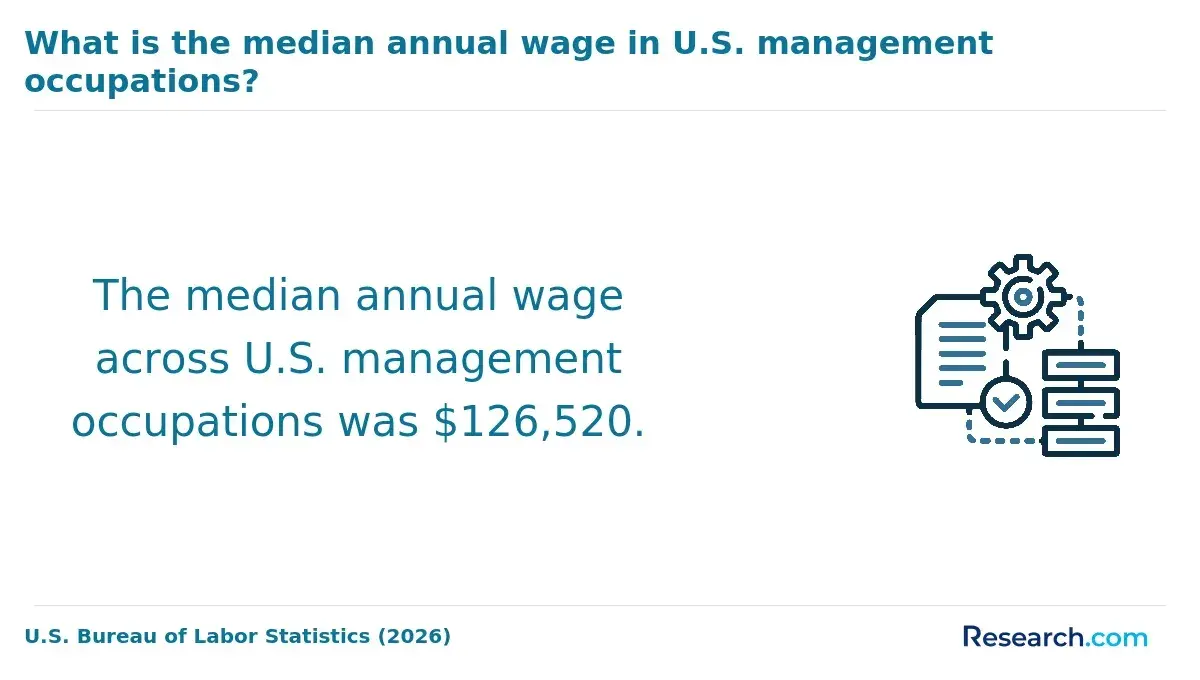
- The U.S. Bureau of Labor Statistics reports a $126,520 median annual wage for management occupations in May 2025. That broad occupational figure is not a forecast of a healthcare MBA graduate's pay.
What is an online MBA in healthcare management?
It is a general management degree delivered online with additional study of healthcare organizations. Students typically learn to interpret financial information, manage people and operations, and make strategic decisions, then apply those skills to settings such as hospitals, clinics, insurers, or health services companies. A school may call the healthcare component a concentration, specialization, or focus area; those terms do not establish equal academic depth.
For a nonbusiness graduate, the distinction is useful. The MBA core supplies business fundamentals, while healthcare coursework connects them to industry-specific decisions. Neither component provides clinical training or grants a clinical license. If your goal is chiefly health policy, population health, or administration within one type of care setting, compare the MBA curriculum with an MHA or MPH before committing.
Can nonbusiness majors enroll in an online healthcare management MBA?
Yes. A business bachelor's degree is not a universal MBA admission requirement. Schools assess applicants individually, and a nonbusiness major can contribute relevant expertise: a clinician may understand care delivery, while a public health graduate may know community programs and data. Neither background necessarily includes managerial accounting or corporate finance.
Separate eligibility from readiness. Ask whether a school requires graded foundation courses, offers noncredit preparation, or teaches introductory concepts within the MBA. Then review a sample finance or accounting syllabus against your own experience. If you need time to assemble an application or complete preparation, online MBA programs with rolling admission may offer a useful scheduling alternative; confirm the specific healthcare option is available for your intended start term.
Which online healthcare management MBA programs are accredited?
The following is a fit-based shortlist, not a national ranking. These universities identify an online MBA and a named healthcare management option or healthcare administration focus area, and their business schools hold AACSB accreditation. The comparison prioritizes a clearly identifiable healthcare option and distinctions a nonbusiness applicant can investigate. It does not rank price or flexibility where a current, comparable total cost or schedule has not been established.
The table distinguishes the advertised healthcare designation so you can check its required courses rather than treating every option as an identical concentration. Program catalogs and accreditation status can change; verify both with the school before applying.
| University and online MBA | Healthcare designation | Useful fit question for a nonbusiness graduate |
| University of North Carolina Wilmington | Healthcare management specialization | How are business fundamentals introduced before healthcare-specific coursework? |
| University of Texas at Tyler | Healthcare management emphasis | Which healthcare courses are required, and what preparation is expected for quantitative work? |
| University of Scranton | Healthcare management specialization | Which courses connect management decisions to the healthcare settings you know or hope to enter? |
| University of Massachusetts Amherst | Healthcare administration focus area | How many courses make up the focus area, and will it appear on your academic record? |
AACSB accredits business schools or their business degree programs; it is distinct from the university's institutional accreditation. Do not assume an MBA is separately accredited as a healthcare administration degree. If AACSB recognition and cost are both priorities, compare the shortlisted schools' current quotes with low-cost online MBA programs, then confirm that any lower-cost alternative actually offers the healthcare coursework you want.
Expect schools to ask for proof of a bachelor's degree and academic transcripts, and often a résumé and application statement. Policies on work experience, recommendations, GMAT or GRE scores, and prerequisite study vary. A test waiver at one university says nothing about another university's policy, and a recommended accounting refresher is not necessarily an admission condition.
Before applying to a shortlisted program, request its current requirements for your intended entry term. In particular, ask whether your degree and coursework satisfy admission rules, whether foundation classes add credits or cost, and how your professional experience will be evaluated. A strong statement can connect your existing expertise to a specific management problem you want to solve; it need not pretend you already have business training.
The MBA core commonly covers accounting, finance, operations, strategy, organizational behavior, and analytics. Healthcare study may address payment and reimbursement, healthcare law or policy, quality, or the management of care organizations. These are examples of subjects to look for, not a claim that every shortlisted school requires the same courses.
Compare required healthcare courses rather than course titles alone. A nurse moving toward clinic operations might value staffing, quality, and financial decision-making; a psychology graduate seeking a first healthcare role might need more exposure to how providers and payers operate.
Check whether projects use healthcare cases and whether the program provides a capstone or employer-connected work. A few relevant electives may be sufficient for advancement within a familiar organization but less persuasive for a major industry switch.
Completion time depends on required credits, course sequencing, foundation work, and whether you study part time or take an accelerated load. The shortest advertised timeline may assume continuous enrollment and may not account for preparation a nonbusiness student needs. Ask each school for a course-by-course schedule based on your transcript and realistic weekly availability.
For cost, request a written estimate that separates tuition, mandatory fees, any foundation courses, materials, and required travel. Compare the total for your path, not a per-credit rate or a promotional starting figure.
Employer assistance can materially change the decision, but check reimbursement limits and whether you must pay upfront. If you have a firm budget, online MBA programs under $30,000 offer a comparison point - not proof that a particular healthcare specialization falls below that amount.
Online study may let you keep a healthcare job while applying coursework to real decisions. It does not necessarily mean self-paced study: live meetings, team projects, fixed deadlines, and occasional travel can still affect your schedule. Ask for a recent course calendar and confirm whether the healthcare courses follow the same delivery pattern as the MBA core.
Campus-based study may make in-person recruiting, peer relationships, or a more substantial career transition easier, but it can require commuting or time away from work. If speed is your main concern, compare one-year online MBA programs with the actual healthcare course sequence; an accelerated general MBA is not automatically an accelerated healthcare management MBA. For a nonbusiness applicant, time to master accounting and finance may be more valuable than the earliest possible finish date.
The strongest near-term pathway usually builds on experience you already have. A healthcare employee might pursue broader responsibility in practice operations, service-line management, quality improvement, or project leadership. Someone coming from another industry can bring skills in finance, staffing, logistics, or technology, but may need healthcare exposure before competing for roles that require knowledge of care delivery or reimbursement.
An MBA can strengthen your case for managerial responsibility; it does not itself appoint you a manager. Before enrolling, examine job postings for your target role and identify the experience they request. Favor a program whose projects, classmates, employer connections, or career support can help you close a specific gap.
Applicants whose nonbusiness background includes military healthcare or logistics experience can also compare online MBA programs degree guide and veterans for relevant support, while checking healthcare coursework separately.
No occupational median reliably describes all healthcare MBA graduates. The U.S. Bureau of Labor Statistics reports that management occupations had a median annual wage of $126,520 in May 2025. That figure covers managers across industries and career stages - not new MBA graduates, and not healthcare managers alone. Your likely pay depends more directly on the position, location, prior experience, and employer.
BLS projects management occupations overall to grow faster than the average for all occupations from 2025 to 2035. That broad outlook supports investigating management careers, but it cannot predict openings in your preferred hospital, clinic, or local market. For a useful return-on-investment estimate, compare actual job requirements and local pay ranges with your current compensation and the full cost of the degree.
Which certifications or licenses do healthcare managers need?
There is no universal license for healthcare managers, and an MBA does not confer a clinical credential. A manager who also practices nursing or another licensed profession must meet that profession's licensing rules. Certain facility leadership positions, including nursing home administrator roles, can have state-specific licensure requirements; check the applicable state board before assuming an MBA meets them.
Optional professional certifications may help demonstrate experience in a particular area, but eligibility and value depend on the role and certifying organization. If a target job names a license or certification, verify its requirements directly. When the credential is mandatory and an MBA is merely preferred, completing the credential or gaining relevant experience may be the more direct next step.
Other Things You Should Know About MBA
Choose based on the work you want to do. An MBA emphasizes broadly transferable business management; an MHA generally concentrates more deeply on administering healthcare organizations. Compare required courses and target employers, not degree initials alone.
Not necessarily. Schools differ in whether a concentration or focus area appears on the diploma, transcript, or neither. Ask the registrar how the exact option will be recorded.
Possibly, but course availability and degree rules may restrict a change. Ask an advisor whether switching would add courses, delay graduation, or affect previously completed electives.
Some employers offer tuition assistance, but eligibility, reimbursement timing, and service commitments vary. Obtain the policy in writing before using that support in your budget.
- DAPIP | Homepage - Office of Postsecondary Education (OPE) https://ope.ed.gov/dapip/
- GMAT/GRE- Not Required | California State University Long Beach https://www.csulb.edu/cob-graduate-programs/gmatgre-not-required
- Online MBA: Common FAQs Answered | Spring Arbor University https://online.springarbor.edu/news/online-mba-common-faqs-answered
- MBA Requirements: What You Need to Apply in 2026 | SCU https://www.scu.edu/business/blog/admissions/mba-requirements/
- Prerequisite Courses for an Online MBA Program Without a Business Degree | UWF Online https://getonline.uwf.edu/business-programs/mba/general/prepare-mba-prerequisite-courses/
- Healthcare Management Bachelor's Degree | umn.edu https://ccaps.umn.edu/healthcare-management-bachelors-degree
- What You'll Learn in a Healthcare Management Program | allenschool.edu https://www.allenschool.edu/what-youll-learn-in-a-healthcare-management-program/
- Graduate Cost - ODUGlobal - Old Dominion University https://online.odu.edu/cost/graduate-cost
- Experiential Learning and Project Opportunities in Health Care | duke.edu https://hsm.fuqua.duke.edu/students/hsm-daytime-mba/daytime-courses/experiential-learning-in-health-care/
- Course Modes & Definitions - Office of the University Registrar https://registrar.washington.edu/classrooms/course-modes/