
Is an Online MBA in Nonprofit Management Worth It for International Applicants?

Co-Founder and Chief Data Scientist
An online MBA in nonprofit management can let you study at a U.S. university without leaving your job or country. But international applicants face a decision that goes beyond curriculum: Will the degree help in the market where you intend to work, and will its cost buy skills and connections you cannot gain more directly?
This guide examines the MBA's potential return, U.S. career and immigration limits, program quality, and practical alternatives so you can decide whether to apply and what to verify before paying a deposit.
Key Things You Should Know
- An online nonprofit MBA is most likely to pay off when you already have sector experience, need broader financial and organizational leadership skills, and can apply them in a realistic next role.
- Online enrollment does not itself provide a U.S. visa or work authorization; confirm overseas enrollment rules, time-zone requirements, and where the degree will be recognized.
- The U.S. median annual wage for management occupations was $126,520 in May 2025, according to the Bureau of Labor Statistics, but that broad figure is not a nonprofit MBA graduate salary or a sound basis for projecting your own return.
Is an online MBA in nonprofit management worth it for international applicants?
It can be worth it if you need general management training for mission-driven leadership and can use the degree where you are legally able to work. The case is strongest for an experienced nonprofit professional moving toward responsibility for budgets, teams, operations, or organizational strategy, especially with employer funding or a manageable total cost.
It is weaker if your main goal is entry into the U.S. labor market, because the degree alone does not confer immigration status, or if you need specialist training rather than a broad MBA.
An MBA teaches management across functions; nonprofit coursework applies those tools to mission, governance, restricted funding, donor relationships, and accountability. The distinction matters when comparing it with a master of public administration (MPA) or shorter training.
The best choice depends on the work you want to do after graduation, not simply on which credential sounds more senior. This comparison identifies the principal trade-off.
| Option | Potential fit | Main limitation to check |
| Online MBA with a nonprofit concentration | Broad management roles across nonprofits and other sectors | How much nonprofit-specific coursework and practical access it actually provides |
| MPA or nonprofit-focused master's | Deeper study of public service, policy, or nonprofit administration | Whether it offers enough finance and general business training for your goal |
| Focused courses or certificates | A defined gap, such as fundraising or nonprofit accounting | Less breadth and typically less of a graduate-degree credential |
For a personal return-on-investment test, compare total tuition, fees, financing costs, and foregone work time with a realistic career change, not a published salary for all managers. Ask whether the target job requires management experience you already have, whether your employer will support study, and whether the school's network reaches your intended country or sector.
If the career benefit depends on relocating to the United States, evaluate that plan separately from admission. If your decision is primarily about when you can begin, compare online MBA programs with rolling admission, while checking each school's current deadlines and international-document timelines.
What accreditation should international students look for in an online nonprofit MBA?
First, verify that the U.S. institution is institutionally accredited by an accreditor recognized by the U.S. Department of Education. Then check whether its business school or MBA has specialized accreditation, such as AACSB, ACBSP, or IACBE, if that distinction matters to employers or credential evaluators in your intended market. Institutional and business-school accreditation are different; neither establishes that a particular nonprofit concentration is offered online.
Check the institution's current accreditation record and the business accreditor's directory, rather than relying on a marketing badge. Ask the school what the award and transcript will state, then ask relevant employers, regulators, or credential-recognition bodies in the country where you plan to work how they treat a U.S. online degree. Recognition abroad is not universal, and accreditation by itself does not establish eligibility for a U.S. visa or job.
What careers can international graduates pursue with a nonprofit management MBA?
Your existing work is the starting point. A fundraising professional might seek development operations or advancement management; a program manager might pursue a larger portfolio, operations leadership, or a chief-of-staff role.
Financial and analytical experience can support budgeting, grants management, or organizational planning. Senior executive roles generally require a record of leading people, funding, and programs, not merely an MBA.
Employers may value evidence that you can manage restricted funds, report results to funders, work with a board, and adapt to local law and donor expectations. Look for courses or projects that let you produce such evidence.
If you want to move from nonprofits into a hospital or health system, healthcare administration and MBA pathways may provide a more relevant comparison than nonprofit programs alone.
Graduates living outside the United States can pursue roles with local organizations or cross-border employers where their experience and degree are valued. U.S.-based roles require separate consideration of hiring eligibility and work authorization; a U.S. online MBA is not a substitute for either.
An online program may let you keep earning and apply lessons immediately at your organization. An on-campus MBA may offer easier access to in-person classmates, local employers, and activities tied to the campus. Neither format automatically provides nonprofit recruiting, internships, or an international professional network.
For an applicant abroad, format is also an operational choice. Check whether classes are asynchronous, whether live discussions occur at workable local times, whether group projects require meetings across time zones, and whether any residency requires travel or a visa.
Ask which career services and alumni events online students can actually use remotely. If speed matters, compare online MBA program length alongside course intensity and required visits; a shorter calendar is not necessarily an easier workload.
Choose campus study only after evaluating its full cost and the immigration rules applicable to the specific program. Do not assume that switching between online and campus formats preserves the same enrollment or visa options.
Most MBA programs build on a general management core, commonly including accounting, managerial finance, marketing, operations, strategy, and leadership.
Nonprofit-focused study may address fundraising, grant funding, board governance, program evaluation, nonprofit financial management, and mission-driven strategy. The exact mix varies by school: a named concentration is not interchangeable with a general MBA that offers one relevant elective.
Examine the required course list, elective availability online, and any capstone or consulting project. In particular, look for practice with restricted revenue, financial reporting to stakeholders, and decisions that balance mission against limited resources.
If you already know nonprofit operations but lack budget authority, core finance may be the main benefit; if you already manage finances, a deeper nonprofit master's or targeted governance training could be more useful.
Requirements vary by institution. Common application materials include a recognized bachelor's degree, academic records, a résumé, a statement of purpose, and sometimes recommendations or an interview. Schools set their own policies for professional experience and GMAT or GRE scores; a nonbusiness bachelor's degree does not automatically rule you out.
International applicants may also need a course-by-course credential evaluation, certified translations, and proof of English proficiency when applicable. Before paying an application fee, ask whether the school accepts students resident in your country, which evaluator it accepts, whether an English-test waiver applies, and whether courses or projects involve any location restrictions.
Applicants concerned about academic history can compare online MBA programs for low-GPA applicants, but should confirm each program's current standards rather than assume an exception.
Duration depends on required credits, course sequencing, transfer-credit policy, and whether you study full time or part time. Published completion times may assume uninterrupted enrollment. Ask for a course-by-course plan that reflects your intended pace and whether nonprofit electives are offered often enough to finish on schedule.
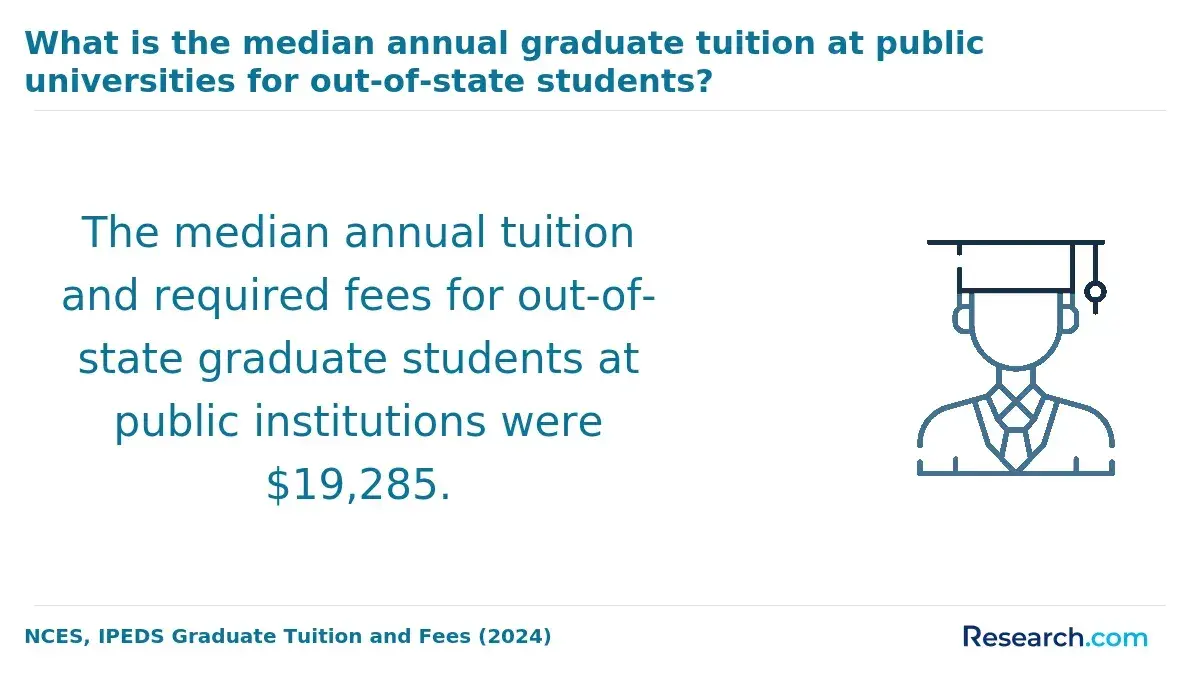
For cost, obtain the school's current total-credit requirement and tuition rate, then add mandatory fees, materials, any travel, currency-conversion charges, and borrowing costs. Confirm whether international online students pay the advertised rate and qualify for scholarships or employer payment arrangements.
A low tuition figure is not a complete cost estimate; if affordability is the deciding factor, compare affordable graduate business education while verifying that any shortlisted program has the nonprofit coursework you need.
To assess payback, divide your estimated net education cost by a plausible annual improvement in compensation that you can reasonably attribute to the opportunity the degree helps you reach.
If that improvement is unknown, or advancement depends on finding a job in a country where you lack work authorization, treat the calculation as uncertain rather than assigning it an optimistic salary.
There is no single reliable salary for graduates of online nonprofit MBAs. Pay depends on the role, organization size, location, funding, experience, and whether the graduate has authority over staff or budgets.
The U.S. Bureau of Labor Statistics reports a $126,520 median annual wage for management occupations in May 2025. That figure covers management jobs across industries and education backgrounds; it is not a nonprofit-sector median or an MBA outcome.
For a useful comparison, look at compensation for the specific roles and U.S. locations you could realistically enter, then compare it with your current pay and likely progression without the degree. If you plan to remain abroad, U.S. wage figures are particularly poor predictors of your earnings and should not drive your borrowing decision.
The U.S. Bureau of Labor Statistics projects that management occupations overall will grow faster than the average for all occupations from 2025 to 2035, with about 1.1 million openings per year on average from growth and replacement needs. This is context for the wider management market, not a projection of nonprofit vacancies or openings available to international graduates.
Nonprofit hiring depends on each organization's funding, mission, and need for experienced managers. Test your target market by reviewing actual job descriptions for the experience, fundraising knowledge, financial skills, and work authorization they request. If the positions you want consistently require prior U.S. nonprofit experience, plan how to gain comparable evidence of impact rather than assuming the MBA will remove that barrier.
Do international nonprofit management MBA graduates need U.S. licenses or certifications?
Nonprofit management itself generally does not require a single U.S. professional license. Employers may value credentials related to a particular function, but an MBA is not a substitute for a regulated qualification, for example, one required for certain accounting or legal work. Check the duties of your intended role and the applicable state or professional rules before pursuing an additional credential.
Licensure and employment authorization are separate questions. Even without a license requirement, working in the United States generally requires appropriate authorization. An online MBA completed from abroad does not, by itself, grant a U.S. visa, permission to work, or eligibility for a particular post-study immigration benefit.
Other Things You Should Know About MBA Programs
That depends on the university. Ask for the exact wording on both the diploma and transcript before enrolling if the distinction could affect recognition by an employer or credential evaluator.
Possibly. Ask the university about third-party billing, accepted payment methods, deadlines, and currency charges, and ask your employer whether its funding requires you to remain employed afterward.
Do not assume it will. Some schools assess prior learning or accept eligible transfer credits, while others require completion of their full curriculum. Request the policy in writing before estimating your cost or timeline.
Often this depends on the instructor, assignment, and your employer's permission. Ask about confidentiality rules and whether a real organizational problem can be used for a capstone or consulting project.
- Students and Employment | uscis.gov https://www.uscis.gov/working-in-the-united-states/students-and-exchange-visitors/students-and-employment
- F-1 Postsecondary | Study in the States - Homeland Security https://studyinthestates.dhs.gov/guide/f-1/f-1-postsecondary
- Recognition of Foreign Qualifications | ed.gov http://www.ed.gov/about/initiatives/international-affairs/recognition-of-foreign-qualifications
- IPEDS - National Center for Education Statistics (NCES) https://nces.ed.gov/ipeds/survey-components/9
- Student Visa | state.gov https://travel.state.gov/content/travel/en/us-visas/study/student-visa.html
- Online Master's Degree in Business Administration (MBA) | Purdue Global https://www.purdueglobal.edu/degree-programs/business/online-mba-master-business-administration/
- Online MBA in Nonprofit Management | 12-18 Months | murraystate https://onlinedegrees.murraystate.edu/programs/business/mba/nonprofit-leadership/
- Master of Business Administration (Evening Hybrid or Online) | UNLV https://www.unlv.edu/business/graduate/mba
- Master of Business Administration, Nonprofit Leadership | Antioch University https://www.antioch.edu/academics/leadership-management/master-of-business-administration/mba-nonprofit-leadership/
- Internships Abroad: A Fast Track to Full-Time Jobs | AACSB https://www.aacsb.edu/insights/articles/2025/01/internships-abroad-a-fast-track-to-full-time-jobs


