Careers After an Online MBA in Real Estate for Small Business Owners

Co-Founder and Chief Data Scientist
For a small business owner, an online MBA in real estate can support two different moves: building a stronger property-related company or moving into a management role with an employer. Those paths call for different skills, connections, and financial commitments. This guide explains which careers are realistic from different starting points, where the degree may help, and where experience or a shorter course matters more. It also covers licensing, pay, and program fit so you can judge the investment against the needs of your business.
Key Things You Should Know
- Owners with property, construction, lending, or brokerage experience may be able to use the MBA to expand into development, portfolio management, or investment work; the degree alone does not qualify someone for those roles.
- The U.S. Bureau of Labor Statistics reports a $126,520 median annual wage for management occupations in May 2025, but that broad figure is not a real estate MBA graduate salary or a forecast for an individual owner.
- Choose a full MBA when you need broad management skills alongside real estate finance and strategy; choose targeted training when one immediate business problem is the main reason to enroll.
What careers can small business owners pursue after an online MBA in real estate?
The most plausible next step usually builds on what you already operate. A brokerage owner might grow into a multi-office operator; a contractor might move toward small-scale development; and an owner of rental properties might build a property or asset management business. An MBA can strengthen decisions about financing, hiring, pricing, and expansion, but clients, lenders, and employers will still assess your transactions and operating record.
Real estate development involves finding sites, assessing feasibility, arranging capital, managing approvals, and coordinating construction. Asset management focuses on improving the financial performance of properties already owned. Property management runs day-to-day leasing, maintenance, tenant service, and budgets. These are different careers: success in one does not automatically establish expertise in another.
Owners seeking a senior management position at a larger firm should also weigh their leadership history against the role's required deal size and portfolio complexity. An executive MBA option for senior professionals may be worth comparing if broad leadership development matters more than real estate-specific coursework.
How does an online real estate MBA help small business owners grow their companies?
The strongest business case is a specific decision you expect to make differently. Managerial accounting can help an owner separate profitable properties or service lines from those absorbing cash. Finance coursework can improve analysis of debt, projected cash flows, and investment risk. Marketing and operations can support customer acquisition, tenant retention, vendor management, and repeatable processes as the company grows.
For example, a small property management firm considering another market needs more than a revenue forecast. Its owner must estimate staffing capacity, customer acquisition costs, local operating requirements, and the cash needed before new contracts become profitable. An applied MBA project could make that expansion plan more rigorous, provided the program permits students to work on their own businesses.
The opportunity cost is real: study time may displace sales, site visits, or supervision. If the immediate gap is only financial modeling or sustainable building operations, a focused course, mentor, or relevant online MBA in sustainability degree guide may help you compare narrower and broader study options before committing to a real estate MBA.
What jobs can you get with an online MBA in real estate?
For owners considering employment, the degree is most useful when it complements evidence that they have managed budgets, people, properties, or deals. The comparison below separates common job targets by what employers are likely to examine beyond the MBA.
| Role | Typical work | Experience or qualification to demonstrate |
| Real estate asset manager | Monitor property performance and recommend leasing, capital, and disposition decisions | Property financial analysis and a record of improving asset performance |
| Development manager | Coordinate feasibility, financing, approvals, and delivery | Development or construction experience, local market knowledge, and completed projects |
| Property management leader | Oversee teams, service quality, operating budgets, and client relationships | Property operations experience; state licensing requirements may apply to specific activities |
| Real estate acquisitions associate or manager | Evaluate potential purchases, underwriting assumptions, and investment risks | Strong modeling skills and transaction experience; seniority depends on deal history |
An owner changing from an unrelated industry may need an intermediate role, transaction experience, or a credible project portfolio before targeting management. Former business ownership is valuable evidence of responsibility, but employers will want to know the scale and results of that responsibility.
An MBA typically combines a broad business core - accounting, finance, marketing, operations, strategy, and leadership - with real estate-focused study. Depending on the school, that study may cover property valuation, investment analysis, real estate capital markets, development, or portfolio decisions. Course titles and depth vary; an elective in real estate does not necessarily constitute a formal concentration.
For an owner, the most useful curriculum links analysis to action: underwriting an acquisition, comparing financing structures, or planning growth without jeopardizing cash flow. Check whether the school offers an applied project and whether you can use your own business as the subject. An MBA generally teaches managerial decision-making rather than substituting for extensive deal experience, appraisal training, or a specialized real estate finance degree.
An online MBA can be credible, but accreditation and employer recognition are separate questions. First, confirm that the university holds recognized institutional accreditation. Then check whether its business school holds specialized accreditation, such as AACSB, ACBSP, or IACBE, if that matters to your goals. Specialized business-school accreditation is not the same as institutional accreditation, and no accreditation label guarantees a particular job outcome.
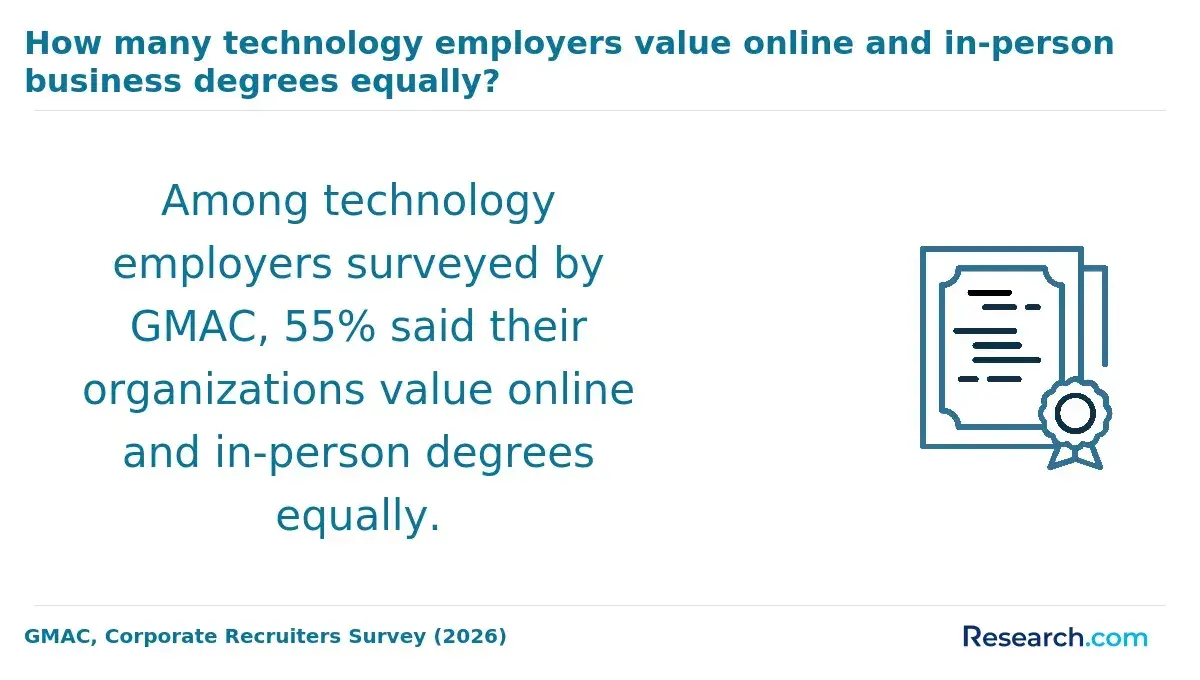
Employers may place greater weight on your operating results, real estate experience, and ability to explain decisions than on whether coursework was online. Ask a prospective school whether online students can use its career services, alumni connections, and employer events; do not assume their access matches that of full-time campus students.
Not for every role. An MBA does not itself grant a real estate license, and some analysis, investment, or internal management positions may not require one. Brokerage activities and certain property management services, however, can trigger state-specific licensing requirements. The answer depends on what you do, for whom, and in which state - not on the degree's title.
Before expanding a company or accepting a role involving transactions, check the relevant state real estate regulator's rules and the employer's requirements. Also distinguish a license from other qualifications: a development manager, for instance, may not need a brokerage license for every task but still needs credible project and regulatory experience.
Schools set their own requirements. Applicants commonly need a bachelor's degree and submit academic records, a résumé, and written application materials; policies on work experience, recommendations, interviews, and GMAT or GRE scores vary. A business undergraduate degree is not universally required, though an owner without recent accounting or quantitative coursework may benefit from preparation before starting.
Use your application to explain the business decisions you have made, their measurable results, and why real estate coursework fits your next move. If timing is difficult because you cannot easily step away from operations, compare start dates and deadlines; online MBA programs with rolling admission may offer another scheduling option, but verify each program's current policy.
Completion time depends on the required credits, course sequence, enrollment pace, and whether the concentration's courses are offered when you need them. Online delivery does not guarantee self-paced study: live meetings, group projects, fixed terms, or residencies may still take you away from the business. Ask for a sample course schedule rather than relying only on an advertised fastest completion time.
Compare total required tuition and fees, not the price of a single course. Add books or software, any required travel, financing costs, and the value of owner time diverted from operations. If you are comparing affordable online MBA programs, confirm that each option actually offers enough real estate coursework for your goal; a lower-cost general MBA is not automatically an equivalent substitute.
For a practical return-on-investment check, identify the specific improvement the degree must help produce - such as stronger margins, a successful expansion, or eligibility for a plausible job - and compare its uncertain value with the full cost. If a short finance course could resolve the immediate problem, the MBA may be difficult to justify on that basis alone.
There is no reliable single salary for graduates of online real estate MBAs. Pay varies by role, market, employer, deal responsibility, and prior experience; an owner's income also depends on business profit and can fluctuate independently of a salary.
For context, the U.S. Bureau of Labor Statistics reports that management occupations had a $126,520 median annual wage in May 2025. That figure covers a broad group of U.S. workers - not just real estate managers or MBA graduates - and should not be used as a post-MBA earnings prediction. Evaluate a prospective job against its own compensation structure, including commissions or bonuses where applicable, and compare it with what you currently earn and retain through business ownership.
How can you choose the best online real estate MBA program?
Start with the career or business decision the program must support. An acquisitions goal calls for rigorous underwriting and finance; a growing property management company may gain more from operations, leadership, and customer strategy. Confirm that real estate is an officially available online concentration if that designation matters, rather than assuming a school's general MBA includes it.
Then request the current course list, full cost, course schedule, live-session requirements, and details of any residency. Ask whether online students can complete projects using their own companies and reach relevant alumni or employers. Compare these answers with the time you can reliably spare while keeping the business running. If speed is essential, accelerated graduate business degrees and MBA programs offer a useful format comparison - but a shorter timetable is only an advantage if the workload and real estate curriculum fit.
Choose the MBA when it addresses several durable gaps and the expected business or career opportunity warrants the commitment. If you need one technical skill, a local deal network, or a required license, pursue that more direct path first.
Other Things You Should Know About MBA
Possibly. Ask the program about project rules and confidentiality before sharing leases, customer information, or financial statements. You may be able to use anonymized figures.
It may improve your financial analysis and presentations, but it does not provide investors or replace a credible deal, track record, and appropriate legal advice.
Yes, if that partner will apply the learning and has time to study. Decide who owns the financial, operational, and growth decisions before choosing who enrolls.
Do not assume it does. Continuing education credit depends on the state regulator's rules and whether the specific course or provider is approved.
- Real Estate Commission Licensure Guide | pa.gov https://www.pa.gov/agencies/dos/resources/professional-licensing-resources/licensure-processing-guides-and-timelines/real-estate-commission-guide
- Working With Licensed Real Estate Professionals | colorado.gov https://dre.colorado.gov/working-licensed-real-estate-professionals
- 5 MBA Jobs in the Real Estate Market | Longwood Online https://online.longwood.edu/business/mba/real-estate/mba-jobs-real-estate-market/
- Career Paths in Real Estate Finance | Orfalea College of Business https://orfalea.calpoly.edu/student-services/career-readiness/career-paths/career-paths-in-ref
- Inside Top MBA Programs: Curriculum, Networking and Career Benefits Guide | YSU https://online.ysu.edu/degrees/business/mba/general/top-curriculum-networking-career-benefits-guide/
- Boost Your Career: Online MBA Alumni Networking Guide | William & Mary Mason https://online.mason.wm.edu/blog/alumni-networking-in-online-mbas-virtual-career-advancement
- Real Estate Career Pathways | Career Management Center Colorado State University https://bizcareers.colostate.edu/resources/wcidwtc-rel/
- Careers in Real Estate | nar.realtor https://www.nar.realtor/membership/careers-in-real-estate
- How to Choose the Right Online MBA Program in 2026 | Rowan Blog https://rowanblog.com/2025/08/how-to-choose-the-right-online-mba-program/
- What Do Employers Think About Your Online Degree? | onlinemba.com https://www.onlinemba.com/resources/employers-thoughts-on-online-degrees/