
Careers After an Online MBA in Data Science for Business for Working Parents

Co-Founder and Chief Data Scientist
An online MBA in Data Science for Business may help a working parent move from producing reports to leading decisions informed by data. But career gains depend on prior experience, the program's technical depth, and whether coursework fits around work and caregiving.
This guide identifies realistic roles, explains what employers may still expect beyond the degree, and shows how to weigh salary potential against cost and time. The goal is to help you decide whether an MBA, a more technical degree, or targeted training is the better next step.
Key Things You Should Know
- The most direct paths are often analytics leadership within your current function, such as marketing, operations, or finance; an MBA alone rarely qualifies someone for a technical data scientist role.
- The U.S. Bureau of Labor Statistics reports a May 2025 median annual wage of $126,520 for management occupations overall, not for MBA graduates or analytics managers specifically.
- For working parents, verify live classes, group-meeting expectations, required travel, and leave policies before treating an online program as flexible.
What careers can you pursue after an online MBA in Data Science for Business?
The strongest career move usually builds on work you already know. A marketing professional might lead customer analytics; an operations specialist might manage forecasting or process improvement.
In these roles, "data science for business" generally means using analytical evidence to make and explain decisions, not necessarily designing machine-learning systems.
The following paths differ in how much technical experience and managerial responsibility employers typically expect. Job titles vary by organization, so compare actual duties rather than titles alone.
| Potential path | What the work involves | Most plausible starting point |
| Business analytics manager | Setting priorities for analysts, evaluating findings, and connecting projects to business goals | Experienced analyst or manager with demonstrated team or project leadership |
| Marketing or customer insights manager | Using customer, campaign, and market data to guide spending and retention decisions | Marketing or customer-experience professional with analytics exposure |
| Operations or supply chain analytics manager | Improving forecasts, capacity decisions, and operating performance | Operations or supply chain professional who understands the processes being measured |
| Analytics-focused product manager | Defining product questions, interpreting experiments, and coordinating technical and business teams | Product, technology, or customer-facing professional with relevant delivery experience |
Progression might mean taking ownership of a larger analytics initiative before seeking a manager title, then moving toward a director role after building a record of results. A move from an unrelated function is harder: employers may want evidence that you can interpret data, work with analysts, and understand the target industry.
An MBA concentration is not a substitute for substantial statistics, programming, or data-engineering experience when those are central to the job.
Industry-specific credentials can also matter more than a general analytics label. For example, a nurse considering healthcare analytics leadership should compare an MBA with clinically oriented low-cost online MBA programs. An MSN/MBA serves a different purpose and should not be assumed to provide a data science concentration.
Is an online MBA in Data Science for Business worth it?
It can be worth it for an experienced professional who needs broader management skills to lead analytics work, can apply projects on the job, and has a credible route to greater responsibility. Its value is less certain if the intended role requires deep technical training, the employer offers no advancement path, or tuition would strain the household budget.
Compare the full amount you would pay, including mandatory fees, financing costs, and any required travel, with a realistic career scenario. Employer tuition assistance may reduce your cost, but check reimbursement limits and repayment conditions. Then consider the less visible cost: study time taken from family, paid work, or rest. A possible promotion is not a return until it is attainable in your workplace or job market.
If you chiefly need statistics, programming, or machine learning, a specialized master's degree or focused courses may be more direct. If you need leadership training but not this concentration, compare curriculum and total cost with MBA program prices and tuition options. Executive formats can have different experience expectations and schedules; a lower advertised price alone does not establish better value.
Before applying, identify a target role, find several relevant job descriptions, and check whether they emphasize management experience, technical proficiency, or both. That comparison is more useful than assuming the MBA will cause a salary increase.
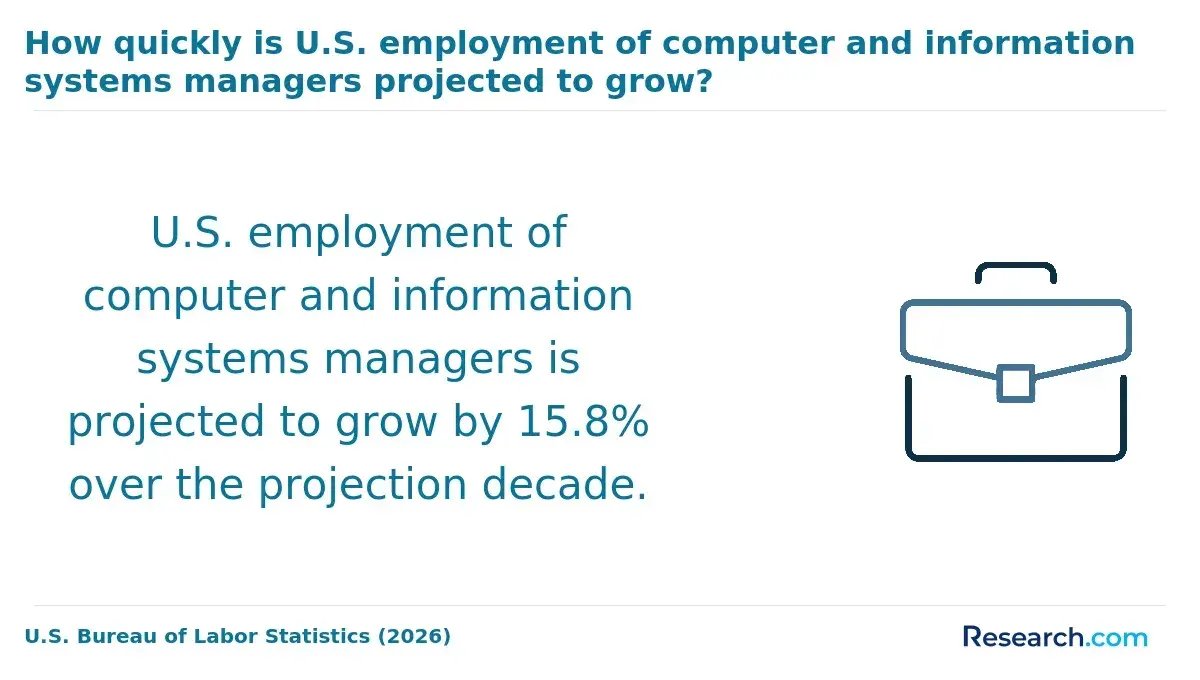
How much can graduates earn after an online MBA in Data Science for Business?
There is no reliable single salary for graduates of this specialization. Pay depends on occupation, location, industry, experience, and scope of responsibility. For context, the U.S. Bureau of Labor Statistics reports that management occupations overall had a median annual wage of $126,520 in May 2025. That figure covers a broad occupational group, not online MBA alumni or the career paths in this article; it should not be used as a starting-salary expectation.
Before estimating your own financial return, compare compensation for your current role and a specific target role in your U.S. labor market. Look at required experience as well as base pay, bonuses, and benefits. An internal promotion, a move to a new function, and a move to a new industry are different salary scenarios, and the MBA alone does not establish eligibility for any of them.
Curricula vary. The MBA core generally develops management judgment through subjects such as accounting, finance, strategy, operations, and leadership. A data science for business concentration may add business statistics, predictive analytics, data visualization, experimentation, or data governance. Schools may instead offer a few related electives without an officially designated concentration.
For a career decision, examine assignments rather than course titles alone. Does the program require students to frame a business problem, assess data quality, explain uncertainty, and recommend an action? Does it teach the SQL, coding, or statistical depth required by your target jobs?
A workplace-based project can be particularly useful for a parent who cannot take an internship, provided the employer permits use of the data.
If your goal is managing information systems rather than analytics strategy, compare the course requirements and total cost with tuition-focused MBA program search. An information systems MBA and a data science for business concentration may overlap, but their emphasis is not interchangeable.
Employers evaluating an analytics-focused manager usually want evidence of two abilities: sound business judgment and the capacity to work effectively with data specialists. Depending on the role, that can mean defining a measurable question, interpreting analysis without overstating causation, weighing costs and risks, and explaining a recommendation to nontechnical colleagues.
Technical expectations differ. A leader overseeing analysts may need enough SQL, statistics, and dashboard literacy to challenge assumptions; a hands-on data scientist role may demand much stronger programming and model-development skills. AI tools do not remove the need to assess data quality, privacy, bias, and whether a proposed result is useful to the business.
Build evidence while studying: lead a bounded workplace analysis, document the decision it informed, and describe your contribution accurately. Parents with limited time may get more career value from one rigorous, employer-relevant project than from several disconnected portfolio exercises.
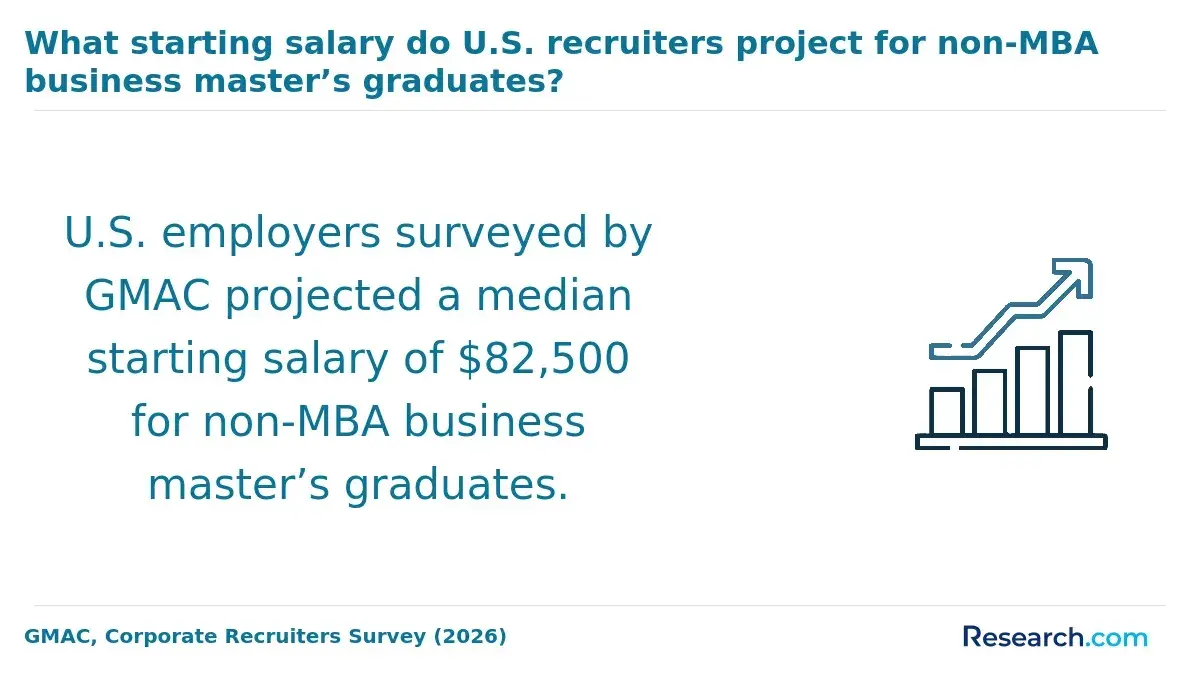
Completion time depends on the school's credit requirements, course sequence, term schedule, and whether you enroll part time or at an accelerated pace. A concentration can affect timing if required courses are offered infrequently. Do not infer a manageable weekly workload from a program's advertised completion time.
For a working parent, map the actual calendar: live sessions, exam windows, group meetings, peak periods at work, school breaks, and caregiving coverage. Ask whether you can reduce your course load, pause enrollment, or resume a required sequence after an interruption, and whether doing so changes tuition, aid eligibility, or the time allowed to finish.
Requirements are set by each school, not by the specialization as a whole. Applicants commonly encounter a bachelor's-degree requirement and requests for transcripts, a résumé, and written statements; policies on professional experience, recommendations, and GMAT or GRE scores differ. A business undergraduate degree or prior coding experience should not be assumed mandatory without checking the program's rules.
Review both admission and course-readiness expectations. If your target curriculum uses statistics or programming, ask about prerequisites, foundation classes, and support for students returning to quantitative study. Parents should also confirm application timing against work and family commitments rather than choosing a start date solely because it is available.
Applicants who have limited professional experience can compare graduate business admissions options. Admission without an experience requirement does not mean management jobs will waive their own experience expectations.
Online study removes a regular commute but may shift scheduling pressure into evenings and weekends. Campus study adds travel and fixed attendance, yet its in-person meetings and recruiting opportunities may suit some career changers. Neither format is automatically more manageable.
This comparison highlights the commitments to verify before selecting a format, rather than assuming all programs within a format operate alike.
| Consideration | Online MBA | Campus-based MBA |
| Attendance | May be asynchronous, live, or a mix; travel may still be required | Usually requires scheduled campus attendance |
| Teamwork | May require evening or weekend video meetings across time zones | May require meetings outside scheduled classes |
| Career connections | Access to recruiting and networking varies by program | In-person activities may be easier to attend regularly if you live nearby |
Ask for sample syllabi and a recent course calendar, especially if group scheduling is a concern. Guidance on online MBA programs with limited group work can help you frame the question, but only the school can confirm requirements for its courses. Also ask whether online students can use the career services and recruiting opportunities relevant to your target roles.
First, confirm that the institution holds recognized institutional accreditation using the accreditor's directory or the U.S. Department of Education's accreditation database. Then check whether the business school holds separate business-school accreditation, if that matters to your employer or goals. Institutional accreditation and specialized business-school accreditation are different claims.
Quality for this career goal also depends on fit. Confirm that the concentration is formally offered online, inspect required courses and faculty expertise, and ask what online students can access in career coaching, alumni events, and applied projects. Request outcomes for the relevant online MBA population where available; a campus MBA employment report should not be treated as evidence of identical online outcomes.
Which certifications complement an MBA in Data Science for Business?
A certification is most useful when it fills a specific gap between your MBA coursework and target job descriptions. Depending on the role, a recognized credential in a business-intelligence platform, cloud data services, project management, or a relevant analytics tool may demonstrate practical familiarity. Check the credential's current exam content and renewal requirements before paying for it.
Choose for evidence, not volume. If employers want hands-on SQL or dashboard work, a completed project may be more persuasive than a certificate covering concepts alone. If they want people leadership and budget ownership, another technical badge is unlikely to replace that experience. No general analytics certification makes an MBA equivalent to a specialized technical degree.
Other Things You Should Know About MBA Programs
Diploma wording varies by school. Ask the registrar how the degree and any concentration appear on the diploma and transcript.
Only with appropriate employer and program permission. Confirm confidentiality, privacy, and publication rules before selecting a workplace dataset.
Alumni access varies. Ask which coaching, job-board, and recruiting services remain available after graduation, especially if you plan to delay a job search for family reasons.
Do not assume it is. Ask the school's financial aid office whether documented dependent-care costs can be considered in your individual aid budget and what funding, if any, is available.
- What Jobs Can You Get with an MBA in Business Analytics? | FIU College of Business https://business.fiu.edu/academics/graduate/insights/posts/what-jobs-can-you-get-with-an-mba-in-business-analytics.html
- Stand Out as an MBA: Skills Employers Want | Jenkins MBA https://mba.ncsu.edu/2026/05/07/stand-out-as-an-mba-skills-employers-want/
- What Can I Do With a Degree in Data Science? Career Paths & Skills | Harvard SEAS https://seas.harvard.edu/news/what-can-i-do-degree-data-science-career-paths-skills
- How Much Does an Online MBA Cost? | University of Bridgeport https://www.bridgeport.edu/news/cost-of-online-mba/
- Essential MBA skills for the future of business leadership | Missouri Baptist University (Mobap) https://www.mobap.edu/news/essential-mba-skills-for-business-leadership/
- How to Plan for Online MBA Costs | Colorado Technical University https://www.coloradotech.edu/degrees/studies/business/articles/online-mba-cost-planning-guide
- Is an MBA in Business Analytics Worth It? Careers and Pay | Notre Dame de Namur University https://www.ndnu.edu/articles/business-management/mba-in-business-analytics.html
- Top Skills Business School Grads Need in 2025 and Beyond | UC Davis Graduate School of Management https://gsm.ucdavis.edu/blog/what-employers-really-want-top-skills-business-school-grads-need-2025-and-beyond
- Consequences of Routine Work Schedule Instability for Worker Health and Wellbeing - The Shift Project https://shift.hks.harvard.edu/consequences-of-routine-work-schedule-instability-for-worker-health-and-wellbeing/
- Is an MBA in Data Analytics Worth It? | University of Southern Indiana https://online.usi.edu/degrees/business/mba/data-analytics/why-mba-data-analytics/


