
Online MBA in Real Estate: curriculum and workload for working parents

Co-Founder and Chief Data Scientist
An online real estate MBA may let you keep working while studying property finance, development, and management - but online classes still compete with work and caregiving. For working parents, the deciding issue is often not whether the coursework is interesting; it is whether deadlines, group projects, and the total cost fit household life.
This guide explains what students typically study, where the workload becomes difficult, and how to assess a program's schedule and career value before enrolling.
Key Things You Should Know
- A real estate MBA combines a general management core with property-focused coursework; schools differ in whether real estate is a formal concentration, an elective cluster, or just one course.
- Online does not necessarily mean self-paced: live sessions, team meetings, project deadlines, and campus visits can determine whether a program works for a parent's schedule.
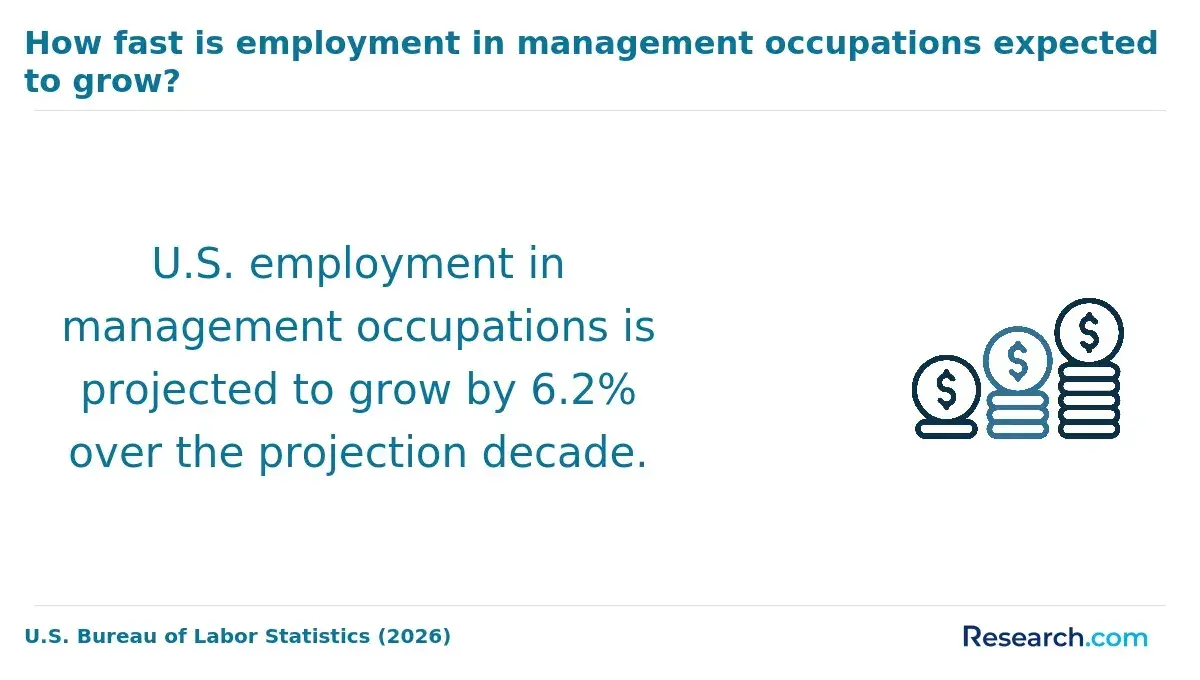
- Compare the full household cost with a realistic career goal. The $126,520 median annual wage for US management occupations in May 2025 is not an expected salary for real estate MBA graduates.
What is an online MBA in real estate?
An online MBA in real estate is a graduate business degree that pairs broad management study with courses related to property as an asset, business, and development opportunity. Depending on the school, "real estate" may be an official concentration, a track, a set of electives, or a topic within a general MBA. The designation matters: one property elective does not provide the same depth as a sequence of real estate courses.
The MBA is best understood as management education applied to property decisions - not training to become a licensed agent, appraiser, architect, or attorney. It can suit someone moving from leasing or property operations toward asset management, for example. A professional whose goal is instead to lead clinical services would be comparing a different kind of degree, such as online MBA programs in healthcare management.
Is an online real estate MBA worth it for working parents?
It can be worthwhile when the coursework supports a defined next step - such as taking responsibility for an investment portfolio, overseeing development decisions, or advancing within a real estate firm - and the family can accommodate the program's least flexible weeks. Existing industry experience makes it easier to apply classroom analysis at work; the degree alone will not replace a record of completed projects or local professional relationships.
Value is less certain if you need only one skill, such as property valuation, or if tuition would strain essential household spending. An individual course, employer training, or a specialized real estate master's degree may be a better match. The comparison should include caregiving coverage, any income lost through reduced work, employer support, and how long it might realistically take to use the new skills - not just the degree's advertised tuition.
Choose the credential for the job you actually want. For a nurse considering care-delivery leadership rather than property investment or development, online MSN and MBA dual-degree programs address a different professional path; they are not substitutes for real estate coursework.
What does an online MBA in real estate curriculum include?
Curricula vary by school, but the distinction between the MBA core and real estate coursework helps reveal what you are buying. The table shows common subject areas, not a required curriculum shared by all programs.
| Curriculum component | What students may study | Why it matters in real estate |
| MBA core | Managerial accounting, finance, strategy, marketing, operations, leadership, and analytics | Builds the ability to evaluate investments and manage organizations, people, and risk |
| Real estate specialization | Property valuation, real estate finance, markets, development, investment, and asset or property management | Applies business decisions to acquisitions, financing, projects, and ongoing property performance |
| Electives and applied work | Possible courses in law, sustainability, or urban development; case studies, deal analyses, or a capstone | Lets students test decisions against property-specific constraints and career interests |
Expect management-level analysis rather than universal training in every technical part of a transaction. A valuation course might ask you to assess cash flows and investment assumptions; it does not automatically satisfy professional appraisal requirements. Before applying, inspect the course catalog for the number of real estate courses, whether they are offered online regularly, and whether a capstone can address your intended sector.
There is no dependable weekly-hours figure for every online real estate MBA. Reading, quantitative assignments, discussion posts, exams, and team projects vary by course and by how many courses you take at once. Finance-heavy work may also require more preparation if accounting or spreadsheets are unfamiliar.
The hardest weeks are often those with overlapping demands: a work deadline, a child's school event, and a group presentation that requires everyone to meet at the same time. Asynchronous lectures can remove a commute without removing fixed submission dates. Development projects and investment analyses may involve team coordination even when other coursework is completed independently.
Before committing, request a recent syllabus for a core finance course and a real estate course. Check the actual pattern of weekly deadlines, required live attendance, exam windows, group meetings, and any residency. Then place a representative busy week - not an average week - on the family calendar and identify who can cover caregiving if work or a child's needs disrupt the plan.
Ask whether you can take one course at a time, pause enrollment, or return after a leave without losing access to needed courses.
Requirements are set by each school. Online MBA applications commonly ask for a bachelor's degree, transcripts, a résumé, and a statement of goals; recommendations, interviews, work experience, and GMAT or GRE scores or waivers depend on the program. Do not assume that a real estate license, business bachelor's degree, or finance job is universally required.
For applicants returning to school while raising children, preparation is also a workload test. Review a sample finance or accounting assignment and ask whether the program offers foundation coursework if you have not used those subjects recently. In your application, explain the business decisions you want to make - not simply an interest in property - and verify every deadline and requirement with the school before submitting.
Completion time depends on required credits, course availability, term structure, and enrollment pace. Part-time study may protect family and work time but extend the period over which tuition, fees, and scheduling pressures continue. An accelerated option can shorten the calendar while making each term less forgiving when caregiving needs change.
Published tuition may be quoted per credit, course, term, or entire program. To compare schools fairly, account for mandatory fees, materials and software, any required travel, financing costs, and potential extra charges if your pace changes.
For a breakdown of these categories, see online MBA tuition and total cost. Ask each school for a written estimate based on the course load you could actually sustain, then check employer reimbursement rules before assuming that benefit will cover the bill.
Delivery format changes where and when learning happens, but neither format guarantees flexibility or access to the same recruiting opportunities. For a working parent, the useful comparison is the schedule and career support of the specific programs under consideration.
| Factor | Online MBA | Campus-based MBA |
| Schedule | May offer recorded lessons, but can still require live classes and fixed deadlines | Requires travel and scheduled attendance; evening or part-time options may exist |
| Collaboration | Team projects often require coordinating across locations and time zones | In-person meetings may be easier to arrange on campus but add travel time |
| Real estate connections | May support remote alumni and employer events; local access varies | May make nearby property-market events and employer visits easier to attend |
| Family logistics | Reduces routine commuting unless residencies are required | Needs dependable coverage for travel and on-campus hours |
Ask whether online students can use the same career services, employer events, electives, and alumni activities as campus students. If your target employers operate in a particular property market, access to that market may matter more than the delivery label.
First, confirm that the university holds recognized institutional accreditation by checking the accreditor's directory and the US Department of Education's accreditation database. Then check the business school's own listing if it advertises specialized accreditation, such as AACSB, ACBSP, or IACBE. Institutional and business-school accreditation are different claims; neither confirms that real estate coursework meets a state licensing requirement.
If your goal involves acting as an agent or broker, contact the real estate commission in the state where you intend to practice. Ask which education, examinations, experience, and application steps apply to your intended license. Appraisal and other regulated roles have separate requirements. Obtain confirmation from the relevant regulator rather than treating an MBA course description as proof of eligibility.
Possible paths include advancement in property or asset management, real estate investment analysis, development management, and corporate real estate. Day-to-day work may involve budgets, tenant or stakeholder relationships, acquisition analysis, financing, or project coordination.
Which path is realistic depends heavily on your existing experience: an experienced property manager may be better positioned for a broader portfolio role than someone trying to enter investment management without transaction experience.
The US Bureau of Labor Statistics reports a median annual wage of $126,520 for management occupations in May 2025. That figure covers management jobs across industries and experience levels; it is neither a real estate salary nor a forecast for MBA graduates. Compare pay for the specific occupation and location you are targeting, and weigh it against your current compensation and the cost of study.
Sector choice matters, too. Managing a hospital's property portfolio calls for real estate expertise and knowledge of that employer's facilities needs; managing care delivery is a different goal. Someone pursuing the latter might compare online MBA for healthcare administrators rather than assume a property concentration covers clinical operations.
How should working parents choose a reputable online real estate MBA?
Start with the role you want next, then compare programs on evidence of relevant coursework, a sustainable schedule, and total household cost. A prestigious name or a "flexible" label cannot tell you whether required meetings clash with caregiving or whether real estate electives will run when you need them.
A short verification sequence can prevent an expensive mismatch:
- Confirm the official degree and concentration name, the online availability of each real estate course, and any prerequisite or course-rotation restrictions.
- Request sample syllabi and a term-by-term plan at your intended pace; check live sessions, team projects, residencies, and leave policies.
- Compare written total-cost estimates and confirm accreditation, online-student career services, and access to employers in your target market.
- Discuss the plan with your household and employer, including coverage during deadline-heavy weeks and any conditions on tuition assistance.
If cost is the deciding constraint, a cost-effective MBA choices can help identify options to investigate. Check their current real estate coursework and full costs separately; an affordable accredited MBA is not automatically an affordable real estate MBA.
Other Things You Should Know About MBA
Possibly, if the instructor approves it. Get your employer's permission before sharing financial records, tenant information, or transaction details; an anonymized case may be safer.
That depends on the courses. Ask which spreadsheet tools, financial models, or property-data platforms are required and whether access is included in tuition.
Check whether live-class times, exam rules, residencies, and state-based enrollment restrictions would affect your ability to continue. Get the school's answer before accepting a move.
It can, but not automatically. Ask about alumni and employer contacts in your intended market, and plan to participate in local industry events if those connections matter to your goal.
- Program Integrity Questions and Answers - Credit Hour http://www.ed.gov/laws-and-policy/higher-education-laws-and-policy/program-integrity-information-questions-and-12
- Cost of Attendance (Budget) | 2025-2026 Federal Student Aid Handbook https://fsapartners.ed.gov/knowledge-center/fsa-handbook/2025-2026/vol3/ch2-cost-attendance-budget
- Understanding College Costs | studentaid.gov https://studentaid.gov/resources/prepare-for-college/students/choosing-schools/consider-costs
- Semester Course Load and Student Performance - PMC - NIH https://pmc.ncbi.nlm.nih.gov/articles/PMC7568764/
- Real Estate Finance and Development (BS) - USC Catalogue https://catalogue.usc.edu/preview_program.php
- How Many Hours of Work Per Online Course Credit | ASU Online https://asuonline.asu.edu/newsroom/online-learning-tips/discover-weekly-number-hours-online-students-study/
- How Many Classes Do I Need to Take to Earn an MBA? | Student Support & Advising Services https://www.colorado.edu/business/mba/mba-blog/2018/how-many-classes-do-i-need-take-earn-mba
- MBA Information - Anderson School of Management | The University of New Mexico https://business.unm.edu/current-students/grad/mba-curriculum.html
- What's Different About an MBA in Real Estate? | Longwood Online https://online.longwood.edu/business/mba/real-estate/whats-different/
- MBA Courses | Herbert Wertheim College of Business https://wertheim.fsu.edu/mba-courses


