Careers after an online MBA in Organizational Change for military veterans

Co-Founder and Chief Data Scientist
Military leadership experience can be valuable in civilian organizations, but employers may not immediately recognize how it applies to business transformation. For veterans considering an online MBA in organizational change, the decision is whether the degree will help bridge that gap - and which jobs it could realistically support. This guide connects military experience to career paths, explains what the MBA adds, and examines salary, cost, and program fit so you can decide whether a full degree is the right next step.
Key Things You Should Know
- Veterans with operations, logistics, training, or program experience may be well positioned for change-related roles; an MBA strengthens business fluency but does not replace civilian industry experience.
- The U.S. Bureau of Labor Statistics reports a $126,520 median annual wage for management occupations in May 2025. That is a broad occupational figure, not an expected salary for organizational change MBA graduates.
- Before enrolling, compare the program's actual change-management coursework, civilian employer connections, total out-of-pocket cost, and eligibility for your specific VA education benefits.
What careers can veterans pursue after an online MBA in organizational change?
An organizational change MBA combines a broad business education with study of how organizations plan, communicate, and implement changes to processes, technology, or strategy. For veterans, the most realistic destination usually builds on work they have already done - not on the degree alone.
The paths below show how prior responsibilities can connect to civilian roles. Titles vary by employer, and some positions are individual-contributor roles before they become management jobs.
| Potential path | Relevant military experience | What employers may still expect |
| Change management specialist or manager | Leading transitions, training teams, coordinating new procedures | Examples of stakeholder engagement and measured adoption in a civilian setting |
| Operations manager | Resource allocation, logistics, process improvement | Commercial budgets, customer priorities, and industry-specific operations knowledge |
| Program or project manager | Coordinating complex missions, schedules, and cross-functional teams | Evidence of scope, budget, risk, and delivery under the employer's methods |
| Organizational development or learning manager | Training, coaching, workforce development | Experience with civilian HR practices, employee feedback, and learning outcomes |
Change expertise can also complement an existing industry specialty. A veteran already working on environmental initiatives, for example, might compare organizational change coursework with an online MBA in sustainability for working professionals. The better fit depends on whether the target job calls primarily for implementing change or for sustainability-specific business knowledge.
How does an organizational change MBA prepare veterans for leadership roles?
Military service may provide substantial experience directing teams and executing plans. An MBA can add the civilian business context behind those decisions: managerial accounting, financial trade-offs, organizational behavior, strategy, and communication with stakeholders who do not report through a command structure.
Change-focused coursework typically examines why people resist a proposed change, how leaders build support, and how they evaluate whether a new process has taken hold. A veteran who has implemented a training or logistics overhaul can use that framework to explain not just what changed, but its business case, employee impact, and results.
That translation matters in interviews. Describe the size and purpose of an initiative, your authority, the people you influenced, and the outcome without relying on military acronyms. The MBA may make those examples more legible to employers; it does not automatically confer civilian people-management responsibility or qualify a graduate for an executive role.
What jobs align with military experience and organizational change expertise?
Start with the function in which you have credible experience, then look for employers undertaking changes in that function. A logistics veteran might pursue operations transformation or supply-chain program roles; someone who led training could target employee development or change-adoption work. Veterans with procurement or systems-rollout experience may find a stronger initial fit in implementation teams than in broad strategy consulting.
Sector choice changes the qualifications employers value. Healthcare transformation, for example, involves clinical stakeholders, patient safety, and sector-specific operations; military leadership alone does not supply that knowledge. Veterans targeting that field can compare change coursework with healthcare-focused MBA program options online MBA programs for healthcare professionals and seek relevant healthcare experience.
Read job postings for the roles you want, not just their titles. Separate requirements you already meet from gaps in industry knowledge, software, project delivery, or HR practice. A project-management certification can help demonstrate a specific methodology where employers request it, but neither that certification nor an MBA substitutes for a record of delivering projects.
There is no universal organizational change MBA curriculum. Most MBA programs have a general management core, while the change component may be a formally named concentration, a set of electives, or a certificate. Verify which designation the school actually awards and whether every required course is available online.
The core commonly covers accounting, finance, operations, strategy, marketing, and business analytics. Change-focused study may address organizational behavior, leadership, negotiation, change implementation, and methods for assessing whether employees adopt new practices. A capstone or consulting project, if offered, can be especially useful when it gives you a civilian business example to discuss with employers.
Choose electives for the work you intend to do. Someone aiming to lead an organization-wide technology rollout needs a different mix from someone seeking customer-facing commercial work, for whom business-school marketing tracks may be more relevant. Ask for the current course sequence and descriptions rather than judging depth by the concentration name.
Requirements are set by each school, not by the concentration. Applicants commonly need a bachelor's degree and may be asked for transcripts, a résumé, recommendations, and a statement of goals. Schools differ on professional experience, GPA expectations, interviews, and GMAT or GRE policies; do not assume that "test optional" also means no quantitative preparation is needed.
Veterans can strengthen an application by explaining the scope of their leadership and why organizational change fits their civilian goal. If accounting or statistics is unfamiliar, ask whether the school offers foundation coursework and whether it adds time or cost. Applicants who want to compare schools for online MBA programs with accessible admissions should still check each program's current policies and academic expectations directly.
Completion time depends on required credits, course sequencing, transfer-credit policies, and whether you study part time or at an accelerated pace. A concentration may extend the program if its courses are offered infrequently or cannot be taken alongside core classes.
Online delivery does not necessarily mean self-paced study. Before committing, ask when live sessions and group meetings occur, whether there are campus visits, and what happens if work or family responsibilities require a pause. For a veteran entering civilian employment, a slower schedule may preserve time to build industry experience and pursue opportunities during the degree.
Without a specific school and enrollment plan, there is no reliable single price. Compare total program tuition with mandatory fees, books or software, any travel requirements, and borrowing costs. Also check whether the concentration requires credits beyond the standard MBA.
VA education benefits can change the out-of-pocket amount, but eligibility depends on the veteran's benefit, remaining entitlement, enrollment, and the school and program. Confirm the specific online program's VA approval and ask the school's certifying official how tuition, fees, and any housing allowance would be treated. Yellow Ribbon participation, where applicable, must also be verified rather than assumed.
For a fair comparison, request a written cost estimate for your expected course load, then subtract only funding you have confirmed, such as applicable VA benefits or employer assistance. If testing costs are a concern, affordable graduate business education gmat required is a useful comparison topic, but a waived test does not by itself make a program affordable. If your goal is one specific skill, a shorter course or employer training may cost less than an MBA.
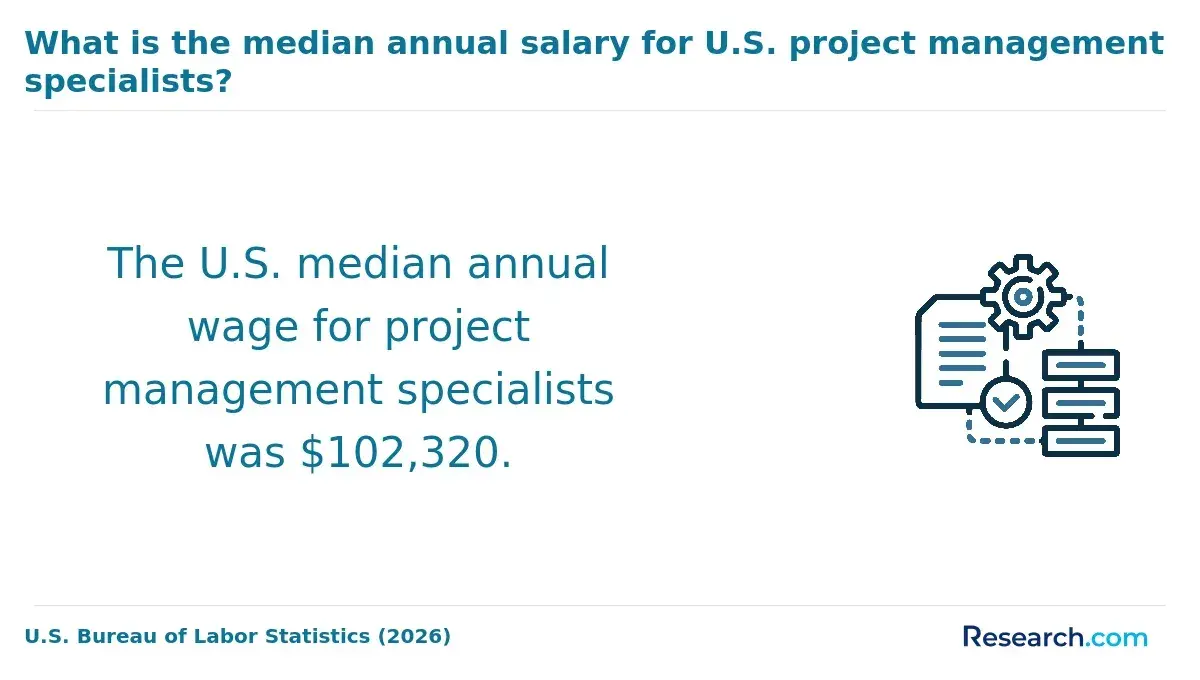
Pay depends more directly on the occupation, location, industry, and level of responsibility than on the concentration printed on a transcript. According to the U.S. Bureau of Labor Statistics, the median annual wage across management occupations was $126,520 in May 2025. That figure covers a broad workforce - not veterans, change managers, or MBA graduates specifically - and should not be used as a starting-salary forecast.
For a useful personal estimate, compare local postings for jobs matching your experience and note whether compensation includes bonuses or requires extensive travel. A veteran moving into a new civilian function may initially compete for specialist or project roles rather than management positions, even with substantial military leadership experience.
The U.S. Bureau of Labor Statistics projects management occupations overall to grow faster than the average for all occupations from 2025 to 2035, with about 1.1 million openings annually on average from growth and replacement needs. This is evidence of a broad management labor market, not a projection for organizational change jobs specifically.
"Change manager" is not one uniform occupation: employers may place this work in operations, HR, technology implementation, or consulting. Search those adjacent functions in your target location and examine which employers hire candidates with your industry background. That gives a more practical outlook than treating every management opening as a potential post-MBA opportunity.
How can veterans choose an accredited online organizational change MBA?
First, verify that the institution holds recognized institutional accreditation. Then check whether the business school or program holds optional specialized accreditation, such as AACSB, ACBSP, or IACBE; institutional and business-school accreditation are different claims. Accreditation establishes an important quality baseline, but it does not establish career fit or VA benefit eligibility.
Shortlist programs by the career evidence they can help you build. Confirm the formal concentration designation, online course availability, applied projects, access to career services for online students, alumni or employer connections in your target sector, scheduling demands, and total cost after confirmed funding. Ask how career staff help veterans translate military experience into civilian résumés and interviews.
An MBA is a stronger choice when you need broad business knowledge alongside change expertise and can connect the coursework to a plausible next role. If you already have that breadth and need only a particular change methodology or industry skill, targeted training - and experience applying it - may be the better investment.
Other Things You Should Know About MBA
Possibly, but availability and scheduling vary by program and employer. Ask whether working students can use an employer-based project or consulting assignment instead of a traditional internship.
That depends on the school's project rules and what information you are permitted to share. Obtain approval before proposing a project involving restricted or sensitive material.
Most do not. Certain federal or defense-contractor roles may require one, and an employer will state that requirement in the posting. Prior clearance is not a general requirement for the field.
Federal veterans' preference does not generally govern private-sector hiring. Private employers may have veteran recruiting initiatives, but their selection criteria and any applicable legal requirements differ.
- Veterans to workplace: Keys to successful transition - PMC https://pmc.ncbi.nlm.nih.gov/articles/PMC10013406/
- VA Transition Programs - DiscoverVA - Veterans Affairs https://discover.va.gov/transition-programs/
- General MBA vs. Specialized MBA: Which Is Right for You? | Northern Kentucky University Online https://onlinedegrees.nku.edu/programs/business/mba/general-vs-specialized/
- Resume Tips for Veterans: Translating Military Skills into Civilian Speak | Herzing University https://www.herzing.edu/blog/resume-tips-veterans-translating-military-skills-civilian-speak
- Organizational Development Careers: Jobs, Roles & Salary | Edgewood College https://online.edgewood.edu/blog/organizational-development-careers-jobs-roles-salary/
- What Can You Do With an MBA With a Specialization in Leadership, Negotiation and Change Management? - Purdue Business https://business.purdue.edu/master-of-business/online-masters-in-business-administration/posts/what-can-you-do-mba-leadership-change-management.php
- US Veterans Pivot Into Business With An Online MBA | UC News https://www.online.uc.edu/blog/us-veterans-pivot-into-business-with-an-online-mba.html
- Online MBA vs Full-Time MBA: ROI, Cost and Career Outcomes | Jenkins MBA https://mba.ncsu.edu/2026/04/27/choosing-between-an-online-mba-and-full-time-mba/
- The 5 most in-demand roles for MBAs in 2026 | gmac https://www.gmac.com/resources/learners/business-careers/career-planning/most-demand-roles-mbas
- Change Management Job Description | Prosci Inc https://www.prosci.com/blog/change-management-job-description