
Is an Online MBA in Healthcare Management Worth It for Military Veterans?

Co-Founder and Chief Data Scientist
Military leadership experience can be valuable in healthcare, but moving into a civilian management role may require new knowledge, contacts, and credentials. An online MBA in healthcare management could help bridge that gap, if its cost and curriculum fit your target job.
This guide is for veterans weighing that investment. It explains where the degree may help, where experience or another qualification matters more, and how to compare programs and education benefits before enrolling.
Key Things You Should Know
- Best fit: The MBA is most compelling for veterans who can connect their leadership experience to a specific healthcare operations or business role - not those expecting the degree alone to secure a senior position.
- Salary context: The May 2025 median wage for US management occupations was $126,520, according to the Bureau of Labor Statistics (BLS); that broad figure is not a healthcare MBA graduate salary or a projected pay increase.
- Before committing: Confirm the program's VA approval, your own benefit eligibility, total remaining cost, healthcare coursework, and access to civilian employers.
Is an online MBA in healthcare management worth it for military veterans?
It can be worth it if you have substantial military leadership or operations experience, want to manage the business side of healthcare, and can enter a program at a manageable net cost.
The MBA supplies broad business training; a healthcare management concentration applies some of that training to healthcare organizations. Neither replaces civilian healthcare experience.
The value depends on the transition you are making. A veteran who managed personnel, logistics, budgets, or complex services may be able to demonstrate relevant leadership while learning healthcare finance and operations.
A veteran seeking a first civilian job may need an entry point, such as a coordinator or analyst role, before an employer will consider them for management. Clinical leadership is a different path: business coursework does not confer a clinical qualification.
Use your target role, not the degree's name, to compare educational options. These distinctions matter most when deciding whether to spend remaining benefits on a full MBA:
| Option | Strongest fit | Main limitation |
| Healthcare management MBA | Broad business leadership, including roles beyond healthcare | Healthcare content may be limited to a few courses |
| Master of health administration (MHA) | Deeper preparation for healthcare administration | Usually less emphasis on business applications outside healthcare |
| Targeted course, certificate, or employer training | A specific knowledge gap or a lower-commitment career test | May provide less breadth or access to a degree-level network |
Nonfinancial value matters too: a useful capstone, healthcare-connected classmates, and career staff who understand military experience can improve the transition.
For a veteran considering the degree later in a career, whether an online MBA is the right move after 50 also depends on the time available to apply its benefits. If you already have the skills and employer access your target role requires, another degree may offer little additional value.
What careers can veterans pursue with an online MBA in healthcare management?
Veterans can pursue healthcare operations, practice administration, supply chain, and business-support roles. The realistic starting level depends on their military duties, civilian experience, and knowledge of healthcare organizations.
For example, leading a military logistics team may transfer well to hospital supply operations, but the applicant still needs to understand healthcare purchasing practices and stakeholders.
The following pathways distinguish transferable military experience from the additional evidence an employer may want:
| Pathway | Relevant military experience | Likely civilian knowledge gap |
| Healthcare operations or service-line management | Staffing, process improvement, and resource coordination | Care-delivery workflows, patient experience, and healthcare performance measures |
| Medical practice administration | Team leadership and budgeting | Scheduling, reimbursement, and practice operations |
| Healthcare supply chain or procurement | Logistics, vendor coordination, and inventory control | Healthcare purchasing and relationships with clinical teams |
| Healthcare project or program management | Cross-functional planning and execution | Healthcare systems, regulations, and employer-specific processes |
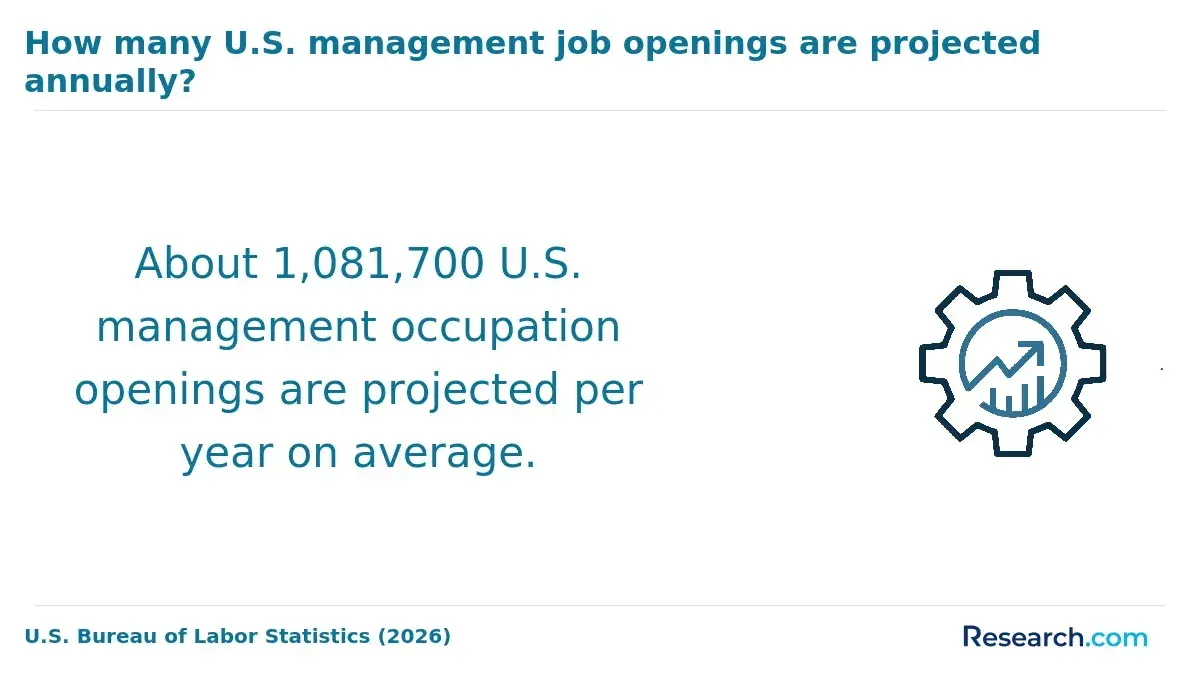
For salary context, BLS reports that the median annual wage across all US management occupations was $126,520 in May 2025; BLS projects this broad group to grow faster than the average for all occupations from 2025 to 2035.
Neither measure describes entry-level healthcare managers, veterans, or MBA graduates specifically. Compare local job postings and their experience requirements with your own record rather than using a broad median as a return-on-investment forecast.
How much does an online MBA in healthcare management cost veterans?
There is no single veteran price. The amount you pay depends on school charges, your approved benefit and remaining entitlement, enrollment pattern, and expenses the benefit does not cover. A tuition quote alone is not the full cost of attending.
Compare the same cost components at each school before deciding whether a lower advertised tuition actually means a lower net price:
| Cost component | What to verify |
| Tuition | Charge per credit or course, required credits, and any higher concentration-course rate |
| Mandatory fees | Online, technology, graduation, and other required charges |
| Other attendance costs | Books, software, required travel, and possible residencies |
| Financing and opportunity cost | Potential loan costs and any reduction in work hours |
Request a written estimate from the school's veterans benefits and financial aid offices showing charges, expected eligible payments, and your possible balance. If budget is the limiting factor, online MBA programs under $30,000 can provide a starting point for comparison, but confirm current prices and whether they offer meaningful healthcare coursework.
For a personal break-even check, divide your remaining total cost by a conservative estimate of additional annual take-home pay attributable to a realistic career move.
If you cannot support that pay estimate with credible job opportunities, or the result assumes an immediate promotion, do not treat the calculation as evidence that the MBA will pay for itself.
Eligible veterans may be able to use VA education benefits for an approved online MBA, but eligibility is individual, and an accredited school or MBA is not automatically approved for a particular benefit.
Before applying, ask the school's VA certifying official to confirm that the specific program and delivery format are approved, then check your entitlement and applicable payment terms with the VA.
Under the Post-9/11 GI Bill, payments can include eligible tuition and fees, a housing allowance when the student qualifies, and other applicable education payments. Amounts and eligibility depend on factors including service history, enrollment, school type, and how classes are delivered.
An exclusively online schedule can produce a different housing allowance from qualifying in-person enrollment; do not assume that an occasional campus visit changes the classification.
Ask how course load and term dates affect payments, whether Yellow Ribbon funding is available and applicable, and what happens if you withdraw or change enrollment.
Veterans with a service-connected disability may also ask whether Veteran Readiness and Employment is appropriate for their employment goal. Neither benefit nor supplemental funding should be included in your budget until your eligibility and the school's participation are confirmed.
An MBA typically begins with a broad management core, such as accounting, finance, operations, strategy, and organizational leadership. Healthcare-focused courses may then apply those skills to provider organizations, healthcare finance, quality improvement, policy, or the delivery of care.
The number and depth of those courses vary: a named concentration is not the same as a general MBA offering one healthcare elective.
For veterans, the useful test is whether assignments help translate existing leadership into civilian healthcare decisions. A project involving staffing, budgets, or a service improvement proposal may be more relevant to an operations goal than a concentration label alone.
Ask for the current course list and any capstone requirements, and check whether projects involve healthcare organizations. Management coursework does not train students to diagnose or treat patients.
Completion time depends on required credits, term length, course availability, prerequisites, and whether you study full time or part time. An accelerated schedule may reduce calendar time but compress coursework and group-project deadlines, an important trade-off if you are working, managing a transition, or expecting service-related interruptions.
Ask for a term-by-term plan showing when healthcare courses are offered and whether a missed course delays graduation. Compare that plan with your remaining benefit entitlement and other commitments.
If finishing sooner is essential, accelerated MBA degree programs are worth examining, but verify their actual healthcare curriculum and weekly scheduling demands before choosing one.
Requirements vary by school. Programs commonly request a bachelor's degree and academic records; they may also request a résumé, recommendations, essays, an interview, or GMAT/GRE scores.
Some waive tests or do not require them, while some expect professional experience. Military service can strengthen an application, but schools decide how it meets their criteria.
Describe military responsibilities in civilian terms: the size of a team led, resources managed, processes improved, and results achieved. Explain why healthcare management is your next step, especially if you have not worked in a civilian healthcare setting.
If your transition date is uncertain, online MBA programs with rolling admission may offer more application timing options; confirm start dates and benefit-processing deadlines separately.
An online MBA may let you remain employed or live near family while studying. A campus-based program may offer more routine face-to-face contact and access to local healthcare employers. Neither format guarantees flexible scheduling, strong recruiting, or a better career outcome.
The decision turns on what you need from the program. If you already work in healthcare and need management education without relocating, online study may be practical. If you are making a substantial industry change, examine how either format will help you meet employers and gain relevant project or work experience.
Ask online programs about live sessions, group meetings, campus visits, career-service access, and whether healthcare employers recruit their online students - not merely students in the campus MBA.
Many healthcare business and operations roles do not require a general "healthcare manager" license. Requirements can change with the position and state, however. Administration of a licensed healthcare facility, for example, may have separate state rules; clinical jobs require their own professional qualifications.
An MBA and its concentration are academic credentials, not licenses. Optional professional certifications may help demonstrate specific expertise, but an MBA course is not automatically certification preparation or a substitute for required experience.
Read job postings for your intended role and check the applicable state board or employer requirements before selecting courses around an assumed credential pathway.
How can veterans choose an accredited online healthcare management MBA?
Start by verifying the university's institutional accreditation through a recognized accreditor. Then check whether the business school holds specialized business accreditation, if that matters to your goals. These are different forms of recognition; neither establishes that the particular MBA has VA approval or strong healthcare employer connections.
Shortlist programs only after comparing their published healthcare courses, complete cost, format, and evidence of career support for online students.
Speak with a career adviser about healthcare employers, a faculty or program representative about applied projects, and the VA certifying official about your proposed enrollment. If testing requirements affect your options, compare affordable online MBA programs with no GMAT requirement, then verify each school's current admissions policy and healthcare curriculum.
Choose the program that closes a demonstrable gap between your experience and your target role at a cost you can justify. If you cannot identify that gap, or cannot find a program that addresses it, gain healthcare experience or pursue targeted training before committing to a full MBA.
Other Things You Should Know About MBA
Yes, if the school accepts your application. Confirm that your duty schedule permits required class participation, and check benefit rules for your current service status rather than assuming veteran payment terms apply.
Ask the school about military leave, withdrawal, readmission, and course availability before enrolling. Also contact its VA certifying official promptly if your enrollment changes, because the change can affect benefit payments.
Schools set graduate transfer-credit policies. Military training that counted toward a bachelor's degree will not necessarily satisfy MBA requirements; request an evaluation before relying on it to shorten the program.
Do not assume you can. Obtain your employer's approval and follow its privacy and data-use rules. A school or employer may require de-identified information or a different project entirely.
- Healthcare leaders navigating complexity: a scoping review of key trends in future roles and competencies - PMC https://pmc.ncbi.nlm.nih.gov/articles/PMC11223336/
- Post-9/11 GI Bill Rates | Veterans Affairs https://www.va.gov/education/benefit-rates/post-9-11-gi-bill-rates/
- How Long Does It Take to Earn an Online MBA in Healthcare? | Case Western Reserve University MBA https://onlineprograms.case.edu/mba/blog/how-long-to-earn-healthcare-mba-online/
- 10 Skills Employers Want for Healthcare Management Jobs | American InterContinental University https://www.aiuniv.edu/blog/10-top-skills-for-healthcare-management-jobs
- Choosing the Right Online MBA Program | Gies College of Business https://giesbusiness.illinois.edu/news/2025/10/03/choosing-the-right-online-mba-program--a-comprehensive-guide-to-asynchronous--synchronous--and-hybrid-programs
- MPH vs. MHA vs. MBA: Choosing the Right Path for Your Career in Healthcare - Purdue Online https://www.purdue.edu/online/mph-vs-mha-vs-mba-choosing-the-right-path-for-your-career-in-healthcare/
- Career Services for Military and Veterans | UMass Global https://www.umassglobal.edu/military-veterans/veteran-resource-center/career-services
- Post-9/11 GI Bill®/Yellow Ribbon | nyu.edu https://www.nyu.edu/students/communities-and-groups/military-students-and-veterans/military-connected-student-benefits/post-9-11-gi-bill-yellow-ribbon-montgomery-gi-bill.html
- MBA in Healthcare Management vs. Administration | EWU https://online.ewu.edu/degrees/business/mba/healthcare-administration/management-vs-administration/
- MBA Time Commitment: What to Expect from Full-Time and Part-Time Programs - Gary W. Rollins College of Business https://blog.utc.edu/business/2022/12/05/how-long-does-it-take-to-get-an-mba/


