Online MBA in Business Analytics: Admissions Guide for Public Sector Professionals

Co-Founder and Chief Data Scientist
Public agencies need leaders who can use data without losing sight of budgets, procurement rules, privacy, and public accountability. If you work in government or a public institution, an online MBA in business analytics may help you move from reporting results to managing decisions, but getting admitted and choosing the right program require more than an interest in data.
This guide explains what schools commonly ask of applicants, how to present public sector experience, what to verify before enrolling, and when a different credential may serve you better.
Key Things You Should Know
- MBA admission requirements vary by school: a business bachelor's degree, GMAT or GRE score, and prior analytics experience are not universal requirements.
- A strong public sector application connects measurable work, such as budget analysis, service delivery, or procurement improvement, to a clear management goal.
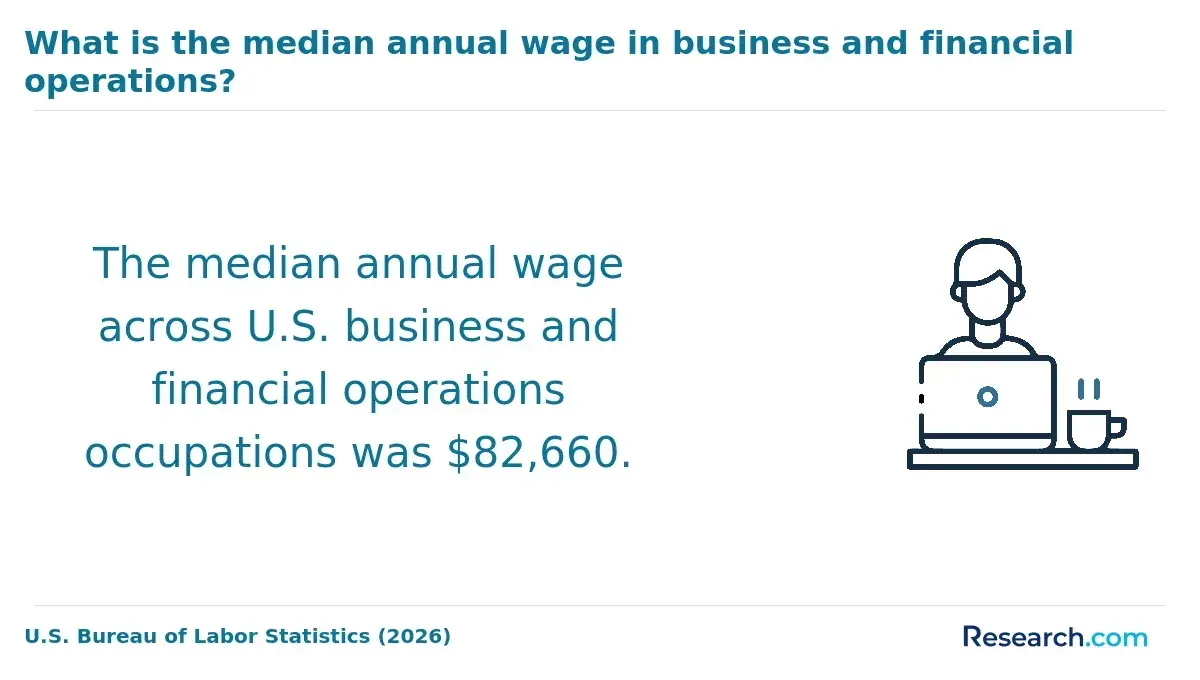
- Do not use broad salary figures as a promotion forecast. The Bureau of Labor Statistics reports a $126,520 median annual wage for all management occupations in May 2025, not for government analytics MBA graduates.
What is an online MBA in business analytics for public sector professionals?
It is a graduate business degree that combines an MBA's management core with coursework in using data to inform decisions. Depending on the school, business analytics may be a formal concentration, an elective sequence, or simply a few relevant courses. Check the transcript designation and required courses rather than assuming the program title describes an official concentration.
For a public sector professional, the useful question is whether assignments can address problems such as allocating limited resources, evaluating programs, forecasting demand, or explaining results to oversight bodies. An MBA generally teaches managers to interpret evidence and lead implementation; it is not necessarily advanced training in statistics, data engineering, or public administration.
Applicants from policy, social science, healthcare, or other nonbusiness fields may bring valuable subject expertise. A nonbusiness bachelor's degree does not automatically rule out admission, though preparation needs differ by applicant. If that describes you, compare online MBA programs for nonbusiness majors and check whether each requires foundation coursework.
Is an online business analytics MBA worth it for government careers?
It may be worthwhile if your target role combines analytical decision-making with responsibility for people, budgets, operations, or organizational change.
A government analyst seeking to manage a performance office, for example, may benefit from finance, leadership, and analytics together. The degree is less compelling if the next job primarily requires coding, statistical modeling, or a specific civil-service qualification.
Assess value against your actual advancement system. Public employers may use posted qualification standards, competitive hiring, and defined pay structures; an MBA alone does not create a promotion or private-sector-style salary increase.
Ask your supervisor or human resources office whether graduate education counts toward eligibility for the roles you want and whether tuition assistance is available. Compare the degree's net cost and time commitment with a specialized analytics master's, an MPA, individual courses, or employer training.
Which accreditation should an online business analytics MBA have?
First, confirm that the university holds recognized institutional accreditation. Then check whether its business school or MBA also has specialized accreditation, such as AACSB, ACBSP, or IACBE. Institutional and business-school accreditation serve different purposes; specialized accreditation is an additional consideration, not a substitute for institutional recognition.
Verify the institution and business school directly through the relevant accreditor's directory, and confirm that the online MBA is covered where program-level scope matters. Accreditation does not establish that a particular analytics concentration exists or that its courses address public-sector work. If AACSB accreditation and affordability are priorities, an MBA tuition comparison can help you identify options to investigate; confirm current prices with each school.
The MBA core typically covers subjects such as accounting, finance, operations, strategy, and organizational leadership. Analytics coursework may add data visualization, forecasting, statistical reasoning, and decision models. Course titles do not reveal technical depth: inspect syllabi, software requirements, and projects to see whether students build analyses, interpret them for managers, or both.
For government work, look for opportunities to examine data quality, privacy, fairness, and the limits of applying commercial metrics to public services. A useful project might weigh service outcomes against cost and access, rather than optimizing revenue alone. Ask whether you can use appropriately authorized workplace data and whether a capstone can address a public agency problem.
If you work in a public hospital as a licensed nurse and seek healthcare leadership rather than general agency management, a guide to online MSN and MBA dual-degree programs may help you compare a more clinically oriented education path. That path is distinct from an analytics MBA and does not replace any applicable professional licensure.
Schools set their own requirements, but applicants commonly encounter a bachelor's degree requirement and requests for transcripts, a résumé, a statement or essay, and recommendations.
Policies on professional experience, minimum GPA, interviews, prerequisite courses, and GMAT or GRE scores vary. A test waiver at one university does not imply a waiver elsewhere; verify the policy for your intended intake and whether a concentration has separate conditions.
Your application should make public sector work legible to a business admissions committee. Describe the decision you influenced, your responsibilities, the evidence you used, and the result, without disclosing protected records or claiming sole credit for a team outcome. Budget stewardship, cross-agency coordination, procurement, and communicating findings to nontechnical stakeholders can all demonstrate management readiness.
Before applying, complete these steps in order so you can address both eligibility and application quality:
- Check each program's current degree, GPA, work-experience, testing, prerequisite, deadline, and document policies.
- Review quantitative readiness in areas such as spreadsheets and introductory statistics; ask whether foundation courses are required or optional.
- Choose recommenders who can discuss your judgment, collaboration, and results, and prepare examples that respect workplace confidentiality.
- Write a goal statement naming the public-sector role you seek and explaining why both management and analytics training matter to it.
These preparation steps strengthen an application; they are not additional admissions requirements unless a school explicitly says so.
Completion time depends on required credits, term structure, course load, prerequisite work, and whether analytics courses are offered every term. A part-time schedule may fit full-time government employment but lengthen the time to graduation. Ask for a course-by-course completion plan based on your intended pace, including any capstone or required residency.
Compare total cost rather than advertised tuition alone. Request the current per-credit or program tuition basis, mandatory fees, books and software costs, and any required travel expenses. Ask whether charges change with enrollment pace or residency status.
Then check your agency's education-assistance rules, including approval timing, reimbursement limits, grade requirements, and any service commitment. If borrowing, include interest and repayment obligations in your decision; neither employer assistance nor aid should be assumed available until eligibility is confirmed.
An online program can let you remain employed and apply coursework to a current agency problem. A campus-based program may make in-person collaboration and local recruiting easier. Neither format guarantees access to the same career services, employer events, or professional network; ask what is available specifically to online students.
Online also does not always mean self-paced. Check for live sessions, group-project meetings, examinations at set times, and campus visits.
If unpredictable hearings, emergency operations, or legislative deadlines affect your schedule, online MBA programs with asynchronous classes may be worth examining, but verify every required synchronous component before enrolling.
Potential paths depend on your experience and the employer's hiring rules. An existing program analyst might pursue performance-management leadership; a budget or operations professional might seek a role overseeing resource planning, service delivery, or process improvement. Analytics coursework can support those moves, while the MBA core helps with supervision and cross-functional decisions.
An MBA does not automatically qualify someone for a senior government appointment, a technical data-science position, or a regulated profession. Read actual job postings for required experience, technical skills, eligibility rules, and any specialized credentials.
In public hospitals, management roles for MBA graduates may draw on clinical experience as well as business education; a nonclinician should not assume the same path is open to them.
There is no single reliable salary for public sector business analytics MBA graduates. Pay depends on occupation, agency, location, grade or pay band, and prior experience. Use the published range for a specific target vacancy, and your employer's promotion rules, rather than a broad MBA salary claim to estimate a possible return.
For context, the Bureau of Labor Statistics projects about 1.1 million openings per year across all U.S. management occupations from 2025 to 2035, including openings that replace workers who leave those occupations permanently. That broad outlook is not a forecast for government analytics jobs or for MBA holders. It supports investigating management opportunities, not assuming that a degree will secure one.
Which certifications complement an MBA in business analytics?
Choose a certification only after identifying a skill that your target role requires and the MBA does not sufficiently teach.
A recognized project-management credential may be relevant if you lead agency implementations; a platform-specific data credential may help if postings expect hands-on dashboard or database work. Requirements, exam eligibility, and renewal obligations differ by certifying body.
A certificate is not the same as a professional certification: the former usually documents completion of coursework, while the latter may involve an independent assessment and continuing requirements.
Neither substitutes for an MBA's broad management curriculum. If your goal is narrowly technical, targeted coursework and a relevant certification may be a more direct investment than a full MBA.
Other Things You Should Know About MBA Programs
Yes, at an appropriate level of generality. Explain your role, method, and impact without sharing protected data, sensitive procurement information, or details your employer prohibits you from disclosing.
Possibly, but policies vary. Obtain written guidance on advance approval, eligible programs, payment timing, required grades, and any obligation to remain employed before committing to tuition.
Some schools allow it, but limits and course-equivalency rules vary. Ask for a written transfer evaluation before relying on those credits to reduce cost or completion time.
Be accurate about your goals. You can explain how your public sector experience supports a future transition, but show that you understand the skills and experience the target role requires beyond the MBA.
- Paying For College | The Ohio Department of Higher Education https://highered.ohio.gov/wps/portal/gov/odhe/students/pay-for-college
- Types of Financial Aid: Grants, Work-Study, and Loans | studentaid.gov https://studentaid.gov/understand-aid/types
- Graduate admissions Steps to apply Prepare required materials | The Ohio State University https://gpadmissions.osu.edu/grad/prepare-required-materials.html
- Online MBA in Business Analytics: No GMAT Required | SIUE https://online.siue.edu/degrees/business/mba/business-analytics/aacsb-accredited-no-gmat-option/
- Graduate School Application Materials - UTK Student Success https://studentsuccess.utk.edu/career/plan-and-apply/graduate-school/application-materials/
- Online MBA in Business Analytics at Texas State University https://online.txst.edu/degrees/business/mba/business-analytics/
- Documents and Test Scores - Graduate Admissions | UT Dallas https://graduate-admissions.utdallas.edu/apply-to-ut-dallas/documents-and-test-scores/
- Careers in Public Administration | SPIA | University of Georgia https://spia.uga.edu/blog/careers-in-public-administration/
- MBA Business Analytics online - Radford Online https://online.radford.edu/degrees/business/mba/business-analytics/
- Does the GMAT/GRE waiver affect my application? - Carey Blog https://blog.carey.jhu.edu/article/does-the-gmat-gre-waiver-affect-my-application