Careers after an online MBA in Business Analytics for nonbusiness bachelor's graduates

Co-Founder and Chief Data Scientist
A nonbusiness bachelor's degree can be an asset in business analytics: it gives you a field in which to apply data, whether that is healthcare, engineering, education, or the arts. The harder decision is whether an online MBA will help you turn that expertise into a new role - or whether you first need more technical experience. This guide compares realistic career paths, explains what the degree teaches, and shows how to assess admissions, cost, and employment prospects before you enroll.
Key Things You Should Know
- An online MBA in business analytics can support moves into analytics-informed management, operations, and consulting, but an MBA concentration alone does not qualify a graduate for technical or senior roles.
- A nonbusiness bachelor's degree is not an automatic admissions barrier; preparation needs depend on your quantitative background, work experience, and each program's foundation-course policy.
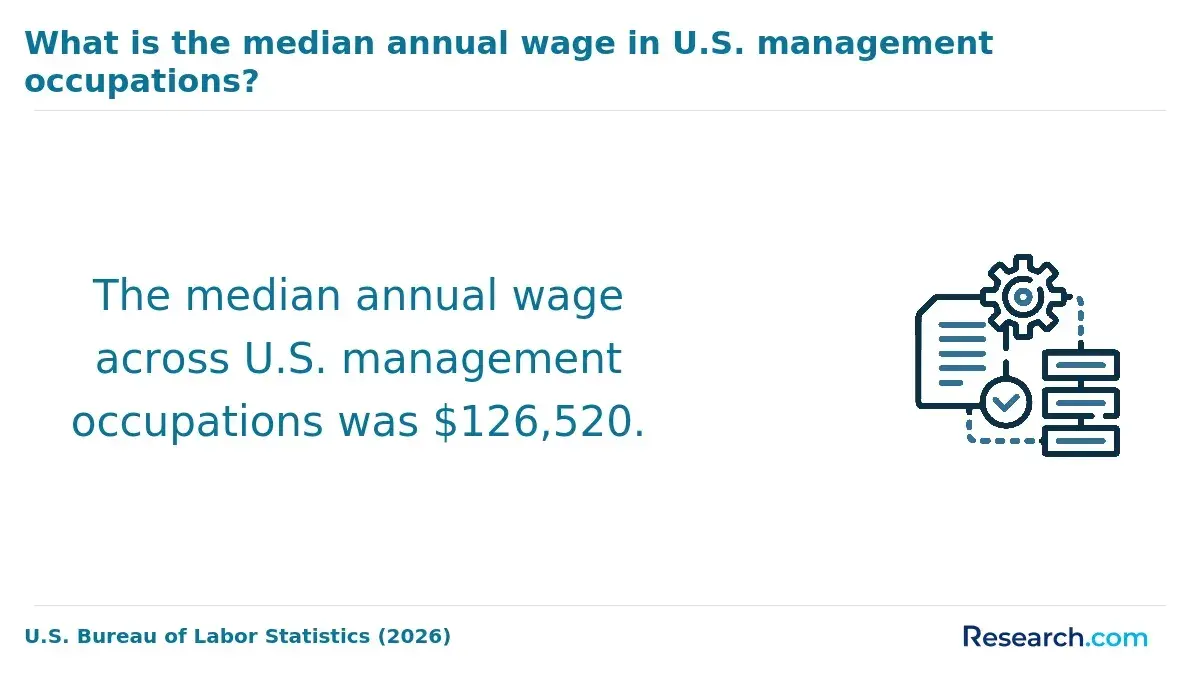
- The U.S. Bureau of Labor Statistics reports a $126,520 median annual wage for management occupations in May 2025 - not a starting salary or an earnings estimate for analytics MBA graduates.
What careers can you pursue after an online MBA in business analytics?
The most realistic next role depends on what you already know. A teacher who has evaluated student outcomes, for example, may be closer to an education operations analyst role than to a software-company analytics manager position. An engineer with project and data experience may be ready for a different transition. In both cases, the MBA can add business judgment; it cannot replace evidence that you can do the target job.
The comparison below separates accessible transitions from roles that usually require more experience or technical depth. Job titles vary by employer, so compare responsibilities rather than titles alone.
| Career path | Typical work | Best starting position for a nonbusiness graduate |
| Business or operations analyst | Examine performance, improve processes, and present recommendations | Experience with reporting, workflows, budgets, or program evaluation |
| Marketing or customer insights analyst | Interpret customer behavior, campaign results, or market research | Research, communications, or customer-facing experience plus relevant analytics projects |
| Analytics project or product manager | Coordinate teams, define business questions, and oversee delivery | Prior project, product, or stakeholder-management experience |
| Management consultant with an analytics focus | Diagnose organizational problems and support client recommendations | Credible industry expertise, strong problem-solving examples, and access to relevant recruiting |
| Analytics manager or director | Lead analysts, set priorities, and connect analysis to strategy | Substantial analytics and people-management experience; usually a later career step |
A practical progression is to move first into an analyst, operations, or project role in an industry you understand, then seek broader decision-making responsibility. If your goal is to build statistical models or production data systems, a technical degree, targeted courses, and hands-on projects may be a more direct route than a management-focused MBA.
Can nonbusiness bachelor's graduates earn an online MBA in business analytics?
Yes. MBA programs can admit applicants with bachelor's degrees outside business, although each school sets its own requirements. Your major matters less than whether you can handle graduate coursework and show relevant professional potential. A psychology graduate may bring research-methods experience; a nurse may understand clinical workflows; a humanities graduate may bring strong communication skills but need more quantitative preparation.
Identify your actual gaps before paying for a program. Review your familiarity with spreadsheets, basic statistics, accounting, finance, and economics. Ask whether a school requires foundation courses, builds introductory material into the MBA, or merely recommends preparation. For comparisons focused on that distinction, see business-school entry requirements for MBA students; confirm the current policy with each school.
What skills does an online MBA in business analytics develop?
The defining skill is using evidence to make and explain business decisions. Depending on the curriculum, students may learn to frame a business question, interpret descriptive and predictive analysis, evaluate trade-offs, build dashboards, and communicate recommendations to people who do not work with data every day. The MBA core adds budgeting, operations, strategy, and leadership context.
That combination is valuable when your previous field supplies the problem and the MBA supplies a decision framework. A healthcare professional, for instance, might use service-demand data to propose a staffing change while accounting for cost and patient needs. Coursework in analytics ethics and data governance also matters when recommendations rely on sensitive or imperfect information.
Check how deeply a program teaches tools such as SQL, Python, statistical modeling, or visualization software. Some emphasize interpreting analysts' work rather than producing advanced models yourself. Match that distinction to the jobs you intend to apply for.
Curricula differ, but an MBA typically combines a broad management core with analytics-focused courses or electives. Core subjects may include managerial accounting, finance, marketing, operations, organizational behavior, and strategy. Analytics study may cover business statistics, data visualization, forecasting, decision models, or customer analytics.
A concentration is not the same as a single analytics elective. Before applying, inspect the published degree plan: determine which analytics courses are required, whether they teach hands-on tools, and whether a capstone or employer project lets you demonstrate the work. For nonbusiness graduates, also check whether foundation coursework adds credits or must be completed before the MBA begins. A program strong in management-level interpretation may fit an aspiring operations leader but disappoint someone seeking intensive programming training.
Requirements vary by school. Applicants commonly encounter a bachelor's-degree requirement and requests for transcripts, a résumé, recommendations, and a statement of goals. Programs differ on professional experience, interviews, GMAT or GRE policies, minimum academic performance, and prerequisite courses. Do not treat a test waiver or lack of formal business prerequisites as a universal policy.
For a stronger application, connect your existing work to a specific analytics-supported career goal. Describe a decision you improved with evidence, even if your job title was not "analyst," and address any quantitative gaps with relevant coursework or projects. If you have prior graduate study, ask whether credits can apply to the MBA: online MBA programs accepting transfer credits can be a starting point for comparison, but schools decide which credits count and whether concentration courses are eligible.
Completion time depends on required credits, foundation courses, term structure, and how many courses you take while working. Some schools offer shorter online MBA completion plans, but a fast schedule can leave less time for technical practice, networking, and a career change.
There is no reliable single price for this degree category. To compare offers, calculate required credits multiplied by the applicable tuition rate, then add mandatory fees, software or materials, and any required travel. Confirm whether foundation courses cost extra and whether published tuition applies to your residency or enrollment status. Employer assistance may reduce your expense, but check reimbursement limits and any obligation to remain employed.
For a career switch, compare the total cost with the value of the recruiting access and applied work you will actually receive. A cheaper MBA without relevant projects or career support may not be the better buy; an expensive program is not justified simply by its name.
Online study can let you keep working and apply coursework immediately. Campus study may make in-person recruiting, team projects, and employer events easier to access. Neither format guarantees flexibility or strong career support: an online MBA may require live evening sessions, group meetings, or visits, while a campus program may offer part-time scheduling.
If you are changing careers, ask each school whether online students can use the same career coaching, employer events, internships, consulting projects, and alumni network as campus students. Also ask how students complete analytics projects and whether recruiting serves the industry and location you want. A list of online MBA programs program list can help you identify schools to investigate, but verify each school's current analytics concentration and online-student access directly.
No single salary figure describes graduates of this concentration. Pay depends on occupation, experience, location, industry, and managerial responsibility. The U.S. Bureau of Labor Statistics reports that the median annual wage for all management occupations was $126,520 in May 2025. That broad occupational figure includes experienced managers across many fields; it is not a post-MBA salary, an entry-level benchmark, or evidence that the degree caused a pay increase.
For a useful financial estimate, compare your current compensation with posted pay for roles you could plausibly obtain after graduation - not with senior-management salaries. Account for tuition, fees, financing, and time spent building experience. If your existing profession has its own advancement route, compare that route too. For example, nurses considering leadership can examine lower-cost graduate business programs focused on MSN/MBA dual degrees, while checking whether the nursing qualification and combined curriculum serve their goals; those programs are not a general alternative for other nonbusiness graduates.
The outlook depends on the occupation you enter, not on the MBA concentration printed on your transcript. The U.S. Bureau of Labor Statistics projects about 1.1 million openings per year, on average, in management occupations from 2025 to 2035, including openings created when workers leave those occupations. That indicates a broad market for managers, not 1.1 million openings for business analytics MBA graduates or for first-time managers.
For your target job, examine its duties and experience requirements alongside its occupational outlook. Employers may want evidence that you can work with data, influence stakeholders, and understand their industry. Projects tied to your prior discipline can provide more persuasive evidence than a concentration label alone.
Which accreditation and certifications matter for business analytics careers?
Start by checking that the university holds recognized institutional accreditation. Then determine whether its business school or program holds specialized business accreditation, such as AACSB, ACBSP, or IACBE accreditation. These are distinct checks: institutional accreditation applies to the university, while specialized accreditation evaluates business education. Verify current status with the accreditor rather than relying only on marketing language.
Most business analytics roles do not require a universal professional license or certification. A tool-specific credential may help demonstrate a skill such as visualization, cloud analytics, or project management, but it is not equivalent to an MBA or proof of job readiness. Choose one only after reviewing target job postings and identifying a skill you can also demonstrate through work samples. If postings consistently call for advanced programming or statistics, targeted technical training may matter more than an additional management credential.
Other Things You Should Know About MBA
Often, yes, if you have permission to share the data and results. When a project uses confidential employer information, ask about creating a public, anonymized version or use an openly available dataset instead.
You can, but changing both industry and function is usually a larger transition. Start by identifying employers that value your existing expertise, then use projects and networking to demonstrate skills that transfer elsewhere.
Possibly. Check the instructor's project rules and obtain your employer's approval before using internal data. Agree on confidentiality and what, if anything, you may include in a portfolio.
Diploma wording is set by the university. Ask the school for its official diploma and transcript policies if the distinction matters to you; do not assume the online and campus credentials are worded identically.
- What Jobs Can You Get with an MBA in Business Analytics? | Tulane University Freeman School of Business https://online-business.tulane.edu/online-mba/articles/jobs-with-mba-in-business-analytics/
- Top Companies Hiring MBA Graduates & What They Pay | CSP Global Concordia University, ST. Paul https://online.csp.edu/resources/article/top-companies-hiring-mba-graduates/
- After Everything: Projections of Jobs, Education, and Training Requirements through 2031 - CEW Georgetown https://cew.georgetown.edu/cew-reports/projections2031/
- MS in Business Analytics vs. MBA: Understanding the differences - D'Amore-McKim School of Business https://damore-mckim.northeastern.edu/resources/cc-msba-vs-mba-understanding-the-differences/
- Explore 7 exciting careers in data analytics - Penn LPS Online https://lpsonline.sas.upenn.edu/features/interested-data-analytics-explore-7-exciting-careers-field
- Jobs That Require an MBA: Career Paths and Salaries | Touro University Worldwide https://www.tuw.edu/business/21-jobs-require-mba/
- What Jobs Can You Get with an MBA in Business Analytics? | FIU College of Business https://business.fiu.edu/academics/graduate/insights/posts/what-jobs-can-you-get-with-an-mba-in-business-analytics.html
- Do You Need a Master's in Analytics? | Northeastern University Graduate Programs https://graduate.northeastern.edu/knowledge-hub/do-you-need-a-masters-degree-to-work-in-analytics/
- Do companies care where you get your MBA? - The Advisor | Tippie College of Business https://tippie.uiowa.edu/about/who-we-are/advisor/mba/do-companies-care-where-you-get-your-mba
- What to Consider When Evaluating Online MBA Programs | Northeastern Online https://online.northeastern.edu/resources/what-to-look-for-when-choosing-an-online-mba-program/