
Is an online MBA in Human Resources worth it for public sector professionals?

Co-Founder and Chief Data Scientist
For a government HR professional, an online MBA can build management skills without requiring a career break - but it may not change a pay grade or qualify you for a new role. Its value depends on your agency's hiring rules, the work you want to do, and what you would pay after employer assistance. This guide compares an HR-focused MBA with more targeted options and shows how to evaluate its cost, curriculum, and career potential before enrolling.
Key Things You Should Know
- An online HR MBA is most likely to pay off when you are moving from HR practice into broader agency leadership and can use employer education assistance.
- Do not treat the $126,520 median annual wage for all U.S. management occupations in May 2025 as an expected MBA salary; it includes many industries and roles outside government.
- Check the target position's qualifications and pay structure before enrolling: an MBA may strengthen an application, but it does not replace required HR experience or ensure a promotion.
Is an online MBA in human resources worth it for public sector professionals?
Often, but not by default. An HR-focused MBA is a general management degree with additional HR coursework. It can be valuable if your next role combines workforce strategy with budgeting, operations, and organizational change.
Its value is less certain if you need only a specific HR skill or if your agency will not recognize the degree in hiring or advancement decisions.
The best option depends on the gap between your current experience and your target job. These comparisons separate the benefits of broad management education from those of more focused training.
| Career objective | Potentially stronger choice | Why |
| Lead HR across an agency or move into general administration | HR-focused MBA | Connects people strategy to finance, operations, and leadership |
| Deepen expertise in compensation, labor relations, or HR practice | Specialized HR master's degree or targeted training | May offer greater depth in the function you use daily |
| Move into policy, public budgeting, or government administration | Master of public administration | May align more closely with governance and public-service systems |
| Meet a near-term qualification or fill a narrow skills gap | Certification, graduate course, or employer training | May require less time and expense than a full degree |
For a realistic return-on-investment test, compare the full amount you would pay - including fees, materials, financing, and any required travel - with a plausible change in your compensation or career options.
Base that change on actual vacancies, promotion rules, and conversations with hiring managers, not MBA-wide earnings claims. A degree can also have nonfinancial value, such as helping you manage a difficult reorganization, but that benefit should be worth the time and cost to you.
What careers can an online HR MBA prepare you for in government?
For someone already working in public-sector HR, plausible next steps include HR manager, workforce planning manager, training and development manager, or a broader administrative leadership role. The MBA's leadership and financial coursework is most useful when a position involves agency-wide staffing decisions, budgets, and coordination with other departments.
Moving from a non-HR public role into HR is a different proposition. Your knowledge of government operations may transfer, but employers may still expect experience with classification, recruiting, employee relations, or applicable civil-service rules.
Review vacancies at your intended level: a qualification that is listed as preferred will have a different effect from one required to apply. An MBA alone does not confer supervisory experience or override a competitive selection process.
How much does an online MBA in human resources cost and take?
There is no reliable single price or completion time for online HR MBAs. Schools differ in required credits, tuition structure, course sequencing, and whether students can change their pace. A published tuition figure may also omit costs that matter to a working public employee.
Use the same cost categories for every program you compare. This makes an apparently cheaper offer easier to assess against your agency's education-assistance policy.
| Cost or time factor | What to verify |
| Tuition and required fees | Total required coursework, pricing basis, and any additional online or program fees |
| Materials and attendance | Books, software, and travel for any required campus sessions |
| Funding | Employer reimbursement limits, eligibility, grade requirements, and repayment obligations |
| Completion time | Course availability, part-time options, maximum time allowed, and leave policies |
Start an affordable online MBA programs comparison with total required cost, not advertised tuition alone. Then ask your HR office whether reimbursement is available for the degree and whether leaving the employer soon after graduation would trigger repayment. If promotion prospects are limited, borrowing substantially for a credential your agency does not require deserves particular caution.
An MBA typically pairs management subjects - such as accounting, finance, operations, analytics, and organizational behavior - with HR-focused study. Depending on the school, that HR study might cover talent management, compensation, employment law, workforce analytics, or organizational change.
A course in HR is not necessarily a formal HR concentration: confirm the designation and required courses in the school's catalog.
For government work, look beyond course titles. Ask whether assignments let you examine public budgeting, merit-based hiring, collective bargaining where applicable, records and privacy obligations, and accountability to multiple stakeholders.
Private-sector case studies can teach useful management methods, but a proposed workforce change may need a different approval process in an agency.
If your goal is HR leadership in a public hospital, a tuition-focused MBA program search covering healthcare-management programs online may provide a useful comparison; inspect the curriculum rather than assuming healthcare management includes substantial HR study.
They can be, but accreditation must be checked for the institution and, separately, the business school or program. Institutional accreditation concerns the university as a whole. Specialized business accreditation, when held, is a different form of review; it does not establish that a particular online HR concentration exists.
Confirm the university's current accreditation through its official disclosures and accreditor, then check whether any claimed business accreditation covers the school offering the MBA.
A list of online MBA programs with accessible admissions acceptance rates can help identify schools to investigate, but admission accessibility is not evidence of accreditation, curriculum fit, or public-sector employer acceptance. Ask your agency whether it has degree-recognition requirements before you apply.
Online study may let you keep working and apply lessons immediately, while a campus program may make in-person peer interaction easier. Neither format is automatically more flexible or more useful for career advancement. An online program can still require live evening classes, group meetings, scheduled exams, or travel; a campus program may offer part-time classes near work.
Compare the actual weekly schedule, required visits, team-project expectations, and access to career services. If agency deadlines or unpredictable staffing needs make fixed attendance difficult, examine online MBA programs with asynchronous classes - and verify whether every required course follows that format. Public-sector peers and alumni contacts may be more relevant to your goals than a large network focused primarily on corporate recruiting.
Requirements vary by university. Applicants commonly need a bachelor's degree and may be asked for transcripts, a résumé, recommendations, or a statement of purpose. Schools set their own policies on professional experience, GMAT or GRE scores, prerequisites, and interviews. A nonbusiness bachelor's degree does not automatically rule you out, but you may need preparation in accounting or quantitative subjects.
Before applying, check each school's published requirements and ask how your public-service experience will be evaluated. If scheduling an application around agency work matters, online MBA programs with rolling admission may offer another timing option; rolling admission does not mean immediate entry or relaxed academic standards.
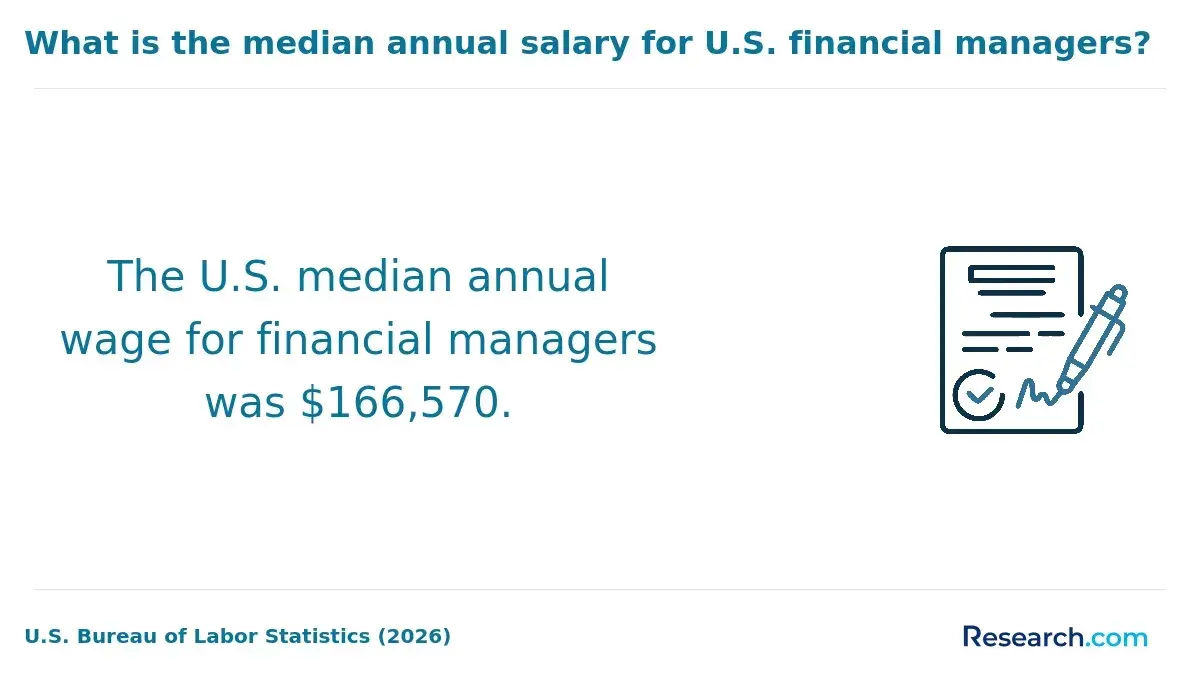
There is no single salary for public-sector professionals with an HR MBA. Pay depends on the employer, location, position, grade or classification, and your experience. For context, the U.S. Bureau of Labor Statistics reports a median annual wage of $126,520 for all management occupations in May 2025. That is not an HR-specific, government-specific, or MBA-graduate figure, so it should not be used as a personal earnings forecast.
For a better estimate, find your current pay range and the published range for a realistic target vacancy. Check whether the degree changes eligibility, placement within a range, or neither. A move between grades may produce a clearer financial case than earning an MBA while remaining in a position with limited pay progression.
HR certifications can demonstrate professional knowledge alongside an MBA's broader management education. Options include credentials offered by SHRM and HRCI; eligibility, examinations, and renewal rules depend on the specific credential and can change. Neither an MBA nor an HR concentration automatically awards certification.
Choose a credential based on vacancies you want, not its name recognition alone. A professional handling federal HR may also benefit more immediately from agency-specific training in staffing, classification, or labor relations.
If your goal is general agency leadership, the MBA may add broader value; if your goal is a specialized HR assignment, focused training or certification may be the more direct investment.
What job outlook can HR MBA graduates expect in the public sector?
The broad U.S. management labor market offers context, not a forecast for government HR graduates. The Bureau of Labor Statistics projects about 1.1 million openings annually across management occupations from 2025 to 2035, including openings created when workers leave those occupations permanently. That figure covers many jobs outside HR and the public sector.
Government opportunities depend on agency budgets, authorized positions, retirements, and hiring rules. An MBA can make you better prepared to compete for some openings, but it cannot create a vacancy.
Before enrolling, examine recent postings from your target employers and ask whether candidates who advanced into those roles typically brought supervisory experience, specialized HR expertise, or a graduate degree.
Other Things You Should Know About MBA
Do not assume you can. Follow your employer's privacy, records, and information-security rules, and obtain approval before using nonpublic material. A school may allow you to work with anonymized or publicly available information instead.
That depends on the university. Ask how the degree and HR concentration appear on both the diploma and official transcript if the wording matters to your employer.
Possibly. Check the school's leave-of-absence, reentry, and maximum-completion policies before enrolling; a break may also affect financial aid or employer reimbursement.
If you are comfortable doing so, the conversation can clarify development opportunities, scheduling support, and whether the degree aligns with upcoming roles. Confirm any funding or advancement promise in the employer's written policy.
- Employer-offered educational assistance programs can help pay for college | Internal Revenue Service https://www.irs.gov/newsroom/employer-offered-educational-assistance-programs-can-help-pay-for-college
- Public Service Loan Forgiveness | studentaid.gov https://studentaid.gov/manage-loans/forgiveness-cancellation/public-service
- Competitive Hiring | U.S. Office of Personnel Management https://www.opm.gov/policy-data-oversight/hiring-information/competitive-hiring/
- Online MBA, Human Resource Management Concentration | North Carolina Agricultural and Technical State University https://onlineprograms.ncat.edu/programs/graduate-degrees/mba/
- Online vs. In-Person College: What Employers Really Think About Each - CityU of Seattle https://cityu.edu/online-vs-in-person-college/
- Online Master's in Business Administration (MBA) | American Public University https://www.apu.apus.edu/online-masters-programs/master-of-business-administration/
- Online MBA vs Full-Time MBA: ROI, Cost and Career Outcomes | Jenkins MBA https://mba.ncsu.edu/2026/04/27/choosing-between-an-online-mba-and-full-time-mba/
- What is an MBA in HR Management | University of Bridgeport https://www.bridgeport.edu/news/what-is-mba-in-hrm/
- Federal Human Resources Management Course IDPMGT7011 | Graduate School USA https://www.graduateschool.edu/courses/federal-human-resources-management
- MPA vs. MBA: What's the Difference? | Northeastern Online https://publicaffairs.northeastern.edu/articles/master-public-administration-mpa-vs-master-business-administration-mba/


