Online MBA in International Business: admissions guide for career changers

Co-Founder and Chief Data Scientist
Changing careers into international business takes more than adding a concentration to your résumé. An online MBA may help you build management skills while keeping your job, but admission policies, practical experience, and recruiting access vary by school. This guide starts with the experience you already have and the role you want next. It explains how to prepare a credible application, compare programs, and decide whether an MBA offers a better route than a narrower qualification or a move within your current employer.
Key Things You Should Know
- A career change is most credible when your application connects existing skills to a specific international business function and identifies the experience you still need.
- Schools set their own rules for work experience, tests, prerequisites, and admission to an international business concentration; verify each policy before applying.
- The U.S. Bureau of Labor Statistics reports a $126,520 median annual wage for management occupations in May 2025, but that is not an MBA graduate salary or a forecast of your return.
What is an online MBA in international business?
An online MBA in international business combines a broad graduate management core with coursework on operating across borders. The MBA core generally covers areas such as finance, marketing, operations, and leadership. International business study may examine market entry, cross-border strategy, global supply chains, and differences in business practices or regulation.
Check the credential's exact structure: a school may offer a formally named concentration, a group of international electives, or only a relevant course. Those are not equivalent. A dual degree is another, typically more extensive option; online dual MBA programs should be evaluated separately from a single MBA with an international business concentration.
Is an online international business MBA worth it for career changers?
It can be worth considering when you have transferable experience and a plausible route into a target role. For example, a domestic supply chain professional may use international coursework and a cross-border project to pursue global operations work. A teacher seeking a first job in trade finance faces a larger functional gap: MBA coursework alone is unlikely to replace finance experience.
Assess the change on two axes: function and industry or geography. Changing one is usually easier to explain to an employer than changing both at once. Before applying, identify the job titles you want, review their experience requirements, and look for projects or responsibilities you can pursue now. An MBA becomes more compelling if its career support and applied work address the gaps you find. If you need only a specific skill, a targeted course, employer training, or a specialized master's may cost less and get you there more directly.
How do you choose an accredited online international business MBA?
Start by confirming that the institution holds recognized institutional accreditation and that the online MBA actually offers the international business curriculum you want. Then check whether the business school has programmatic accreditation, such as AACSB, ACBSP, or IACBE. Institutional and business-school accreditation answer different questions; neither establishes that a particular concentration is available online.
For a career change, compare the courses and the means of gaining relevant experience - not just the concentration name. Ask whether online students can use career coaching, alumni networks, employer events, and applied projects, and whether any residency or live class conflicts with work. If your academic record is a concern, reviewing online MBA programs for low-GPA applicants may help you find policies to investigate; only the school can confirm your eligibility and whether a test can strengthen your application.
Requirements are set by each university, not by the specialization as a whole. Applicants commonly need a bachelor's degree and may be asked for transcripts, a résumé, a statement of purpose, and recommendations. Schools differ on professional experience, GPA expectations, interviews, GMAT or GRE policies, and whether foundational business coursework is required. A nonbusiness bachelor's degree does not automatically rule you out.
Your preparation should demonstrate both readiness for graduate business study and a credible career transition. Use the following sequence to build an application around evidence rather than a broad interest in working globally.
- Choose a target function and compare its job requirements with your current responsibilities; note transferable achievements and concrete gaps.
- Check each school's current admissions page for degree, experience, testing, deadline, prerequisite, and concentration-access policies.
- Address quantitative gaps through relevant coursework or work examples if needed; do not assume a foundation course is mandatory unless the school says so.
- In your statement and recommendations, connect measurable work contributions to your intended role and explain why that program's curriculum and resources fit the transition.
- Confirm when a decision will arrive relative to your funding and work plans; online MBA programs with rolling admission may offer a different application timetable, but rolling admission does not mean immediate enrollment.
If you earned your degree outside the United States, also ask about credential evaluation, English-language documentation, and eligibility to enroll from your location. These requirements vary by school.
The management core teaches you to evaluate budgets, markets, teams, and operating decisions. International coursework applies those skills to problems such as selecting an overseas market, adapting a product strategy, coordinating suppliers across countries, or assessing currency and regulatory exposure. Course titles and depth differ, so read the catalog rather than assuming every program covers trade law or advanced finance.
For a career changer, the most valuable assignment may be one you can discuss in an interview: a market-entry analysis, consulting project, or cross-border operations case. Ask who defines the project, whether you can work with an external organization, and what you can share with employers afterward. Management-level global strategy coursework is not a substitute for specialized legal, language, logistics, or country-specific expertise.
Completion time depends on required credits, term length, course availability, and whether you study part time or at an accelerated pace. A concentration can add credits at one school and fit within existing electives at another. Request a course sequence for your intended enrollment pace, including when international electives run and whether a capstone must be taken last.
For cost, calculate required credits multiplied by the school's published tuition rate, then add mandatory fees, materials, and any required travel. Check whether the rate changes with residency or enrollment status, and compare the result with employer assistance and the income you would give up if you reduced work hours. Even online MBA tuition comparisons in healthcare management illustrate why specialization-specific comparisons matter: their prices do not establish the cost of an international business MBA. Obtain a current, program-specific estimate before borrowing or enrolling.
The better format depends on how you expect to make the career change. The distinctions below are tendencies to investigate, not guarantees about every school.
| Decision factor | Online MBA | Campus-based MBA |
| Continuing employment | Often easier to combine with a current job, subject to live classes and group work | A full-time format may require a substantial break from work |
| Recruiting and relationships | Access and participation depend on services available to online students | May provide more in-person recruiting and cohort contact, depending on the program |
| Practical transition work | May rely on projects within a current job or remote consulting work | May offer more time for internships in a full-time program |
If staying employed is essential, investigate graduate management programs with asynchronous courses, but verify scheduled sessions, team meetings, and travel separately. If you need an internship and structured recruiting to enter an unfamiliar function, a campus-based full-time program may be the stronger option despite its greater opportunity cost.
Potential paths include international business development, global supply chain management, market-entry strategy, and regional operations. The realistic entry point depends on your existing function. A marketer may be competitive for an international marketing assignment; an operations professional may move toward cross-border sourcing. Employers may expect relevant industry knowledge, language ability, or direct international experience in addition to the MBA.
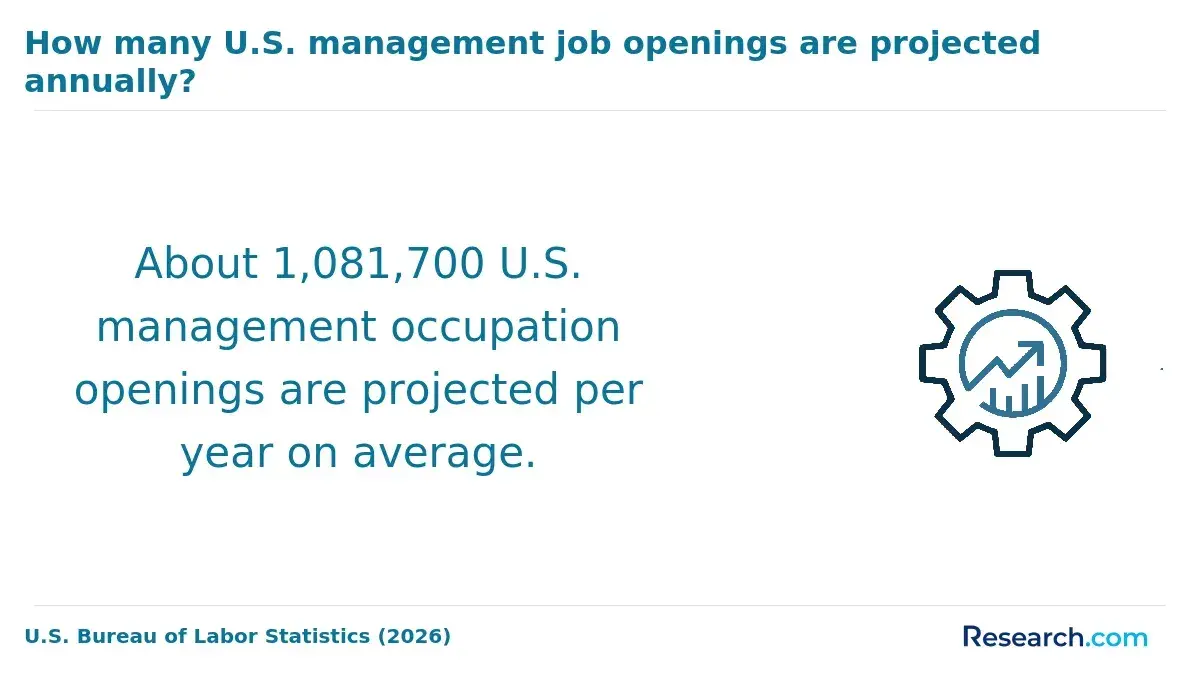
The U.S. Bureau of Labor Statistics projects about 1.1 million openings per year, on average, across all management occupations from 2025 to 2035, including openings created when workers leave those occupations. That broad figure signals a large management labor market, not the number of international business vacancies. To test a particular path, compare current job descriptions and pursue a cross-border project, vendor relationship, or internal transfer that gives you evidence of relevant work.
There is no single reliable salary for international business MBA graduates: pay varies by occupation, experience, location, employer, and responsibility. The U.S. Bureau of Labor Statistics reports a median annual wage of $126,520 for management occupations in May 2025. That figure covers workers across management roles - not MBA graduates specifically - and should not be treated as an expected salary for someone making a first career switch.
For a useful personal estimate, compare pay for the exact roles and U.S. locations you are targeting, then distinguish entry points you could reach now from roles requiring years of functional experience. Use the plausible difference from your current compensation, not the broad management median, when judging whether tuition and time are affordable.
Do international business MBA graduates need certifications or licenses?
The MBA itself does not generally confer a professional license, and there is no universal certification required for international business management. Some target jobs may value additional qualifications in areas such as project management or supply chain work; regulated activities can have separate requirements. Check the rules for the specific occupation and employer rather than assuming a concentration qualifies you for it.
Choose an additional credential only after identifying a hiring gap. Demonstrated experience with an international customer, supplier, or market may do more for an adjacent career move than collecting certifications without relevant work to support them.
Other Things You Should Know About MBA
Not generally as a universal MBA admissions rule, though a school or particular opportunity may have its own requirements. Language skills can matter substantially for specific markets and roles.
Possibly. Transfer-credit limits, course equivalency, and how recently you completed the work are school-specific. Get a written evaluation before assuming credits will reduce your cost or timeline.
Recognition varies by country, employer, and the institution's standing. If you plan to work outside the United States, check local degree-recognition rules and ask prospective employers how they view the credential.
Some can, but eligibility, scheduling, and career-service support vary. Ask whether online students can use the school's internship resources and whether the program's pace leaves time to complete one.
- Tests & Waivers - NYU Stern - New York University https://www.stern.nyu.edu/programs-admissions/masters-programs/ms-accounting/admissions/tests-waivers
- Frequently Asked Questions | MBA | MIT Sloan https://mitsloan.mit.edu/mba/admissions/frequently-asked-questions
- MBA Requirements: What You Need to Get Into Business School | Southwest Minnesota State University https://online.smsu.edu/resources/article/mba-requirements/
- How to get the best online MBA experience | Indiana Kelley https://kelley.iu.edu/programs/online/mba/articles/how-to-get-the-best-online-mba-experience.html
- Online vs. In-Person MBA: Benefits and Differences | Freeman News https://freemannews.tulane.edu/2025/11/04/online-vs-in-person-mba-benefits-and-differences
- How to Write a Career Change Resume - Template - Wharton | Wharton Executive Education https://executiveeducation.wharton.upenn.edu/thought-leadership/wharton-online-insights/how-to-write-a-career-change-resume/
- Verifying International Credentials | Harvard Extension School https://extension.harvard.edu/registration-admissions/degree-program-admissions/verifying-international-credentials/
- MBA Requirements: What You Need to Apply in 2026 | SCU https://www.scu.edu/business/blog/admissions/mba-requirements/
- GRE and GMAT Test Score and Waiver Options | umn.edu https://carlsonschool.umn.edu/graduate/resources/gre-gmat-test-score-waivers
- Online MBA vs. traditional MBA for working professionals | Capella University https://www.capella.edu/blog/business/online-mba-vs-traditional-mba/