Is an Online MBA in Supply Chain Management Worth It for Nonbusiness Bachelor's Graduates?

Co-Founder and Chief Data Scientist
A nonbusiness bachelor's degree can be an asset in supply chain work, but it may leave gaps in accounting, finance, and management. An online MBA with a supply chain management concentration could help bridge those gaps while you keep working. It is also a substantial investment, and the degree alone will not qualify you for every supply chain role.
This guide helps graduates from fields such as engineering, science, healthcare, and the humanities assess career fit, preparation, program costs, and less expensive alternatives.
Key Things You Should Know
- A nonbusiness bachelor's degree does not automatically bar admission; schools set their own experience, testing, and foundation-course policies.
- The MBA is most compelling when you can pair management training with relevant work experience and a credible route to a specific supply chain role.
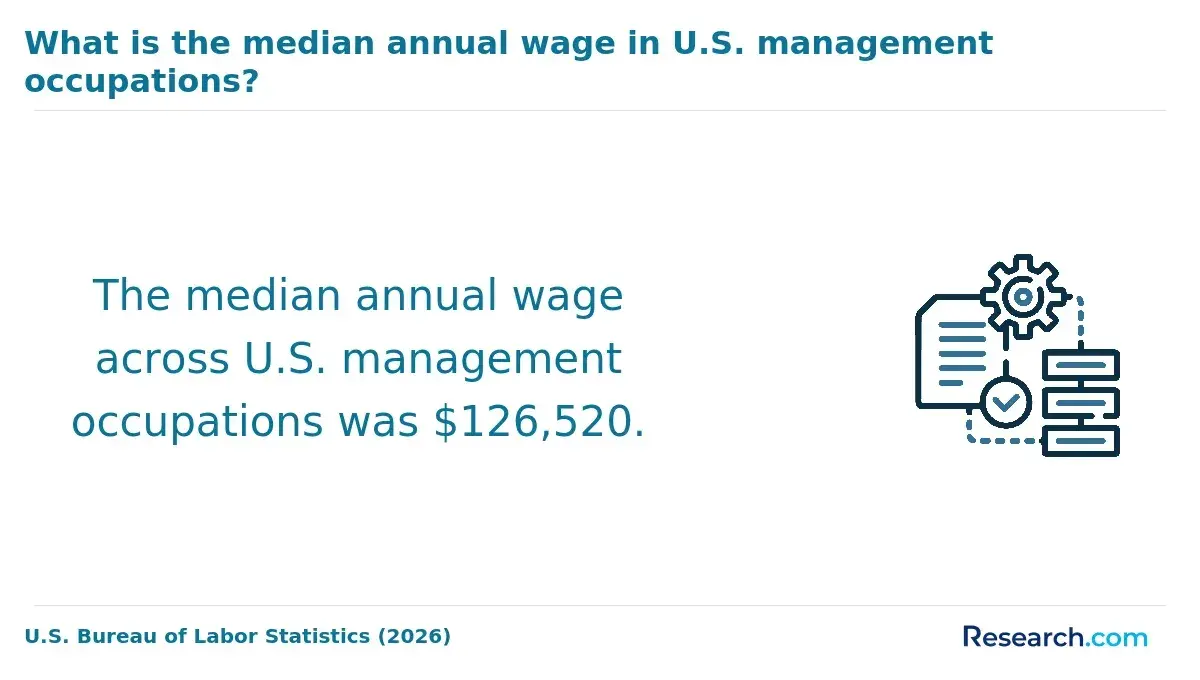
- The $126,520 May 2025 median wage for management occupations describes a broad U.S. occupational group, not supply chain MBA graduates or a likely post-MBA salary.
Is an online MBA in supply chain management worth it for nonbusiness graduates?
It can be worth it if the degree closes a specific business-skills gap and helps you pursue an attainable next role without taking on an unmanageable cost.
A supply chain MBA combines a broad management degree with coursework in how organizations source materials, plan demand, move goods, and manage operational risk. Its value depends less on your undergraduate major than on your experience, target job, and access to relevant work while studying.
For an engineer already improving production processes, the MBA may support a move into operations leadership. For a healthcare professional involved in purchasing, it may add financial and supplier-management skills. A humanities graduate with no operations experience faces a different challenge: the MBA can teach the language of business, but employers may still want evidence of forecasting, procurement, inventory, or logistics work.
Compare the degree's full cost, including fees, borrowing costs, and time, with a realistic next position, not an executive salary. Employer tuition assistance and a chance to apply coursework at work strengthen the case.
If your goal is an analyst or buyer role and you lack functional experience, a targeted course, certification, or entry-level assignment may be a more direct first step. Be careful with search results labeled affordable online MBA programs. An MSN/MBA dual degree, for example, serves a different purpose and should not be priced as a supply chain MBA.
Can you earn a supply chain MBA with a nonbusiness bachelor's degree?
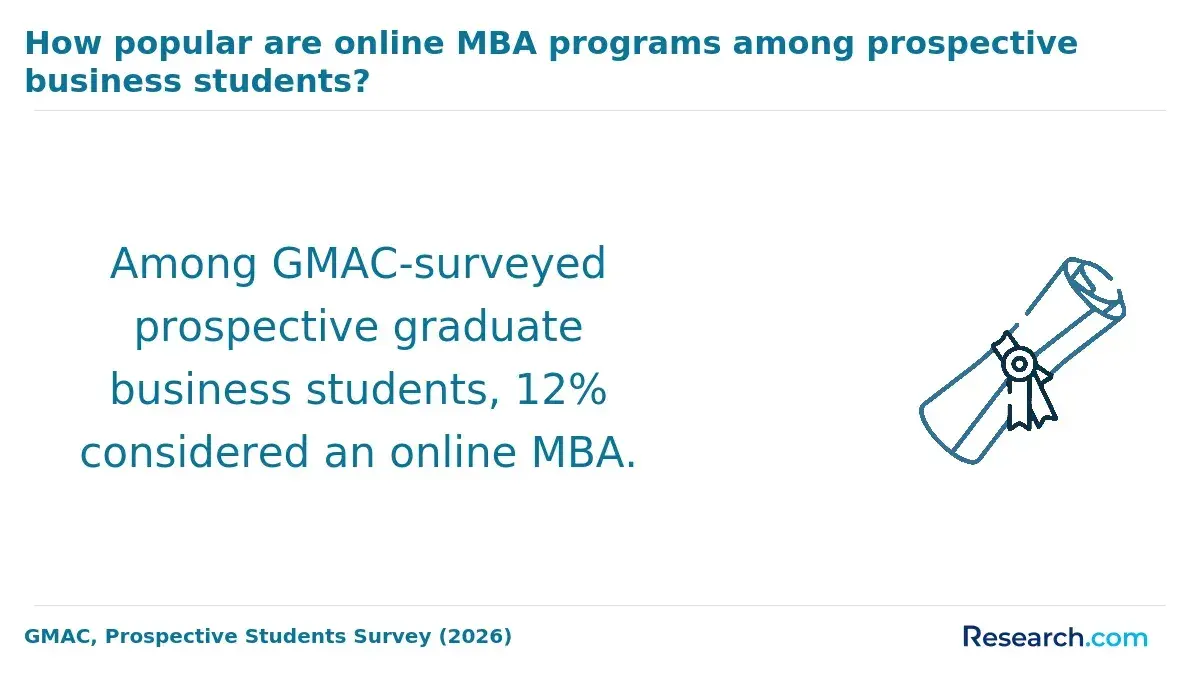
Many MBA programs consider applicants from varied academic backgrounds, although each school sets its own eligibility rules. Your previous discipline may be useful: engineering can inform production decisions, science can support quality work, and healthcare experience can provide context for medical purchasing or distribution.
Preparation needs vary. A graduate who already uses statistics and manages budgets may need less review than someone who has not studied quantitative methods or financial statements.
Schools may offer introductory accounting, economics, or quantitative courses; some require them, while others incorporate foundations into the MBA core. Ask whether any additional courses count toward the degree and add to tuition or completion time.
Relevant job experience can matter more than the title of your bachelor's degree. If you have a technical background, comparisons of online MBA programs for engineers can provide a starting point, but check each program's actual supply chain curriculum rather than assuming an operations elective constitutes a formal concentration.
What careers can an online supply chain MBA prepare you for?
The degree can support advancement in procurement, logistics, inventory planning, manufacturing operations, and supplier management. It does not establish the hands-on experience employers may require. The most plausible next role usually connects your existing expertise to a supply chain problem.
The distinctions below can help you judge whether your background supports an adjacent move or a larger career change.
| Starting background | Potential direction | Experience to demonstrate |
| Engineering or manufacturing | Production planning or operations management | Process improvement, capacity decisions, and cross-team coordination |
| Healthcare or life sciences | Medical supply procurement or distribution | Vendor work, product requirements, and operational constraints |
| Data or quantitative work | Demand planning or supply chain analytics | Forecasting, data quality, and communication of recommendations |
| Little related work experience | Buyer, coordinator, or analyst role | Practical exposure to purchasing, inventory, or logistics systems |
Management roles generally require a record of making decisions and leading work, not simply an MBA. If you are changing functions, seek a supply chain project, internal rotation, or employer-sponsored assignment during the program. Ask career services whether online students can use relevant recruiting events and employer connections; access may differ from that of a full-time campus MBA.
Both formats can teach the MBA core and supply chain concepts. The practical difference is often how you build experience and relationships while enrolled. Online study may let you keep earning and apply lessons at work; a campus-based full-time program may offer more time for internships and structured recruiting, often at the cost of leaving a job.
Online does not necessarily mean self-paced. When comparing formats, request the schedule for live classes, group meetings, exams, and any required campus visits. Listings of graduate management programs with asynchronous courses can narrow a search, but verify each requirement directly with the school.
A career changer who needs an internship should also ask whether the online MBA permits one and whether career services help online students pursue it.
The MBA core typically develops management-level skills in accounting, finance, strategy, leadership, and decision-making. Supply chain coursework may address procurement, operations, logistics, demand planning, inventory, supplier relationships, and risk. Schools differ in which subjects are required, how deeply they are taught, and whether "supply chain management" is a formal concentration or a set of electives.
For a nonbusiness graduate, finance and accounting can be as consequential as the specialization: managers must weigh service levels, working capital, and the cost of holding inventory.
Analytics courses may teach you to interpret forecasts and make decisions, but an MBA should not be assumed to provide the technical depth of a specialized analytics master's degree. Before enrolling, inspect course descriptions and ask whether applied projects use real operational data you are permitted to access.
Requirements vary by school. Applications commonly ask for bachelor's-degree transcripts, a résumé, and a statement of goals; programs may also request recommendations, an interview, or GMAT or GRE scores.
Some waive tests under stated conditions or do not require them. Work-experience minimums and prerequisite policies also differ, so do not assume your nonbusiness degree creates a universal extra requirement.
Explain the connection between your prior discipline, your work, and the supply chain position you want. An application is stronger when it identifies a concrete business problem you have addressed, or have a realistic opportunity to address, than when it relies only on an interest in management.
Ask admissions whether foundation courses are mandatory, how they affect cost, and whether your quantitative or professional experience can satisfy preparation expectations.
There is no single duration or price for an online supply chain MBA. Completion time depends on required credits, course sequencing, foundation courses, and whether you study part time. A faster schedule can reduce elapsed time but make it harder to keep working or take on a useful supply chain project.
Compare total program cost, not the advertised price per credit alone: multiply tuition by required credits, then account for mandatory fees, additional foundation courses, materials, required travel, and borrowing costs. Subtract employer assistance or other funding you can actually use. Ask whether the supply chain concentration adds credits or fees and whether tuition can change before you finish.
Programs described as MBA programs with adaptable schedules still need a close review of course availability and deadlines. Request a term-by-term plan for your intended pace so that a lower-cost or shorter-looking option does not conceal courses offered infrequently.
No single salary or job-growth figure describes supply chain MBA graduates. Pay depends on the occupation, location, industry, scope of responsibility, and experience brought to the job.
The U.S. Bureau of Labor Statistics reports a $126,520 median annual wage for management occupations in May 2025. That broad figure is not an MBA outcome or a reasonable starting-salary estimate for someone entering supply chain work.
BLS projects management occupations overall to grow faster than the average for all occupations from 2025 to 2035. That is useful context for long-term management ambitions, but it does not measure demand for a particular supply chain concentration.
For a personal payoff estimate, compare your current compensation with pay for specific roles you could plausibly obtain, then consider program cost and how long advancement might take. Do not attribute an experienced manager's entire salary to the MBA.
Supply chain management roles generally do not require a universal professional license, and an MBA concentration is not a license. Individual jobs may have employer-specific requirements, while regulated industries can impose separate rules on particular activities.
Certifications can demonstrate focused knowledge in areas such as procurement, logistics, or inventory management, but their value depends on the role and the certifying organization's eligibility rules.
For a nonbusiness graduate seeking an initial functional role, a targeted credential combined with relevant work may cost less and signal a clearer skill set than an MBA. For someone moving toward broader leadership, certification and an MBA can serve different purposes rather than substitute for each other.
How can you choose an accredited online supply chain MBA program?
First confirm that the university holds recognized institutional accreditation. Then check whether the business school holds specialized accreditation, such as AACSB, ACBSP, or IACBE, if that distinction matters to your goals. Institutional and business-school accreditation are different; neither confirms that a particular supply chain concentration is available online.
Use the same questions for each program you consider so that marketing claims do not stand in for comparable evidence:
- Is supply chain management a formally designated concentration, and which required courses appear on the current curriculum?
- What is the full cost at your planned pace, including any foundations, fees, and required travel?
- Which live sessions, group projects, campus visits, and course-sequencing constraints apply?
- Can online students use the career services, applied projects, and employer connections relevant to your target role?
If collaborative work is a scheduling obstacle, research online MBA programs with limited group work options, then confirm the actual expectations for each required course. Choose the program that fits your career transition and budget, not merely the one with the most convenient label.
Other Things You Should Know About MBA Programs
That depends on the school. It may appear on a transcript rather than the diploma. Ask the registrar how the completed credential is recorded.
Only with appropriate employer permission and in compliance with the program's rules. Ask whether the assignment accepts anonymized or publicly available data instead.
Not necessarily. Technical expectations vary by course; review syllabi for analytics software or programming requirements before committing.
Yes. Public agencies and nonprofits also make purchasing, distribution, and resource-allocation decisions. Their budgets, accountability requirements, and hiring practices may differ from those of private employers.
- Cost of Attendance (Budget) | 2025-2026 Federal Student Aid Handbook https://fsapartners.ed.gov/knowledge-center/fsa-handbook/2025-2026/vol3/ch2-cost-attendance-budget
- Types of Financial Aid: Grants, Work-Study, and Loans | studentaid.gov https://studentaid.gov/understand-aid/types
- DAPIP | Homepage - Office of Postsecondary Education (OPE) https://ope.ed.gov/dapip/
- Online MBA in Operations and Supply Chain Management | SUU https://online.suu.edu/degrees/business/mba/operations-supply-chain-management/
- How Long Does It Take to Finish an Online Degree? | NMSU Global Campus https://global.nmsu.edu/blog/general/how-long-does-it-take-to-finish-an-online-degree/
- Full-Time MBA Pre-MBA Knowledge | Lehigh Business https://business.lehigh.edu/academics/graduate/masters-programs/full-time-mba/pre-mba-knowledge
- Employer Tuition Reimbursement: How It Works and How to Pay for College | Winston-Salem State University https://ramsonline.wssu.edu/blog/employer-education-benefits/
- Business Foundations | uncg.edu https://bryanbusinessreport.uncg.edu/graduate-programs/certificates/business-foundations/