Online MBA in Entrepreneurship: Curriculum and Workload for Career Changers

Co-Founder and Chief Data Scientist
If you are changing careers, an online MBA in entrepreneurship can help you learn how businesses make decisions while you keep working. But the course title alone will not tell you whether the program teaches the skills you lack - or whether its schedule leaves room to build a new career.
This guide separates the MBA core from entrepreneurship coursework, explains the work behind an online class, and shows how to compare programs against your target role or business idea. You will also see when a shorter, more direct route may serve you better.
Key Things You Should Know
- An entrepreneurship MBA combines broad management study with courses that may cover venture testing, funding, and growth; the depth of the specialization varies by school.
- For career changers, projects, recruiting access, and time for networking can matter as much as coursework. Online delivery does not necessarily mean self-paced study.
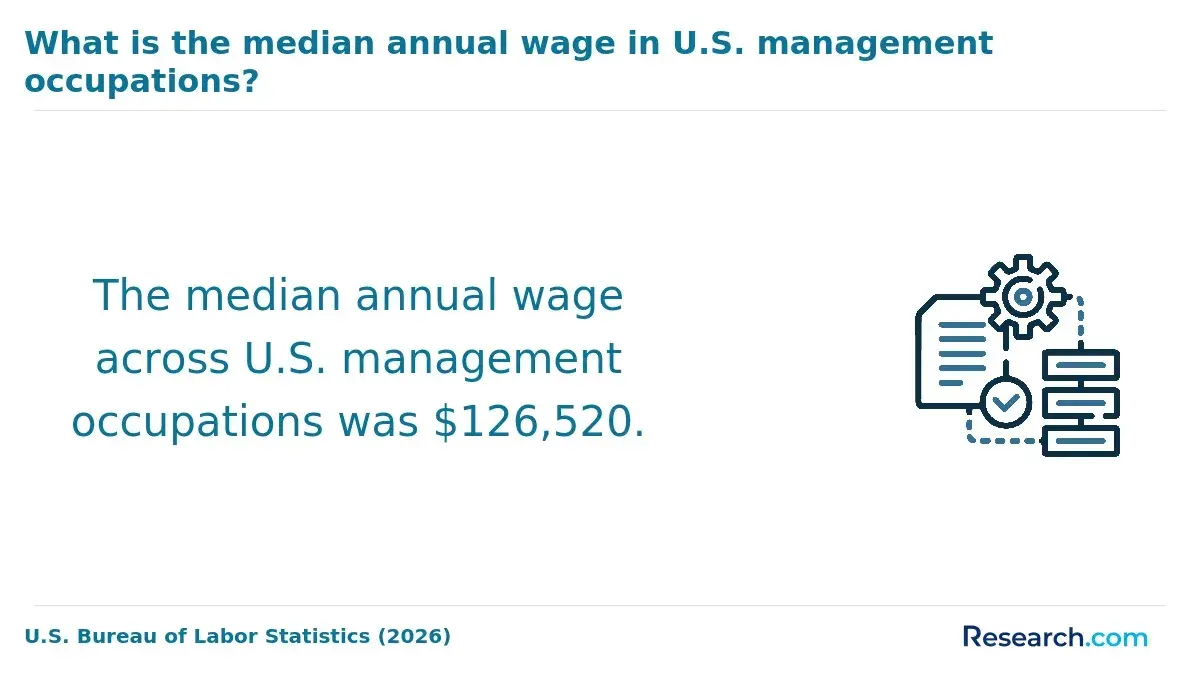
- The US median annual wage for management occupations was $126,520 in May 2025, according to the Bureau of Labor Statistics (BLS), but that is an occupation-wide figure - not an expected salary for new MBA graduates.
What is an online MBA in entrepreneurship?
An online MBA in entrepreneurship is a graduate management degree delivered primarily online, with coursework focused on starting, evaluating, or growing ventures. Usually, students complete an MBA core and then take entrepreneurship electives or a formal concentration. A school offering one startup elective does not necessarily offer an entrepreneurship concentration; check the degree requirements and how the specialization appears on the transcript.
For a career changer, the distinction matters. The MBA core can fill gaps in finance, marketing, and organizational decision-making, while entrepreneurship courses provide a setting in which to apply those skills to an uncertain market. Neither component substitutes for customers, industry knowledge, or experience doing the work required in a target job.
What does an online MBA in entrepreneurship curriculum include?
Curricula differ, but the clearest way to compare them is to separate foundational management courses from venture-focused work. The table shows what each component is likely to contribute - not a required course list shared by all schools.
| Curriculum component | What you may study | Why it matters to a career changer |
| MBA core | Managerial accounting, finance, marketing, operations, strategy, analytics, and leadership | Builds the business vocabulary and decision-making skills needed when moving from a nonbusiness function |
| Entrepreneurship courses | Customer discovery, business models, venture finance, innovation, and growth decisions | Helps test an opportunity rather than assuming a promising idea is a viable business |
| Electives | School-dependent options such as product management or small-business operations | Lets you address a specific gap, if the relevant courses are offered online and available when needed |
| Applied work | A possible capstone, venture plan, consulting engagement, or customer-research project | Can produce evidence of skills and contacts, provided the project offers meaningful external feedback |
Expect management-level application rather than comprehensive training in every startup function. A venture-finance course, for example, may teach you to evaluate funding and cash needs; it will not make you a licensed accountant or an experienced investor. Ask to see recent syllabi and project briefs. A pitch deck assessed only in class offers different career value from work tested with prospective customers or an external organization.
How demanding is the workload in an online entrepreneurship MBA?
The workload depends on course design, enrollment pace, prior business preparation, and whether assignments require other people's participation. Recorded lectures may fit around work, but readings, financial models, case analyses, and group projects still need scheduled time. A career changer new to accounting may spend substantially longer on a finance assignment than a classmate who uses it at work.
Entrepreneurship courses can add less predictable work: interviewing potential customers, revising an idea after feedback, or coordinating a team across time zones. Live discussions, timed exams, and campus visits may also be required even when a program describes itself as online.
Before enrolling, request a sample course calendar and ask about expected study time, live attendance, group-project frequency, and whether courses run simultaneously or one at a time. Compare those commitments with your work schedule and the time you need for job-search conversations or venture testing. If completing the degree quickly would crowd out those activities, a slower pace may be the more useful choice.
The better format depends less on where lectures occur than on how you will gain practical experience and meet people in your target field. These differences are especially important when you are changing both function and industry.
| Decision factor | Online MBA | Campus-based MBA |
| Employment while studying | Often easier to retain a job, subject to live sessions and travel requirements | May require more daytime availability, especially in a full-time program |
| Peer collaboration | May rely heavily on scheduled video meetings and remote projects | Can make informal, in-person collaboration easier |
| Career switching | Access to internships, employer events, and recruiting varies; verify online-student eligibility | Some full-time programs organize substantial on-campus recruiting, but access still varies by school |
| Venture development | May let you test an idea in the market where you live | May offer easier in-person access to a campus incubator or local startup community |
If your move depends on a structured internship or intensive recruiting, ask for outcomes and services specific to the online MBA, not the school's full-time MBA. If you already manage teams and want a format built around experienced leaders, compare the schedules and costs of executive MBA tuition and formats online executive MBA programs as well; an executive MBA is not automatically the better route into a new function.
Requirements are set by each school, not by the entrepreneurship specialization as a whole. Applications commonly call for a bachelor's degree, transcripts, a résumé, and a statement of goals; schools differ on recommendations, interviews, work experience, and GMAT or GRE policies. A nonbusiness bachelor's degree does not automatically rule you out, though a program may require foundation coursework or recommend preparation in quantitative subjects.
Career changers can make a stronger case by connecting past work to a specific next step. A teacher developing an education service, for example, can explain their knowledge of users while identifying what they still need to learn about pricing and operations. Before applying, confirm the current test policy, prerequisites, deadlines, and whether the online specialization accepts new students. Treat suggested preparation separately from formal admission requirements.
Completion time depends on required credits, course sequencing, enrollment intensity, and whether entrepreneurship courses are offered every term. Accelerated study can shorten the calendar but may leave less room for customer research or a career search. If timing is your main constraint, compare the course schedules of programs designed to finish an MBA online faster degree programs before assuming any online MBA can be sped up.
Without a named school and current tuition schedule, there is no reliable single price for this degree. Calculate your likely cost using the school's published rates and your intended pace, including the following items:
- Tuition for all required credits, plus mandatory program and university fees.
- Books, software, and any required travel or residency costs.
- Financing costs and income you would give up if you reduce work hours.
- Employer assistance, scholarships, or other funding you are actually eligible to receive.
Ask how long the quoted tuition rate is valid and what happens if a required elective is unavailable on your planned schedule. For a career changer, the key affordability test is not simply whether payments fit the monthly budget: it is whether the degree's cost leaves you enough financial flexibility to pursue an uncertain transition or launch a venture.
Start with the experience you already have and name the change you want to make. Moving from healthcare operations into a health-service venture may draw directly on your knowledge of customers and regulation. Moving from an unrelated field into venture investing is a larger transition that may require relevant deal, finance, or startup experience beyond the MBA. Career changers from healthcare can also compare business degrees for healthcare managers if their goal is organizational leadership rather than building a venture.
Use the program to close identifiable gaps and produce evidence that someone outside your classroom can assess. These steps make the degree more useful for a transition:
- Identify a target role or customer problem, then compare its demands with your current skills.
- Choose electives and projects that address the largest gap, such as financial planning or customer research.
- Seek external feedback through an employer project, prospective customers, mentors, or relevant industry contacts.
- Confirm that career services and recruiting opportunities are open to online students before depending on them.
If you need only a specific skill and already have access to the right industry, a targeted course, mentoring relationship, or hands-on project may be faster and less expensive than a full MBA.
Graduates may pursue a venture of their own, expand a small business, or seek roles in product development, business development, innovation, or operations. The plausible next job depends heavily on prior experience. A marketer who has launched campaigns may be able to move toward growth work in a startup; an applicant without product experience may need a project portfolio or an adjacent role before becoming a product manager.
Entrepreneurship coursework is particularly useful when a role involves assessing opportunities, coordinating across functions, or making decisions with incomplete information. It does not confer a job title or replace technical expertise. If your target is primarily systems or technology management rather than venture creation, compare more directly aligned MBA degree options for working adults degree programs before committing to entrepreneurship electives.
There is no single meaningful salary for "MBA entrepreneurship graduates": a founder's income, an entry-level career switcher's pay, and an experienced manager's compensation reflect very different work. For context, the BLS reports that the median annual wage across US management occupations was $126,520 in May 2025. That figure includes workers with varied education and experience; it is not a starting salary, an MBA outcome, or evidence that the degree caused higher pay.
The BLS projects management occupations overall to grow faster than the average for all occupations from 2025 to 2035, with about 1.1 million openings annually on average from growth and replacement needs. That broad outlook does not predict demand for founders or guarantee access to management jobs. For a useful earnings estimate, identify your intended occupation, location, and likely entry point, then compare those with your current pay and the full cost of study.
How do you choose an accredited online MBA in entrepreneurship?
First, verify that the institution holds recognized institutional accreditation and check whether its business school or MBA has specialized accreditation. These are different forms of review; a claim that a university is accredited does not establish that its business school holds a particular specialized credential. Confirm the status through the accreditor and school rather than relying on a program advertisement.
Then compare programs against your intended transition: required entrepreneurship courses, project access, live-session times, total cost, and career support available to online students. Ask whether you can work with real customers or organizations and whether graduates pursuing your target path have access to relevant alumni. If you are transitioning from military service, compare business-school options for online MBA programs and veterans and verify your own eligibility for any education benefits before estimating cost.
A strong choice is the program whose schedule, projects, and connections help you take the next credible step - not necessarily the one with the most entrepreneurship courses. If you cannot identify how its specific offerings improve your transition, pause before paying for the degree.
Other Things You Should Know About MBA
Sometimes. Ask whether instructors allow personal ventures, what evidence projects require, and how the school handles confidential information or intellectual property.
Usually not, unless a particular program says otherwise. A clear career goal and a willingness to investigate real customer problems can be more useful than an untested pitch.
Policies vary. Ask whether completed courses would count toward another concentration and whether changing paths would delay graduation.
That depends on its policy. Check eligibility, required grades, continued-employment terms, and repayment obligations before relying on reimbursement.
- How An Online MBA Can Lead to Career Change | Tulane University Freeman School of Business https://online-business.tulane.edu/online-mba/articles/online-mba-career-change/
- Time on Task in Online Courses | RIT https://www.rit.edu/teaching/time-task-online-courses
- Choosing the Right Online MBA Program | Gies College of Business https://giesbusiness.illinois.edu/news/2025/10/03/choosing-the-right-online-mba-program--a-comprehensive-guide-to-asynchronous--synchronous--and-hybrid-programs
- Mentorship and Coaching for Working Professionals in Online MBA Programs - The Quantic Blog https://quantic.edu/blog/2024/06/05/mentorship-and-coaching-for-working-professionals-in-online-mba-programs/
- How MBA Students Build Career Connections | News at Poole College https://poole.ncsu.edu/news/2026/05/29/how-graduate-business-students-build-networks-that-launch-careers/
- A Glimpse Into the Online MBA Curriculum | The University of Memphis https://www.memphis.edu/uofmglobal/blog/uofm-global-the-online-mba-curriculum.php
- The Importance of Networking in an MBA Program | marymount.edu https://marymount.edu/blog/the-importance-of-networking-in-an-mba-program-building-connections-for-life/
- How to Pay for an MBA: Smart Funding Strategies Explained | Jenkins MBA https://mba.ncsu.edu/2026/05/07/paying-for-your-mba-scholarships-employer-benefits-and-loans/
- Flexible MBA Formats: Compare Accelerated, Evening & Online Programs | YSU https://online.ysu.edu/degrees/business/mba/general/flexible-formats-comparing-accelerated-evening-programs/
- What Career Changers Should Look for in Online Degrees | UGA Online https://online.uga.edu/news/what-career-changers-should-look-for-in-online-degrees/