Online MBA in Project Management: curriculum and workload for international applicants

Co-Founder and Chief Data Scientist
An online MBA in project management can build business leadership skills without requiring a move to the United States. For international applicants, though, the decision depends on more than the course list: live classes may fall outside local working hours, group projects can cross time zones, and enrollment does not confer US work authorization. This guide explains what you are likely to study, how to assess the workload, and which academic and practical details to confirm before applying. It will help you decide whether a project management MBA fits your career goal - or whether a narrower qualification would serve you better.
Key Things You Should Know
- Expect a broad MBA core alongside project planning, risk, stakeholder, and delivery coursework; the depth of the project management concentration varies by school.
- Before applying from abroad, confirm overseas enrollment eligibility, live-session times, assessment arrangements, and any required US visits.
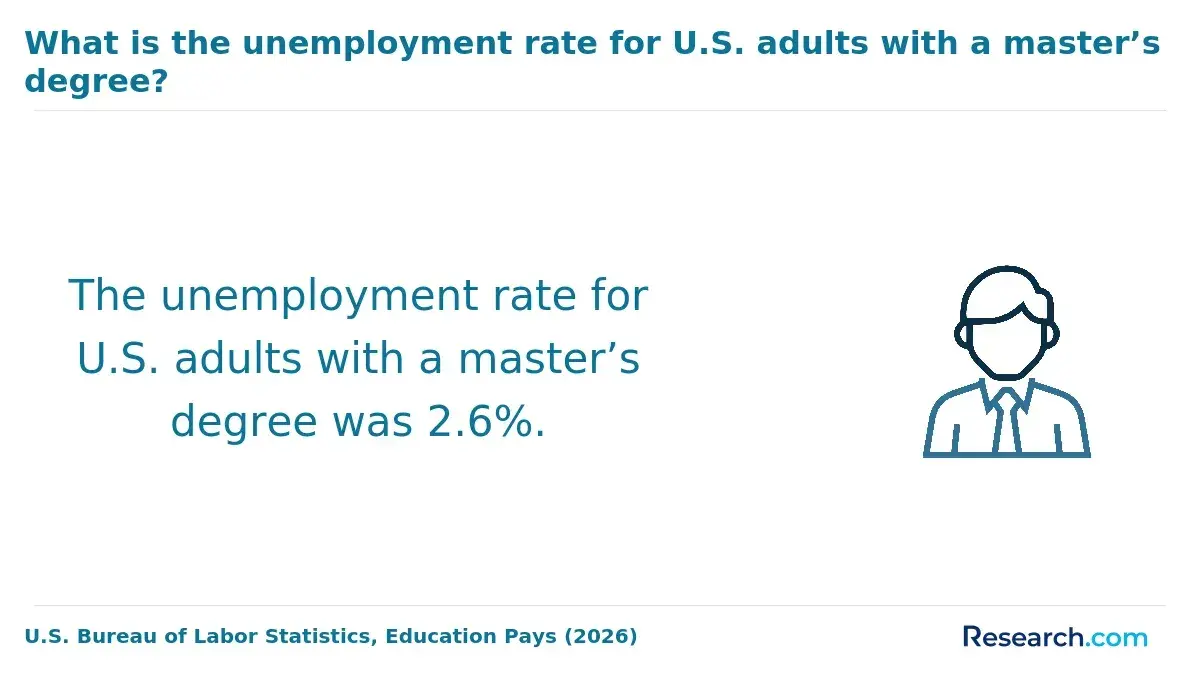
- The US median wage for management occupations was $126,520 in May 2025, but that broad occupational figure is not a salary estimate for project management MBA graduates.
What is an online MBA in project management?
An online MBA in project management is a graduate business degree that combines general management education with coursework on delivering projects. The project management component may be a formally named concentration, a track, or a set of electives. Check the degree requirements and transcript designation rather than assuming that a school offering one relevant course offers a full concentration.
The MBA is most useful when you need to connect project decisions to budgets, operations, organizational strategy, and leadership. If your goal is primarily to learn a particular scheduling method or qualify for a professional certification, a focused course or credential may require less time and expense. Applicants earlier in their careers can also compare online MBA programs without work experience requirements, while checking whether the cohort and coursework match their level of experience.
What does an online MBA in project management curriculum include?
There is no standard curriculum shared by every project management MBA. The distinction to examine is how much of the degree develops broad business judgment and how much provides sustained project management study. This table shows the kinds of learning to look for in a program's published course plan.
| Curriculum component | What students may study | Why it matters for project work |
| MBA core | Managerial accounting, finance, operations, strategy, analytics, and organizational behavior | Connects a project's scope and spending to wider business decisions |
| Project management courses | Scope and scheduling, budgets, risk, procurement, stakeholders, and team leadership | Develops methods for planning and overseeing delivery |
| Electives | Topics such as change management, supply chains, or technology management | Lets students align the degree with an industry or role |
| Applied work | A capstone, simulation, or consulting project, if required | Provides a setting to practice decisions with competing constraints |
Read course descriptions and assessment methods, not just course titles. A program may teach project methods as management decisions - how to prioritize investments or manage stakeholders - rather than as advanced training in a particular software platform or technical discipline. For applicants working abroad, an applied project involving a local employer may be particularly valuable; confirm that the school permits it before relying on that option.
How much does an online MBA in project management cost and take?
There is no reliable universal price or completion time: schools differ in required credits, tuition basis, course availability, and enrollment pace. Compare a published total-program price with the full cost of attendance. If tuition is charged per credit, multiply the required credits by the applicable rate, then add mandatory fees, materials, technology charges, and any required travel. Ask which tuition rate applies to students residing outside the United States and whether currency conversion or payment processing adds costs.
For timing, examine when required concentration courses are offered and whether prerequisites must be completed in sequence. An advertised fast completion path may assume continuous enrollment and a heavier course load than a working applicant can manage. Accelerated online MBA programs can provide a useful comparison, but their shortest advertised timeline should not be treated as a personal completion estimate.
Ask the school about scholarships open to overseas residents and payment arrangements before committing. Do not assume that admission to a US online program makes you eligible for US federal student aid.
The workload depends on course design and how many courses you take at once; credit hours alone cannot establish your weekly study time. Expect assigned reading, business cases, quantitative work, discussions, and projects. Project management courses may add schedules, risk registers, budgets, and team deliverables. A group assignment can be harder to coordinate across time zones than an individual assignment of similar academic difficulty.
Before enrolling, request a recent syllabus or sample course calendar. Check whether lectures are asynchronous, whether attendance at live sessions is graded, when deadlines fall in your local time zone, and whether exams require remote proctoring or a test center. Also ask how teams are formed, whether concentration courses run every term, and what happens if employment or family responsibilities require a pause.
If you are returning to graduate study after a long career, assess your readiness for finance and quantitative coursework as well as the schedule. Guidance on online MBA programs after 50 may help frame that planning, but age does not determine whether a particular workload is manageable.
Requirements vary by university, so use each program's current international admissions page as the authority. Common application materials include academic transcripts, a résumé, a statement of purpose, and recommendations. Some schools request a GMAT or GRE score; others offer waivers or do not require a test. A nonbusiness bachelor's degree does not automatically rule out admission, although a school may recommend or require preparation in accounting or quantitative subjects.
International applicants should check whether their degree requires a course-by-course credential evaluation, whether official translations are needed, and how English-language proficiency is assessed or waived. Confirm that the university accepts students residing in your country and that any required exam, residency, or fieldwork can be completed from your location. Applicants concerned about academic records can explore graduate business admissions options, but must still verify each school's own standards.
Enrollment and immigration are separate matters. Studying online from abroad does not itself provide a US student visa, permission to move to the United States, or US employment authorization. Ask the school's international student office about any planned campus component rather than assuming online enrollment supports an immigration benefit.
First, verify the university's US institutional accreditation through the US Department of Education's accreditation database or the accreditor's directory. Then check whether the business school or MBA holds separate business-school accreditation, such as AACSB, ACBSP, or IACBE accreditation. Institutional and business-school accreditation are different claims; neither should be inferred from marketing language about a "recognized" degree.
Look up the institution under its official name and confirm the accreditor's current status and the scope of accreditation. If a school advertises accreditation for its business programs, check the accreditor's directory for the school and applicable programs. Finally, if you need the qualification for employment, further study, or professional recognition in your home country, ask the relevant employer, university, or recognition authority whether it accepts the specific US degree. US accreditation does not guarantee recognition in every country.
An online MBA can let you remain employed and avoid relocating, but its flexibility depends on the timetable, not the delivery label. A campus MBA may offer easier access to in-person recruiting, classmates, and local internships; an online program may be more practical if you intend to keep building experience with your current employer. Neither format guarantees access to the other format's career services or employer events.
Compare the formats against your actual goal: leadership development while employed, a change of function, or entry into a particular US job market. For a substantial career switch, ask both programs which recruiting events, internships, alumni services, and projects you can actually use from your location. Applicants considering a combined professional degree should compare its additional qualification and workload separately. For example, a healthcare professional weighing an MBA against an MSN/MBA can compare online MBA program length degree programs by required coursework and career purpose, not the advertised timeline alone.
The most direct path is often advancement from work you already know: a project coordinator taking on larger budgets, a technical professional leading cross-functional initiatives, or an experienced project manager moving toward program or operations leadership. Relevant roles may include project manager, program manager, operations manager, and implementation or transformation lead. Job titles and responsibilities vary considerably by industry.
For an international applicant, the practical question is where you plan to work. A US MBA may support applications to multinational or local employers, but the degree alone does not establish local professional recognition or eligibility to work in the United States. Review job postings in your target location for required industry experience, methods, language skills, and credentials. If you have little project experience, gaining responsibility for real deliverables may be more important initially than adding a management degree.
There is no single reliable salary figure for graduates of this specialization. Pay depends on the occupation, industry, location, seniority, and the experience a candidate brings to the degree. The US Bureau of Labor Statistics reports a median annual wage of $126,520 for all management occupations in May 2025. That figure covers many jobs and workers without this MBA; it is not a project manager salary or a prediction of a graduate's earnings.
Use compensation data for the specific role and US location you are targeting when assessing whether tuition is affordable. If you expect to work outside the United States, US wage data is a poor substitute for local job offers and compensation research. A sensible financial comparison also accounts for your current earnings, employer tuition support, and the possibility that a promotion may take time or may not follow graduation.
Do MBA graduates need PMP certification or other credentials?
An MBA and the Project Management Professional (PMP) certification serve different purposes. MBA coursework develops business and organizational decision-making; PMP is a professional credential tied to project management experience, education, and an exam under Project Management Institute rules. Completing an MBA does not automatically award PMP certification or establish that you meet its eligibility requirements.
Other Things You Should Know About MBA
Possibly. Transfer-credit rules vary by school and may limit the age, grade, or type of coursework accepted. Request a written evaluation before assuming it will shorten the program.
Some programs allow it, but project approval, supervision, and confidentiality rules vary. Ask the program director before planning a capstone around your employer.
That is institution-specific. Ask for the exact degree and concentration wording that appears on the diploma and transcript.
Ask about leaves, maximum time to complete the degree, and how a break affects course sequencing, tuition, and your ability to re-enroll while living abroad.
- Cost of Attendance (Budget) | 2025-2026 Federal Student Aid Handbook https://fsapartners.ed.gov/knowledge-center/fsa-handbook/2025-2026/vol3/ch2-cost-attendance-budget
- Online group projects in higher education - PMC https://pmc.ncbi.nlm.nih.gov/articles/PMC10038701/
- International records for transfer - UC Admissions https://admission.universityofcalifornia.edu/counselors/preparing-transfer-students/international-records-transfer.html
- Considering Student Workload | CITT - University of Florida https://citt.it.ufl.edu/resources/course-design-basics/develop-and-implement/considering-student-workload/
- Tuition and Fees | Bursar's Office | SDSU https://bursar.sdsu.edu/tuition
- Tuition and Fees | Columbia SIPA https://www.sipa.columbia.edu/office-financial-aid/tuition-and-fees
- International Credentials & Applicants | miami.edu https://www.grad.miami.edu/graduate-education/international-credentials-and-applicants/index.html
- International Applicants | psu.edu https://realestate.smeal.psu.edu/program-admissions/international-applicants
- How long will it take me to complete the program? | Ohio State Online https://online.osu.edu/frequently-asked-questions/how-long-will-it-take-me-to-complete-the-program/
- Time Managment Calculator | School of Chemical Sciences | Illinois https://scs.illinois.edu/time-managment-calculator