Best online MBA in Healthcare Management programs for working parents

Co-Founder and Chief Data Scientist
An online MBA can fit around a job and children - or it can add fixed evening meetings, group deadlines, and costs that strain a household budget. For working parents interested in healthcare leadership, the best choice depends less on a school's reputation than on whether its curriculum and schedule fit the career move you want to make.
This guide compares identifiable online healthcare MBA options, explains what to verify before enrolling, and helps you decide whether a full MBA is worth the time and expense.
Key Things You Should Know
- Start with scheduling: WGU's competency-based MBA offers a different kind of pacing from term-based options at SNHU and Purdue Global, but confirm each program's current deadlines, group work, and attendance rules.
- Compare the healthcare curriculum as well as the MBA core; a program with healthcare electives is not necessarily a formally designated healthcare management MBA.
- Do not use broad salary figures as a tuition-payback forecast: the May 2025 median for all U.S. management occupations was $126,520, not a reported outcome for healthcare MBA graduates.
What is an online MBA in healthcare management?
An online MBA in healthcare management combines a general business core - typically finance, operations, strategy, and leadership - with coursework applying management decisions to healthcare organizations. Depending on the school, healthcare may be part of the degree name, a formal concentration, or a smaller group of electives. Those distinctions matter if you want sustained study of healthcare delivery rather than a general MBA with one relevant course.
The degree prepares students for organizational decisions, not clinical practice. For a parent already working in a hospital, insurer, clinic, or health technology company, the useful question is whether the program fills a management gap that experience alone has not. If you primarily want to compare healthcare-focused MBA curricula rather than family scheduling, see online MBA programs for healthcare professionals.
Which online MBA healthcare management programs are best for working parents?
There is no defensible single winner for every family. This shortlist favors identifiable online MBAs with a healthcare management focus and a scheduling model worth comparing. It is a fit-based selection, not a nationwide ranking. Published descriptions do not establish how much time every course takes, so parents should verify the details that could disrupt childcare or work.
The comparison separates known program structures from questions that require a current answer from the school. In particular, "online" does not establish that every activity can be completed after bedtime.
| Online MBA option | Healthcare focus and format | Potential fit for a working parent | Confirm before applying |
| Western Governors University (WGU) | MBA Healthcare Management; competency-based study in six-month terms. | Worth considering if variable study hours make a conventional course calendar difficult. | Current assessment expectations, minimum progress requirements, term tuition, and available academic support. |
| Southern New Hampshire University (SNHU) | Online MBA with a healthcare management focus; courses follow academic terms. | Worth considering if predictable course periods help you plan work and childcare. | Current concentration designation, course sequence, collaborative deadlines, total credits, and per-credit charges. |
| Purdue University Global | Online MBA with a healthcare management concentration. | Worth considering if you want a named concentration within a conventional MBA structure. | Current course delivery, any live seminars, concentration requirements, fees, and total program cost. |
For WGU, the central trade-off is pacing freedom versus the discipline needed to make progress without a weekly class meeting. For SNHU and Purdue Global, term-based coursework may make family planning more predictable, but an asynchronous lecture does not eliminate assignment or team deadlines. None should be labeled the cheapest or most flexible without checking current tuition and the actual course schedule.
Ask each program for a recent syllabus from a required healthcare course and a core course. Check whether live meetings are required, how teams arrange projects, when exams open, whether campus visits occur, and what happens if you need to pause for caregiving. Parents who need even more control over study hours can also compare MBA programs with self-paced learning, while checking whether those alternatives offer enough healthcare content.
Is an online healthcare management MBA accredited?
Accreditation applies to the institution and, sometimes, separately to its business programs - not automatically to a concentration because it appears in an MBA title. Verify each university's current institutional accreditation in the U.S. Department of Education's database. Then check the business school's own listing if accreditation from AACSB, ACBSP, or IACBE matters to your employer or career plans.
Do not mistake business-program accreditation for a license to practice healthcare, or assume that every healthcare MBA has specialized healthcare-administration accreditation. If your employer pays tuition only for accredited programs, obtain its eligibility rules before making a deposit.
The MBA core develops broad management skills; healthcare-focused courses apply some of those skills to issues such as care delivery operations, healthcare finance, policy, or organizational leadership. The exact mix varies. One program may emphasize managing healthcare teams, while another devotes more coursework to financing and the structure of the U.S. healthcare system.
Parents working in healthcare can often test new ideas against problems at work, but should check whether assignments permit workplace-based projects and whether employer data can be used. Compare required courses - not just elective titles - against the responsibilities of your target job. A specialized master's in healthcare administration may be a better fit if you need deeper sector-specific study and have less interest in a broad MBA core.
Requirements differ by school and can include a bachelor's degree, transcripts, a résumé, an application statement, and, in some cases, recommendations or evidence of professional experience. Test policies and minimum GPA rules are program-specific. A clinical or business undergraduate degree is not a universal prerequisite.
If your academic record is a concern, check published policies rather than ruling yourself out; online MBA programs for low-GPA applicants offer another comparison point. Before applying, ask whether the program expects prior accounting or statistics knowledge and whether foundation coursework would add time or cost. In your application, connect your existing healthcare or managerial experience to a realistic next role rather than suggesting the MBA alone will qualify you for it.
Completion time depends on the program's credits or competency requirements, course sequencing, transfer policies, and how much you can study while working and caring for children. A self-paced term is not a promise of rapid completion; a part-time course load can extend the calendar while making each week more manageable.
Map the required courses against school breaks, predictable busy periods at work, and likely childcare gaps. Ask how long you may pause enrollment and whether courses are offered often enough to resume without a lengthy wait. If speed is your priority, compare one-year online MBA programs against the weekly commitments they require; a shorter calendar can mean a less workable family schedule.
The shortlist does not have one comparable published price: WGU's tuition is structured by term, while conventional MBAs commonly charge by credit and may add fees. An advertised tuition rate alone does not establish the total you will pay. Request a written estimate using your expected course load, required credits or terms, mandatory fees, materials, and any travel.
For a household budget, model both a normal term and a disrupted one. Slower progress can add terms under a term-based tuition model; under per-credit pricing, it may spread payments over a longer period without necessarily reducing the total. Ask your employer when reimbursement is paid, what grades it requires, and whether leaving your job triggers repayment. Borrowing costs and time away from family or paid work also belong in the decision, even though they are not listed as tuition.
The most plausible next step usually builds on work you already do. A clinic supervisor might pursue broader operations responsibility; a healthcare finance analyst might move toward budget management; and a project lead at an insurer or health technology company might seek responsibility for a larger team. Hiring for each depends on relevant experience, organizational knowledge, and openings - not the degree alone.
A substantial change into healthcare leadership is harder if you have no sector experience. Look for projects or roles that expose you to healthcare operations, reimbursement, compliance, or cross-functional decision-making while you study. For an engineering professional moving into medical-device or healthcare-technology leadership, schools offering online MBA programs for engineers may provide a useful comparison, but sector knowledge remains essential.
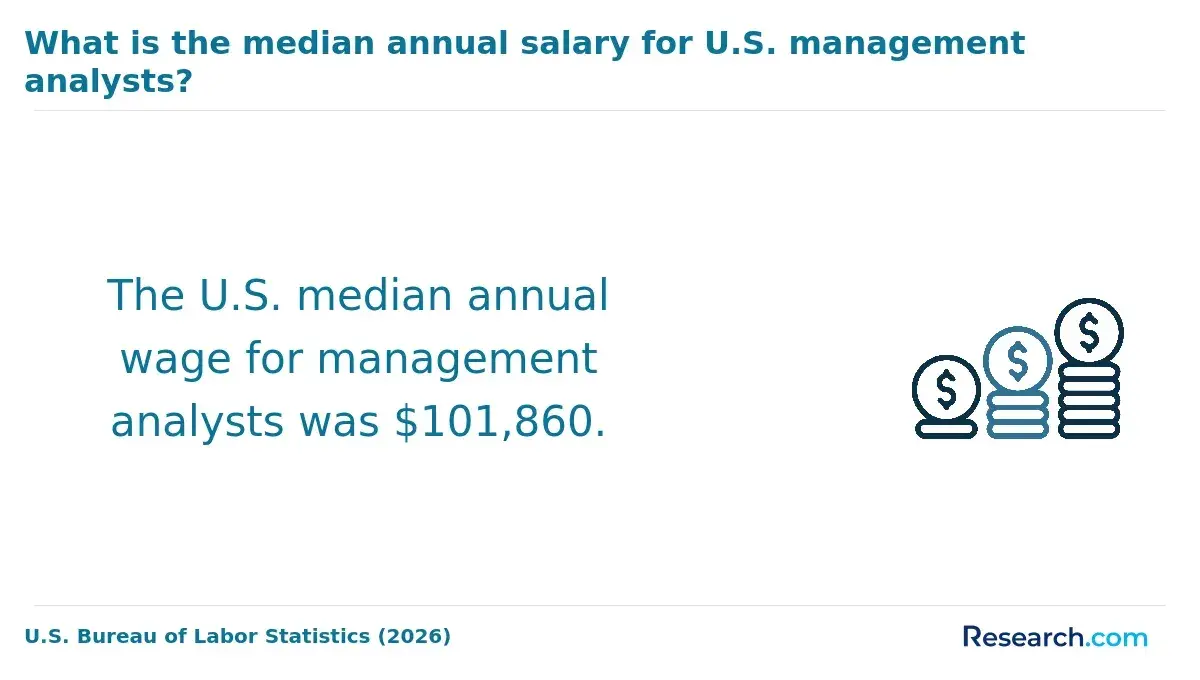
The U.S. Bureau of Labor Statistics reports a median annual wage of $126,520 for all management occupations in May 2025. That broad figure is not a healthcare management MBA graduate salary: it combines many industries, seniority levels, and education paths.
For a useful personal estimate, compare pay for the specific role you could realistically pursue in your region with your current compensation. A parent seeking an internal promotion may have a more grounded forecast than someone planning to change industry and function at once. Do not justify tuition with an executive salary unless you also have a credible route to the experience that role requires.
Does healthcare management require a license or professional certification?
Many healthcare management jobs do not require a general "healthcare manager" license. Requirements depend on the role and state: for example, managing a nursing home can involve administrator licensure, while practicing as a clinician requires the applicable clinical license. An MBA does not replace either.
Professional certifications may help demonstrate expertise in a particular function, but they are separate from the degree and may have experience or examination requirements. Check the actual job postings and state rules for your target role before choosing coursework or paying for an additional credential.
Other Things You Should Know About MBA
Do not assume it will - or that one is available. Ask whether the program requires an internship, offers one as an option, or uses a course project instead, especially if you cannot step away from full-time work.
Possibly, if the instructor permits it and your employer approves. Remove patient or confidential business information unless you have explicit authorization and an appropriate way to protect it.
The receiving school decides which credits, if any, it accepts. Request its transfer-credit policy in writing before assuming that completed courses will count elsewhere.
Diploma wording varies by institution. Ask the registrar what appears on the diploma and transcript if that distinction matters to you or your employer.
- Accreditation Made Easy: Step-by-Step Guide for Healthcare Institutions | nih.gov https://pmc.ncbi.nlm.nih.gov/articles/PMC11554392/
- 9 FAM 402.5 (U) STUDENTS AND EXCHANGE VISITORS | state.gov https://fam.state.gov/fam/09FAM/09FAM040205.html
- Cost of Attendance (Budget) | 2025-2026 Federal Student Aid Handbook https://fsapartners.ed.gov/knowledge-center/fsa-handbook/2025-2026/vol3/ch2-cost-attendance-budget
- HCM Program Topics | South University https://www.southuniversity.edu/news-and-blogs/2024/01/hcm-program-topics
- What Is a Health Care Management Degree? 2026 Guide | App State Online https://onlineprograms.appstate.edu/blog/what-is-healthcare-management-degree/
- Optimizing Course Availability and Delivery for On-Time Completion | Community College Research Center https://ccrc.tc.columbia.edu/research-project/optimizing-course-availability.html
- MBA vs. MHA vs. Healthcare MBA - Online Programs | Case Western Reserve University MBA https://onlineprograms.case.edu/mba/blog/healthcare-mba-vs-mha-differences-explained/
- HCA 499: Healthcare Administration Capstone | Charter Oak State College https://www.charteroak.edu/bb/syllabi/hca/hca_499_syllabus.php
- MBA in Healthcare Administration Online Master's Degree Program | WGU https://www.wgu.edu/online-business-degrees/mba-masters-business-administration-healthcare-administration-program.html
- Do Online Colleges Provide Student Support? Here's What to Know | University of Cincinnati | UC News https://www.online.uc.edu/blog/do-online-colleges-provide-student-support.html