Online MBA in Leadership: Admissions Guide for Public Sector Professionals

Co-Founder and Chief Data Scientist
A public-sector manager may need stronger budgeting and change-management skills without stepping away from government work. An online MBA in leadership could help, but admission requirements vary, and the degree may not be the best route to every public-service role. This guide explains how to assess your readiness, prepare an application that reflects your agency experience, and compare an MBA with more targeted credentials. It also covers the costs, scheduling demands, and career limits worth checking before you apply.
Key Things You Should Know
- Expect schools to review your bachelor's degree, work history, and application materials; GMAT/GRE policies and experience requirements vary by program.
- Show what you accomplished in government work - such as managing a budget or improving a service - not just the size of your team or your job title.
- An MBA is most useful when broad management skills match your target role; the $126,520 median wage for U.S. management occupations in May 2025 is not an MBA-graduate salary or a forecast of government pay.
What is an online MBA in leadership for public sector professionals?
An online MBA is a graduate business degree delivered primarily through online coursework. Its core typically covers finance, accounting, operations, strategy, and organizational management. "Leadership" may mean a formal concentration, a set of electives, or simply a program-wide emphasis; check the school's degree requirements before treating it as a named specialization.
For a public-sector professional, the value lies in applying management tools under public constraints. A proposal that looks efficient on a spreadsheet may also need to satisfy procurement rules, legislative oversight, equity goals, and public-records obligations. An MBA can strengthen management judgment, but it is not a substitute for learning those agency-specific requirements.
Is an online MBA in leadership worth it for government careers?
It can be worth considering if your next role requires broader financial, operational, and people-management responsibilities, particularly if your employer helps pay. The case is weaker if advancement depends chiefly on a civil-service classification, years of service, or a specialized credential the MBA does not provide. Ask your HR office whether the degree changes eligibility, pay, or promotion competitiveness in your actual job series.
The best alternative depends on the work you want to do. This comparison separates broad management preparation from more directly public-sector study.
| Option | Stronger fit when your goal is... | Main limitation to weigh |
| Leadership MBA | Managing budgets, operations, teams, or a possible move across sectors | May offer limited instruction in public law, policy, and governance |
| MPA or MPP | Public administration, policy analysis, or government-specific decision-making | May offer less broad business training |
| Graduate course or employer training | Closing a defined skill gap while staying in your role | Does not provide a full graduate degree |
For a financial comparison, count fees, materials, any required travel, and borrowing costs alongside tuition. This guide to online MBA tuition and total cost provides a starting framework; your employer's reimbursement rules and the program's published charges should drive your own calculation.
What careers can an online leadership MBA prepare public sector professionals for?
The most plausible path is often advancement from an existing specialty into management: a procurement specialist overseeing contracts and staff, a budget analyst managing a finance unit, or an operations supervisor coordinating services across departments. Prior agency experience remains important because public hiring rules and technical duties do not disappear with an MBA.
The degree may also support a move into consulting or private-sector operations, but that transition usually requires evidence that your skills transfer. For example, a public-hospital manager considering healthcare administration should compare leadership coursework with sector-specific study. Lists of MBA programs with affordable tuition in healthcare management can help frame that comparison, but healthcare management and leadership are not interchangeable concentrations.
Online delivery can let an employee remain at an agency, but it does not guarantee control over study hours. Live classes, group projects, proctored exams, and residencies can conflict with legislative sessions, emergency response, or rotating shifts. Request a sample course schedule and ask how the school handles an unexpected work deployment or reassignment.
A campus-based program may offer easier access to in-person recruiting and classmates; an online program may better preserve income and professional continuity. Neither format guarantees equivalent access to internships or career services. Veterans working in public service may also want to compare scheduling and support using resources on online MBA programs and veterans, while confirming any education-benefit eligibility with the relevant administrator.
Most MBA programs combine a business core with electives or concentration courses. For government employees, managerial accounting can inform budget discussions, operations can help assess service delivery, and organizational behavior can support supervision and change. These courses teach management applications, not the legal authority to spend public funds or award contracts.
Leadership-focused coursework may examine negotiation, team development, ethics, strategy, or organizational change. Look beyond course titles: an applied project involving stakeholder engagement and measurable service outcomes may be more relevant than another general leadership elective. Verify whether such a project is available online and whether your agency would permit its proposed use of workplace information.
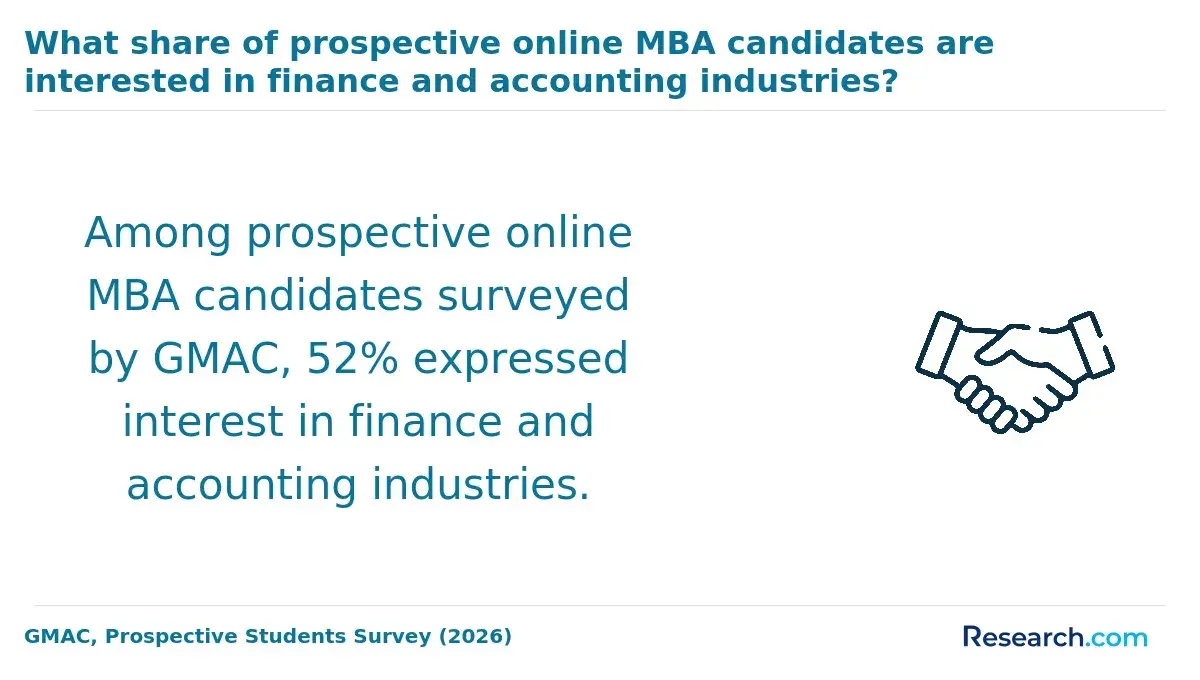
Requirements are set by each university, not by the leadership label. Applicants commonly need a bachelor's degree and may be asked for transcripts, a résumé, a statement, and recommendations. Schools differ on minimum academic performance, professional experience, interviews, prerequisites, and GMAT/GRE testing; a test waiver at one school says nothing about another school's policy. A nonbusiness bachelor's degree does not, by itself, rule out admission.
Public-sector applicants can prepare a stronger, more precise application by taking these steps before requesting recommendations or submitting an essay:
- Confirm each program's current degree, experience, test, deadline, and prerequisite policies directly with admissions.
- Identify two or three work examples with your specific contribution, the constraints you faced, and a verifiable result; protect confidential information.
- Explain why business training fits your next responsibility, rather than relying on a general desire to lead.
- Choose recommenders who can describe your judgment and collaboration, and ask whether they can speak within agency ethics rules.
- If quantitative coursework is unfamiliar, review accounting or statistics and ask whether the school offers foundation courses.
For applicants comparing test policies with price, directories of affordable online MBA programs can help generate a shortlist. Confirm both the current testing rule and full cost with each school before applying.
Completion time depends on required credits, transfer or foundation coursework, term length, and whether you enroll part-time. An accelerated schedule can reduce elapsed time while increasing the pressure of overlapping courses and agency deadlines. Compare MBA programs designed for quicker completion against a pace you could sustain during your busiest work period.
Published tuition may be charged per credit, course, or term; it is not necessarily the total bill. Request an estimate based on your expected enrollment pattern that includes mandatory fees, materials, technology, and any travel. Ask HR whether reimbursement requires advance approval, a minimum grade, continued employment, or attendance at an approved school. Those conditions can matter as much as the advertised tuition rate.
There is no single salary or job-growth rate for leadership MBA graduates. The U.S. Bureau of Labor Statistics reports a median annual wage of $126,520 for management occupations in May 2025. That figure covers management workers across sectors and education backgrounds; it should not be used as an expected starting salary or assumed to match a government pay scale.
The BLS projects management occupations overall to grow faster than the average for all occupations from 2025 to 2035. For your decision, the more useful evidence is your target agency's posted pay band, qualification standard, promotion process, and vacancy history. Compare those with your current compensation before attributing a potential raise to the MBA.
An MBA does not generally create a separate license requirement for management work. A particular position may still require an occupation-specific license, credential, or eligibility determination. Accounting, engineering, and clinical roles, for example, have requirements that management coursework cannot replace.
For procurement, project delivery, or financial oversight, an employer may prefer or require specialized training or certification. Read the target vacancy announcement before paying for either an MBA or an additional credential: the requirement may attach to the job function, not to leadership in general.
How can you choose an accredited online MBA leadership program?
Start by verifying that the university holds institutional accreditation recognized by the U.S. Department of Education or the Council for Higher Education Accreditation. Then check whether the business school holds separate accreditation, such as AACSB, ACBSP, or IACBE, if that distinction matters to you or your employer. Institutional and business-school accreditation are different claims.
Next, ask for the online degree plan and confirm whether leadership is a formal concentration, which courses actually run online, and whether a credential or program designation appears on the transcript. Compare live-session obligations, total charges, career support for experienced professionals, and projects relevant to public institutions. Finally, show the exact program and accreditation details to your HR or tuition-assistance office before committing; agency approval can determine whether a well-regarded degree is financially workable.
Other Things You Should Know About MBA
No. A degree does not grant a clearance. Clearance eligibility follows the hiring agency's requirements and vetting process.
No. Eligibility depends on the loan type, repayment conditions, qualifying employment, and applicable program rules - not the degree's format. Check current federal requirements before borrowing.
Only with appropriate permission. Ask your agency and school about confidentiality, public-records obligations, and whether anonymized or public data would work instead.
Ask the school about deferral, leave-of-absence, and course-withdrawal policies before enrolling. Also check whether a change in duties affects employer tuition assistance.
- HHS Office of Human Resources Guidance, Hiring Assessment Strategies | HHS.gov https://www.hhs.gov/about/agencies/asa/ohr/hr-library/hiring-assessment-strategies.html
- Cost of Attendance (Budget) | 2025-2026 Federal Student Aid Handbook https://fsapartners.ed.gov/knowledge-center/fsa-handbook/2025-2026/vol3/ch2-cost-attendance-budget
- Types of Financial Aid: Grants, Work-Study, and Loans | studentaid.gov https://studentaid.gov/understand-aid/types
- How to Pay for an MBA: Smart Funding Strategies Explained | Jenkins MBA https://mba.ncsu.edu/2026/05/07/paying-for-your-mba-scholarships-employer-benefits-and-loans/
- Credit for Prior Learning | University of Arizona Catalog https://catalog.arizona.edu/policy/courses-credit/credit/credit-prior-learning
- GRE and GMAT Test Score and Waiver Options | umn.edu https://carlsonschool.umn.edu/graduate/resources/gre-gmat-test-score-waivers
- Admission Policies | University of Dallas https://udallas.edu/university-policies-consumer-information/student-policies/admission-policy.php