Online MBA in Risk Management: Curriculum and Workload for International Applicants

Co-Founder and Chief Data Scientist
An online MBA in risk management can let you study at a U.S. business school without leaving your job or country, but its courses, live-session schedule, and career value may differ sharply from what the program name suggests. For international applicants, the decision also depends on whether the school permits overseas enrollment and whether the degree will be recognized where you plan to work.
This guide explains what you are likely to study, how to assess the workload across time zones, and which program details to verify before committing.
Key Things You Should Know
- A risk management MBA combines a broad management core with risk-focused study. Check whether risk management is a formal concentration, an elective cluster, or just one course.
- Weekly demands depend on course load, live meetings, group work, and assessment schedules, not the word "online." Request a sample course calendar in your time zone.
- A U.S. online MBA earned from abroad does not itself provide a U.S. student visa or work authorization; assess its value against your intended career market and total cost.
What is an online MBA in risk management?
It is a general management degree with additional study of how organizations identify, measure, govern, and respond to uncertainty. Risk may include financial losses, operational disruption, cyber incidents, regulatory exposure, or supply-chain failures.
MBA coursework generally emphasizes decisions and communication across functions rather than training students to perform every technical risk analysis themselves.
The label needs scrutiny. One school may offer a formally named risk management concentration with required courses; another may allow risk electives within a general MBA.
Neither should be confused with a specialized master's degree devoted primarily to quantitative finance, insurance, or another risk discipline. Ask whether the concentration appears on the transcript and which courses are guaranteed to run online.
Is an online MBA in risk management worth it for international students?
It can be worthwhile if you already work in risk, finance, insurance, compliance, operations, or technology and need broader managerial judgment for your next role. The strongest case combines usable coursework, a credential recognized by employers in your target market, manageable tuition, and opportunities to apply projects at work. A U.S.-based curriculum may be less directly useful if your target role requires detailed knowledge of another country's regulations.
Value is less certain if you need hands-on technical training, an internship-based career change, or access to U.S. employment through the degree. Online study from abroad does not itself grant a U.S. student visa, Optional Practical Training, or employment authorization. Compare the full cost with a specialized master's, a professional certification, or employer-supported courses before assuming the MBA is the best route.
Career stage changes the calculation, too. Experienced applicants assessing a late-career investment may find the questions addressed in schools offering online MBA programs after 50 useful, although they should still evaluate risk coursework and overseas access separately.
What careers can an online MBA in risk management lead to?
For someone already working in the field, the MBA may support progression toward enterprise risk management, operational risk, insurance management, compliance leadership, or risk-aware operations roles.
Responsibilities can include setting risk priorities, reporting to senior leaders, coordinating controls across departments, and weighing the cost of mitigation against business objectives. Employers will still assess relevant experience, industry knowledge, and local regulatory familiarity.
A substantial career change is harder than advancement within an existing function. A finance professional might use the degree to move toward financial risk oversight, while someone seeking a technical cybersecurity role would usually need technical skills beyond an MBA.
Hospital risk work presents another distinct setting; healthcare-focused MBA program options may be more relevant when sector operations matter more than a broad risk concentration.
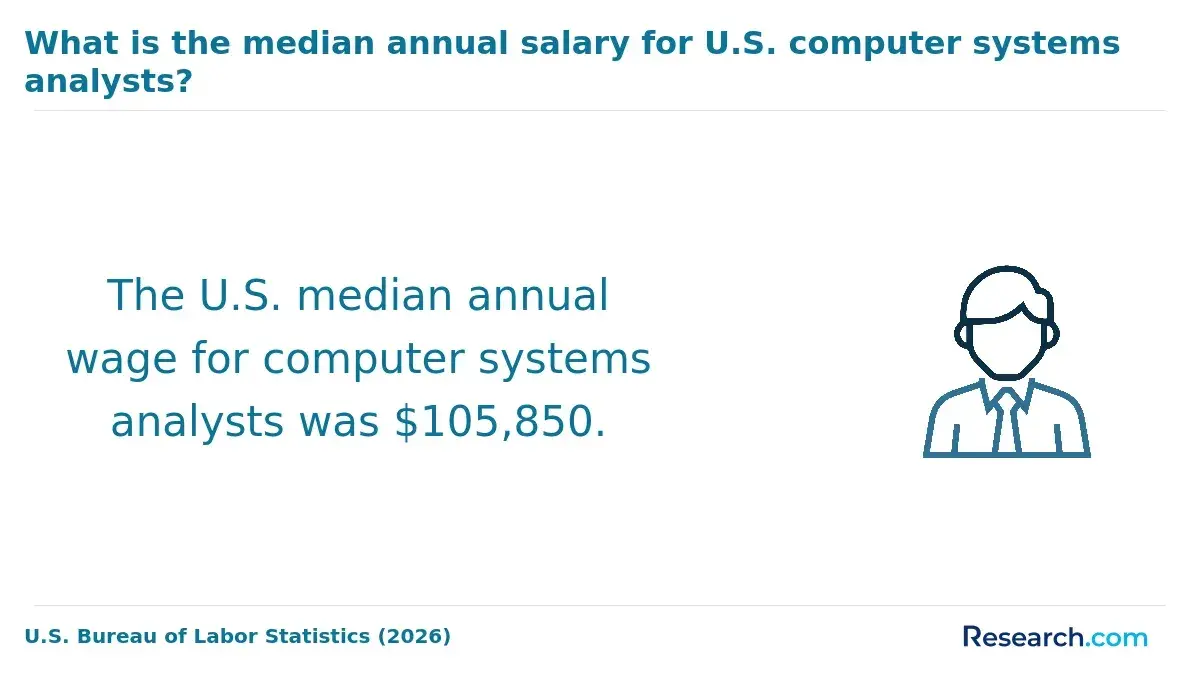
For salary context, the U.S. Bureau of Labor Statistics reported a $126,520 median annual wage for management occupations in May 2025. That figure covers many occupations, not risk managers or MBA graduates specifically; it cannot predict an international applicant's pay or the return on this degree.
Curricula vary by school. The table separates the MBA foundation from risk-focused study so you can judge how much of the degree actually addresses your goal.
| Curriculum component | What it may cover | What to check |
| MBA core | Managerial accounting, finance, strategy, operations, analytics, leadership, and organizational behavior | Whether foundation courses are required for applicants without prior business study |
| Risk concentration or electives | Enterprise risk, insurance, financial risk, business continuity, compliance, or risk modeling | Required courses, elective choice, technical depth, and online availability |
| Applied work | A capstone, simulation, case analysis, or employer-related project | Group-work expectations and whether projects can address a non-US organization |
Management-level risk courses often ask students to interpret evidence and recommend controls, not build advanced actuarial models or qualify as legal or cybersecurity specialists.
Compare syllabi and assessment examples rather than relying on course titles. International applicants should also check whether cases assume U.S. rules exclusively or permit analysis under the laws relevant to their careers.
There is no dependable universal weekly-hours estimate: reading, quantitative preparation, writing, team projects, and the number of simultaneous courses all affect the load. Risk assignments can be especially time-consuming when they require interpreting financial statements, comparing scenarios, or explaining recommendations to a nontechnical audience.
For students abroad, scheduling may matter as much as academic difficulty. An asynchronous lecture can be watched locally, but a required live discussion, proctored exam, or team presentation may fall during your workday or overnight.
Before enrolling, request a sample course calendar, ask which activities are mandatory in real time, and convert every deadline to your local time zone. Check whether group projects require meetings with US-based classmates and whether you can reduce your course load during a demanding work period.
Test the proposed schedule against a normal working week and a particularly busy one. If it works only when nothing unexpected happens, a slower course sequence, or a program with fewer fixed meetings, is the safer choice.
Policies differ, but applicants commonly need a recognized undergraduate degree, academic records, a résumé, and application materials explaining their goals. Schools may also request recommendations, an interview, work experience, or GMAT/GRE scores; testing and waiver policies are program-specific. Risk management is not universally limited to applicants with a finance degree or risk certification.
International applicants should ask how the school evaluates non-US credentials, whether it requires official translations or a third-party evaluation, and which English-language test or exemption rules apply.
Confirm that the program accepts students living in your country: online availability does not automatically mean worldwide enrollment. Experienced managers comparing MBA formats can also examine online executive MBA programs, while checking their separate experience and attendance expectations.
Duration depends on required credits, prerequisite coursework, course sequencing, and whether you enroll part time or take multiple courses at once. A concentration may add no credits if its courses replace electives, or it may extend the degree if risk courses are offered infrequently. Ask for a course-by-course completion plan based on your intended pace, not just the advertised fastest timeline.
For cost, compare the published tuition unit with the number of credits or courses you must complete. Then account for mandatory fees, books and software, potential travel, currency-conversion charges, and financing costs.
Confirm whether international students pay the same online rate and whether your employer will reimburse an overseas degree. U.S. federal student aid is generally unavailable to applicants who are neither U.S. citizens nor eligible noncitizens; ask the school about eligibility rather than building a budget around presumed aid.
Without a verified program and tuition schedule, a single price would be misleading. A useful personal comparison is total expected spending plus work time committed, weighed against the specific role or responsibility you expect the degree to help you pursue.
Neither format is automatically stronger; the better choice depends on where you intend to work and how much access you need to in-person recruiting. These distinctions are especially important when studying outside the US.
| Decision factor | Online study from abroad | Campus-based study |
| Employment continuity | May allow you to keep your current job | May require relocation or reduced work hours |
| Networking | Often relies more on virtual classmates and employer-based projects | May provide more in-person events and recruiting access |
| Scheduling | Travel may be limited, but US-time-zone meetings can be difficult | Requires attendance near campus on the program's schedule |
| US immigration | Studying online from abroad does not itself provide a student visa or work authorization | On-campus study may involve a qualifying visa process, subject to school and government rules |
Do not assume an online student receives the same internship, career-service, or recruiting access as a campus MBA student at the same school. Compare those services directly. If location matters to your employer or network, a set of Texas-based online MBA programs can be a starting point, but verify risk course availability and overseas enrollment at each school.
Start by confirming the institution's current U.S. institutional accreditation through the accreditor and the U.S. Department of Education's recognized-accreditor information. Then check separately whether its business school holds specialized accreditation, such as AACSB accreditation.
Institutional and business-school accreditation answer different questions; neither confirms that a risk concentration is offered online or that your home-country employer will recognize it.
For accredited graduate management programs, verify the school's current status directly rather than relying on an older program list. Ask the university what degree and concentration wording will appear on official records.
If the credential is needed for public employment, professional registration, or further study abroad, check the relevant authority's recognition rules before paying a deposit.
Which certifications and licenses complement a risk management MBA?
Choose an additional credential for the work you want to perform, not simply to accumulate letters after your name.
The Financial Risk Manager (FRM) credential aligns more closely with quantitative financial risk; the RIMS-Certified Risk Management Professional (RIMS-CRMP) focuses on risk management practice; and the Associate in Risk Management (ARM) designation is relevant to insurance and organizational risk. Each has its own examinations and eligibility or maintenance rules, which applicants should verify with the issuing organization.
An MBA develops broader business decision-making and leadership; these credentials can demonstrate more focused knowledge. None automatically grants a regulated professional license. If your target job requires one, check the applicable jurisdiction's education, examination, and experience rules separately.
Other Things You Should Know About MBA Programs
Possibly. Ask whether the concentration has a declaration deadline, prerequisite courses, or limited course availability, and whether switching would delay graduation.
Only with appropriate permission. Ask about project-data policies and whether you can use anonymized or public information instead.
That varies by institution. Request sample diploma and transcript wording from the registrar if the distinction matters to an employer or credential evaluator.
Do not assume so. Confirm the program's exam windows, proctoring rules, identity-document requirements, and any location or technology restrictions before travel.
- Evaluation of Foreign Degrees - United States Department of State https://www.state.gov/global-community-liaison-office/family-member-employment/family-member-employment-in-the-d-c-area/evaluation-of-foreign-degrees
- Students and Employment | uscis.gov https://www.uscis.gov/working-in-the-united-states/students-and-exchange-visitors/students-and-employment
- Program Integrity Questions and Answers - Credit Hour http://www.ed.gov/laws-and-policy/higher-education-laws-and-policy/program-integrity-information-questions-and-12
- MBA in Risk Management Online - UMSV | Mount saint vincent https://online.mountsaintvincent.edu/degrees/business/mba/risk-management/
- Short-Term International Student FAQ | nyu.edu https://www.nyu.edu/students/student-information-and-resources/student-visa-and-immigration/newly-admitted/short-term-international-student-FAQ.html
- Online MBA Degree | Iona University https://www.iona.edu/academics/explore-majors-programs/online-master-business-administration
- Credential Evaluations and Translations | yale.edu https://oiss.yale.edu/immigration/credential-evaluations-and-translations
- International Students | Penn GSE - University of Pennsylvania https://www.gse.upenn.edu/admissions-and-aid/how-to-apply/international-students
- What Does Asynchronous Mean? A Simple Guide to Online Learning Formats - Professional Development at Charlotte https://professional.charlotte.edu/what-does-asynchronous-mean-a-simple-guide-to-online-learning-formats/