
Online MBA in International Business: Curriculum and Workload for Career Changers

Co-Founder and Chief Data Scientist
If you want to move from your current field into work involving international markets, the curriculum matters as much as the MBA credential. An online program may let you keep working, but its group projects, live classes, and career support can determine whether the transition is practical.
This guide explains what international business coursework typically adds to an MBA, how to assess the workload, and which career changes may require experience beyond the degree. Use it to judge whether a particular program - or a narrower qualification - fits your target role.
Key Things You Should Know
- An international business MBA combines a broad management core with globally focused courses; check whether those courses form a formal concentration rather than a few electives.
- Online does not necessarily mean self-paced. Live sessions, cross-time-zone group work, and applied projects can be the biggest scheduling constraints for a working career changer.
- The U.S. Bureau of Labor Statistics projects about 1.1 million annual openings across management occupations from 2025 to 2035, but that broad figure does not measure demand for international business MBA graduates or entry-level career switchers.
What is an online MBA in international business?
It is a Master of Business Administration delivered primarily online that pairs general management education with study of business across national markets. The MBA core usually covers finance, accounting, marketing, operations, strategy, and leadership. International business coursework applies some of those disciplines to decisions such as entering a foreign market, coordinating a multinational supply chain, or managing cross-border teams.
Schools use different labels. A formal concentration has defined course requirements; an elective cluster may offer similar topics without appearing on a transcript as a concentration. Neither should be confused with a specialized master's degree focused more deeply on one discipline.
For a career changer, the strongest reason to choose this MBA is often the combination of management breadth and relevant applied work. If you already have management training and need only trade-compliance or supply-chain expertise, a targeted course or credential may be more direct.
What does an online MBA in international business curriculum include?
There is no standard curriculum shared by all schools. The comparison below separates the management foundation from coursework that may distinguish an international business concentration. Review required courses - not just the concentration name - to see whether a program addresses your skills gap.
| Curriculum component | What it commonly addresses | Value for a career changer |
| MBA core | Managerial accounting, finance, marketing, operations, analytics, strategy, and leadership | Builds a shared business vocabulary for applicants from other functions or industries |
| International business courses | Global strategy, international marketing, cross-border finance, or multinational operations | Connects prior experience to decisions involving multiple markets |
| Electives | Topics such as supply chains, negotiation, or regional market analysis, depending on the school | Allows a closer match to a specific target role |
| Applied work | A capstone, consulting assignment, or market-entry project, if offered | May provide work samples and experience explaining business recommendations |
Expect management-level analysis rather than automatic professional training in customs law, advanced language proficiency, or technical logistics systems. For example, an engineer moving toward global product management may be able to use technical experience in a market-entry project, while still needing marketing and customer-discovery skills. Readers with that background can compare broader online MBA programs for engineers in the US before deciding whether an international concentration adds enough value.
Ask to see the current course catalog and a recent sample syllabus. Check whether globally focused courses are required, how often they run, and whether the capstone lets you work on the function or industry you hope to enter.
How much workload does an online MBA require for career changers?
Weekly effort depends on course intensity, quantitative preparation, assessment design, and how many courses you take at once. Credit hours alone cannot tell you how many evenings a program will occupy. A career changer learning finance or accounting for the first time may also need more preparation than a colleague who uses those skills at work.
Request a sample course schedule and test it against your work calendar. In particular, identify fixed live sessions, group-meeting expectations across time zones, examination windows, and deadlines for team projects. An asynchronous lecture can still lead to a tightly scheduled group assignment. Ask whether you can reduce your course load or pause enrollment if a new job or job search becomes demanding.
Plan separately for the career change: employer research, networking, portfolio work, and interviews take time outside class. If an accelerated format compresses courses into shorter terms, confirm what that does to overlapping deadlines rather than assuming it reduces the total work. Listings for accelerated online MBA programs degree programs, for example, may describe specialized dual degrees; their schedules are not a reliable proxy for an international business MBA.
Requirements vary by university, but applications commonly ask for an accredited or otherwise accepted bachelor's degree, academic records, a résumé, and a statement of goals. Schools may also request recommendations, an interview, or a GMAT or GRE score; others waive or do not require testing. Prior work experience may be required, preferred, or simply considered alongside other evidence.
A nonbusiness degree does not inherently disqualify you. Compare any formal prerequisites or foundation courses with your actual preparation in accounting, finance, statistics, and economics. If your grades are a concern, review each school's stated policy rather than assuming all programs use the same cutoff. A comparison of MBA programs with accessible admissions can help you identify policies to investigate, but admission remains program-specific.
Use your application to connect existing skills to a credible next role: name the function you want, explain the gap the MBA would fill, and show how your previous work gives you a starting point. International applicants should separately verify credential-evaluation and English-language rules, overseas enrollment eligibility, and live-class time zones. Enrollment in a U.S. online MBA does not itself confer a U.S. visa or work authorization.
Completion time depends on required credits, course sequencing, term length, and whether you study part-time or at an accelerated pace. A concentration can also affect the timeline if required courses are offered infrequently. Ask each school for a degree plan based on the course load you could actually sustain - not its fastest advertised pathway.
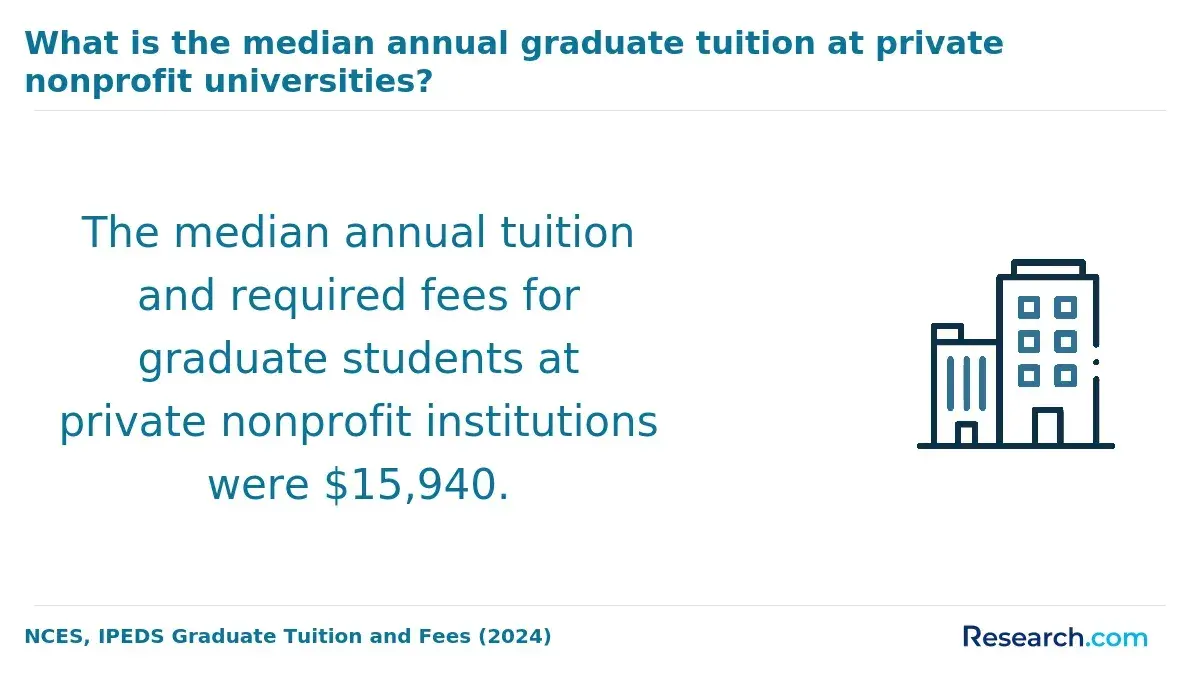
For cost, compare the full program commitment: tuition multiplied by required credits or terms, mandatory fees, books and software, and any required travel. Add borrowing costs if you expect to finance the degree. Published tuition may be per credit, course, or term, so a headline price is not necessarily a comparable total. An MBA tuition comparison affordable online MBA programs can provide a starting shortlist, but confirm current charges and concentration availability directly with each school.
Employer reimbursement can change the decision substantially, especially if you remain employed while studying. Check annual funding limits, minimum-grade rules, and repayment obligations if you leave your job. A lower-priced MBA with weak access to relevant projects or recruiting may be less useful for a substantial career switch than a better-supported program you can afford.
The better format depends less on where lectures happen than on the opportunities available for your particular transition. These differences are worth checking program by program; an institution's online and campus MBAs may not offer the same services.
| Decision factor | Online MBA | Campus-based MBA |
| Work continuity | Often easier to combine with an existing job, subject to live-session requirements | Full-time options may require time away from work; part-time options vary |
| Peer interaction | May rely on scheduled video meetings, discussion forums, and team projects | May provide more frequent in-person contact |
| Career switching | Recruiting access, internships, and employer engagement must be verified | Some programs offer structured internship recruiting and on-campus events |
| Travel | May still require residencies or immersions | Regular campus attendance or relocation may be necessary |
An online program can suit an adjacent move - for example, from domestic procurement to supplier management involving overseas partners - when you can build on current work. A switch into an unfamiliar function may depend more heavily on internships, recruiting, and concentrated networking. Ask career services which opportunities online students can use and whether outcomes are reported separately by format.
Start by confirming the university's institutional accreditation through the U.S. Department of Education's accreditation database or the accreditor itself. Then check whether the business school holds separate programmatic accreditation, such as AACSB, ACBSP, or IACBE accreditation. These are different checks: institutional recognition does not automatically mean the business school has specialized accreditation.
Accreditation is a baseline, not a measure of career-switching fit. Examine the current catalog to verify that international business is offered online as advertised. Ask for evidence of faculty expertise, applied projects, cohort interaction, and career services available to online students. If a school publishes employment outcomes, check who responded, which students are included, and whether the figures describe online students or the entire business school.
The degree may support work in global marketing, international operations, cross-border supply chains, market development, or multinational strategy. The realistic entry point depends on your existing function. A domestic operations professional might pursue international operations responsibilities; a marketer may move toward regional or global campaigns. Someone changing both industry and function may first need a bridge role or relevant project experience.
Translate coursework into evidence employers can evaluate: a market analysis, a supplier-risk assessment, or a recommendation shaped by regulatory and cultural constraints. Ask programs whether projects can involve real organizations and whether career advisers support experienced professionals seeking a functional change, not just promotions within their current field.
An MBA does not substitute for language ability where a role requires it, trade-compliance expertise, or experience managing an overseas operation. For a clinician considering a move into healthcare leadership rather than cross-border commercial work, MBA pathways into management careers in nursing provide a more relevant comparison than an international business concentration.
There is no single U.S. salary or job-growth figure for "international business MBA graduates." Compensation varies with occupation, location, employer, and experience. For context, the U.S. Bureau of Labor Statistics reports a $126,520 median annual wage for management occupations in May 2025. That is a median across occupations and workers - not a starting salary, a measure of MBA graduates' pay, or evidence that the degree caused higher earnings.
The BLS projects management employment to grow faster than the average for all occupations from 2025 to 2035. That broad outlook does not establish demand for a particular international role. For a useful personal estimate, identify the exact job title and U.S. market you are targeting, then compare its typical experience requirements and compensation with your current position. Treat any school-reported salary outcome cautiously unless it separates comparable online students and explains its reporting method.
Which certifications complement an international business MBA?
Choose a credential for a specific hiring gap, not because it sounds globally relevant. Supply-chain and procurement certifications may help if your target roles emphasize sourcing or logistics; project-management certification may be useful where employers expect formal delivery methods. Trade-compliance training can be more directly applicable to import or export responsibilities. Eligibility, examinations, and renewal requirements vary by credential.
Before paying for either an MBA or a certification, read several U.S. job postings for your target role. If they consistently request hands-on systems knowledge or function-specific experience, a short course, employer project, or lateral move may be more effective than another broad qualification. If they expect both management judgment and cross-border business knowledge, an MBA with substantial relevant coursework may justify the larger commitment.
Other Things You Should Know About MBA
Not necessarily. Check the program's admission and course requirements. Language skills may matter much more for certain employers and location-specific roles than for MBA enrollment.
No degree automatically grants permission to work in another country. Employment eligibility depends on that country's immigration rules and the employer's requirements.
Possibly. A cross-border supplier assignment, international customer project, or market analysis may give you practical examples to discuss with employers, subject to your workplace's approval and confidentiality rules.
It can provide a broad foundation, but inspect the electives and faculty expertise. Market-specific language, regulations, and professional relationships may require learning beyond the MBA.
- Quantitative Preparation | UC Davis Graduate School of Management https://gsm.ucdavis.edu/flex-master-management/admissions/quantitative-preparation
- Asynchronous and Synchronous Online Courses | nmsu.edu https://dacc.nmsu.edu/faculty-and-staff/online-quality-assurance/asynchronous-and-synchronous-online-courses.html
- How Many Hours of Work Per Online Course Credit | ASU Online https://asuonline.asu.edu/newsroom/online-learning-tips/discover-weekly-number-hours-online-students-study/
- 3 significant differences between the International MBA and Master of International Business programs https://business.fiu.edu/academics/graduate/insights/posts/3-significant-differences-between-the-international-mba-and-master-of-international-business-programs.html
- Career Coaching and Support | WashU Olin Business School https://olin.washu.edu/student-resources/career-services/index.php
- MBA in International Business Online at Texas A&M University-Corpus | TAMUCC https://online.tamucc.edu/degrees/business/mba/international-business/
- Online MBA in International Business at UNCW https://onlinedegree.uncw.edu/programs/business/mba/international-business/
- Time on Task in Online Courses | RIT https://www.rit.edu/teaching/time-task-online-courses
- Why Choose an MBA in International Business Management? | Southwest Minnesota State University https://online.smsu.edu/resources/article/mba-in-international-business/
- Trinity Policies for Online Teaching and Learning | trinitydc.edu https://discover.trinitydc.edu/catalog-25-26/online-teaching-and-learning-policy/


