Online MBA in Public Administration: Admissions Guide for First-Time Managers

Co-Founder and Chief Data Scientist
Your first management role may require skills you did not need as an individual contributor: setting budgets, resolving team conflicts, and explaining decisions to stakeholders. An online MBA with public administration coursework could help, but admission requirements and the value of the degree vary by school and career goal.
This guide shows first-time managers what to check before applying, how to present early leadership experience, and when an MBA - or a more public-sector-focused alternative - may be the better choice.
Key Things You Should Know
- A business bachelor's degree or years of formal management experience are not universal admissions requirements; check each school's policy and show evidence of the leadership responsibilities you already hold.
- Confirm that public administration is an official online concentration rather than a single elective, and check whether its courses address public budgeting, governance, and accountability.
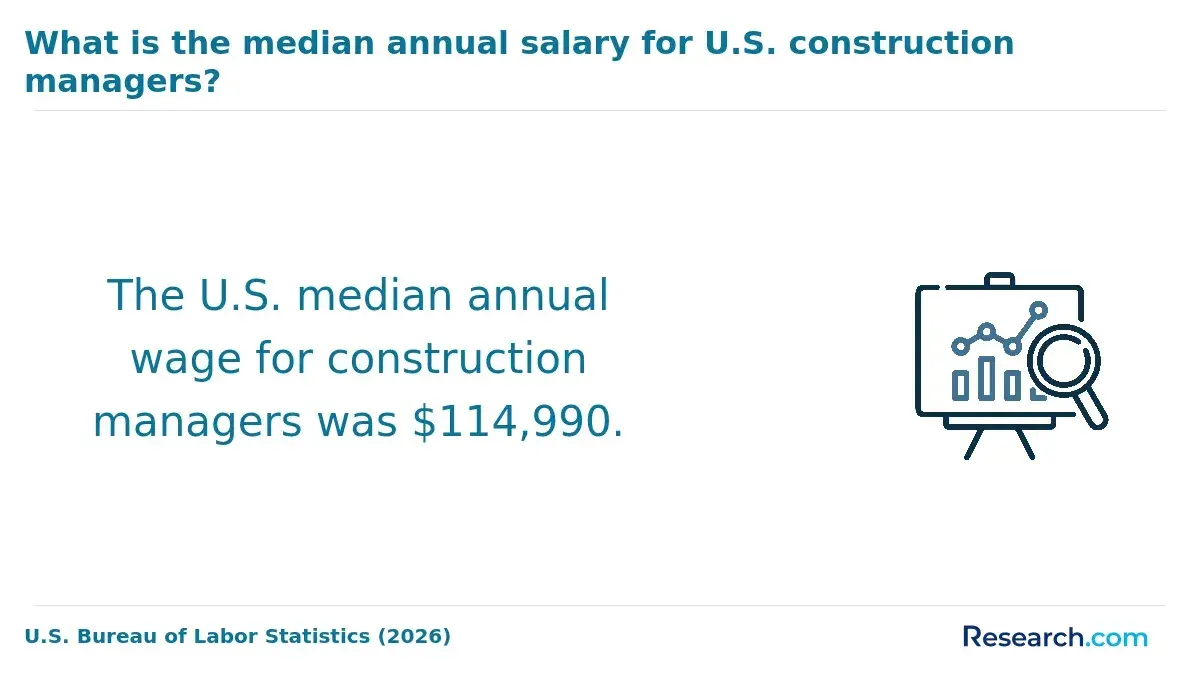
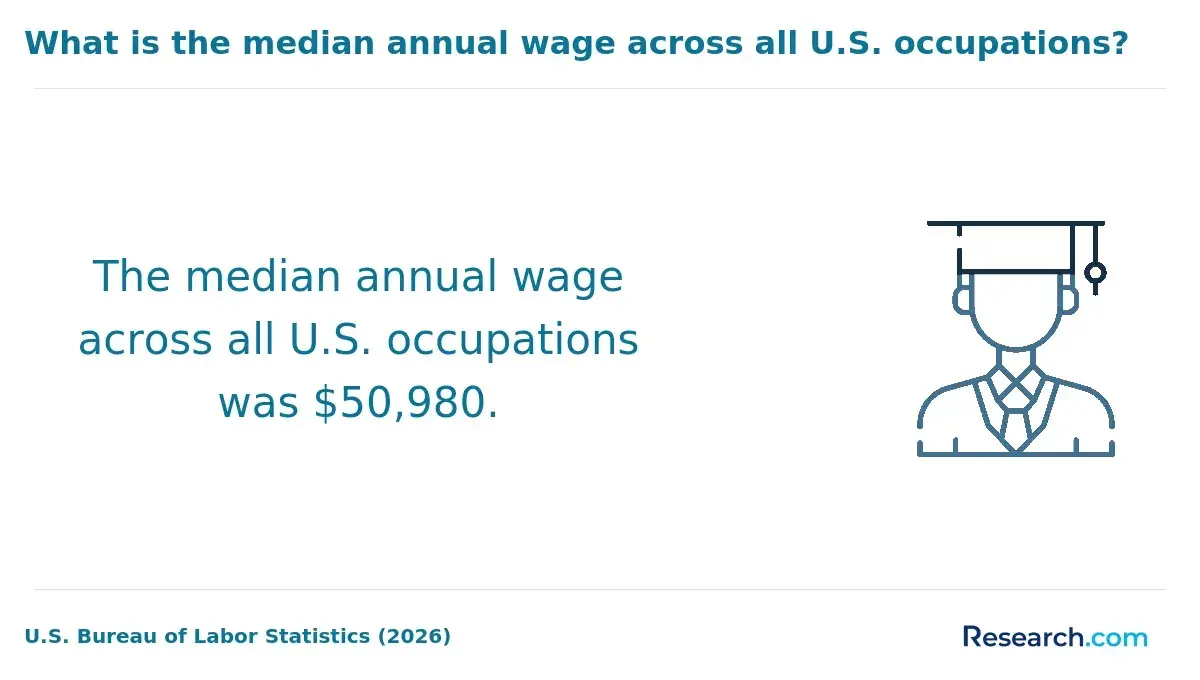
- The U.S. median annual wage for management occupations was $126,520 in May 2025, according to the Bureau of Labor Statistics (BLS); that figure covers experienced managers across occupations, not new managers or MBA graduates specifically.
What is an online MBA in public administration?
It is an MBA delivered primarily online that combines a general business-management core with coursework relevant to running government agencies, public institutions, or mission-driven organizations. The core typically develops skills in accounting, finance, operations, strategy, and organizational behavior. Public administration courses may examine governance, public budgeting, policy implementation, or accountability.
Program labels matter. A school might offer a formally designated concentration, a few relevant electives, or a general MBA with a public-sector project. Those are different levels of specialization. An MBA emphasizes managing organizations and resources; a Master of Public Administration (MPA) generally places more emphasis on public policy, government institutions, and public-service administration. Compare actual course requirements rather than relying on the degree title alone.
Is an online MBA in public administration worth it?
It may be worthwhile for a first-time manager who needs stronger budgeting, team-leadership, and operational decision-making skills and can apply them in a current role. Its value is less certain if the desired promotion depends mainly on agency tenure, a competitive civil-service process, or experience the degree cannot replace. Ask a supervisor or hiring manager which qualifications actually influence advancement in your organization.
An MBA can be particularly useful if you want management skills that transfer between public institutions, nonprofits, and businesses. If your goal is specifically policy analysis or a government career path requiring deeper public-sector training, compare an MPA. If your immediate gap is conducting performance conversations or managing an agency budget, employer training or a targeted course may cost less and solve the problem sooner. Programs designed as graduate business programs for executives may be better suited to established leaders than to someone managing a first team.
Before applying, identify a realistic next role, its hiring criteria, the skills you lack, and the amount you can spend without assuming a promotion. A degree is most defensible when its curriculum addresses those gaps and its cost fits your likely career path.
What are the admission requirements for an online MBA in public administration?
There is no universal admissions standard for this specialization. Schools commonly review an accredited bachelor's degree, academic record, résumé, statement of purpose, and recommendations, but experience expectations, GPA thresholds, interviews, and GMAT or GRE policies differ. A nonbusiness major does not automatically rule you out; a school may instead recommend or require foundation work in accounting or quantitative subjects. Do not assume that public administration coursework adds a separate admission requirement.
As a first-time manager, your strongest evidence may be recent rather than lengthy. Describe the size and purpose of your team, decisions you own, a budget or resource constraint you handled, and a conflict or stakeholder issue you worked through. Be precise about what you did: coordinating peers is valuable experience, but it is not the same as supervising employees.
Use this application-preparation sequence to separate official requirements from ways to strengthen your candidacy:
- Check each program's current admissions page for degree eligibility, required documents, tests or waivers, deadlines, and any minimum work-experience rule.
- Confirm that the public administration option and its required courses can be completed online; ask whether it appears on the transcript.
- Choose examples showing people management, communication, budgeting, and accountability, then explain what you learned rather than claiming senior-level authority.
- Ask recommenders who have observed your judgment and leadership to provide specific examples, following the school's rules on who may write a reference.
- If you need foundational business preparation or have prior graduate coursework, ask which courses must be taken before enrollment and whether any credits can count toward the MBA.
Credit acceptance is especially important if you have already completed graduate business courses. Policies differ, so evaluate transfer-friendly business degree pathways against the receiving school's written limits; prior coursework is not a guarantee of fewer required credits.
The delivery format affects how you practice management and build connections, not just where you watch lectures. The comparison below highlights questions that matter when you are responsible for a team during working hours.
| Factor | Online MBA | Campus-based MBA |
| Scheduling | May reduce travel, but live classes and group meetings can still be fixed. | Usually requires regular travel and scheduled class attendance. |
| Practice and networking | Virtual projects may connect you with working managers in other locations; access to events varies. | In-person teamwork and events may be easier to attend locally. |
| Workplace application | Often allows continued employment and immediate use of course concepts. | Part-time formats may also allow this; full-time study can require time away from work. |
Ask for the actual timetable, group-project expectations, exam arrangements, and any campus visits. "Online" does not mean asynchronous. If speed is your priority, compare one-year online MBA programs with your ability to study while managing a team; a shorter calendar can mean a heavier course load.
Expect the MBA core to teach managerial accounting and finance, organizational behavior, operations, strategy, and decision-making. For a new manager, these subjects can connect day-to-day people decisions to staffing capacity, budgets, and organizational goals. Public-administration-focused courses may add public finance, administrative ethics, governance, procurement, or program evaluation, depending on the school.
Inspect the required course list for depth. One public-sector elective may provide useful context but will not offer the same preparation as a sequence covering public budgeting and institutional accountability. Ask whether a capstone or project can address a real workplace issue without exposing confidential personnel, client, or agency information.
Both vary substantially with required credits, course load, term schedule, and whether the school requires foundation courses. Part-time study can preserve income and give you time to practice new skills at work, while a faster pace may be difficult during budget cycles or your first year supervising staff. Get the school's course sequence and maximum completion window before committing.
For cost, compare the full required-credit tuition with mandatory fees, books or software, and any travel for residencies. Then subtract confirmed employer assistance or scholarships and consider borrowing costs and time away from work. Published tuition alone is not a complete budget. MBA programs under $30,000 can be a useful affordability starting point, but verify each program's current total cost and whether it offers the public-administration coursework you need.
First, confirm that the institution holds recognized institutional accreditation using the school's current accreditation information and the U.S. Department of Education's accreditation database. Then check whether the business school or MBA has separate business accreditation, such as AACSB, ACBSP, or IACBE, using the accreditor's own directory. Institutional and business-school accreditation answer different questions; one should not be mistaken for the other.
Finally, verify that the MBA, its online delivery, and the public administration option are actually offered by the institution you are considering. If an employer requires a particular credential for tuition assistance or promotion, obtain that requirement in writing before enrolling.
For a first-time manager, the most realistic near-term outcome is often greater responsibility within a familiar function: supervising a larger service team, managing operations, coordinating programs, or overseeing resources in a public agency or nonprofit. Later moves into department or agency leadership generally depend on performance, relevant sector experience, and the employer's hiring rules - not the MBA alone.
Public hospitals and health systems also need operations managers, but healthcare-specific knowledge matters. If that is your intended destination, compare the public-administration curriculum with online MBA programs for healthcare professionals and examine which better matches the roles you seek. For any transition, read actual job postings to identify required experience, sector knowledge, and credentials before treating a concentration as a hiring shortcut.
There is no single salary or job-growth rate for graduates of this MBA concentration. Compensation depends on the occupation, employer, location, experience, and public-sector pay structure. BLS projects about 1.1 million openings per year, on average, across U.S. management occupations from 2025 to 2035, from growth and workers leaving those occupations permanently. That broad figure signals opportunities across management; it does not forecast openings for public administrators or new MBA holders.
For a useful personal estimate, compare pay ranges for the specific next role in your agency or target employers. Use the broad management wage figure in the takeaways as context, not as an expected post-MBA salary or a basis for calculating your degree's return.
Do public administration MBA graduates need licenses or certifications?
The MBA itself does not grant a professional license, and a general public-administration management role does not have a universal licensing requirement. Specific jobs can have additional rules: a school leadership position, for example, may require a state-issued credential, while specialized finance or procurement work may call for qualifications set by the employer or jurisdiction.
Check requirements for the occupation you want, not just the degree you plan to earn. A voluntary management or project credential may help demonstrate a skill, but it does not replace required experience or a legally mandated license.
Other Things You Should Know About MBA
That depends on the university. Ask the registrar how the degree appears on both the diploma and transcript; do not assume online and campus credentials use identical wording.
Often, but obtain any required employer approval first. Remove confidential employee, client, and agency information, and ask the instructor whether a simulated or publicly available dataset is acceptable.
Check whether the school accepts a former supervisor, project lead, or other professional recommender. Explain the situation to admissions rather than submitting a reference that cannot speak to your work.
Possibly. Ask about leave-of-absence rules, course availability when you return, and any effects on financial aid or employer reimbursement before assuming you can pause without consequences.
- Accreditation in the U.S. | ed.gov http://www.ed.gov/laws-and-policy/higher-education-laws-and-policy/college-accreditation/accreditation-in-the-us
- Synchronous vs. Asynchronous Classes | Hopkins EP https://ep.jhu.edu/news/asynchronous-vs-synchronous-classes/
- MBA with Public Administration Certificate | CCO https://online.champlain.edu/degrees-certificates/mba-public-administration-specialization
- What's the Difference Between Asynchronous and Synchronous Learning? | Ohio State Online https://online.osu.edu/content-hub/blogs/whats-the-difference-between-asynchronous-and-synchronous-learning/
- What's the Difference Between an MPA and an MBA? | Pace University Online https://online.pace.edu/articles/public-administration/mpa-vs-mba-whats-the-difference/
- Online MBA | GW School of Business https://business.gwu.edu/academics/programs/mba/online-mba
- Guidelines to Waive Standardized Test Requirements | UTD https://graduate.utdallas.edu/staff-advisors/test-waiver/
- Does the GMAT/GRE waiver affect my application? - Carey Blog https://blog.carey.jhu.edu/article/does-the-gmat-gre-waiver-affect-my-application
- Online Master's in Business Administration (MBA) | American Public University https://www.apu.apus.edu/online-masters-programs/master-of-business-administration/
- MPA vs. MBA: What's the Difference? | Northeastern Online https://publicaffairs.northeastern.edu/articles/master-public-administration-mpa-vs-master-business-administration-mba/