Is an online MBA in Healthcare Management worth it for working parents?

Co-Founder and Chief Data Scientist
An online healthcare MBA can build management skills without requiring a working parent to leave a job. It can also claim evenings, weekends, and money that a household cannot easily spare.
This guide is for parents weighing advancement in healthcare against those commitments. It explains what the degree may help you do, what it cannot guarantee, and how to test a program's cost and schedule against your career goals before you apply.
Key Things You Should Know
- An online MBA in healthcare management is most likely worth it when it supports a realistic move into broader responsibility and fits your family's budget and weekly schedule.
- Online does not necessarily mean self-paced: live classes, group projects, and residencies can create childcare needs that marketing descriptions overlook.
- The U.S. Bureau of Labor Statistics reports a $126,520 median annual wage for management occupations in May 2025, but that figure covers many jobs and is not an earnings estimate for healthcare MBA graduates.
Is an online MBA in Healthcare Management worth it for working parents?
It can be if the degree addresses a specific career bottleneck and the program remains manageable alongside work and caregiving. A parent already supervising a clinical team, coordinating operations, or managing a healthcare budget may be able to apply MBA coursework at work and compete for wider operational responsibility. Someone seeking a first healthcare job should be more cautious: a management degree does not replace industry experience.
Compare the credential with the job you actually want. The distinctions below can prevent you from paying for more education—or the wrong education—than that goal requires.
| Option | Potential fit | Important limitation |
| Healthcare-focused MBA | Broad business leadership, finance, and operations roles in healthcare | May offer less depth in health policy or administration than a specialized degree |
| Master of Health Administration (MHA) | Focused preparation for healthcare administration | May offer less general business breadth for a move outside healthcare |
| Targeted course, certificate, or employer training | A defined skill gap, such as budgeting or project leadership | May not satisfy an employer's preference for a graduate degree |
Value depends on your likely next role, the employer's promotion criteria, the net cost after any tuition assistance, and the time your family would give up. If you already have substantial leadership experience, an executive MBA program comparison may help you assess another format, though executive schedules and costs may be less family-friendly. If no target position calls for an MBA and a shorter credential closes the skill gap, the shorter route may be the better investment.
What Careers Can an Online MBA in Healthcare Management Lead To?
The degree may support progression into clinic or practice operations, hospital department management, healthcare consulting, or business roles at insurers and other healthcare organizations. Those jobs involve different combinations of staffing, budgets, process improvement, and coordination with clinicians. The most credible path usually builds on responsibilities you already hold: a nurse manager might seek broader service-line operations, while a billing supervisor might pursue revenue-cycle leadership.
For a parent changing industries, a project with a healthcare employer, relevant work experience, and professional contacts may matter as much as the concentration. Ask prospective programs whether online students can access healthcare-focused career services and applied projects. An MBA alone does not qualify someone to practice medicine or nursing, nor does it confer the experience commonly expected for senior executive jobs.
How Much Does an Online MBA in Healthcare Management Cost?
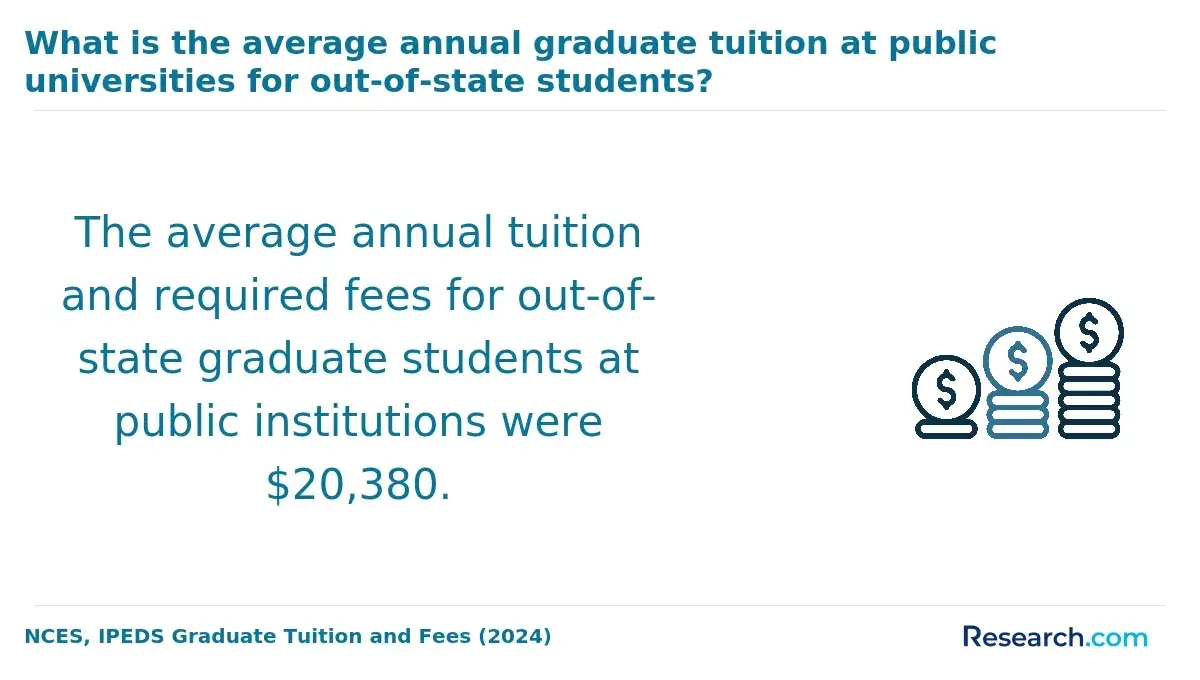
There is no reliable single price for this degree: schools charge by credit, course, term, or program, and a healthcare concentration may or may not add coursework. Request a written estimate covering all required credits, mandatory fees, materials, technology, and any residency travel. For a working parent, include childcare needed for live sessions or trips and the cost of reducing paid work hours, if necessary.
Compare the resulting household cost—not the advertised tuition alone—with available savings, employer assistance, and any borrowing you would need. Affordable online MBA programs can provide comparison candidates, but confirm each school's current total charges and whether it offers the healthcare coursework you need.
For a rough payback test, divide your net cost by a conservative estimate of additional annual income from a plausible next job; if you cannot identify that job or estimate its pay credibly, do not treat the calculation as an expected return. Also check whether employer reimbursement requires you to remain at your job after graduation.
Most programs pair an MBA core—such as managerial accounting, finance, strategy, operations, and organizational leadership—with healthcare-focused courses or electives. Depending on the school, those courses may address healthcare finance, delivery systems, policy, quality, or regulatory decision-making. A healthcare-themed elective is not necessarily a formally designated concentration; check the degree plan and transcript designation.
For working parents, an applied project can be especially useful if it addresses a real workplace problem without adding extensive travel. Confirm its scope and group-work requirements before enrolling. This is management education: it does not teach clinical practice or substitute for a professional healthcare license.
Completion time depends on required coursework, term length, course availability, and how many classes you take at once. Accelerated study can shorten the calendar but compress deadlines into a parent's workweek. Part-time study can preserve more family time each term while extending tuition commitments and delaying any career benefit.
If speed matters, compare one-year online MBA programs with slower options only after checking their healthcare curriculum and weekly demands. Ask whether courses run every term, how long you may take to finish, and what happens if a caregiving interruption forces you to pause.
Accreditation depends on the institution and program; online delivery or a healthcare concentration does not establish it. Check that the university holds recognized institutional accreditation, then determine whether its business school or MBA also holds specialized business accreditation, such as AACSB, ACBSP, or IACBE accreditation. These are distinct forms of review, not interchangeable labels.
Verify status directly with the accreditor and ask whether it covers the online MBA. Accreditation is an important screening step, but it does not establish that a particular schedule, healthcare curriculum, or career service meets your needs.
Schools commonly request a bachelor's degree, transcripts, a résumé, and application materials explaining professional goals. Policies on work experience, recommendations, interviews, prerequisite courses, and GMAT or GRE scores vary. A clinical or other nonbusiness degree does not automatically rule you out; review whether the program offers accounting or quantitative foundations if you need them.
For a parent coordinating applications around work and school calendars, online MBA programs with rolling admission may offer more timing options. Confirm the actual start dates, aid deadlines, and document requirements with each school rather than assuming rolling review means you can begin immediately.
Online access removes a commute, not the work. Asynchronous classes usually allow more choice about when to view material; synchronous classes require attendance at set times. Either format can include fixed deadlines, team meetings, proctored exams, or campus visits. A course labeled flexible may still conflict with bedtime, shifts, or weekend caregiving.
Before committing, request a sample syllabus and term calendar. Put live sessions, estimated study blocks, and likely group meetings on the same calendar as your job and childcare coverage. Ask whether classes can be taken one at a time, whether group meetings are student-scheduled, and how leaves and re-entry work. A sustainable pace is more valuable than an advertised fast finish you cannot maintain.
There is no defensible salary figure for all graduates: pay depends on occupation, location, employer, prior experience, and responsibility. For context, the U.S. Bureau of Labor Statistics reports a $126,520 median annual wage for management occupations in May 2025. That broad occupational figure is not a healthcare-manager starting salary, an MBA-graduate median, or evidence that earning the degree causes a raise.
Use pay ranges for the specific roles and locations you could realistically enter, then compare them with your current compensation. BLS projects management occupations overall to grow faster than average from 2025 to 2035, but that broad outlook cannot predict openings at your employer or a promotion after graduation.
Do Healthcare Managers Need Licenses or Professional Certifications?
Many healthcare business and operations roles do not require a general healthcare manager license. Requirements differ by role and state: certain regulated facility leadership positions have licensing rules, while clinical duties still require the applicable professional license. Employers may value role-specific certifications, but an MBA is not a substitute for required licensure, and a certification is not automatically mandatory.
If you are a licensed nurse deciding between business leadership and advanced nursing education, compare the credentials against the position's actual requirements. A guide to MBA options by total cost degree programs includes MSN/MBA dual-degree options; check nursing prerequisites and the full combined cost before treating a dual degree as the right route.
Other Things You Should Know About MBA
That varies by university. Ask how the degree and concentration appear on both the diploma and transcript before enrolling.
Some schools may account for documented dependent-care costs when setting an eligible student's cost of attendance. Ask the financial aid office what its policy allows; an allowance does not itself create a grant.
Usually not if you are paying independently. Approval may be necessary for tuition assistance or for using workplace data, projects, or paid time for coursework.
Possibly, but the receiving school decides which credits it accepts and applies to its degree. Ask about transfer limits and course equivalencies before relying on that option.
- Apply for Childcare and Parent Services (CAPS) Program | Georgia.gov https://georgia.gov/apply-childcare-and-parent-services-caps-program
- Persistence and Dropout in Higher Online Education - PMC https://pmc.ncbi.nlm.nih.gov/articles/PMC9197481/
- Annual Earnings by Educational Attainment - COE https://nces.ed.gov/programs/coe/indicator/cba/annual-earnings
- Professions | vermont.gov https://sos.vermont.gov/opr/professions
- Child Care Financial Assistance Options - ChildCare.gov https://childcare.gov/consumer-education/get-help-paying-for-child-care/child-care-financial-assistance-options
- What Does Asynchronous Mean? A Simple Guide to Online Learning Formats - Professional Development at Charlotte https://professional.charlotte.edu/what-does-asynchronous-mean-a-simple-guide-to-online-learning-formats/
- MHA vs. MBA in health care: choosing the right path for you | Capella University https://www.capella.edu/blog/business/the-difference-between-an-mha-and-mba-in-health-care-management/
- MBA in Healthcare Management vs. Master's in Healthcare Administration - Graduate School | Academic Advising https://www.highpoint.edu/graduate/mba-healthcare-management-vs-masters-healthcare-administration/
- What are Asynchronous Classes? | University of Bridgeport https://www.bridgeport.edu/news/what-are-asynchronous-classes/
- How Do Asynchronous Classes Work? | Hopkins EP Online https://ep.jhu.edu/news/how-do-asynchronous-classes-work/