Online MBA in Entrepreneurship: Curriculum and Workload for Nonbusiness Bachelor's Graduates

Co-Founder and Chief Data Scientist
An online MBA in entrepreneurship can help a nonbusiness graduate learn to evaluate and run a venture, but the specialization is only part of the degree. Accounting, finance, and other MBA core courses may require more adjustment than developing a business idea. If you are weighing a program alongside work or plans to launch a company, the useful questions are what you will study, how you will manage the workload, and whether a full MBA serves your goal better than shorter training. This guide helps you make that comparison before enrolling.
Key Things You Should Know
- A nonbusiness bachelor's degree does not automatically bar admission; check each school's experience expectations and whether it requires foundation coursework.
- Expect a broad management core plus entrepreneurship courses. Your largest preparation gap may be accounting or finance, not the venture project.
- Compare the full cost and course schedule with your intended use of the degree; the $126,520 median wage for management occupations is not an MBA graduate salary.
What is an online MBA in entrepreneurship for nonbusiness graduates?
It is a graduate business degree that combines general management education with courses focused on starting, acquiring, financing, or growing organizations. Schools may call the focused coursework a concentration, specialization, or track.
A school offering one entrepreneurship elective is not necessarily offering a formal entrepreneurship concentration, so inspect the degree requirements rather than relying on the program label.
Your undergraduate field can be an asset. An engineer may recognize a product problem, an educator may understand a market for learning services, and a clinician may see a gap in care delivery. The MBA adds tools for judging demand, costs, operations, and risk; it does not replace the professional expertise or licenses needed to deliver a regulated service.
Can you earn an online entrepreneurship MBA without a business degree?
Many MBA programs consider applicants from a range of undergraduate majors, although eligibility and professional-experience expectations vary by school. A nonbusiness degree is not, by itself, evidence that you need every introductory course. Compare the skills you already use at work with the skills required by the MBA core.
Before applying, distinguish a formal prerequisite from recommended preparation. A program might require a foundation course, provide a preparatory module, or teach introductory concepts within its graduate courses.
Ask for the current course sequence and a sample accounting or finance syllabus. If you have not worked with financial statements, spreadsheets, or basic quantitative analysis, review those topics before your first term - even if admission has no prerequisite.
What does an online MBA in entrepreneurship curriculum include?
Curricula differ, but the key distinction is between management courses required of most MBA students and courses devoted to ventures. The table shows how each component can serve a graduate entering from another discipline; it does not describe a universal set of required courses.
| Curriculum component | Common subject matter | Why it matters to a nonbusiness graduate |
| MBA core | Managerial accounting, finance, marketing, operations, strategy, analytics, and leadership | Builds a shared vocabulary for pricing, cash flow, customer decisions, and managing people |
| Entrepreneurship coursework | Opportunity evaluation, customer discovery, business models, venture finance, and growth | Tests whether an idea has a workable market and operating model |
| Electives and applied work | Potentially a venture plan, consulting engagement, product project, or capstone | Offers a way to apply learning, provided the project fits your goals and circumstances |
Look past appealing course titles to the assignments. A venture-finance course might emphasize managerial funding decisions rather than advanced financial modeling.
Likewise, drafting a business plan is not the same as interviewing customers, testing demand, or operating a company. If you already have a venture or an industry-specific idea, ask whether you can use it in projects and what access you will have to mentors or feedback.
Online delivery can reduce commuting and let you keep working, but it does not automatically mean self-paced study. Programs may use recorded lessons, scheduled live discussions, group projects, fixed deadlines, and occasional campus visits.
Campus programs may offer more spontaneous contact with classmates; either format can support useful relationships if its projects, faculty access, and networking opportunities fit your schedule.
For a working applicant, compare the required schedule, not just the delivery label. Published comparisons of online MBA programs with asynchronous classes can help narrow your search, but confirm live-session times, residency requirements, and group-meeting expectations directly with each school.
If your aim is to find cofounders or enter a new industry, also ask how online students participate in recruiting, alumni events, and venture activities.
Requirements vary. Programs commonly review a completed bachelor's degree, academic record, résumé, and statement of goals; some also request recommendations, an interview, or GMAT or GRE scores.
A school may require professional experience or offer a test waiver, but neither policy should be assumed. Entrepreneurship coursework generally does not require that you already own a business unless the school states otherwise.
Use your application to connect your prior discipline to a specific management problem: for example, turning technical expertise into a viable service or learning to manage finances in a growing organization.
If timing is important, online MBA programs with rolling admission may offer another application route; verify deadlines, start dates, and when foundation work must be completed. Ask admissions to identify any required prerequisites in writing before committing.
Completion time depends on the credits required, transfer or waiver policies, term structure, and whether you enroll full time or part time. A shorter advertised pathway may assume a demanding course load or prior preparation. If speed is your priority, compare one-year online MBA programs against the time you can actually protect for study, rather than treating the published minimum as your likely finish date.
There is no single reliable price for this category of MBA. Request each school's current total-program estimate, identifying tuition, mandatory fees, materials, and any required travel separately.
Confirm whether foundation courses add credits or charges and whether tuition is billed per credit or term. For an owner or aspiring founder, include time diverted from paid work or the venture. Employer assistance can lower your out-of-pocket cost, but check reimbursement limits and continued-employment conditions before counting on it.
The workload comes from both course pace and the distance between your prior training and the MBA core. A graduate who has managed budgets may find finance more familiar than someone encountering financial statements for the first time.
An entrepreneur may already know customers well but still need time to learn accounting conventions. Group projects can add scheduling demands even when lectures are recorded.
Before choosing a course load, run a practical schedule check. These steps expose commitments that a program's description of flexibility may not show:
- Obtain a recent syllabus or sample weekly schedule for a core course and an entrepreneurship course.
- Mark fixed deadlines, live meetings, examinations, and likely group-work windows against your work and personal calendar.
- Try a short accounting or finance refresher, then note how long it takes you to complete the exercises.
- Ask whether you can reduce your course load or pause enrollment if work or business demands change.
If the schedule leaves no room for difficult weeks, a slower path may be more useful than an accelerated one. Protect time for applying course concepts to a real decision, not merely finishing assignments.
The most direct use may be building or improving your own organization. Graduates may also seek roles in product development, business development, innovation, or small-business management.
Fit depends heavily on prior experience: a scientist developing a product may bring valuable domain knowledge but still need sales or commercial experience; an existing manager may be better positioned to lead a new initiative.
An entrepreneurship concentration is not a placement credential. If you want to change industries, examine whether a program offers projects, relevant employer connections, and career support available to online students.
For a healthcare professional, information on career outcomes after business school in nursing-related paths can illustrate how prior professional qualifications shape options; those paths should not be generalized to every nonbusiness graduate.
If your immediate need is to validate one idea or improve cash-flow decisions, a targeted course, mentor, or small-business support program may be faster and less costly than a full MBA. The degree becomes more compelling when you need broad management training as well as venture-specific learning.
There is no single salary or employment outlook for entrepreneurship MBA graduates: founders' income depends on their businesses, while employed graduates enter different occupations at different career stages.
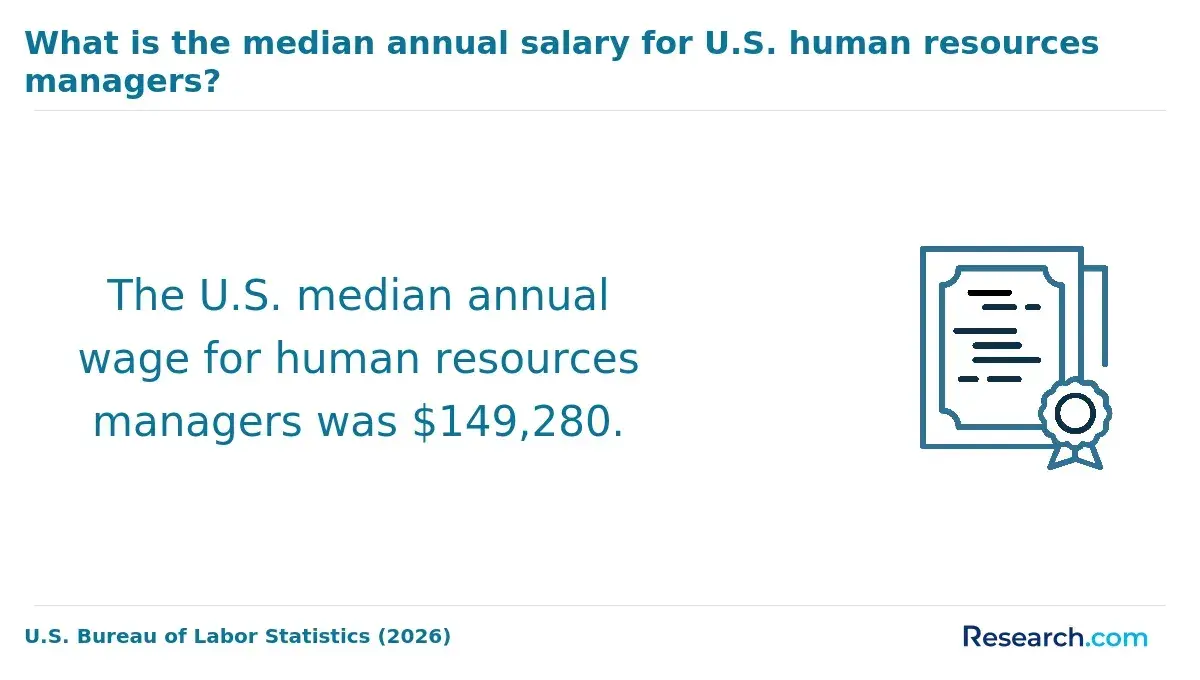
The U.S. Bureau of Labor Statistics reports a $126,520 median annual wage for management occupations in May 2025. That figure covers workers across management occupations - not online MBA graduates, new founders, or people who have just changed careers.
BLS projects overall management employment to grow faster than the average for all occupations from 2025 to 2035. Use that broad outlook as labor-market context, not a forecast for a particular venture or job offer. For a personal financial decision, compare your current earnings and realistic next role with the program's full cost and the income or operating time you may give up while studying.
How can you choose an accredited online MBA in entrepreneurship?
First, verify the university's institutional accreditation through an official accreditor or U.S. Department of Education resource. Then check whether the business school holds specialized accreditation, such as AACSB accreditation, if that distinction matters to you. Institutional and business-school accreditation are different; neither confirms that an entrepreneurship concentration is offered online.
Compare affordable AACSB-accredited online MBA programs as a starting point, then verify the current program page for concentration requirements and total cost. Request the course sequence, sample syllabi, required meeting schedule, and details of online students' access to career or venture support.
The strongest choice is the one whose actual coursework and schedule help you address a business problem you intend to work on - not simply the one with the most appealing concentration name.
Other Things You Should Know About MBA
Usually not, unless a program explicitly requires one. Having a problem or market you want to explore can make projects more useful, but an untested idea is not proof of a viable business.
Do not assume they will transfer as graduate credit. A school might instead use prior coursework to waive a foundation requirement; ask for its written credit and waiver policies.
Diploma wording varies by institution. Ask the registrar for a sample diploma and transcript policy if the distinction matters to you.
Possibly. Check your employer's tuition-assistance policy for degree eligibility, grade requirements, annual limits, and any obligation to repay assistance if you leave.
- SC Entrepreneurship Course Standards https://www.ed.sc.gov/instruction/career-and-technical-education/programs-and-courses/career-clusters/business-management-and-administration/business-management-course-standards/entrepreneurship-standard/
- Quantitative Preparation | UC Davis Graduate School of Management https://gsm.ucdavis.edu/flex-master-management/admissions/quantitative-preparation
- Curriculum Requirements for Master of Business Administration | School of Management | New York Tech Catalog 2026-2027 https://catalog.nyit.edu/management/mba/curriculum
- Professional MBA Courses and Electives | umn.edu https://carlsonschool.umn.edu/graduate/mba/professional/curriculum/courses
- Curriculum - Master of Business Administration | Cal Lutheran https://www.callutheran.edu/programs/graduate/mba/curriculum/
- How Long Does It Take to Get an MBA? - Pace Online https://online.pace.edu/articles/business/how-long-does-it-take-to-get-an-mba/
- The time commitment and workload for an online MBA degree | WashU Olin Business School https://olin.washu.edu/about/news-and-media/news/2022/12/the-time-commitment-and-workload-for-an-online-mba-degree.php
- What to Expect from MBA Coursework - Gary W. Rollins College of Business https://blog.utc.edu/business/2022/05/16/what-to-expect-from-mba-coursework/
- Academic Support - Degree Programs - Columbia University https://academics.business.columbia.edu/mba/academics/academic-support
- Required Courses - Business Administration MBA | Temple University https://www.temple.edu/academics/degree-programs/business-administration-mba-bu-ba-mba/required-courses