Online MBA in Data Science for Business: admissions guide for small business owners

Co-Founder and Chief Data Scientist
A small business can collect plenty of sales, customer, and operating data without knowing which decisions the numbers should change. An online MBA in data science for business may help an owner connect analytics with pricing, cash flow, marketing, and growth—but it also takes money and time away from running the company.
This guide explains what these programs teach, how admissions typically work, and what to verify before applying. It also helps you decide whether a full MBA offers more value than a shorter, targeted course.
Key Things You Should Know
- Applicants generally need a bachelor's degree, but testing, work-experience expectations, prerequisites, and application materials vary by school; owning a business can provide relevant experience.
- For an owner, the strongest application connects a measurable business problem to the program's actual analytics coursework—not simply a desire to "use more data."
- Cost and operating time matter as much as admission: the $126,520 May 2025 median wage for US management occupations is not an earnings forecast for business owners or MBA graduates.
What Is an Online MBA in Data Science for Business?
It is a graduate business degree that combines a broad MBA core with coursework on using data to make business decisions. The core typically covers areas such as accounting, finance, marketing, operations, and leadership. Analytics coursework may address forecasting, visualization, customer analysis, or data-driven strategy.
Check the credential's exact name. A school may offer a formal data science concentration, a business analytics concentration, or only a few relevant electives. Those are not equivalent promises about depth or what appears on a transcript. An MBA generally prepares managers to frame questions and act on analysis; it should not be assumed to provide the statistics, programming, and data engineering depth of a specialized technical master's degree.
A combined or dual-degree MBA is another distinct structure. Listings of online MBA programs in the US MBA programs should not be taken as evidence that a school offers an online data science concentration; confirm the credential and course requirements on the school's current program page.
Is an Online Data Science MBA Worth It for Small Business Owners?
It can be worth it when an owner needs both stronger general management skills and a repeatable way to make decisions from data. For example, an owner expanding locations may need to evaluate cash flow, staffing, customer demand, and operational capacity together. Applying course projects to those decisions can create value before graduation, provided the school permits appropriate use of company data.
The case is weaker when the immediate problem is narrow. If you need to build a sales dashboard or improve bookkeeping, a targeted course, consultant, mentor, or capable hire may solve it faster and at lower cost. An MBA also cannot guarantee that better analysis will overcome limited capital, poor data quality, or a market with insufficient demand.
Compare the full expense with the benefit you can reasonably use: tuition and fees, borrowing costs, and hours diverted from customers and employees versus better decisions, management capability, and any credible career opportunities. An owner who is also a nurse considering clinical leadership may instead ponder choosing online MSN and MBA dual-degree programs; that is a separate educational goal, not a substitute name for a data science MBA.
What Careers Can an Online MBA in Data Science Prepare You For?
For many owners, the most relevant outcome is not a new job title. It is becoming a more capable operator: deciding where to invest, which customers to serve, and when to hire. Owners who later seek employment may also draw on their operating experience for roles in business operations, marketing analytics, product management, or analytics leadership.
Those transitions depend on what the applicant has actually done. Someone who has managed budgets, employees, and customer acquisition can show relevant management experience; someone seeking a hands-on data scientist role may still need substantial programming, statistical, and portfolio experience.
An MBA is not a substitute for technical experience, nor does it confer an executive position. Before enrolling for a career change, review job descriptions for the intended role and ask whether the program's projects and career services help close the specific gaps.
Expect business fundamentals alongside analytics, but do not assume schools use the same curriculum. MBA core courses may include managerial accounting, finance, marketing, operations, organizational behavior, and strategy. Relevant specialization courses might cover business statistics, predictive analytics, data visualization, database concepts, or decisions under uncertainty.
For an owner, the distinction is between learning to interpret and govern analysis and learning to build sophisticated models independently. Inspect course descriptions for the software used, required quantitative work, and whether students tackle applied projects. A course titled "data science" may focus on managerial applications, while another may require coding.
If your goal is to evaluate a new location using customer and financial data, look for opportunities to connect analysis to budgets and implementation—not just model accuracy.
Requirements are set by each university, not by the specialization as a whole. Programs commonly consider a bachelor's degree, academic record, professional background, and evidence that an applicant can handle graduate business work. They may also request a résumé, statement, recommendations, or interview. GMAT or GRE policies, deadlines, minimum grades, and prerequisite courses vary; none should be assumed from the program title.
A small business owner's application is strongest when it explains the scale of their responsibilities and a specific decision they want to improve. These preparation steps are useful even when they are not formal admission requirements:
- Confirm the current degree, testing, experience, prerequisite, deadline, and document requirements with each program.
- Describe your business responsibilities with verifiable examples, such as budgeting, hiring, pricing, or managing customer acquisition.
- Refresh the quantitative skills you will need for the published courses, particularly spreadsheets, basic statistics, and financial statements.
- Use your statement to connect one business challenge to identifiable courses and explain how you will make time for study.
- Ask recommenders who know your decisions and leadership to provide concrete examples, if recommendations are required.
A nonbusiness bachelor's degree does not automatically rule out admission, though a school may require foundation work. Likewise, test-optional does not mean admission is automatic. Listings of budget-conscious MBA program choices GMAT required are only a starting point; verify each school's current test policy directly.
Completion time depends on the required credits, term schedule, course sequence, and whether you study part time or take an accelerated load. A faster path can mean more simultaneous deadlines during your business's busiest periods. Ask whether analytics courses are offered often enough to support your planned pace and what happens if you need to pause enrollment.
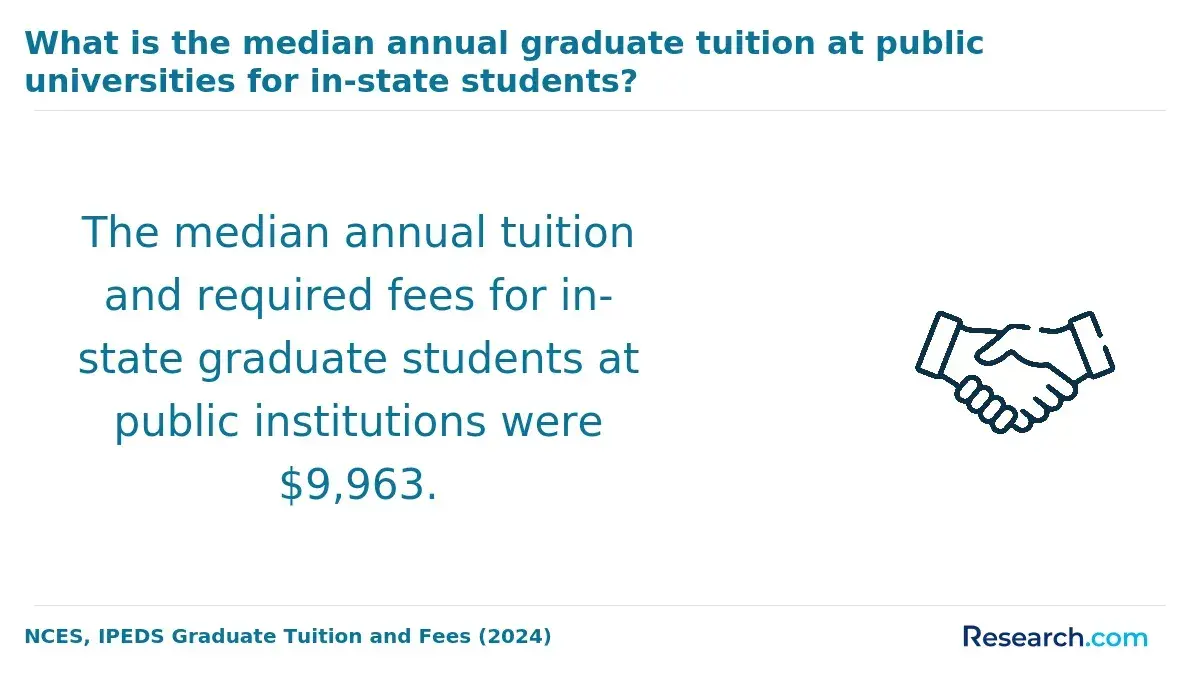
Compare total expected cost, not an advertised per-credit or annual tuition figure alone. Include required fees, books and software, any campus travel, financing costs, and time away from operating the business. Request a written estimate based on your intended course load, then check whether scholarships or employer support actually apply to you. MBA programs ranked by affordability can help identify options to investigate, but an annual price category is not the same as a verified total program bill.
Delivery format affects whether an owner can keep the business running while studying. The comparison below highlights practical questions, not features guaranteed by every program:
| Factor | Online MBA | Campus-based MBA |
| Schedule | May reduce commuting but can still require live sessions and group meetings. | May offer more predictable in-person contact but requires travel to class. |
| Applied work | May let an owner connect assignments to their business, subject to project rules. | May make in-person team projects and campus activities easier to access. |
| Networking | Depends on cohort design, events, and access to career services. | Depends on attendance pattern and participation, not location alone. |
Ask for a sample term calendar, including live sessions, exams, group work, and any residency. If seasonal demand makes a fixed start date difficult, online MBA options for applicants with lower GPAs online MBA programs with rolling admission may be worth examining for timing; rolling admission does not establish that courses are self-paced or that enrollment can be paused without consequences.
Start with a decision the business makes repeatedly, rather than buying a tool because it promises "AI." A retailer, for instance, might combine sales and inventory records to improve reordering; a service business might examine which customer-acquisition channels produce repeat clients rather than just leads. In either case, the owner still needs to test whether the analysis improves cash flow after implementation costs.
Set a baseline before changing a process, assign someone to maintain the data, and review the result at a regular management meeting. Keep customer information protected and limit access to what staff need. These habits make analytics useful to a small team even when the owner never builds an advanced model.
There is no single salary or job-growth figure for "data science MBA graduates." Pay depends on occupation, experience, location, employer, and whether an owner draws a salary or retains profits in the business. As broad context, the US Bureau of Labor Statistics reports a $126,520 median annual wage for management occupations in May 2025. That figure describes workers across management jobs, not graduates of this specialization, and should not be used to project an owner's return on tuition.
The BLS projects management occupations to grow faster than the average for all occupations from 2025 to 2035. That outlook indicates a broad labor market, not demand for a particular MBA concentration. If employment is your goal, compare openings and requirements for the exact roles you want with your existing experience before assigning any salary gain to the degree.
How Can You Choose an Accredited Online Data Science MBA Program?
First, verify that the university holds recognized institutional accreditation and that the online MBA is offered by that institution. Business-school accreditation is a separate consideration; if a school advertises it, confirm what entity and programs it covers. Accreditation alone does not establish that the analytics coursework or schedule fits your business.
Next, compare the credential actually awarded, required analytics courses, total cost, delivery calendar, and opportunities to apply coursework to your company. Ask admissions staff whether projects may use business data, how sensitive information must be handled, and what support is available to online students. Favor a program whose schedule and curriculum address your identified business decisions over one chosen solely for a ranking or a prominent specialization label.
Other Things You Should Know About MBA
Possibly, but obtain the instructor's approval and follow school policies, customer commitments, and applicable privacy obligations. Anonymized or synthetic data may be safer.
Do not assume so. A program may provide practice datasets, but useful business analysis usually depends on records you can lawfully access and maintain.
Tax treatment depends on your circumstances and current rules. Consult a qualified tax professional before counting a deduction in your affordability calculation.
The degree itself does not establish loan eligibility. Lenders assess factors such as the business's finances, credit, and the requirements of the particular loan program.
- Types of Financial Aid: Grants, Work-Study, and Loans | studentaid.gov https://studentaid.gov/understand-aid/types
- What is a "LIVE ONLINE" Course? - Faculty & Staff Support https://staffsupport.spcollege.edu/hc/en-us/articles/15871336299547-What-is-a-LIVE-ONLINE-Course
- What Is Data-Driven Decision Making? Complete Guide | CSP Global Concordia University, ST. Paul https://online.csp.edu/resources/article/data-driven-decision-making-how-organizations-use-data-to-work-smarter/
- MBA in Business Analytics Online - St. Cloud State University https://degree.stcloudstate.edu/online-programs/business/mba/business-analytics/
- How to Pay for an MBA: Smart Funding Strategies Explained | Jenkins MBA https://mba.ncsu.edu/2026/05/07/paying-for-your-mba-scholarships-employer-benefits-and-loans/
- How to Become a Data Scientist | Harvard SEAS https://seas.harvard.edu/news/how-become-data-scientist
- How to be a Successful Online Student | Scottsdale Community College https://www.scottsdalecc.edu/students/elearning/how-be-successful-online-student
- MBA Requirements: What You Need to Apply in 2026 | SCU https://www.scu.edu/business/blog/admissions/mba-requirements/
- Best Online Business Analytics MBA Programs | usnews.com https://www.usnews.com/education/online-education/mba/online-business-analytics-rankings