
Online MBA in Organizational Change: Curriculum and Workload for Nonbusiness Bachelor's Graduates

Co-Founder and Chief Data Scientist
A nonbusiness degree can be an asset in organizational change, but it may not have prepared you for graduate accounting, finance, or business analytics. An online MBA can bridge those gaps while teaching you to lead changes in how organizations work. The challenge is finding a program whose curriculum and schedule fit your preparation, job, and goals.
This guide explains what you are likely to study, where the work may be hardest, and what to check before committing to a degree rather than a shorter alternative.
Key Things You Should Know
- A nonbusiness bachelor's degree does not automatically bar admission; check each school's experience expectations and whether it requires business foundation coursework.
- Expect an MBA core in finance, accounting, operations, and strategy alongside change-focused study in leadership, organizational behavior, and implementation - not a degree devoted entirely to change management.
- Course load, live meetings, group work, and your quantitative preparation determine workload more reliably than the word "online"; the $126,520 May 2025 median wage for management occupations is not an expected MBA graduate salary.
What is an online MBA in organizational change?
It is a graduate business degree that combines a broad MBA core with study of how organizations plan, carry out, and assess change. Depending on the school, "organizational change" may name a formal concentration, a leadership track, an elective cluster, or simply a theme within individual courses. Those arrangements do not offer the same depth, so inspect the required courses and the credential that will appear on your record.
Change-focused study generally concerns people and business decisions: building support for a new process, aligning incentives, communicating with stakeholders, and measuring whether implementation worked. It does not replace specialist training in fields such as clinical practice, software engineering, or labor law. For someone whose earlier degree is in education, psychology, engineering, or another discipline, the MBA's distinctive contribution may be its business-wide view of a change they already understand from the ground level.
Can nonbusiness majors enroll in an online organizational change MBA?
Yes, where a program accepts applicants from varied academic backgrounds. A nonbusiness major is not itself evidence of weak preparation: a psychology graduate may have studied research methods, while an engineer may be comfortable with quantitative analysis. Both may still need to learn managerial accounting or marketing. Schools differ in whether they offer introductory modules, require foundation courses, or expect students to prepare independently.
Compare your transcript and work with the actual first-term syllabi, not just the concentration description. If you have helped implement a new service, trained colleagues, analyzed a process, or coordinated stakeholders, you may already have useful change experience - even without a management title. Engineers evaluating the business side of technical change can also compare business-school options for online MBA programs for engineers; the useful comparison is between required business preparation and the change work they hope to lead.
What does an online MBA in organizational change curriculum include?
There is no universal organizational change MBA curriculum. The table separates the common types of study so you can tell whether a program teaches business fundamentals, gives substantial attention to change, and lets you apply both. Individual course titles and requirements vary.
| Curriculum component | What it may cover | Why it matters to a nonbusiness graduate |
| MBA core | Managerial accounting, finance, marketing, operations, strategy, and analytics | Builds the vocabulary for evaluating budgets, trade-offs, and business results |
| Change-focused courses | Organizational behavior, leadership, change implementation, communication, and stakeholder management | Connects people-centered decisions to organizational goals |
| Electives | Topics such as project management, human resources, or technology management | Lets you pursue a specific kind of change if the courses are actually available online |
| Applied work | A case, simulation, capstone, or employer-based project, where offered | Provides a way to practice diagnosing a problem and defending a proposed change |
The strongest curriculum for your purpose depends on the change you want to manage. For a technology rollout, examine operations, analytics, and technology electives; for workforce redesign, look more closely at organizational behavior and people management. Compare course lists rather than trusting a directory label: a listing described as online MBA financial planning degree programs should not be treated as evidence of either financial-planning or organizational-change coursework without checking the school's own curriculum.
The workload depends on course design, how many courses you take at once, and what you already know. A student new to accounting may need substantial practice outside class, while a student experienced in training or team development may find some leadership cases more familiar. Credit hours alone cannot establish a reliable weekly study estimate.
Online delivery also does not mean fully self-paced study. Case discussions, deadlines, live sessions, and group projects can compete with work schedules. Change courses may require interviews or a team implementation plan; core courses may add problem sets and exams. Before enrolling, request recent syllabi or sample course calendars and check when team members must meet, whether attendance at live sessions is required, and whether projects can use your workplace. If you plan to study alongside a full-time job, consider starting with a lighter course load until you have experienced both a quantitative core course and a collaborative course.
Requirements are set by each school, not by the organizational change specialization as a whole. An application commonly calls for a bachelor's degree and academic records; programs may also ask for a résumé, recommendations, a statement of goals, an interview, or test scores. Professional experience expectations, test waivers, and foundation-course policies vary. Do not assume that advice to review accounting is an official prerequisite - or that admission means you will need no preparation.
For an application, explain how your disciplinary knowledge relates to a change you want to lead. An educator might discuss implementing a new learning process; a healthcare administrator might describe improving a service workflow without claiming clinical expertise. Ask admissions staff which introductory business topics are assumed in the first term, whether preparatory work earns degree credit, and whether any requirement adds time or cost.
Completion time varies with required credits, course availability, transfer or foundation policies, and whether you enroll part-time or accelerate. A concentration may fit within ordinary electives at one school but require additional coursework at another. Ask for a term-by-term plan that includes the change courses you want - not just the shortest advertised route through the MBA.
To estimate your cost, start with the required credits and published tuition basis, then add mandatory fees, materials, any required travel, and the cost of foundation courses that do not count toward the degree. Employer assistance can change what you pay, but check reimbursement limits and conditions before relying on it. Listings of lower-cost graduate business programs can help you identify candidates; compare complete degree costs and change-related course availability before treating a lower advertised price as better value.
Both formats can teach the same management concepts, but their schedules and opportunities for interaction may differ substantially. Online study may let you keep your job and apply a project immediately at work. A campus program may offer more routine in-person contact and access to activities scheduled around its local cohort. Neither format guarantees strong networking, internship access, or flexibility: those depend on the particular program.
Ask both schools how students find project partners, meet faculty, use career services, and attend recruiting events. If speed matters, compare actual course sequencing with MBA degree pacing options one-year online MBA programs; an accelerated calendar may leave less room to build business foundations while working. Choose the format whose required interactions you can attend, rather than assuming online always means easier.
First, verify that the institution is accredited by an agency recognized by the U.S. Department of Education. Then check whether the business school or MBA has additional business accreditation, such as AACSB, ACBSP, or IACBE accreditation. Institutional and business-school accreditation are different checks; neither proves that a particular organizational change concentration exists or that every elective is offered online.
Confirm the school's status through the accreditor's directory, and ask which institution awards the degree if courses involve a partner. That distinction matters especially when comparing a single MBA with the more complex program selection for online MBA programs mba programs available through dual-degree arrangements: verify the recognition and requirements of each credential separately.
The most direct path usually builds on work you already know. A professional who has coordinated process improvements might pursue broader operations responsibility; someone experienced in employee training might move toward learning, organizational development, or people-management work. Change-management and internal consulting roles may also be relevant when you can demonstrate project delivery, stakeholder communication, and measurable results.
The MBA can strengthen business judgment, but it does not confer managerial authority or replace experience in a target function. If you want to lead technical implementation, employers may still expect technology experience; specialized HR or project roles may call for further field-specific skills or credentials. Look for programs that let you produce a credible work sample - a change proposal with a budget, stakeholder plan, and measures of success - rather than relying on the concentration name alone. If your goal is a narrow skill upgrade rather than broader management responsibility, an individual course, employer training, or a specialized credential may be more direct.
What salaries and job outlook can organizational change MBA graduates expect?
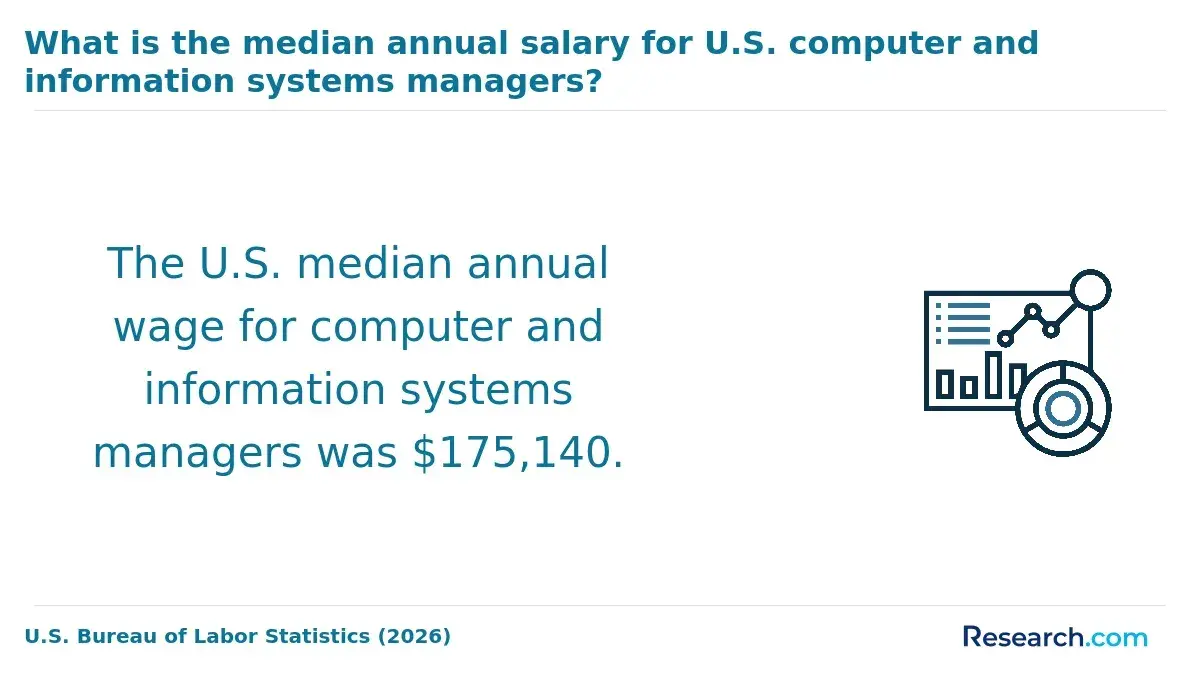
There is no single salary or job-growth measure for "organizational change MBA graduate." The U.S. Bureau of Labor Statistics reports that management occupations had a median annual wage of $126,520 in May 2025. That figure covers people across management occupations and experience levels; it is not a starting salary, a concentration-specific outcome, or an estimate of what the MBA will add to your pay.
BLS projects management employment to grow faster than the average for all occupations from 2025 to 2035, with about 1.1 million openings annually on average from growth and replacement needs. Those openings do not measure demand for organizational change specialists. For a useful personal comparison, examine pay and hiring requirements for the specific role and location you want, then compare them with your current earnings, degree cost, and likelihood of meeting the role's experience requirements.
Other Things You Should Know About MBA
Not necessarily. Schools differ in whether a concentration appears on the diploma, transcript, or neither. Ask the registrar how the completed credential is recorded.
Only with appropriate employer permission and course approval. Ask whether you can anonymize information or use a public case instead.
Not automatically. Check the certifying body's current education and experience rules before assuming that a course or degree qualifies.
No. Schools may limit enrollment by location or impose requirements for activities completed elsewhere. Confirm eligibility with the program before applying.
- Education and Training - Full-time Equivalency (FTE) https://benefits.va.gov/GIBILL/85_15/FTE.asp
- Education credits: Questions and answers | Internal Revenue Service https://www.irs.gov/credits-deductions/individuals/education-credits-questions-and-answers
- Choosing a learning format that works for you | Gary W. Rollins College of Business https://blog.utc.edu/business/2025/06/09/choosing-a-learning-format-that-works-for-you/
- How does the workload of an MBA compare to undergraduate? | Tippie College of Business https://tippie.uiowa.edu/about/who-we-are/advisor/mba/workload-comparison
- Getting an MBA While Working Full Time: How to Make It Work | Pace University New York https://www.pace.edu/news/getting-an-mba-while-working-full-time
- Can You Work Full-Time While Earning Your MBA? | Carson-Newman University https://www.cn.edu/cps-blog/tips-for-working-while-earning-mba/
- Business Administration, MBA | University of Alabama https://catalog.ua.edu/graduate/business/masters-of-business-administration-program-mba/
- MBA in Leadership & Change: Is It Worth the Investment? | Edgewood College https://online.edgewood.edu/blog/mba-in-organizational-leadership-and-change/
- How to apply - D'Amore-McKim School of Business https://damore-mckim.northeastern.edu/admissions/how-to-apply/
- Graduate Bridge Program - IU Southeast - Indiana University https://southeast.iu.edu/bct/graduate-bridge-program.html


