
Is an Online MBA in Accounting Worth It for Career Changers?

Co-Founder and Chief Data Scientist
Changing careers into accounting can mean different things: moving into corporate finance leadership, becoming an accountant, or pursuing CPA licensure. An online MBA in accounting may help with the first goal, but it is not always the most direct route to the others. If you have experience outside accounting, this guide will help you assess what you can transfer, what you still need to learn, and whether the degree's cost and career support justify enrolling.
Key Things You Should Know
- An online MBA in accounting is most compelling when you can combine existing business experience with accounting knowledge to pursue finance or operations leadership; it is less direct for an entry-level accounting switch.
- CPA eligibility depends on state-specific education and experience rules. An MBA concentration alone does not establish that you qualify for licensure.
- The Bureau of Labor Statistics reports a $126,520 median annual wage for management occupations in May 2025, but that figure is not an expected salary for new accountants or MBA graduates.
Is an online MBA in accounting worth it for career changers?
It can be, if your target job combines accounting knowledge with management and your previous experience gives you a credible path into it. A project manager who already manages budgets, for example, may use the degree to pursue a broader financial planning or operations role. Someone seeking their first staff accountant job will usually need deeper accounting preparation and a way to gain relevant experience.
The distinction is between an adjacent move and a new profession. The MBA may build on your industry knowledge, supervisory experience, or analytical work. It does not replace the technical coursework, supervised experience, or recruiting access your target role may require. Before applying, review job postings you would realistically pursue and separate requirements you already meet from gaps the program would actually close.
Value also depends on what you give up or pay to attend. An online format may let you keep earning, but tuition, fees, study time, and reduced availability for work or family still matter. Employer assistance and a clear internal promotion path strengthen the case. If you are an established executive seeking general leadership development rather than an accounting transition, affordable online executive MBA programs option 2 may be worth comparing; an executive format is not inherently better for breaking into accounting.
What is an online MBA in accounting?
It is a graduate business degree that pairs an MBA's broad management core with an accounting concentration, specialization, or defined set of accounting electives. The core typically covers decisions across finance, strategy, operations, and leadership. Accounting-focused courses add perspective on financial reporting, taxation, auditing, or managerial accounting, depending on the school.
Names matter: a general MBA with one accounting elective is not necessarily a formal accounting concentration. Compare the required courses and the credential recorded by each school, not just its marketing language. For a broader baseline, compare online MBA programs in the US before narrowing your search to programs with the accounting depth you need.
Can an online MBA in accounting prepare you for CPA licensure?
Possibly, but never assume it will. CPA licensure is set by state boards of accountancy. They evaluate education - including required accounting and business subjects - and impose examination and experience requirements. Rules can also differ for eligibility to sit for the exam versus eligibility for a license.
An MBA may contribute qualifying coursework or credits, but a management-oriented accounting concentration may not include the specific upper-level subjects your state requires. This is especially important if your bachelor's degree included little accounting. Ask the program for course descriptions and a transcript-level accounting course map, then confirm how your intended state board evaluates that coursework before paying a deposit. Neither an MBA degree nor a program's statement that it offers "CPA preparation" is a licensure determination.
The better choice depends on whether your primary gap is management breadth or technical accounting preparation. The comparison below highlights the difference for someone moving from another field.
| Decision factor | MBA in accounting | Master's in accounting |
| Academic emphasis | General management with some accounting specialization | More concentrated study of accounting subjects |
| Potential fit | Experienced professional moving toward finance-related management | Career changer seeking technical accounting roles or a possible CPA coursework pathway |
| Main limitation | May not provide enough accounting depth or qualifying courses | May offer less broad leadership and strategy coursework |
| What to verify | Number and level of accounting courses; relevant career services | Prerequisites, state-board course fit, and access to accounting recruiting |
A master's in accounting is not automatically CPA-qualifying either. Compare transcripts against your state's rules. If you need only a few specified courses, undergraduate or graduate accounting courses may be more direct than either full degree.
The MBA core teaches you to connect accounting information to business decisions: evaluating investments, managing performance, allocating resources, and communicating with stakeholders. Accounting courses may address financial statements, internal controls, cost analysis, or tax implications. Exact subjects and their technical depth vary substantially by program.
For a career changer, applied work can be as valuable as a course title. A project involving budgets, reporting, or controls may help you demonstrate new skills alongside your previous experience. Ask whether projects use real organizations, whether your target courses are offered regularly online, and whether you must already know introductory accounting. Management-level treatment of a subject should not be mistaken for the preparation expected of an experienced auditor or tax specialist.
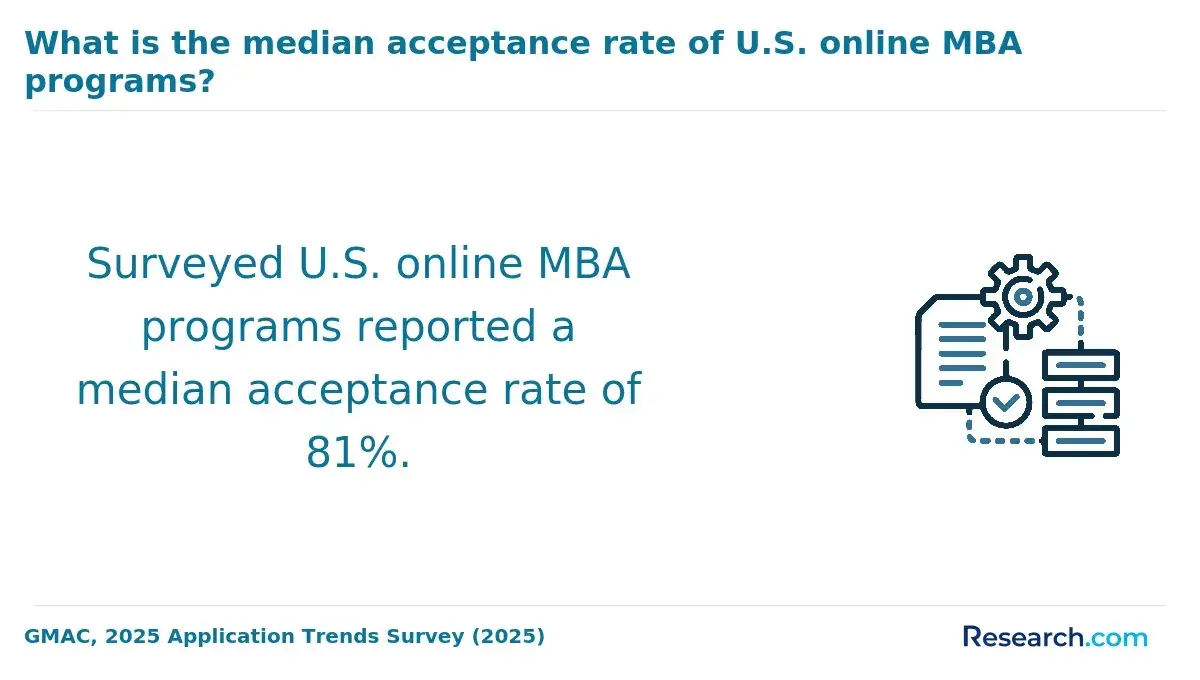
Requirements vary by school. Programs commonly evaluate a bachelor's degree, academic record, résumé, and a statement of goals; some request recommendations, an interview, or GMAT or GRE scores. Professional experience expectations and test waivers also differ. A nonbusiness bachelor's degree does not automatically rule you out.
Preparation is a separate question from admission. If you have not studied accounting or worked with financial statements, ask whether foundation courses are required and whether they add time or cost. In your application, explain the connection between your existing work and your target role. An operations professional who has managed budgets, for instance, can show relevant experience without claiming to have practiced accounting.
Both depend on required credits, any foundation courses, and whether you enroll full time or part time. Schools may price tuition per credit, course, or term; a published tuition figure may exclude mandatory fees, materials, technology, or required travel. Online delivery can reduce commuting without eliminating scheduling conflicts: live classes, group work, and fixed course sequences may limit flexibility.
For a useful comparison, calculate each program's total expected cost from its required coursework and published charges, then account for employer reimbursement, borrowing costs, and income you might forgo. If you are searching in North Carolina, MBA options by total cost MBA NC can help start a shortlist, but confirm each school's current online-program charges directly.
A payback estimate is only as credible as its assumptions: compare your likely out-of-pocket cost with a conservative, role-specific change in compensation, not a broad MBA salary figure. Include the possibility that the career move takes longer than graduation.
Career options depend more on your starting experience than on the concentration name. The table distinguishes plausible transitions from roles that generally demand additional accounting experience or credentials.
| Target direction | Experience you may be able to transfer | Likely gap to address |
| Budgeting or financial planning within your current industry | Operations knowledge, forecasting, stakeholder communication | Financial modeling and direct budgeting responsibility |
| Accounting or finance operations management | Team leadership, process improvement, systems work | Accounting controls and experience overseeing financial workflows |
| Staff accounting, audit, or tax | Industry knowledge and analytical skills | Technical accounting coursework, hands-on experience, and possibly a CPA pathway |
Controller and other senior accounting positions typically require substantial progressively responsible accounting experience; an MBA is not a shortcut to them. If your strongest work is in customer growth rather than financial processes, marketing specialization choices for MBA students may align more closely with the experience employers already value. For any target, check whether the online program gives career changers access to relevant projects, employer events, and recruiting - not just general career coaching.
There is no reliable single salary for graduates of this concentration. Earnings vary by occupation, location, prior experience, employer, and whether you move into management. The Bureau of Labor Statistics reports a $126,520 median annual wage for management occupations in May 2025. That is a broad occupational benchmark, not an MBA outcome or a reasonable starting-salary forecast for someone entering accounting.
Use the pay ranges in postings for jobs you could qualify for after graduation, then compare them with your current compensation and the program's full cost. If the target role requires accounting experience you do not yet have, build a transition plan around gaining that experience rather than assuming the degree will immediately produce a management salary.
How can you choose an accredited online MBA in accounting?
First, confirm that the institution holds recognized institutional accreditation. Then check whether its business school holds specialized accreditation, such as AACSB, ACBSP, or IACBE, and whether the online MBA is within the relevant scope. Institutional and specialized accreditation are different checks; neither establishes CPA eligibility.
For a career switch, compare programs on the accounting courses actually available online, state-board course fit if licensure matters, total cost, scheduling, and access to accounting employers or applied projects. Ask career services for evidence relevant to online career changers, rather than relying on outcomes from a full-time campus MBA. Veterans making a transition can also consult resources that compare online MBA programs and veterans while checking their own benefit eligibility and support needs.
Before enrolling, identify a target job, confirm its entry requirements, and obtain answers about course availability and career support in writing. A program is a good fit only if it closes the gaps that stand between your current experience and that job at a cost you can justify.
Other Things You Should Know About MBA
Diploma wording varies by institution. Ask the school for its policy rather than assuming the delivery format will or will not appear.
Often, yes. Staying employed can protect your income, but check whether your schedule permits live sessions and whether you can build relevant experience through projects or a role change at work.
Not necessarily. Taking on budget, reporting, or team responsibilities now can clarify your goals and strengthen later applications, whether or not your title changes.
Compare the remaining cost with lower-cost courses or credentials that address your immediate skill gap. Review reimbursement conditions, including any requirement to remain employed afterward.
- CPA Evolution - 150-hour Education Requirement https://www.op.nysed.gov/professions/certified-public-accountants/license-requirements/cpa-evolution-150-hour-education-requirement
- Undergraduate Prerequisites - Master of Accounting (MAC) Program https://mac.ncsu.edu/admissions/qualifications/undergraduate-prerequisites/
- Online MBA Accounting Concentration | SNHU https://www.snhu.edu/online-degrees/masters/mba-online/mba-in-accounting
- Eligibility | M.S. in Accounting - UVA McIntire | University of Virginia McIntire School of Commerce https://www.commerce.virginia.edu/ms-accounting/admissions/eligibility
- Online MBA vs Full-Time MBA: ROI, Cost and Career Outcomes | Jenkins MBA https://mba.ncsu.edu/2026/04/27/choosing-between-an-online-mba-and-full-time-mba/
- MS in Accounting | marquette.edu https://www.marquette.edu/business/graduate/ms-accounting.php
- Master's in Accounting vs. MBA: 5 Big Differences to Know | Franklin University https://www.franklin.edu/blog/accounting-mvp/masters-in-accounting-vs-mba
- FLEX MBA Career Outcomes - Lehigh College of Business https://business.lehigh.edu/academics/graduate/masters-programs/mba/flex-mba/career-outcomes
- Pre-Enrollment Requirements - NYU Stern - New York University https://www.stern.nyu.edu/programs-admissions/masters-programs/ms-accounting/admissions/pre-enrollment-requirements
- Master's in Accounting vs MBA: 6 Key Differences | Pace University New York https://www.pace.edu/news/masters-accounting-vs-mba-which-degree-right-you


