Online MBA in Sustainability: curriculum and workload for international applicants

Co-Founder and Chief Data Scientist
An online MBA in sustainability may let you build management skills without leaving your job or relocating to the United States. But international applicants need to look beyond the word "online": live classes may run overnight, projects may require cross-border teamwork, and enrollment does not create US work authorization. This guide explains what the curriculum typically covers, how to assess the workload, and which program details to verify before committing. It will help you decide whether an MBA fits your goals - or whether a more specialized qualification would serve you better.
Key Things You Should Know
- Expect a broad MBA core plus sustainability-focused electives or a formal concentration; check the required courses rather than relying on the program's label.
- Estimate your workload from the actual course schedule, live-session times, group projects, and any required travel - not credit hours alone.
- US Bureau of Labor Statistics projections indicate about 1.1 million management-occupation openings annually from 2025 to 2035, but that figure covers all management occupations, not sustainability MBA graduates.
What is an online MBA in sustainability?
An online MBA in sustainability is a general management degree that applies business decisions to environmental and, in some programs, broader social challenges. Students study how organizations finance investments, manage operations, measure performance, and respond to stakeholder expectations. Sustainability coursework may address emissions, resource use, supply chains, reporting, or responsible innovation.
The name does not establish the degree's depth. One school may offer a formally designated sustainability concentration with required courses; another may offer a general MBA with a sustainability elective. A third may frame similar material as corporate responsibility or sustainable enterprise. Ask whether the specialization appears on the transcript and whether its courses are regularly available online.
This is primarily management education, not training to become an environmental scientist or engineer. It can suit professionals who already understand an industry and want to lead sustainability-related decisions. Applicants seeking advanced climate modeling, environmental engineering, or technical accounting expertise may need a specialized master's degree or targeted professional training instead.
What does an online sustainability MBA curriculum include?
Curricula vary by school, but the central distinction is between the MBA core and the coursework that actually develops sustainability expertise. The following comparison shows what to look for in a published degree plan.
| Curriculum component | Typical subject matter | What to check |
| MBA core | Accounting, managerial finance, strategy, marketing, operations, analytics, and leadership | Whether foundation courses are required for applicants without business preparation |
| Sustainability specialization | Sustainable operations, climate-related business risk, responsible supply chains, or impact measurement | Which courses are required, how often they run, and whether the specialization is formally designated |
| Electives | Topics such as energy markets, social enterprise, or sustainability reporting | Whether the electives you want are available online during your enrollment |
| Applied work | Capstone, consulting project, case analysis, or organizational assessment | Whether you can use an employer or organization in your country as the project setting |
A strong fit connects sustainability concepts to business trade-offs. For example, evaluating a lower-emissions supply chain should involve cost, supplier reliability, measurement limits, and implementation - not just an environmental target. Read course descriptions and recent syllabi where available; a course title alone cannot show how much quantitative, policy, or technical work it requires.
How much workload does an online sustainability MBA require?
There is no dependable universal weekly-hour estimate. Workload changes with course intensity, term length, your accounting and analytics preparation, and the number of courses taken at once. Sustainability assignments can add substantial reading, data interpretation, and team coordination to an already demanding MBA core.
For an applicant abroad, when the work happens can matter as much as how much there is. An asynchronous lecture may be easy to watch after work, while a required US-evening discussion or group meeting may fall in the middle of your night. Shorter terms can also compress the same kinds of assignments into fewer weeks.
Before enrolling, request a sample course calendar and ask which sessions are mandatory, how groups set meeting times, whether exams have fixed windows, and whether residencies require travel. Then map those commitments onto your local time zone and busiest work weeks. If considering short-duration MBA pathways, compare the simultaneous course load and sequencing rules rather than assuming a faster program is easier to schedule.
Start with institutional accreditation recognized by the US Department of Education. Then check whether the business school holds specialized accreditation, such as AACSB, ACBSP, or IACBE, if that matters to your employer or future study plans. Institutional and business-school accreditation answer different questions; neither confirms that a sustainability concentration is available or academically deep.
Recognition outside the United States is a separate issue. If you need the degree for promotion, public-sector hiring, or further study in your country, ask the relevant employer, university, or credential-recognition authority whether it accepts the institution and the online award. Verify accreditation in the accreditor's directory rather than relying only on a marketing page. For a cost-sensitive starting point, affordable AACSB-accredited online MBA programs can help you identify schools to investigate; confirm each school's current status and sustainability coursework directly.
Requirements are school-specific. Online MBA applications commonly ask for a recognized bachelor's degree, academic records, a résumé, and evidence of professional readiness; some also request essays, recommendations, an interview, or GMAT/GRE results. A sustainability concentration does not universally require an environmental degree, and a nonbusiness bachelor's degree is not necessarily a barrier.
International applicants should check whether the school requires a credential evaluation, certified translations, or English-language test results - and whether exemptions apply. Ask how it evaluates your institution's grading scale and whether foundational business courses are required. Also confirm that the school permits enrollment while you reside in your country; online availability in the United States does not establish worldwide enrollment eligibility.
If your background is technical or policy-focused, show how you have handled budgets, stakeholders, projects, or organizational decisions. If you have limited quantitative preparation, review accounting and finance before classes begin. These are preparation strategies, not universal admission requirements.
Completion time depends on required credits, term length, course availability, and whether you study part-time or on an accelerated schedule. A concentration can extend the timeline if its required courses are offered infrequently. Ask for a term-by-term plan that accounts for prerequisites, capstones, and any maximum time allowed to finish.
For cost, compare the price of the whole degree, not a per-credit headline. Request an itemized estimate covering tuition, mandatory fees, materials, software, and any travel for required in-person activities. Confirm whether overseas students pay a different rate and how currency conversion, payment deadlines, and international transfer charges affect your budget. Financing eligibility also varies: do not assume you qualify for US federal student aid or a particular private loan.
When reviewing MBA programs ranked by affordability, calculate the cost of the courses you would actually need, including the sustainability requirements. A lower-priced general MBA may offer too little relevant coursework to meet your goal.
The better format depends on whether you need to keep working abroad or need access to in-person recruiting and local experience. This comparison highlights differences to verify at each school rather than benefits to assume.
| Decision factor | Online MBA | Campus-based MBA |
| Location and employment | May allow continued employment abroad if overseas enrollment is permitted | Usually requires relocation and may require leaving or reducing employment |
| Scheduling | Can offer asynchronous study but may still require live sessions and group meetings | Typically has a more fixed, locally scheduled timetable |
| Networking and recruiting | May provide virtual events and alumni access; availability varies | May make in-person employer events and peer interaction easier to access |
| Practical projects | May support projects with an existing employer | May offer local consulting or internship opportunities; eligibility varies |
If you hope to work in the United States, ask the school separately about recruiting access and immigration-related support for each format. Enrollment in a US online MBA does not itself grant a visa or US employment authorization. For applicants with an engineering background, comparisons of online MBA programs for engineers may also help clarify whether a program's projects and employer connections support a move from technical work into management.
The most direct path usually builds on experience you already have. A supply-chain professional might pursue responsible sourcing or sustainable operations leadership; a finance professional might assess climate-related investment risks; a manager in manufacturing might lead resource-efficiency projects. These roles require the ability to weigh environmental objectives against budgets, operations, and organizational constraints.
Changing fields entirely is harder. A sustainability-focused MBA can develop management vocabulary and strategic judgment, but employers may still expect sector knowledge, reporting experience, or evidence that you have implemented change. Look for an applied project that produces work you can discuss with employers, and check whether career services serve graduates working outside the United States.
Some professionals need a different combination of skills. A clinician seeking to lead healthcare operations and sustainability initiatives, for example, could compare schools for online MSN and MBA dual-degree programs rather than assume a sustainability concentration best serves both goals. The right qualification depends on the responsibilities of the target role, not the sustainability label alone.
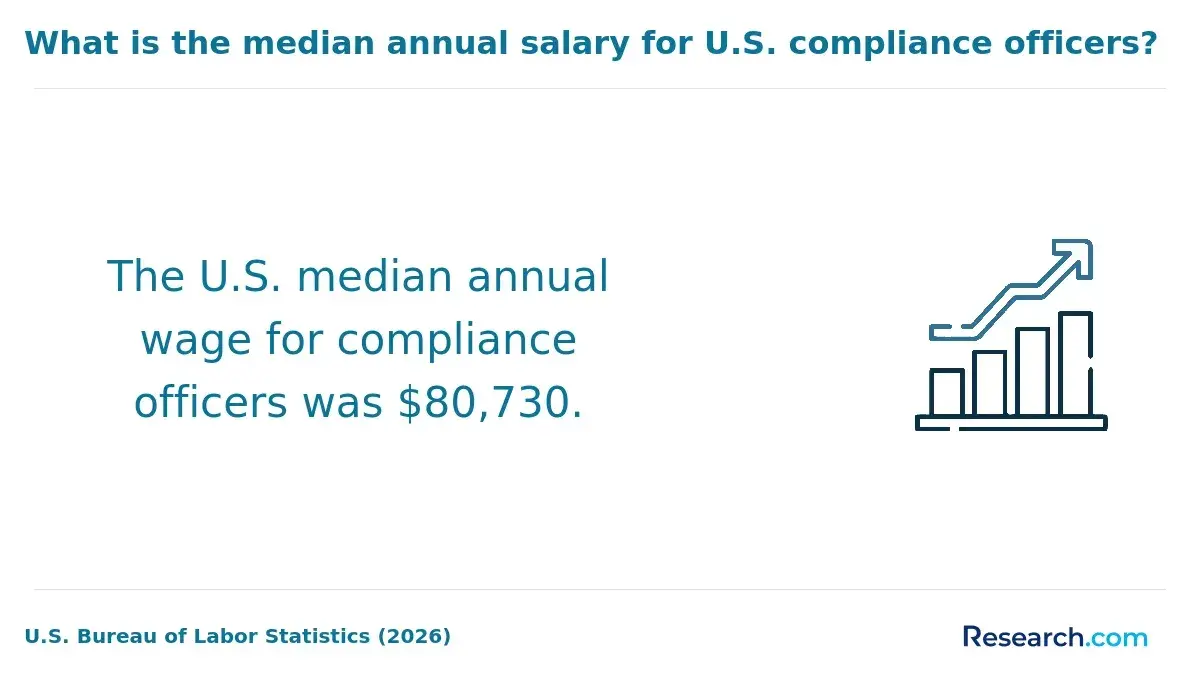
There is no single reliable US salary or job-growth figure for "sustainability MBA graduates." Job titles span operations, finance, procurement, consulting, and other functions, and pay depends heavily on experience, employer, location, and responsibility. The US Bureau of Labor Statistics reports a $126,520 median annual wage for management occupations in May 2025. That is a benchmark for a broad occupational group - not an entry salary, an MBA earnings figure, or a prediction for an applicant working abroad.
The BLS also projects management-occupation employment to grow faster than the average for all occupations from 2025 to 2035. Its projected openings reflect both growth and replacement needs across management jobs; they do not isolate sustainability positions. For a useful personal comparison, identify realistic target job titles in the location where you can legally work, review their stated experience requirements, and compare compensation with your current role and total degree cost.
Are certifications or licenses required for sustainability careers?
There is no universal sustainability-manager license, and an MBA concentration is not a professional license. Employers may value role-specific credentials in areas such as project management, environmental management, building performance, or sustainability reporting, but expectations vary by position and country.
Match credentials to the work you want to do. If a target job requires technical environmental assessments, engineering sign-off, or regulated accounting services, MBA coursework alone will not establish eligibility; the relevant jurisdiction's rules and professional qualifications control. If your goal is to lead cross-functional initiatives, a shorter certification or employer-supported project may be a more direct next step than a full MBA.
Other Things You Should Know About MBA
Diploma and transcript wording varies by university. Ask the registrar for a sample or written explanation if the distinction matters to an employer or credential evaluator.
Possibly, but obtain permission first. Ask how the school handles confidential data and whether an anonymized or public-data alternative is available.
Ask about leave-of-absence rules, course availability after you return, and any limit on time to degree. A pause can affect your planned completion date.
Request recent syllabi and examine required assignments, analytical tools, faculty expertise, and capstone expectations. Give more weight to assessed work than to a list of appealing course titles.
- Types of Financial Aid: Grants, Work-Study, and Loans | studentaid.gov https://studentaid.gov/understand-aid/types
- Evaluation of Foreign Degrees - United States Department of State https://www.state.gov/global-community-liaison-office/family-member-employment/family-member-employment-in-the-d-c-area/evaluation-of-foreign-degrees
- Research Your Options: U.S. Online Learning | EducationUSA https://educationusa.state.gov/your-5-steps-us-study/research-your-options/online-learning
- Cost of Attendance (Budget) | 2025-2026 Federal Student Aid Handbook https://fsapartners.ed.gov/knowledge-center/fsa-handbook/2025-2026/vol3/ch2-cost-attendance-budget
- Overview of sustainable finance https://finance.ec.europa.eu/sustainable-finance/overview-sustainable-finance_en
- Recognition of Foreign Qualifications | ed.gov http://www.ed.gov/about/initiatives/international-affairs/recognition-of-foreign-qualifications
- Impact MBA Curriculum | CSU College of Business https://biz.colostate.edu/academics/graduate-programs/mba/impact-mba/curriculum
- Online MBA in Environmental Social Governance | WP | WPUNJ https://online.wpunj.edu/degrees/business/mba/esg/
- MBA Curriculum & Program | Manhattan University Catalog https://catalog.manhattan.edu/graduate/schoolofbusiness/mbacurriculumprogram/
- International Applicants | Johns Hopkins https://publichealth.jhu.edu/offices-and-services/office-of-admissions-services/international-applicants