
Careers After an Online MBA in Strategy for International Applicants

Co-Founder and Chief Data Scientist
An online MBA in strategy can help an international professional move from managing a function to making broader business decisions, but it does not, by itself, open every strategy role or provide a route to US employment.
Your prior experience, target country, and access to employers matter as much as the degree. This guide maps realistic career paths, explains US salary and job-market evidence, and shows how to assess a program's curriculum, cost, recognition, and career support before enrolling.
Key Things You Should Know
- The most accessible strategy moves usually build on existing industry or functional experience; an MBA concentration is not a substitute for consulting, finance, or operating experience.
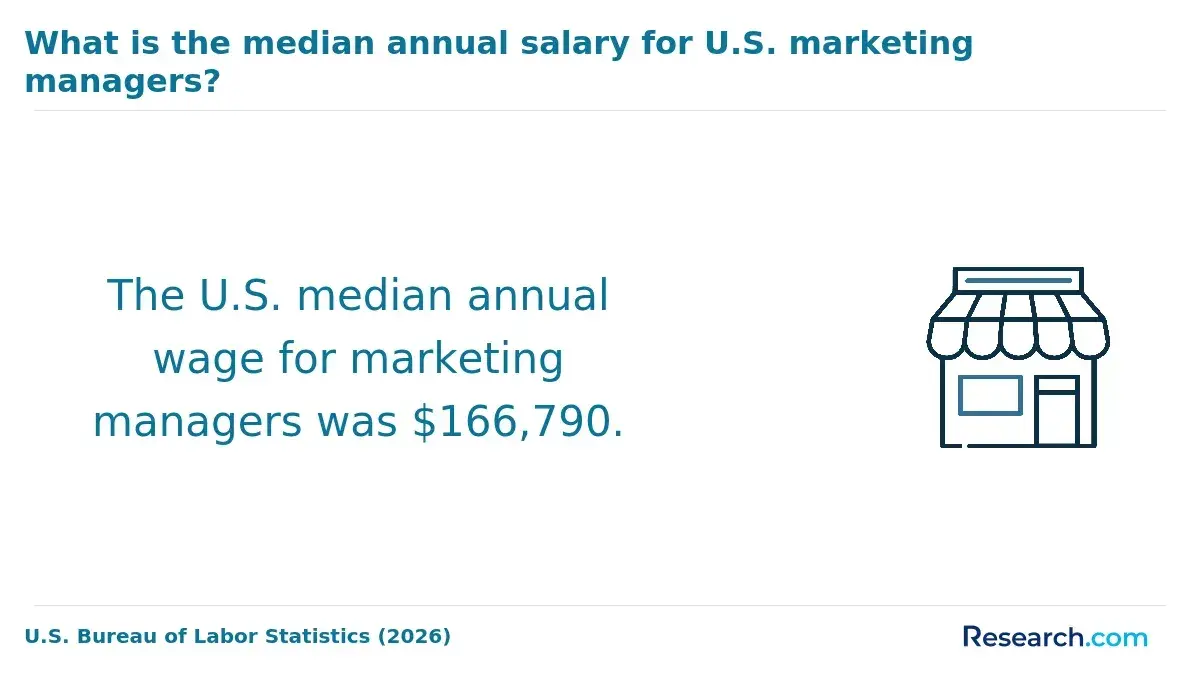
- The US Bureau of Labor Statistics reports a $126,520 median annual wage for management occupations in May 2025, but that figure covers all workers in those occupations, not online MBA graduates or strategy specialists.
- Enrollment in a US online MBA does not itself provide a US visa or work authorization. Confirm overseas enrollment eligibility and your intended employment pathway separately.
What careers can you pursue after an online MBA in strategy?
An MBA in strategy combines broad management training with courses on competitive positioning, growth, and long-term decisions. It can support advancement into roles that connect market analysis with budgets, operations, and execution. The strongest next move typically extends work you have already done rather than replacing it.
The table distinguishes plausible paths by starting experience. Job titles and responsibilities vary by employer and country:
| Career path | Typical work | Most relevant starting point | Likely gap to address |
| Corporate strategy or strategic planning | Assess markets, evaluate growth options, and prepare recommendations for leadership | Industry, finance, product, or operations experience | Evidence of analysis that influenced a business decision |
| Business development | Evaluate partnerships, new markets, and commercial opportunities | Sales, partnerships, product, or market-facing work | Negotiation experience and knowledge of the target market |
| Strategy or management consulting | Diagnose client problems and develop recommendations | Consulting, analytical, or deep industry experience | Client-facing experience, case-interview preparation, and recruiting access |
| Operations or general management | Turn strategic goals into budgets, processes, and team priorities | Operational leadership or people management | Accountability for financial and team results |
For example, an operations manager at a multinational company may be better positioned for an internal strategic-planning role than for an immediate switch to an unfamiliar industry's consulting practice. Senior strategy titles usually require a record of delivering results.
Established executives seeking peer-level leadership development may instead compare online executive MBA programs; that format serves a different career stage and may have different scheduling demands.
How much can you earn with an online MBA in strategy?
There is no reliable single salary for "online MBA in strategy" graduates. The US Bureau of Labor Statistics reports a $126,520 median annual wage for management occupations in May 2025. That is useful context for US management careers, not a forecast of your pay: it includes managers with different qualifications, specialties, and levels of experience.
Your likely compensation depends on the position, location, employer, prior achievements, and whether you can legally work in the target market. If you plan to remain outside the United States, a US wage benchmark may be particularly misleading.
Compare compensation for the specific role and location you could realistically enter, then weigh any expected increase against tuition, financing, and time away from other career-building activities. Ask programs for career outcomes broken out by online students and, if available, international graduates rather than relying on campus-wide MBA figures.
What is the job outlook for strategy MBA careers?
US demand for managers provides broad context, but "strategy MBA careers" are not a single labor-market category. The Bureau of Labor Statistics projects about 1.1 million openings annually in management occupations from 2025 to 2035, on average, including openings created when workers permanently leave those occupations. That figure does not indicate how many openings are in strategy or accessible to new MBA graduates.
Evaluate prospects at the level of your target role. Internal strategy teams may favor employees who know the company's products and decision processes; consulting employers may assess client work and structured problem-solving.
For an international applicant, the useful question is not simply whether US management employment is growing, but whether employers recruit from your chosen online program and whether you are eligible to work where those employers hire.
A well-designed strategy curriculum teaches students to compare choices, justify trade-offs, and carry decisions through an organization. Relevant skills include market and competitor analysis, financial evaluation, scenario planning, stakeholder communication, and translating a strategic goal into operating priorities.
The MBA core supplies essential context: a growth proposal is more credible when you can assess its financing, customer demand, and operational constraints.
Coursework can demonstrate these skills through cases or applied projects, but employers also look for evidence that you used them at work. Before enrolling, identify a current business problem you could investigate, with appropriate permission and confidentiality safeguards, and consider whether the program lets you turn it into a substantive project.
For a technical strategy role, such as one centered on advanced analytics, an MBA may need to be paired with deeper technical experience or training.
Curricula vary by school. A typical MBA core covers management subjects such as accounting, finance, marketing, operations, analytics, and organizational leadership.
Strategy-focused study may then include competitive strategy, corporate strategy, innovation, international business, or strategic change. Some programs offer a formal strategy concentration; others offer only relevant electives. Check the required courses before assuming the degree will carry a strategy designation.
Look beyond course titles to the work required. A capstone that evaluates an actual market-entry or growth decision may be more useful for a strategy career than several survey-style electives.
Course sequencing also matters if you want to graduate quickly: shorter online MBA completion plans degree programs may leave less room for strategy electives or an extended applied project. Confirm the curriculum and availability for the specific online format.
Accreditation is an important first check, but it does not settle how a degree will be recognized by every employer or authority abroad. Verify the US institution's recognized institutional accreditation. Separately, a business school may hold specialized accreditation, such as AACSB accreditation; institutional and business-school accreditation are not interchangeable.
If specialized accreditation matters to your target employer or future study, compare MBA programs with business-school accreditation and verify each school's current status directly. Also ask the relevant employer, credential evaluator, or education authority in your intended country how it treats a US online degree. Accreditation alone cannot guarantee professional recognition or career portability.
Requirements differ by institution. Online MBA applicants commonly need a bachelor's degree or accepted equivalent, academic records, a résumé, and application materials explaining their goals.
Schools may also request recommendations, an interview, a GMAT or GRE score, or relevant work experience. Do not assume that a test waiver or admission rule at one school applies to another.
International applicants should check whether their degree requires a formal credential evaluation, which transcripts and translations are accepted, and whether they must demonstrate English proficiency.
Ask whether the school permits enrollment from your country: access to online instruction, payment services, and required activities can vary. If you are considering an intensive schedule, establish that you meet its admission and course-sequencing rules before choosing it for speed.
Completion time and price depend on the school's credit requirements, course schedule, enrollment pace, and any prerequisite or foundation work. A faster timetable is not automatically cheaper: tuition may be charged by credit, course, or term, and fees or required travel can change the total. Live sessions across time zones and group projects can also make an accelerated schedule harder to sustain while working.
Request a written estimate covering tuition, mandatory fees, materials, any residency travel, and the effect of extending your studies. Compare the estimate with what you can pay or obtain through employer support.
If speed is important, review accelerated online MBA options, then verify that your desired strategy courses fit the proposed timetable rather than assuming the shortest advertised duration applies to every student.
A US online MBA does not itself grant permission to enter or work in the United States. Studying entirely from abroad is distinct from enrolling in a qualifying US-based course of study under a student immigration status. Do not assume that remote enrollment makes you eligible for student work benefits, post-completion work authorization, or employer sponsorship.
If US employment is essential to your plan, investigate the applicable immigration pathway before paying a deposit. Ask the school what, if any, immigration support applies to its specific online program, and seek qualified immigration advice for your circumstances.
A sound alternative may be to use the degree to advance with an employer in your current country or pursue an internal transfer, while treating any later US move as a separate process.
How can international applicants choose a reputable online MBA?
Start with the job you could plausibly pursue after graduation, then compare programs on evidence that affects that move. A low price or a familiar university name is not enough if the strategy curriculum is thin, career services exclude overseas students, or required classes meet at impractical hours.
Use these questions to narrow a shortlist and resolve uncertainties before applying:
- Does the online MBA offer a formal strategy concentration, relevant electives, or neither, and what appears on the transcript?
- Which live sessions, group meetings, exams, and campus visits are mandatory in your time zone?
- Can overseas students use the same career advising, alumni events, and employer opportunities advertised for the program?
- What is the full estimated cost from your location, and what happens if you take longer to finish?
- Can the school provide outcomes specifically relevant to online students and your intended employment market?
If affordability is the deciding factor, MBA program prices and tuition options 10 000 can be a starting point for comparison, not a substitute for a current personalized quote. If your goal is a narrow technical skill or a promotion already within reach, a targeted course, employer training, or a specialized degree may be a better investment than a full MBA.
Other Things You Should Know About MBA
Diploma wording varies by university. Ask the registrar for a sample diploma and transcript description if that distinction matters to an employer or credential evaluator.
Possibly, but access is not the same as participation. Ask about virtual alumni introductions, project teams, event times, and whether employers recruit remote students for roles in your intended location.
It depends on the employer and role. Positions involving local customers, regulators, or leadership teams may require workplace-level proficiency even when the MBA is taught in English.
Not necessarily. Casework develops analytical practice, but an internship provides employer-facing experience and may be part of a recruiting route. Check whether the online program offers internships or comparable client projects accessible from your location.
- Employment-Based Immigration: Third Preference EB-3 | uscis.gov https://www.uscis.gov/working-in-the-united-states/permanent-workers/employment-based-immigration-third-preference-eb-3
- Employment-Based Immigrant Visas | state.gov https://travel.state.gov/content/travel/en/us-visas/immigrate/employment-based-immigrant-visas.html
- MBA Accreditation Types and Benefits | Freeman News https://freemannews.tulane.edu/2026/08/06/mba-accreditation-types-and-benefits
- Job Search Strategies for International Students | Cornell Career Network https://career.cornell.edu/videos/job-search-strategies-for-international-students/
- Stand Out as an MBA: Skills Employers Want | Jenkins MBA https://mba.ncsu.edu/2026/05/07/stand-out-as-an-mba-skills-employers-want/
- Jobs for MBA Graduates: Top Roles and Salaries in 2026 | SCU https://www.scu.edu/business/blog/careers/jobs-for-mba-graduates/
- Employer MBA Hiring Trends & AI Skills for 2026 | CSP Global Concordia University, ST. Paul https://online.csp.edu/resources/article/more-employers-plan-to-hire-mbas-in-2026-and-ai-fluency-is-now-the-baseline/
- Full-Time MBA Career Support | UNC Kenan-Flagler Business School https://www.kenan-flagler.unc.edu/programs/mba/full-time-mba/career-leadership/mba-career/
- How MBA Programs Are Changing With the Market | AACSB https://www.aacsb.edu/insights/articles/2023/03/how-mba-programs-are-changing-with-the-market
- Career Paths and Typical Duties for Jobs With an MBA | UNC Kenan-Flagler's Business School's Online MBA https://onlinemba.unc.edu/news/jobs-with-an-mba/


