Online MBA in Entrepreneurship: curriculum and workload for working parents

Co-Founder and Chief Data Scientist
An online entrepreneurship MBA may let you develop a business idea without leaving your job, but coursework still competes with work hours and family time. For working parents, the deciding factor is often not whether classes are online; it is whether deadlines, live sessions, and team projects fit a household schedule.
This guide explains what the degree typically covers, how to assess its real workload, and what to verify before committing money and time. It will also help you decide whether a full MBA offers more value than shorter, targeted training.
Key Things You Should Know
- An entrepreneurship MBA combines a broad management core with venture-focused courses; a single entrepreneurship elective does not necessarily constitute a formal concentration.
- Online does not mean self-paced. Working parents should check live attendance, group meetings, deadline patterns, and required travel before judging whether the workload is manageable.
- Begin with a course load you can sustain during an ordinary work-and-caregiving week, then compare the full program cost with the specific business or career benefit you expect.
What Is an Online MBA in Entrepreneurship?
It is a graduate business degree that teaches general management alongside coursework on identifying opportunities, testing ideas, launching ventures, or growing existing businesses. Students usually study accounting, finance, marketing, operations, and leadership as well as entrepreneurship-focused subjects. Schools may label the focused portion a concentration, specialization, track, or set of electives; those terms do not always represent the same amount of coursework.
The degree is generally about managing business decisions, not receiving guaranteed funding, an incubator place, or technical training to build a product. It may suit a parent developing a venture, running a small business, or seeking an innovation role. If the immediate need is to learn one skill—such as bookkeeping or customer research—a shorter course may be more efficient.
How Does an Online MBA in Entrepreneurship Fit Working Parents?
Online delivery removes a routine commute, but flexibility depends on course design. Recorded lectures may be available at any time while quizzes close on fixed dates; a course may also require live evening discussions or team meetings. A workable program leaves room not only for classes but also for unpredictable caregiving demands.
Before enrolling, ask for a recent syllabus and a typical term calendar. Check whether live meetings are mandatory, whether recordings count as attendance, how far ahead deadlines are posted, and whether group projects allow teams to set their own meeting times. Ask separately about residencies, exam scheduling, course-load changes, and leave or reentry policies. A slower path can be a stronger choice than an accelerated one if it protects employment, childcare arrangements, and progress toward graduation.
Household affordability matters alongside scheduling. Compare the amount due each term—not just the advertised total—with childcare, any required travel, and the timing of employer reimbursement. A guide to online MBA tuition and total cost can help you identify expenses to include in that comparison.
What Does an Online MBA in Entrepreneurship Curriculum Include?
Curricula vary by school, but the distinction between core courses and venture-focused work is essential. The table shows what each part commonly contributes and why it may matter to a working parent applying lessons immediately:
| Curriculum component | Typical focus | Practical application |
| MBA core | Managerial accounting, finance, marketing, operations, strategy, and leadership | Assess cash flow, customer acquisition, staffing, and growth decisions |
| Entrepreneurship courses | Opportunity evaluation, business models, venture finance, and innovation | Test an idea's assumptions before committing more household resources |
| Electives | School-dependent topics such as small-business management or product development | Build depth in the issue most relevant to your work or venture |
| Applied project or capstone | A business plan, market test, consulting assignment, or strategy project, if offered | Produce a usable deliverable, subject to project rules and confidentiality limits |
Entrepreneurship coursework usually emphasizes managerial judgment: estimating demand, evaluating risk, allocating capital, and communicating a plan. It does not replace specialist legal, tax, engineering, or accounting advice. For parents who already operate a business, the strongest curriculum may be one that lets them examine a real operational problem rather than requiring an unrelated hypothetical startup.
There is no reliable universal weekly-hours figure for an online entrepreneurship MBA. Time demands depend on the number of courses taken, term length, quantitative preparation, reading and assessment design, and how much collaboration a course requires. Venture projects can be especially uneven: interviewing potential customers or revising a financial model may take more time in one week than watching lectures in another.
Plan around commitments that cannot move—work, school pickups, meals, and caregiving—before assigning study periods. Reserve separate time for independent coursework and for meetings others must attend. Then test that schedule against a busy week, not an ideal one. If it only works when every weekend remains free and no child gets sick, reduce the initial course load or seek a different format.
Ask a program for a sample syllabus from both a core course and an entrepreneurship course. Their calendars can reveal deadline clusters and team-project periods more accurately than a credit-hour total. Also find out when courses are offered: taking a term off may delay a required course if it is not available again soon.
Requirements are set by the individual school, not by the entrepreneurship concentration as a whole. Online MBA applications commonly request evidence of a bachelor's degree, academic records, a résumé, and written statements; recommendations, interviews, professional-experience expectations, and GMAT or GRE policies vary. A business bachelor's degree is not universally required, though applicants without recent accounting or quantitative work may benefit from preparation.
Check the program's current policy rather than assuming a test waiver. If testing is a major constraint, use online MBA options with no GMAT required as a starting point, then confirm each school's requirements directly. In an application, describe a specific venture or management problem you want to solve and show how your professional experience will inform your coursework; do not claim that having a startup idea substitutes for a school's stated criteria.
Both depend heavily on program design and enrollment pace. Compare required credits, term length, course sequencing, and any deadline for completing the degree. A faster schedule may reduce the number of terms but increase pressure on evenings and weekends; part-time study may be easier to sustain but can extend fees or delay access to a course offered infrequently.
For a meaningful price comparison, request the school's current tuition basis—per credit, course, or term—and add mandatory fees, materials, technology, and any required travel. Ask whether taking fewer courses changes charges or financial-aid eligibility and whether employer reimbursement is paid before or after you complete a course. A list of affordable online MBA programs can narrow a search, but the lowest advertised tuition is not necessarily the lowest household cost.
An MBA's recognition begins with the institution: verify that the university holds recognized institutional accreditation. Then check whether the business school or MBA holds additional business-program accreditation, such as AACSB, ACBSP, or IACBE, if that matters to your goals. Institutional accreditation and specialized business accreditation are different claims; neither should be inferred from the word "accredited" on a marketing page.
Entrepreneurship is not generally a licensed profession, so a concentration does not grant a professional license. Employers and business partners may value the degree and the skills behind it, but recognition also depends on the institution, your experience, and what you can demonstrate. Confirm the exact credential and concentration wording with the school if that distinction matters for your résumé.
An online MBA can make continued employment and caregiving more feasible by eliminating routine travel. A campus-based MBA may offer more spontaneous contact with classmates, faculty, and local venture communities. Neither format automatically provides better entrepreneurship training: compare the actual courses, project access, faculty interaction, and career support available to students in each format.
Parents should also compare control over time, not simply location. A campus course with a predictable weekly meeting could be easier to arrange childcare around than an online course with changing team meetings. Conversely, an online program with recorded lessons and clearly published deadlines may fit a household schedule well. One-year online MBA programs offer another pacing option, but a shorter calendar can mean a heavier workload rather than greater flexibility.
Potential uses include starting or expanding a business, managing a small company, leading new-product initiatives, or moving into business development. Which path is realistic depends on prior industry experience, evidence of execution, and the opportunity available—not the concentration name alone. Founders, in particular, should evaluate whether the coursework will improve decisions in their own business rather than expect a conventional post-MBA job offer.
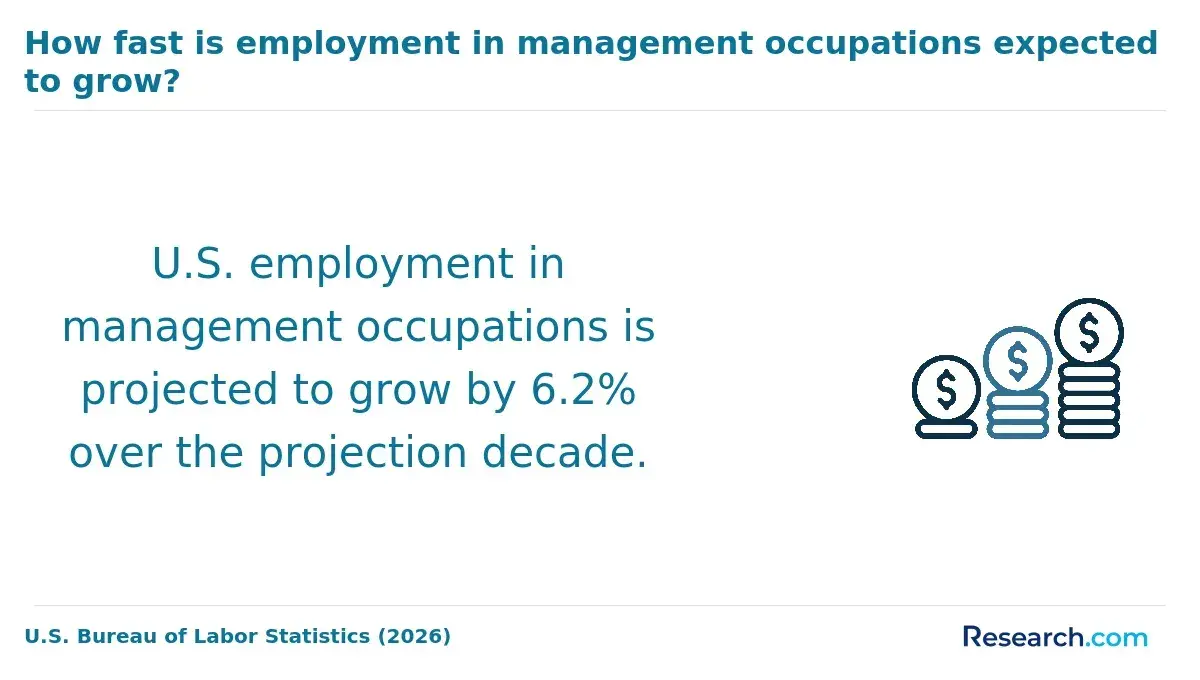
For context, the U.S. Bureau of Labor Statistics reported a $126,520 median annual wage for management occupations in May 2025. That figure describes workers across management occupations; it is not the salary of entrepreneurship MBA graduates, a founder's expected income, or an estimate of the degree's earnings effect. Use compensation information for your specific target occupation and location when judging a possible career change.
How Should You Choose a Reputable Online Entrepreneurship MBA Program?
Start with your intended use for the degree: launching a venture, improving an existing business, or moving into an innovation role. Compare programs on the depth of entrepreneurship coursework, the ability to apply projects to your goal, accreditation, full cost, and scheduling terms. A prestigious name is of limited practical value if its required meeting times or project demands make completion unlikely.
Request a sample course calendar and speak with the program about live attendance, group-work expectations, required visits, pauses in enrollment, and support available to online students. Ask whether a proposed business project can use your own venture and what happens if it contains confidential information. If admission flexibility matters, online MBA acceptance rates may help frame a shortlist, but they do not establish academic fit or predict an individual decision.
Choose the MBA when its broad management core and venture work address several important gaps you can apply over time. If you need one immediately usable skill—or the degree's cost and schedule would strain your household—a focused course, mentor, or employer-supported training may be the better next step.
Other Things You Should Know About MBA
Possibly. Ask the instructor or program whether assignments permit it, what information classmates will see, and whether you can substitute nonconfidential figures or examples.
Transfer-credit rules vary by school and may depend on course equivalence, grades, and credit age. Obtain a written evaluation before relying on transfer credits to shorten your plan.
It depends on the employer's education-benefit policy. Check eligibility, reimbursement timing, grade requirements, and any obligation to remain employed.
Usually not, unless a particular program says otherwise. You can still evaluate ideas through coursework, but confirm whether projects require access to a real organization or customers.
- Understanding College Costs | studentaid.gov https://studentaid.gov/resources/prepare-for-college/students/choosing-schools/consider-costs
- Chapter 3 - Courses and Enrollment, Full Course of Study, and Reduced Course Load | USCIS https://www.uscis.gov/policy-manual/volume-2-part-f-chapter-3
- Cost of Attendance (Budget) | 2025-2026 Federal Student Aid Handbook https://fsapartners.ed.gov/knowledge-center/fsa-handbook/2025-2026/vol3/ch2-cost-attendance-budget
- Child Care Assistance Program (CCAP) | louisiana.gov https://doe.louisiana.gov/families-and-students/early-childhood-families/child-care-assistance-program-(ccap)
- Child Care Assistance Program (CCAP) | childcarenj.gov https://www.childcarenj.gov/parents/ccap
- Time on Task in Online Courses | RIT https://www.rit.edu/teaching/time-task-online-courses
- Synchronous vs. Asynchronous Learning | Saint Leo University https://www.saintleo.edu/about/stories/blog/synchronous-vs-asynchronous-learning-for-course-delivery
- What are Asynchronous Classes? | University of Bridgeport https://www.bridgeport.edu/news/what-are-asynchronous-classes/
- What is a Startup Incubator and How Does It Work? | Duquesne Univ. SBDC https://www.sbdc.duq.edu/Blog-Item-What-is-a-Startup-Incubator
- Getting an MBA While Working Full Time: How to Make It Work | Pace University New York https://www.pace.edu/news/getting-an-mba-while-working-full-time