
Is an Online MBA in Finance Worth It for Nonbusiness Bachelor's Graduates?

Co-Founder and Chief Data Scientist
A nonbusiness bachelor's degree does not rule out an online MBA in Finance, but admission is only part of the decision. The degree combines broad business management with finance coursework, and its value depends on the work you already do and the role you want next.
This guide helps graduates from fields such as engineering, healthcare, and the humanities assess preparation gaps, compare the MBA with more targeted options, and weigh cost against realistic career opportunities before enrolling.
Key Things You Should Know
- Yes, it can be worth it: The strongest case is for a nonbusiness graduate who can apply finance and management skills in an existing role or pursue a credible, supported career transition.
- A business bachelor's degree is not universally required: Check each school's prerequisites, experience expectations, finance electives, and career support rather than assuming all online MBAs work alike.
- Do not use management pay as an MBA payoff estimate: The U.S. median annual wage for management occupations was $126,520 in May 2025, but that figure covers workers with varied education and experience, not MBA graduates specifically.
Is an online MBA in Finance worth it without a business degree?
Often, but not automatically. An online MBA in Finance is most defensible when you need both a management foundation and stronger financial decision-making skills. A nonbusiness degree may be an asset: an engineer evaluating capital projects or a healthcare professional managing a department budget can pair subject expertise with business training. The degree is a weaker bet if your target job primarily requires technical finance experience that you have no practical route to acquire.
The decision changes with your starting point and destination. These options address different gaps, even when they all include finance content.
| Goal and starting point | Potentially better fit | Why |
| Advance into budgeting or leadership within your current field | MBA with a substantive finance concentration | Combines management, accounting, and finance with expertise you already have. |
| Move into a specialized finance analyst role from an unrelated field | Compare an MBA with a specialized finance master's degree | A finance master's may offer more technical depth; either path still needs evidence of relevant skills. |
| Improve financial decisions in your current job without seeking a degree-dependent role | Targeted courses or employer training | May address the immediate skill gap with less cost and disruption. |
For a financial reality check, compare the full amount you would pay with a conservative estimate of additional earnings you could reasonably pursue, accounting for taxes, financing, and time spent studying. Do not treat a hoped-for post-MBA salary as a raise caused by the degree. A promotion pathway, employer funding, and useful professional connections strengthen the case; heavy borrowing and an untested career-switch plan weaken it.
What are the admission requirements for an online MBA in Finance?
Requirements vary by university. Programs commonly review an accredited bachelor's degree, academic record, résumé, and application materials; some also consider professional experience, recommendations, interviews, or GMAT/GRE results. A nonbusiness major is not inherently disqualifying, but a school may require foundation coursework or assess quantitative readiness before enrollment.
Separate admission rules from preparation advice. Ask whether accounting, statistics, or economics courses are mandatory; whether work experience is required; and whether any foundation classes add credits, cost, or time. When comparing online MBA eligibility and admissions online MBA programs, confirm the current policy directly with each school rather than assuming a general description applies to its finance concentration.
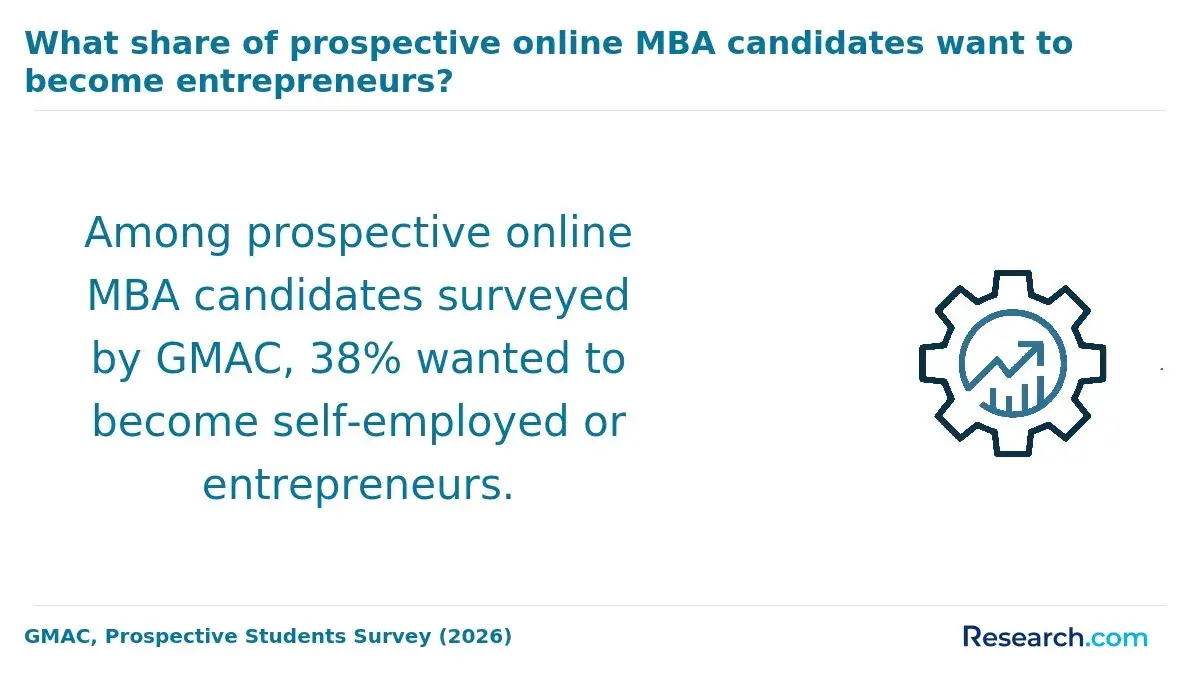
How do nonbusiness graduates prepare for MBA finance coursework?
Start with the skills you have, not your degree label. A STEM graduate may be comfortable with quantitative analysis but new to financial statements; a humanities graduate may bring strong communication and research skills while needing more practice with spreadsheets and basic accounting. Neither profile predicts every student's readiness.
A short diagnostic can reveal whether you need a refresher or a formal prerequisite before the first finance course:
- Review an introductory balance sheet, income statement, and cash flow statement; identify where the figures come from and how they connect.
- Practice spreadsheet calculations involving percentages, cash flows, and time value of money.
- Read the program's course descriptions and ask which concepts instructors expect students to know on day one.
- If a gap remains, choose a foundation course or introductory class that the MBA program confirms will meet its expectations.
Preparation is more valuable when tied to your target work. Someone managing a department budget may prioritize financial statements and forecasting; an aspiring analyst may also need to demonstrate stronger modeling skills through projects or work experience.
An MBA typically has a broad management core, while a finance concentration adds more focused study. Core subjects may include managerial accounting, marketing, operations, organizational behavior, strategy, and finance. Depending on the school, finance courses may cover corporate financial decisions, investments, valuation, financial markets, or risk. Electives, applied projects, and capstones vary; an individual finance elective does not necessarily amount to a formally designated concentration.
For a nonbusiness graduate, that breadth can be the point: finance decisions rarely happen apart from operations, customers, and organizational priorities. But managerial finance is not interchangeable with advanced quantitative training or professional accounting preparation. Compare course titles and descriptions, the number of finance courses, and any hands-on modeling or company-analysis work against the skills your intended role requires.
Completion time depends on required credits, foundation courses, course sequencing, and whether you enroll part-time or at an accelerated pace. A nonbusiness degree does not automatically make the MBA longer: the difference is whether your particular program requires additional preparation and how it schedules those courses.
Ask for a term-by-term plan based on your transcript and intended course load. Check whether finance electives are offered every term, whether courses must be taken in order, and whether a leave or reduced load is possible. An advertised fastest completion time is not a useful personal estimate if it assumes uninterrupted enrollment or omits foundation work.
Online MBA in Finance prices vary substantially, and a published tuition rate may be quoted per credit, course, or term rather than for the whole degree. Because no single price represents all programs, request a written estimate using your required credits and any foundation courses. Add mandatory fees, books and software, potential travel, and borrowing costs; a tuition-only figure is not your total expense.
Check scholarships and employer education assistance before deciding what you must finance, and verify any conditions attached to that support. An affordable online MBA in another field can be a useful comparison for how schools present costs: MBA program prices and tuition options degree programs offers a separate specialization to benchmark, not a price quote for a finance MBA. Your comparison should use the same cost categories and expected course load for each finance program.
The better format depends on how you plan to gain experience and contacts, not simply where lectures take place. Online study may let you keep earning and apply coursework at work; a full-time campus program may offer more access to in-person recruiting and internships. Neither advantage is universal, so verify what a specific program actually provides.
Compare the formats against the career change you want to make:
| Consideration | Online MBA | Campus MBA |
| Continuing current employment | Often easier to arrange, subject to live classes and workload. | Full-time study may require time away from work; part-time campus options differ. |
| Finance recruiting and practical experience | Check access to internships, employer events, projects, and career coaching. | Check actual recruiting access rather than assuming every campus program offers the same opportunities. |
| Professional relationships | May rely more on planned cohort interaction and alumni outreach. | May provide more routine face-to-face interaction. |
Also verify live-session times, group projects, and required visits: "online" does not necessarily mean asynchronous. Applicants whose nonbusiness experience comes from military service may have additional scheduling and support priorities when they compare online MBA programs and veterans.
Your most realistic path usually builds on experience you already possess. A professional who understands an industry's operations may move toward budgeting, financial planning, project investment decisions, or general management within that industry. Moving from an unrelated role into investment banking or a senior finance position is a substantially different transition; employers may expect relevant transactions, modeling, client work, or a recruiting pathway that the degree alone cannot provide.
For example, a clinician or healthcare administrator may find that financial coursework supports service-line budgeting, while a broader healthcare-management MBA may better match an operations leadership goal. Those weighing that distinction can explore online MBA programs in healthcare management. An engineering graduate might instead use finance training to assess equipment investments or move toward product and business leadership.
Before enrolling, inspect job postings for your target role. Separate requirements you can meet through coursework from those calling for demonstrated finance experience, employer-specific knowledge, or another professional qualification. Then ask whether your chosen program provides projects, career services, and employer connections that help close the remaining gap.
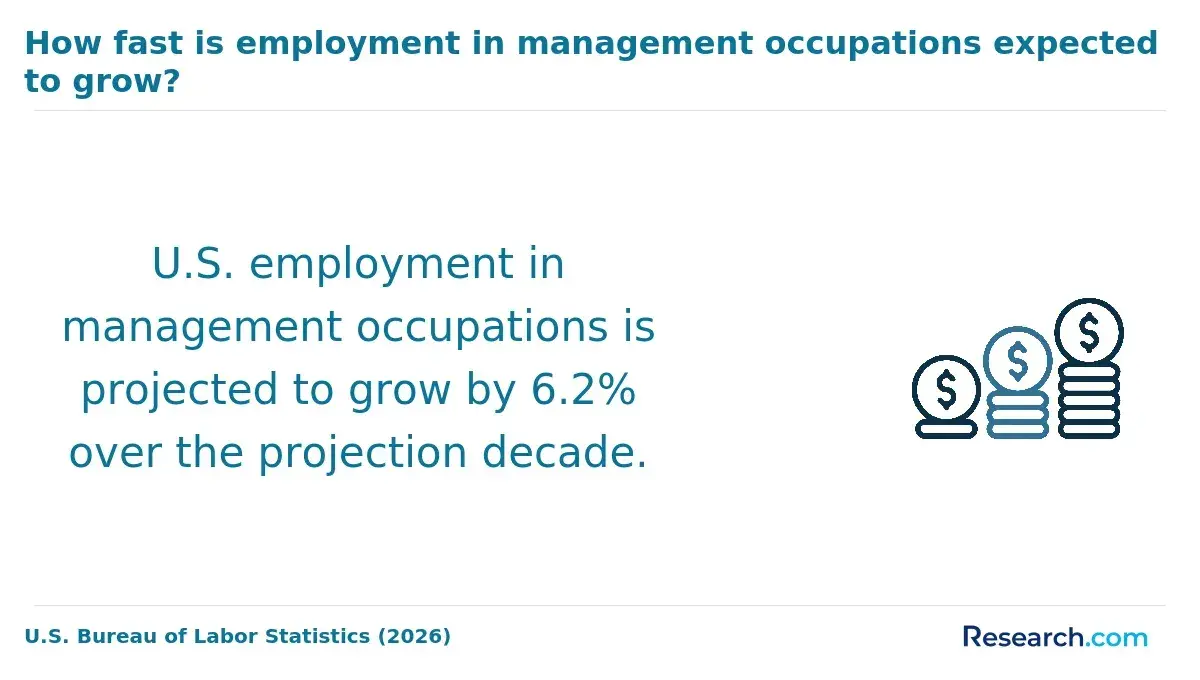
There is no single reliable salary for an online MBA in Finance graduate. Pay depends on the occupation, location, industry, responsibilities, and prior experience. For context, the U.S. Bureau of Labor Statistics reports a May 2025 median annual wage of $126,520 for management occupations. That figure describes a broad occupational group - not finance managers alone, not people with MBAs, and not the earnings an MBA would cause.
For your own estimate, identify a specific target job and location, then compare its posted pay and experience requirements with your current compensation. Treat any potential increase as uncertain until you have a plausible route to that role. The same discipline matters for job outlook: broad growth in management occupations does not establish demand for a particular finance job or guarantee a promotion.
How can you choose an accredited online MBA in Finance?
First confirm that the institution holds recognized institutional accreditation and that the online MBA offers a formally designated finance concentration if that designation matters to you. Specialized business-school accreditation is a separate distinction; do not assume it follows from institutional accreditation. Verify current status with the accreditor and the school.
Next, narrow programs using evidence that affects your return: required foundation work, finance-course depth, total cost, scheduling, and career support for someone with your background. To build a relevant shortlist, compare online MBA programs for nonbusiness majors, then request an individualized degree plan and cost estimate from each school.
Bottom line: Choose the MBA if its combined business and finance training fills a demonstrated gap, fits your schedule and budget, and supports a credible next step. If your goal is narrower - or you cannot identify how you will gain the experience your target job requires - test a targeted course, specialized degree, or relevant work opportunity before committing to a full MBA.
Other Things You Should Know About MBA
Not by itself. CPA licensure is governed by state-specific education, examination, and experience rules. Ask your state board whether particular MBA courses count before using the degree as a licensing plan.
Possibly, but policies differ. A school may waive a foundation course based on prior study without reducing the credits required for the MBA degree. Ask for both determinations in writing.
Eligible students may be able to use federal aid at an eligible institution and program, subject to enrollment and other requirements. Confirm your specific program's eligibility with its financial aid office; aid availability does not make borrowing cost-free.
That depends on the school. Some record a concentration on the transcript rather than the diploma. Request the program's official designation and documentation policy if the wording matters to you or an employer.
- Jobs That Require an MBA: Career Paths and Salaries | Touro University Worldwide https://www.tuw.edu/business/21-jobs-require-mba/
- Online/Distance Students - UNI Career Services https://careerservices.uni.edu/students/onlinedistance-students
- MBA with a Finance Concentration | NDNU https://www.ndnu.edu/business-management/mba/finance.html
- Online MBA in Finance at UNCW https://onlinedegree.uncw.edu/programs/business/mba/finance/
- MBA accreditation: What it is and why it's important for your career | KU Business https://onlinemba.ku.edu/experience-ku/mba-blog/mba-accreditation-what-it-is-why-its-important
- Is an MBA Necessary for a Career in Finance? | Gary W. Rollins College of Business https://blog.utc.edu/business/2023/03/24/is-an-mba-necessary-for-finance-career/
- MBA Requirements: What You Need to Apply in 2026 | SCU https://www.scu.edu/business/blog/admissions/mba-requirements/
- MBA vs. Master's in Finance: Which Program Is Right for You? | UIC Business https://businessgraddegrees.uic.edu/articles/mba-vs-masters-in-finance/
- What Degree Do You Need for an MBA? | LSU Online https://online.lsu.edu/newsroom/articles/what-degree-do-you-need-for-an-mba/
- Finance Master's Degree Program, Online & On Campus | Harvard Extension School https://extension.harvard.edu/academics/programs/finance-graduate-program/


