Online MBA in Healthcare Management: admissions guide for career changers

Co-Founder and Chief Data Scientist
If your experience is in another industry, an online healthcare MBA can build management knowledge - but admission and a successful career switch are separate hurdles. Schools may welcome applicants without healthcare backgrounds, while employers may still expect familiarity with how care organizations operate.
This guide helps career changers assess their qualifications, prepare a credible application, compare programs, and decide whether an MBA offers a better route than a shorter or more specialized option.
Key Things You Should Know
- A nonhealthcare or nonbusiness background does not automatically rule out admission; degree, experience, testing, and prerequisite policies vary by school.
- The strongest applications connect transferable skills to a specific healthcare management goal and show a realistic plan for gaining industry experience.
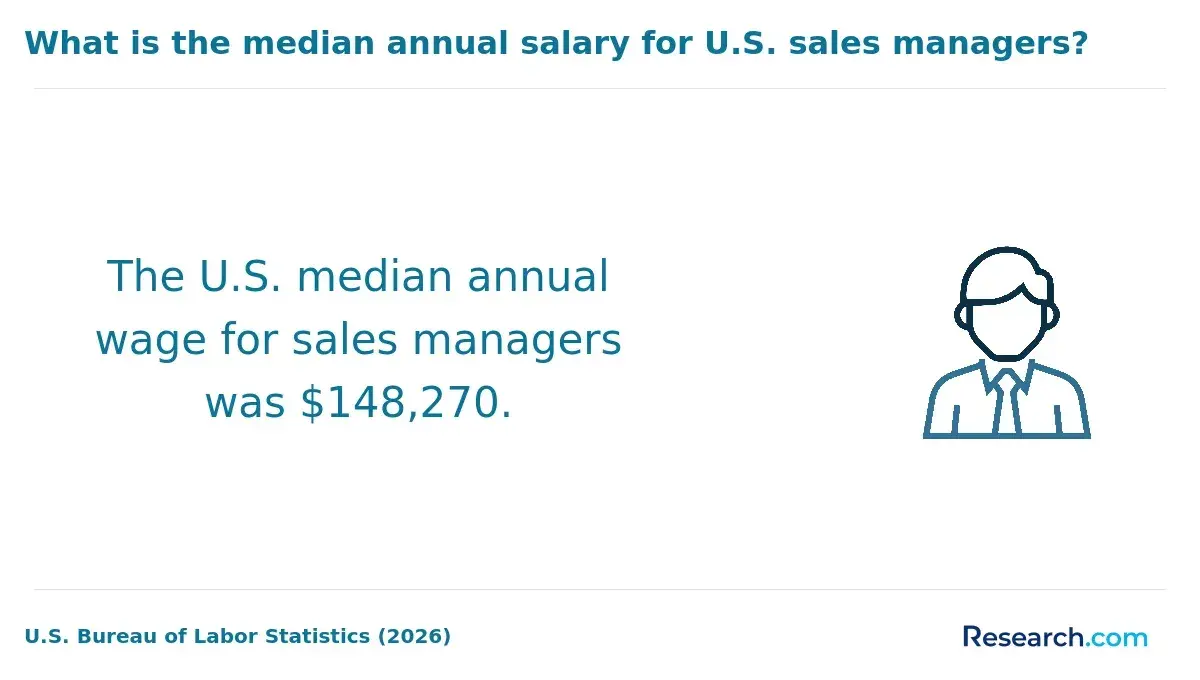
- The $126,520 median annual wage for all management occupations in May 2025 is not an expected healthcare MBA salary; evaluate program cost against the roles you could realistically pursue.
What is an online MBA in healthcare management?
An online MBA in healthcare management combines a broad business degree with coursework focused on managing healthcare organizations. Its MBA core typically covers finance, accounting, operations, strategy, and leadership. Healthcare courses may address care delivery, payment, policy, quality, or organizational change. It prepares students for business decisions in healthcare settings, not clinical practice.
Program labels matter. One school may offer a formally designated healthcare management concentration; another may offer only a few relevant electives within a general MBA. Check the degree plan and transcript designation rather than assuming the titles represent equivalent preparation.
Is an online healthcare MBA worth it for career changers?
It can be worthwhile when you already have skills a healthcare employer needs - such as budgeting, operations, analytics, compliance, or team leadership - and need business training plus a credible way to apply those skills in healthcare. Moving from operations in another regulated industry into healthcare operations is usually a smaller leap than moving from an unrelated role directly into hospital executive leadership.
The distinction is between qualifying for admission and qualifying for the job you want afterward. An MBA may strengthen the former without resolving the latter. If you lack healthcare contacts or experience, favor programs with accessible employer projects, relevant career advising, and alumni you can reach as an online student.
The better credential depends on your target role. This comparison separates broad management preparation from more direct routes into the field.
| Path | Potential fit | Principal limitation |
| Healthcare MBA | Career changers seeking transferable management skills across healthcare organizations | May offer limited healthcare-specific depth or direct recruiting access |
| Specialized healthcare administration master's | Applicants seeking deeper preparation in healthcare delivery and administration | May offer less general business breadth |
| Targeted courses or employer training | Applicants with a specific skills gap or an attainable internal move | May offer less structured networking and broader management study |
Before committing, identify several target job postings, note their experience requirements, and ask whether the degree would close the gaps they reveal. If the primary barrier is hands-on healthcare experience, a lower-cost course paired with a relevant job move may be more effective.
What are the admission requirements for an online healthcare MBA?
Requirements vary by university, and a healthcare concentration does not create a universal requirement for a clinical license, healthcare job, or business bachelor's degree. Applicants commonly encounter a bachelor's-degree requirement and requests for transcripts, a résumé, and a statement of purpose. Schools differ on minimum GPA, professional experience, recommendations, interviews, and GMAT or GRE policies; some offer test waivers or do not require a test.
For a career changer, the statement of purpose should explain why healthcare, why management, and why this program. Use specific evidence from your work: improving a process, managing a budget, coordinating stakeholders, or handling regulated operations. Then acknowledge what you still need to learn about healthcare rather than presenting general leadership experience as industry expertise.
These preparation steps strengthen an application without implying that every school requires them:
- Compare each program's current admission page with its healthcare course sequence, including any prerequisites or foundation courses.
- Ask whether your academic background calls for accounting, statistics, or other preparation before enrollment.
- Select a recommender who can describe your management potential with concrete examples.
- Check testing and waiver rules, deadlines, and whether an interview is required before scheduling an application.
- If you have prior graduate coursework, confirm whether credits can transfer and whether transferred credits can satisfy healthcare concentration requirements.
Transfer policies can change both cost and the courses you ultimately take. A graduate business transfer-credit guide can help you frame questions, but only the receiving university can determine how your particular courses apply.
Start by confirming institutional accreditation through the school's current accreditation information and the accreditor's directory. Then check whether the business school or MBA also holds specialized business accreditation, such as AACSB, ACBSP, or IACBE accreditation. Institutional and specialized business accreditation are different claims: do not assume one establishes the other.
Next, inspect the healthcare concentration's actual courses and ask who teaches them, whether online students can complete them on a predictable schedule, and whether projects involve healthcare organizations. For a career switch, the relevant test of career services is not whether they exist, but whether online, part-time students can use employer connections, advising, and recruiting opportunities suited to healthcare.
Compare the full price alongside those services. A starting point for identifying programs is to compare affordable MBA schools and programs online; verify each school's current accreditation, concentration availability, fees, and access to career support directly before applying.
The general MBA core teaches decisions that apply across industries: reading financial statements, allocating resources, analyzing operations, and leading teams. Healthcare-focused courses apply management thinking to issues such as reimbursement, patient access, quality improvement, healthcare law and policy, and the relationships among providers, payers, and patients. Exact topics and depth vary substantially by school.
A career changer should look for assignments that produce evidence of industry understanding - a healthcare operations analysis or organization-specific project, for example. A project can make an interview more substantive, but it is not the same as having held responsibility inside a healthcare organization. Similarly, managerial healthcare coursework does not train students to diagnose or treat patients.
Completion time depends on required credits, course availability, enrollment pace, and any foundation courses. An accelerated schedule may reduce time to completion while making it harder to work, build healthcare experience, and manage group projects. Ask for a term-by-term plan based on your intended course load, not just the program's advertised fastest finish.
For cost, request a written estimate covering tuition, mandatory fees, materials, technology charges, and any required travel. Ask how tuition is charged - per credit, course, or term - and whether the rate changes during enrollment. Employer assistance and transferable credits may lower your out-of-pocket cost, while borrowing adds financing cost. Listings of online MBA programs under $30,000 can provide a price comparison, but a listed tuition figure is not necessarily your total cost or proof that a healthcare concentration is available.
Both formats can teach the same broad management subjects. The consequential differences for a career changer are access: to healthcare employers, applied projects, peers, and recruiting - not simply where lectures take place. Ask each school which opportunities are available specifically to its online MBA students.
This comparison highlights practical differences to verify rather than promises that apply to every program.
| Consideration | Online program | Campus program |
| Scheduling | May reduce travel, but can still require live sessions and group meetings | May require regular on-site attendance at scheduled times |
| Career-switching access | Employer projects and recruiting access vary by program | May offer more in-person recruiting, depending on format and school |
| Networking | Often requires deliberate participation across locations | Provides more routine in-person contact |
If you need to remain employed, inspect the weekly timetable rather than treating "online" as synonymous with self-paced. Lists of online MBA programs with asynchronous classes can narrow your search; confirm whether the healthcare courses, exams, team meetings, or residencies still have fixed-time requirements.
Potential destinations include healthcare operations, practice administration, project management, finance, analytics, and service-line support. The realistic entry point depends heavily on prior experience. A career changer who has managed teams or budgets may pursue a comparable function at a healthcare employer; someone without that background may need a coordinator, analyst, or supervisor role before competing for broader management responsibility.
Read job postings for the distinction between a preferred MBA and required experience in clinical operations, reimbursement, electronic health records, or a particular care setting. Build a transition plan around those requirements: pursue relevant projects, learn the sector's terminology, and speak with people doing the target job. For an example of how healthcare experience and business education can intersect, see MBA pathways into management careers for nurses; a career changer without nursing credentials should not assume the same options are open to them.
There is no single reliable "healthcare MBA salary." Pay varies by occupation, location, organization, responsibility, and prior experience. The U.S. Bureau of Labor Statistics reports a $126,520 median annual wage for all management occupations in May 2025. That figure covers managers across industries and education backgrounds; it is neither the median for healthcare managers specifically nor an earnings forecast for MBA graduates.
Use compensation information for the exact role and location you intend to pursue, then compare it with your current pay and the degree's full cost. BLS projects management occupations overall to grow faster than the average for all occupations from 2025 to 2035, but that broad outlook does not establish demand for a particular healthcare job or predict a career changer's hiring prospects.
Do healthcare managers need licenses or professional certifications?
Many nonclinical healthcare management jobs do not require a clinical license. An MBA does not, however, authorize its holder to practice medicine, nursing, or another licensed profession. Some roles and settings have distinct legal requirements: nursing home administrators, for example, face state licensure rules that an MBA alone does not satisfy.
Professional certifications may be useful for particular functions, but they are not interchangeable with a degree or a license. Before choosing coursework or paying for a certification, check the target job postings and, where applicable, the relevant state licensing board's requirements.
Other Things You Should Know About MBA
It can help if your career goal depends on a particular course or project. Ask a focused question about its scope and availability to online students; the admissions office is better placed to confirm application policies.
Relevant volunteer work can demonstrate commitment and help you understand an organization, but it may not substitute for paid management or healthcare experience required by an employer.
Yes, if you can identify roles that use your current skills. Entering the sector earlier can test your career goal and help you apply MBA coursework to real problems.
Confirm eligibility, covered expenses, payment timing, grade requirements, and whether you must repay assistance if you leave the organization.
- Cost of Attendance (Budget) | 2025-2026 Federal Student Aid Handbook https://fsapartners.ed.gov/knowledge-center/fsa-handbook/2025-2026/vol3/ch2-cost-attendance-budget
- Types of Financial Aid: Grants, Work-Study, and Loans | studentaid.gov https://studentaid.gov/understand-aid/types
- Career Change to Healthcare: Is It Right for You? | Bouvé College of Health Sciences https://bouve.northeastern.edu/news/career-change-to-healthcare/
- 15 Transferable Skills That Work Across Industries | CityU of Seattle https://cityu.edu/transferable-skills/
- College Credit for Work and Life Experience | Purdue Global https://www.purdueglobal.edu/transfer-students/work-life-experience/
- Accreditation Process | AACSB https://www.aacsb.edu/educators/accreditation/accreditation-process
- MBA in Healthcare Management vs. Administration | EWU https://online.ewu.edu/degrees/business/mba/healthcare-administration/management-vs-administration/
- Why AACSB Accreditation Matters for Your Online MBA | USI https://online.usi.edu/degrees/business/mba/general/importance-of-aacsb-accreditation/
- Application materials and Interviewing | Career Development | Master's Degree in Public Administration https://in.nau.edu/career/application-materials/
- Understanding Business School Accreditation: AACSB and ACBSP Explained | American InterContinental University https://www.aiuniv.edu/blog/2015/april/aacsb-vs-acbsp