Careers After an Online MBA in Strategy for Military Veterans

Co-Founder and Chief Data Scientist
Military leadership experience can be valuable in civilian business, but employers may not immediately recognize how it fits a strategy role. An online MBA with a strategy concentration can help veterans translate that experience into business decisions involving markets, finances, operations, and organizational change. It is not, however, a shortcut to an executive job. This guide identifies realistic career paths, the experience employers may still expect, and the program and funding questions to resolve before enrolling.
Key Things You Should Know
- Veterans often have the strongest immediate prospects in strategy-related roles close to their military experience, such as operations, logistics, program management, or defense-sector business development; a broader career switch may require additional industry experience.
- An online strategy MBA combines general management study with strategy coursework, but the degree alone does not qualify someone for senior leadership or guarantee a civilian job offer.
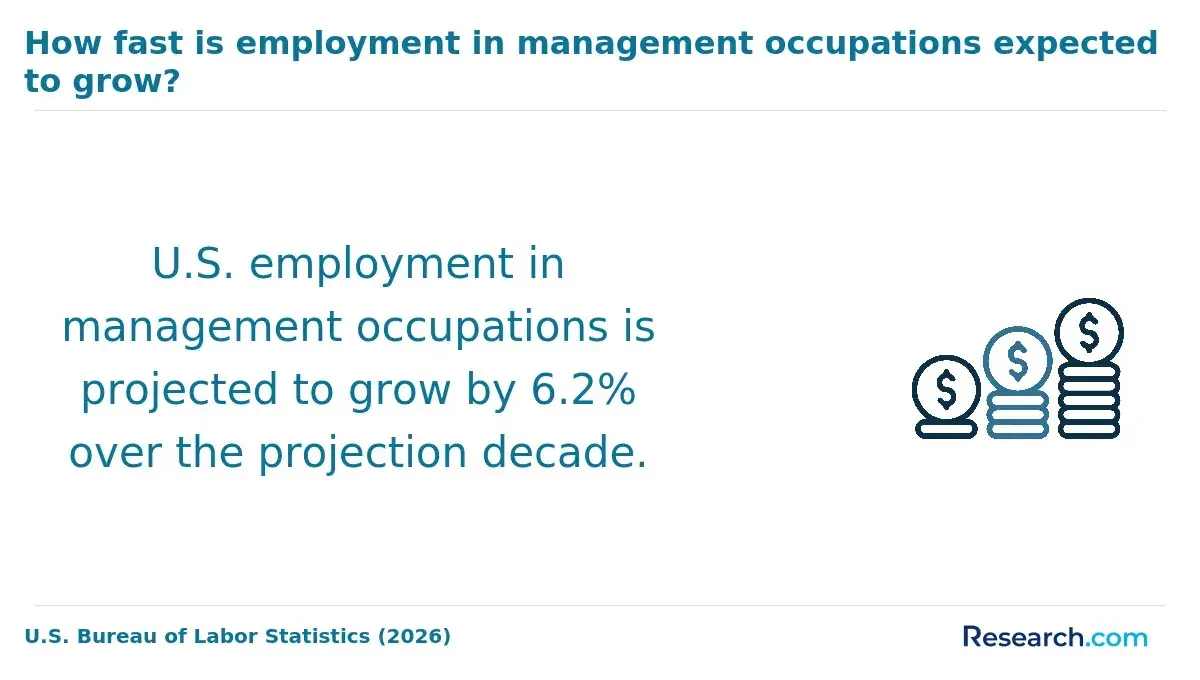
- The U.S. Bureau of Labor Statistics projects about 1.1 million annual openings across management occupations from 2025 to 2035. That broad figure signals opportunity, not demand specifically for MBA graduates or veterans.
What careers can veterans pursue after earning an online MBA in Strategy?
The most credible path usually starts with what a veteran has already managed: people, budgets, equipment, suppliers, complex operations, or cross-organization projects. Strategy work means choosing priorities and allocating resources under uncertainty. An MBA can add commercial vocabulary and analytical tools to that experience, but employers will still look for evidence that the candidate understands their industry.
These career lanes differ in how much prior military experience transfers directly. The comparison can help you choose a target before selecting an MBA program.
| Career lane | Relevant military experience | Likely civilian knowledge gap |
| Operations and supply chain leadership | Logistics, maintenance, readiness, and process improvement | Commercial costs, customers, suppliers, and performance measures |
| Program or project leadership | Coordinating teams, schedules, risks, and resources | Contract economics and the employer's delivery methods |
| Corporate strategy or internal consulting | Planning, analysis, and briefing senior decision-makers | Market research, financial modeling, and industry dynamics |
| Defense-sector business development | Understanding defense missions and stakeholder needs | Sales processes, procurement rules, and proposal development |
Moving from military logistics into a commercial operations role is generally a more direct transition than moving into strategy at an unfamiliar technology company. For the latter, a relevant project, functional role, or industry-specific network may matter as much as the MBA.
How does an online MBA in Strategy benefit military veterans?
An MBA's broad management core can help veterans connect operational decisions to profit, cash flow, customer demand, and organizational performance. Strategy coursework then asks how an organization competes, grows, or changes direction. The combination is particularly useful when a veteran can explain not just that a mission succeeded, but how they assessed alternatives, managed risk, and measured results.
Online study may allow a veteran to keep working or remain in place during a transition. Flexibility varies: live classes, team projects, and campus visits can still conflict with work or family obligations. Veteran-focused advising, career coaching, and employer connections are worth evaluating alongside the curriculum. A useful starting point is to compare online MBA programs education pathways and veterans, then confirm each school's current services and requirements directly.
The benefit is greatest when the program helps you produce civilian-readable evidence of your skills - for example, a market-entry analysis or an operations improvement project - and connects you with employers hiring for your target function. An MBA with limited career support may be less useful for a major career change, even if its classes fit your schedule.
What jobs can you get with an online MBA in Strategy?
Job titles depend more on prior responsibility and industry fit than on the concentration name. Veterans might pursue operations manager, supply chain manager, program manager, business operations manager, business development manager, or strategic planning manager roles. An experienced analyst might also pursue a corporate strategy analyst or internal consultant position as a route toward management.
Responsibilities differ. An operations manager improves delivery and controls costs; a program manager coordinates budgets, teams, and execution; a strategy analyst assesses markets and options for leadership. Defense contractors may value military context in program or business development work, while employers outside defense may expect stronger evidence of commercial experience. Senior strategy director and executive positions usually require an established civilian leadership record, not simply an MBA.
Before applying, compare job descriptions with your record. If the recurring gap is financial analysis, seek coursework and projects that demonstrate it. If the gap is industry knowledge, a related functional role may be a better first move than applying only to senior strategy jobs.
An MBA in Strategy generally means an MBA core plus a formal strategy concentration, track, or set of electives. Those are not interchangeable labels: one strategy elective does not necessarily produce a designated concentration. Check the degree requirements and transcript designation at each school.
The core commonly addresses accounting, managerial finance, marketing, operations, organizational behavior, and analytics. Strategy study may examine competitive positioning, industry analysis, growth choices, innovation, and organizational change. A capstone or consulting project can be especially valuable if it lets a veteran demonstrate a civilian business decision rather than only describe military achievements.
For career purposes, inspect the assignments as closely as the course titles. A program emphasizing market analysis and financial decisions may suit corporate strategy; one with operations and supply chain electives may better support a logistics transition. MBA-level strategy develops management judgment, not the same technical depth as a specialized analytics degree or hands-on training in a particular industry.
Completion time depends on required credits, course availability, transfer or waiver policies, and whether you enroll full- or part-time. An accelerated schedule can reduce time to graduation but may leave less room for work, family, and a civilian job search. Ask whether strategy courses are offered often enough to complete the concentration on your intended schedule.
Compare total tuition and mandatory fees, not just a per-credit price. Also account for books, technology, possible travel, and interest if you borrow. Veterans can use MBA options by total cost online MBA programs under $30,000 as an initial affordability screen, while verifying current charges and whether the full strategy pathway fits within the quoted cost.
VA funding requires an individual check. Confirm your own GI Bill eligibility and remaining entitlement, the school and program's VA approval, the applicable online housing allowance rules, and whether Yellow Ribbon participation applies to you and the program. Yellow Ribbon availability is not automatic, and employer tuition assistance may have separate conditions. Request a written, program-specific estimate of what you would pay after applicable benefits.
Schools commonly ask for a bachelor's degree, transcripts, a résumé, and an application explaining professional goals. Recommendations, interviews, work-experience expectations, and GMAT or GRE policies vary. A business undergraduate degree is not universally required, and admission to an MBA does not necessarily mean immediate eligibility for every elective or concentration.
Veterans should translate rank and assignments into scope, decisions, and measurable results. For example, describe the people, resources, risks, and stakeholders you managed rather than relying on unit terminology. If an academic record is a concern, review online MBA programs for low-GPA applicants, then check each school's current policy instead of assuming a waiver or exception.
Ask admissions whether the strategy concentration is available fully online, whether foundational business courses are required, and whether military training or previous graduate study can affect the degree plan. Get answers before treating an advertised completion timeline as your own.
An online MBA is a delivery format, not a separate level of degree. Start by confirming that the university holds recognized institutional accreditation. Then check whether its business school or MBA has specialized business accreditation, such as AACSB, ACBSP, or IACBE, if that distinction matters to your target employers. Institutional and specialized accreditation answer different questions; neither guarantees a job.
Employer recognition also depends on the institution, your experience, and whether the program helps you demonstrate relevant skills. Ask career services for evidence specific to online MBA students: access to coaching, employer events, alumni contacts, and career-outcome reporting. If a school publishes outcomes for all MBA formats combined, do not assume those results describe its online strategy students or veterans.
Online study can preserve employment and geographic flexibility, while a campus MBA may make in-person recruiting, internships, and concentrated networking easier. Neither advantage is universal. Some online programs provide substantial live interaction and employer access; some campus programs are designed for people who continue working.
For a veteran already employed in a target industry, an online program with strong projects and alumni access may be practical. For a substantial career switch requiring internships or structured recruiting, examine whether a campus program offers access the online option cannot match. Scheduling matters as well: group assignments can be difficult across time zones or unpredictable shifts. If that is a constraint, investigate choosing online MBA programs with limited group work and verify the actual collaboration requirements with the school.
Compare the formats using the same questions: Who can use career services? Which employers recruit online students? Are residencies required? Can you pause enrollment if work or family circumstances change? "Online" alone does not answer any of them.
There is no dependable salary figure for all veterans who earn an online strategy MBA. Pay varies by occupation, location, industry, responsibility, and prior experience. As context, the U.S. Bureau of Labor Statistics reports a median annual wage of $126,520 for management occupations in May 2025. That figure covers workers across management jobs - not MBA graduates specifically - and should not be treated as a starting salary or an MBA earnings premium.
Use compensation estimates for the particular role and market you plan to enter. Then compare a realistic offer range with your current pay, benefits, and likely tuition contribution. To test the education cost side, compare MBA tuition and fees MBA USA and confirm figures with schools. A funded MBA that supports advancement within your field can have a different payoff from a self-funded MBA pursued for a difficult industry switch.
What certifications support careers after an online MBA in Strategy?
A certification can address a specific hiring requirement that a broad MBA does not. Project Management Professional (PMP) may be relevant to program roles, while Lean Six Sigma training may support operations improvement. Supply chain credentials can help candidates targeting procurement or logistics. Each has its own eligibility rules and employer relevance; none is a universal requirement for strategy work.
Read target job postings before paying for another credential. If employers repeatedly request project-management certification, investigate its experience and examination requirements. If they primarily request industry experience or financial modeling, a certificate may not solve the main hiring gap. An MBA is most useful alongside, rather than in place of, evidence that you can perform the target job.
Other Things You Should Know About MBA
Replace mission-specific language with the business problem, your decision, the resources you managed, and the result. Explain acronyms and distinguish your individual contribution from the team's work.
No. Federal veterans' preference applies to eligible applicants in certain federal hiring processes; it does not require private employers to prefer veteran applicants. Check the rules for the specific federal vacancy.
It can be relevant to positions whose duties require one, particularly with some defense employers. A clearance does not replace the business or functional qualifications in a job posting, and employers determine clearance requirements.
Start before applying for the MBA or leaving service if possible. Conversations with people in your target roles can reveal which experience employers value and whether a degree, a shorter course, or a direct job search is the better next step.
- Yellow Ribbon Program | Veterans Affairs https://www.va.gov/education/about-gi-bill-benefits/post-9-11/yellow-ribbon-program/
- MBA Programs for Veterans - Lehigh College of Business https://business.lehigh.edu/academics/graduate/masters-programs/veterans
- Online vs. In-Person MBA: Which is Right for You? | Colorado Technical University https://www.coloradotech.edu/degrees/studies/business-and-management/online-vs-in-person-mba
- Online MBA vs Full-Time MBA: ROI, Cost and Career Outcomes | Jenkins MBA https://mba.ncsu.edu/2026/04/27/choosing-between-an-online-mba-and-full-time-mba/
- Online MBA vs On-Campus MBA | MBA Degree Options | Missouri Baptist University (Mobap) https://www.mobap.edu/news/online-mba-vs-traditional-mba/
- Why veterans should get an MBA | UF Warrington College of Business https://warrington.ufl.edu/news/veterans-should-get-mba/
- 12 Jobs for Veterans in 4 In-Demand Industries | Coursera https://www.coursera.org/articles/jobs-for-veterans
- 3 Reasons Why Employers Respect Online MBA Programs | gmac https://www.gmac.com/resources/learners/business-programs/student-experience-roi/3-reasons-employers-respect-online-mba
- What to Expect in an Online MBA Program: ROI, Format & Fit | Rowan Blog https://rowanblog.com/2025/05/what-to-expect-in-an-online-mba-program/
- How Veterans Can Land Civilian Jobs in Leadership, Operations, and Project Management - RecruitMilitary https://recruitmilitary.com/job_seeker_resource/jobs-for-veterans-leadership-operations-project-management/