Careers After an Online MBA in Operations Management for Military Veterans

Co-Founder and Chief Data Scientist
Military service can provide substantial experience coordinating people, equipment, budgets, and time-sensitive work. Civilian employers may value that experience but describe it in different terms - and an online MBA in Operations Management is one possible bridge.
This guide is for veterans weighing that degree against a direct job search or a narrower credential. It explains which roles fit different service backgrounds, where an MBA can help, what it cannot replace, and how to assess a program before committing time or education benefits.
Key Things You Should Know
- Veterans with logistics, maintenance, procurement, or unit leadership experience may be competitive for related civilian operations roles; an MBA can support advancement but does not replace industry experience.
- The U.S. Bureau of Labor Statistics projects about 1.1 million openings annually across all management occupations from 2025 to 2035 - not specifically for operations managers or MBA graduates.
- Before enrolling, compare the program's operations coursework, civilian employer connections, full cost, schedule, and your verified VA education benefits against a direct job search or targeted certification.
What careers can military veterans pursue after an online MBA in Operations Management?
Operations management concerns how an organization plans, delivers, measures, and improves its work. For veterans, the most plausible transition usually builds on a service function they already know. An MBA may add business finance, analytics, and organizational strategy to that experience; it rarely makes an unrelated senior role an immediate next step.
The table connects common military experience with civilian career paths. These are examples of transferable responsibilities, not automatic job matches or equivalent ranks.
| Military experience | Potential civilian path | Likely gap to address |
| Supply, transportation, or distribution | Logistics manager; supply chain operations manager | Commercial inventory systems, supplier economics, and customer-service measures |
| Maintenance or equipment readiness | Maintenance manager; facilities operations manager | Civilian safety rules, asset-management systems, and sector-specific requirements |
| Unit leadership and resource coordination | Operations supervisor; regional operations manager | Profit-and-loss decisions, civilian employment practices, and business performance measures |
| Acquisition or contracting | Procurement manager; sourcing operations manager | Commercial contracts, supplier negotiation, and private-sector purchasing systems |
Industry matters as much as job title. A veteran may find an easier entry into defense-related manufacturing or logistics than into an unfamiliar industry with specialized regulations. Healthcare operations is another possible path, but hospital experience and knowledge of its operating environment can matter more than an MBA concentration alone. Veterans considering that transition can compare online MBA programs for healthcare professionals with broader operations programs.
How does an online Operations Management MBA benefit military veterans?
The strongest benefit is translation. A veteran who managed readiness can learn to explain that work through capacity planning, cost control, service levels, and process improvement. MBA courses also connect operational decisions to accounting and strategy - useful when seeking responsibility beyond a single team or site.
Online study may let a veteran remain employed or avoid relocating, but it does not guarantee flexible hours. Live classes, group projects, and required visits can affect a job or family schedule. Career value also depends on whether the school helps online students meet employers and alumni, not simply whether it awards the same degree as its campus program.
For a veteran already receiving interviews for the desired role, work experience plus targeted training may be faster and less costly. An MBA is more compelling when the missing qualification is broad business management knowledge or when it supports a credible move from operational leadership into wider organizational responsibility.
What jobs can you get with an Operations Management MBA?
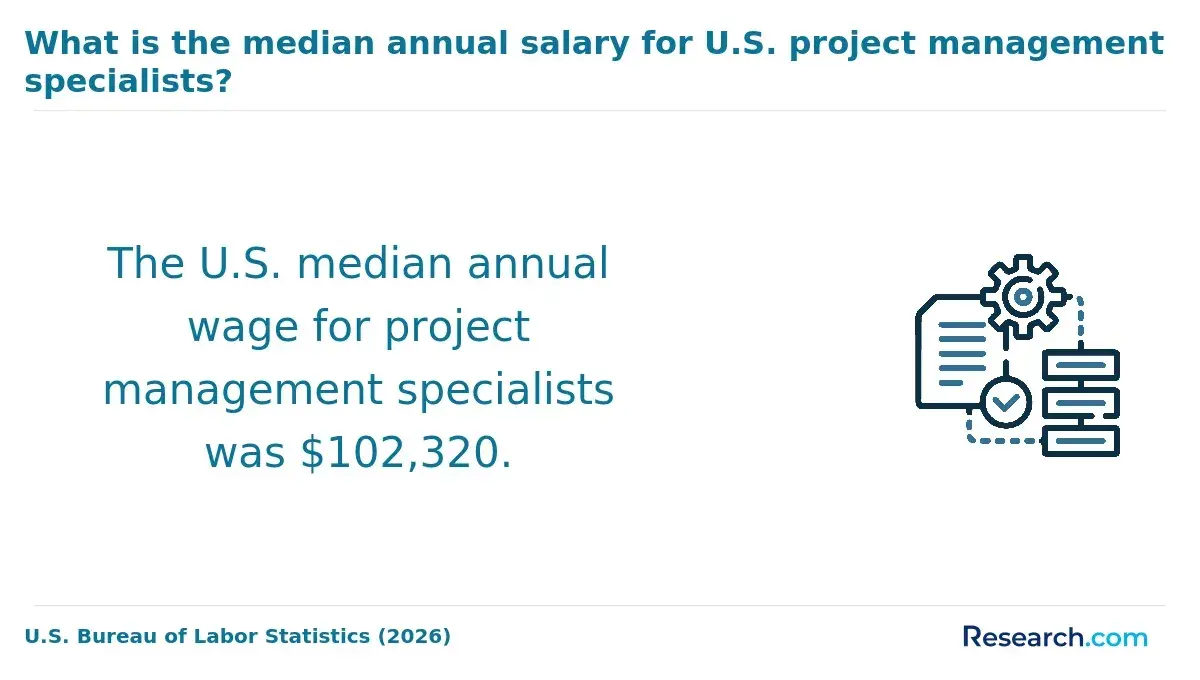
Job titles vary by industry. An operations supervisor oversees daily staffing, quality, and output; a logistics manager coordinates transportation and distribution; a procurement manager directs purchasing and supplier performance. Operations analysts examine workflows and performance data, while project managers coordinate a defined change such as a system rollout or facility expansion.
Read postings for the actual responsibilities behind a title. Compare your experience with the employer's required systems, industry knowledge, budget authority, and people-management scope. Then describe military accomplishments in civilian terms, using accurate measures and explaining what you personally controlled.
An MBA combines a broad management core - often including accounting, finance, strategy, leadership, and analytics - with operations-focused study. Depending on the school, that study may cover supply chains, quality, process design, forecasting, procurement, or project execution. A formal concentration has defined requirements; a general MBA with one operations elective is not necessarily equivalent.
For veterans, the most useful assignments may be those that turn familiar operational problems into civilian business decisions: weighing service quality against cost, testing a process change with data, or presenting an investment case to executives. Check whether the curriculum includes applied projects and whether online students can participate. MBA-level operations courses generally develop managerial judgment, not hands-on qualification in a particular software platform, engineering discipline, or regulated occupation.
First, confirm the university's institutional accreditation and check whether the business school holds separate specialized accreditation. They answer different questions; neither by itself establishes that an operations concentration, strong veteran support, or effective career services is available online.
Next, verify the formal concentration and its courses, required live attendance or campus visits, support for veteran students, and access to employers in your intended industry. Ask career services how it works with experienced online students seeking a civilian transition, rather than assuming campus recruiting is equally accessible. When comparing affordable online MBA programs, use the total amount you would pay and the career support you would actually receive - not a tuition ranking alone.
Finally, ask the school's certifying official which of its online offerings is approved for the VA benefit you intend to use. Confirm your own eligibility with the VA; veteran status alone does not establish entitlement to a particular GI Bill benefit or Yellow Ribbon funding.
Requirements vary by university. Applicants commonly need a bachelor's degree and may be asked for transcripts, a résumé, a statement of purpose, recommendations, or an interview. Schools differ on professional experience, prerequisite business knowledge, and GMAT or GRE policies; do not assume a test waiver or a minimum service history applies everywhere.
Military leadership can strengthen an application when the résumé makes its scope understandable to civilian readers. Describe the size of teams and resources managed, decisions made, and results achieved without disclosing sensitive information. If finance or quantitative coursework is unfamiliar, ask whether the school offers preparation before enrollment. Veterans concerned about application barriers can examine online MBA programs with accessible admissions, then verify each program's current requirements and academic fit directly.
Completion time depends on required credits, course sequencing, and whether you study part time or at an accelerated pace. Ask for a course-by-course plan that accounts for the operations concentration and any required visits. A published fastest-completion timeline may not fit someone working full time.
For cost, request an itemized estimate covering tuition, mandatory fees, books or software, and travel. Then separate the amount a VA benefit, employer, or scholarship may cover from the amount you must pay or borrow. Benefit eligibility, payment rules, and remaining entitlement vary; do not treat a school's advertised military support as a personal award estimate. Comparing affordable online MBA programs is most useful after you calculate your own likely net cost.
Include opportunity cost as well. Reduced work hours, delayed job applications, or a schedule that prevents taking a promotion can change the degree's value even when tuition is largely covered.
An online MBA can preserve geographic flexibility and current employment. A campus-based program may offer easier access to in-person events, internships, and employers recruiting locally. Neither format is inherently better for veterans: a working logistics professional seeking advancement may value continuity, while a veteran making a substantial industry change may need more intensive recruiting access.
Compare the formats on specific services, not assumptions. Ask whether online students attend the same employer events, how team projects are scheduled, and whether career advisers support a transition from military terminology to civilian roles. If speed is a priority, review fast-track MBA options for working adults alongside the workload and recruiting time each option allows. Finishing sooner is not an advantage if it leaves too little capacity to pursue the intended job.
A certification can signal a narrower skill set than an MBA. Choose one to address a requirement in your target job postings, not to collect credentials indiscriminately. For example, a project-management credential may help when pursuing project delivery roles; supply chain certifications may be more relevant to planning or logistics; and process-improvement training may fit quality or continuous-improvement work.
Check each certifying organization's current eligibility rules, examination content, and renewal obligations. Military projects may provide relevant experience, but whether they satisfy an organization's requirements is determined by that organization. If postings consistently request one specific certification and you already have sufficient management experience, that credential may be a more direct next step than an MBA.
What are the salary and job outlook for operations management careers?
The U.S. Bureau of Labor Statistics reports a median annual wage of $126,520 for all management occupations in May 2025. This is a broad U.S. occupational figure - not the pay for operations managers, military veterans, or MBA graduates. It is most useful as context: assess actual offers and postings for your target title, location, industry, and experience level.
BLS projects management employment to grow faster than the average for all occupations from 2025 to 2035. That broad outlook does not establish demand for every operations specialty. When judging a program's potential payoff, compare your realistic post-transition opportunities with your current compensation and total education cost; do not attribute an occupation's median wage to earning the degree.
Other Things You Should Know About MBA
No. An MBA does not maintain or renew a clearance. Clearance status is governed by the relevant federal process and the requirements of positions that need access to classified information.
Some planning and analysis work can be done remotely, but roles responsible for facilities, production, or on-site teams may require regular presence. Check the work-location terms of each posting.
No. Federal veterans' preference applies under specific federal hiring rules, not as a general preference in private-sector hiring. Eligibility and its effect depend on the federal position and hiring process.
It depends on the transition. An internship can provide evidence of experience in a new industry or function, but it may be less useful than a management-level project or direct job search for a veteran already qualified for the target role.
- How Working Conditions in Civilian Jobs Can Affect Veterans' Health and Well-Being: Veterans' Issues in Focus - PMC https://pmc.ncbi.nlm.nih.gov/articles/PMC11425930/
- What Are Veterans' Job Prospects After They Serve? | Census.gov https://www.census.gov/library/stories/2025/01/veterans-employment-outcomes.html
- Translate your military skills to a civilian career - VA Careers https://vacareers.va.gov/job-news-advice/translate-your-military-skills-to-a-civilian-career/
- Yellow Ribbon Program | Veterans Affairs https://www.va.gov/education/about-gi-bill-benefits/post-9-11/yellow-ribbon-program/
- About GI Bill Education Benefits | militaryonesource.mil https://www.militaryonesource.mil/benefits/gi-bill-education-benefits/
- The Benefits of Getting an Online MBA for Veterans | Gary W. Rollins College of Business https://blog.utc.edu/business/2023/11/09/benefits-of-an-mba-for-veterans/
- Companies with Veteran/Military-Connected Hiring Initiatives | GGU Military https://military.ggu.edu/career-support/companies-hiring-veterans-and-military
- From Military to MBA: A Guide for Veterans | utexas.edu https://blogs.mccombs.utexas.edu/mba-insider/from-military-to-mba-a-guide-for-veterans/
- Yellow Ribbon Program (Ch.33 GI Bill® Supplement) | columbia.edu https://sfs.columbia.edu/content/yellow-ribbon-program-ch33-gi-billr-supplement
- Smith Vet FAQs | Robert H. Smith School of Business https://www.rhsmith.umd.edu/military/smith-vet-faqs