Careers after an online MBA in Operations Management for public sector professionals

Co-Founder and Chief Data Scientist
If you manage a public program, procurement process, or service team, an operations management MBA could help you take on broader responsibility - but it will not bypass civil-service hiring rules or replace agency experience. This guide examines the roles the degree may support, the skills employers value, and the limits of salary data.
It also covers the time, cost, and program features to check before deciding whether an online MBA is a better investment than targeted training or a public administration degree.
Key Things You Should Know
- The most realistic next steps are often within your current field: managing larger programs, improving service delivery, or overseeing procurement and logistics.
- An MBA alone rarely qualifies someone for a senior government post. Operations coursework can strengthen budgeting, process analysis, and change management, but government hiring also depends on agency-specific experience, classification rules, and sometimes specialized credentials.
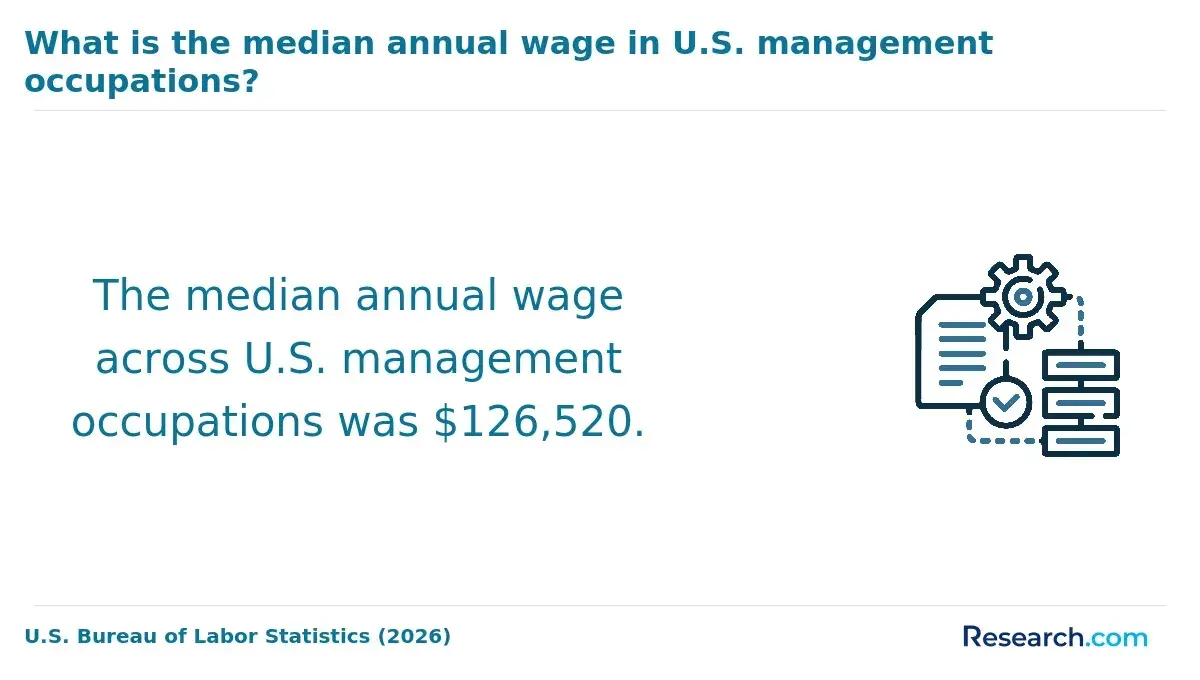
- The May 2025 median wage for all U.S. management occupations was $126,520; it is not a forecast for public-sector MBA graduates. Compare the degree's full cost with the pay range and promotion requirements of your target role.
What careers can you pursue with an online MBA in operations management?
For an experienced public sector professional, the strongest career path is usually an adjacent move: applying broader management skills to operations you already understand. A budget analyst who has managed process changes, for example, may be better positioned for program operations leadership than for an unrelated supply-chain executive role.
The following pathways show how existing experience affects the value of the MBA. Job titles differ among federal, state, and local employers, so compare duties rather than titles alone.
| Pathway | Typical responsibility | Experience that matters alongside the MBA |
| Program or service operations manager | Coordinate staffing, budgets, performance measures, and service delivery | Program administration, supervision, and knowledge of governing rules |
| Procurement or logistics manager | Improve purchasing workflows, inventory, or distribution | Public procurement rules, contract administration, and vendor oversight |
| Performance improvement manager | Analyze bottlenecks and lead cross-agency process changes | Evidence of implemented improvements and stakeholder management |
| Facilities or infrastructure operations manager | Plan resources and coordinate ongoing service or maintenance | Relevant facilities, capital-project, safety, or technical experience |
A move into private-sector operations is possible, especially where your procurement, logistics, or large-scale service experience transfers. It may still require learning different commercial measures and building an industry network. Neither path comes with an automatic promotion on graduation.
How does an online MBA in operations management prepare public sector professionals?
An MBA combines general management education with operations-focused study. Managerial accounting and finance can help you evaluate resource choices; analytics and process design can help you identify delays; organizational behavior can help you implement changes across teams that do not report to you.
Those tools need a public-sector lens. A faster purchasing cycle is not an improvement if it weakens competition, documentation, or oversight. Likewise, a service redesign should account for statutory obligations, accessibility, and the people the agency serves - not only cost per transaction. The best applied projects let you test business methods against these constraints while protecting agency data.
Look for evidence that students practice presenting recommendations to stakeholders and measuring results, rather than only solving private-company cases. An MBA builds management judgment; it does not teach every agency's legal authorities or confer decision-making authority at work.
What public sector jobs value an MBA in operations management?
An MBA may be particularly relevant to openings that combine budget ownership, process improvement, and supervision: program manager, administrative services manager, public works operations manager, transit operations manager, or agency performance manager. Procurement leadership roles may also value it, while still requiring substantial contracting experience.
Before enrolling for a particular job, read several current vacancy announcements from the agency and jurisdiction you want. Separate required qualifications from preferred education, and check the occupational series, grade or salary band, supervisory expectations, and any specialized-experience language. In a structured hiring system, a preferred MBA may strengthen an application without replacing a required year of qualifying work or changing your grade automatically.
If your goal is technical engineering leadership, licensed professional practice, or a role governed by a specialized appointment standard, confirm those requirements separately. An operations MBA is not a substitute for a required license or technical degree.
Curricula vary. The MBA core commonly covers accounting, finance, strategy, leadership, and quantitative decision-making. An operations concentration may add supply chain management, process improvement, quality management, project management, or operations analytics. A school offering one relevant elective does not necessarily award a formal operations management concentration.
Compare course descriptions with the work you want to do. Procurement and logistics roles call for different electives than service-delivery redesign, while a capstone involving real organizational constraints may be more useful than another broad survey course. If your undergraduate degree was outside business, ask whether the school requires foundation work; some online MBA programs without business prerequisites integrate introductory business concepts into the degree instead.
Requirements are set by each school, not by the concentration. Applications commonly ask for a bachelor's degree, transcripts, a résumé, and written statements or recommendations. Schools differ on professional-experience expectations, GPA policies, interviews, and GMAT or GRE rules. Public-sector work in budgeting, procurement, operations, or team leadership can provide useful application examples even if your job title does not say "manager."
If you are earlier in your career, compare online MBA programs without work experience requirements, then check whether their coursework and career support fit your goal. An admissions policy that permits less experience does not mean employers will waive experience requirements for management jobs. Before applying, confirm the current test policy and whether any foundation courses add time or cost.
Completion time depends on required credits, transfer or waiver policies, term schedules, and how many courses you take while working. A part-time route generally offers more room around budget cycles and procurement deadlines; an accelerated route may shorten enrollment but intensify group projects and deadlines.
"Online" does not necessarily mean self-paced. Check for live sessions, required campus visits, fixed cohort sequencing, and how often concentration courses run. If shift coverage or emergency response is part of your job, online MBA programs with asynchronous classes may be easier to schedule, though team assignments can still require coordinated meeting times.
There is no single price for this degree. Compare the total required credits multiplied by tuition per credit, then add mandatory fees, materials, possible travel, and financing costs. Verify whether a quoted price covers the full degree or tuition only, and whether concentration courses carry different charges.
Some schools advertise low-cost online MBA degrees under $10,000; confirm the current total and the operations coursework before treating one as a suitable option. Ask your employer whether tuition assistance applies to your position, requires advance approval, or comes with a service commitment. The useful affordability test is your expected out-of-pocket cost against a realistic target job - not a general post-MBA salary claim.
The U.S. Bureau of Labor Statistics reports a May 2025 median annual wage of $126,520 for management occupations. That figure spans many industries and experience levels; it is neither a public-sector-specific wage nor the expected pay of someone who earns an MBA.
For your own estimate, use published salary bands for target federal, state, or local vacancies and account for location, grade, seniority, and supervisory status. Compare those bands with your current compensation and the experience required to reach them. BLS projects overall management employment to grow faster than the average for all occupations from 2025 to 2035, but that broad outlook does not establish demand for a particular agency role or guarantee an opening when you graduate.
Choose a credential for the duties you want, not as an automatic add-on to an MBA. Project management certification can help document experience leading complex initiatives; a process-improvement credential may suit service redesign; and a procurement-focused credential may be more directly relevant to contracting work. Eligibility, examinations, and renewal rules vary by credential.
For government procurement positions, check the specific employer's training, certification, and warrant requirements before choosing outside coursework. An MBA may improve your management perspective, but it does not itself grant contracting authority. If a vacancy primarily asks for a specialized credential and you already have adequate leadership education, that credential or employer training may be a more direct investment than another degree.
How do you choose an accredited online MBA for public sector careers?
Start with the job you want, then compare programs on curriculum, cost, scheduling, and opportunities to apply coursework to public-service problems. Verify that the institution holds recognized institutional accreditation; separately check whether the business school holds specialized accreditation such as AACSB. These are different forms of accreditation, and neither establishes that an operations concentration is offered online.
You can use affordable AACSB-accredited online MBA programs as a starting point, but confirm each school's current concentration, full cost, and delivery requirements directly. Ask whether career services work with employed online students and whether a capstone can address a public-sector challenge without exposing restricted information.
Choose the MBA if you need broad management preparation for a credible next step and can fund it without relying on a speculative raise. If your goal is specifically public policy or government administration, compare an MPA. If a vacancy calls for a narrow technical or procurement skill, targeted training may serve you better.
Other Things You Should Know About MBA
Only with appropriate authorization. Check your agency's rules on confidential information, data access, and external disclosure; a hypothetical or public-data project may be safer.
No. The program may forgive a qualifying remaining Direct Loan balance after its employment, payment, and other requirements are met; it does not pay tuition upfront. Verify current federal rules before borrowing.
Yes, particularly if it involves an agency vendor, regulated organization, or nonpublic information. Seek guidance from your agency's ethics office before accepting the project.
Translate agency-specific titles into responsibilities and documented results: resources managed, workflows improved, stakeholders coordinated, and constraints handled. Explain the scale and outcome without disclosing restricted information.
- Students & Recent Graduates | U.S. Office of Personnel Management https://www.opm.gov/policy-data-oversight/hiring-information/students-recent-graduates/
- Online MBA Programs Without GMAT Requirement | CTU https://www.coloradotech.edu/articles/studies/business-and-management/online-mba-options-working-professionals
- What Should You Look for in an Online MBA Program? 6 Features of the Best Programs | American University https://kogod.american.edu/news/six-things-the-best-online-mba-programs-offer-to-students
- Guide to Choosing an Accredited Leadership MBA | Southeastern Oklahoma State University https://online.se.edu/programs/business/mba/leadership/guide-choosing-accredited/
- Discover State and Local Government Career Paths | Careers in Government https://www.careersingovernment.com/tools/blog/state-and-local-government-careers/
- 11-1021.00 - General and Operations Managers https://www.onetonline.org/link/summary/11-1021.00
- Careers in Local Government Management | icma.org https://icma.org/page/careers-local-government-management