Online MBA in Nonprofit Management: Curriculum and Workload for Public Sector Professionals

Co-Founder and Chief Data Scientist
Public sector work already demands careful budgeting, accountable leadership, and cooperation across organizations. An online MBA in nonprofit management can build on that experience, but its business-heavy curriculum and weekly commitments may or may not fit your next role. This guide explains what you are likely to study, how coursework fits around an agency job, and where the degree differs from public administration training. It also shows what to verify before enrolling, so you can choose a program - or a shorter alternative - based on the work you want to do.
Key Things You Should Know
- Expect a general MBA core in finance, strategy, operations, and leadership; nonprofit-specific coursework may be a formal concentration, an elective cluster, or just individual courses.
- Online does not necessarily mean self-paced: group projects, live meetings, and agency deadlines can make a seemingly manageable course load difficult.
- The U.S. Bureau of Labor Statistics reports a $126,520 median annual wage for management occupations in May 2025, but that broad figure is not a nonprofit salary or an expected return on this MBA.
What is an online MBA in nonprofit management?
It is a graduate business degree delivered primarily online that combines an MBA's general management core with study of mission-driven organizations. Depending on the school, nonprofit management may be a formally designated concentration, a set of electives, or a theme within a general MBA. Those arrangements are not equivalent: check the required courses and the credential shown on the transcript rather than relying on a program's marketing language.
For a government employee, the appeal is the chance to apply business tools to partnerships, service delivery, and resource decisions. The limitation is equally important: an MBA usually teaches management-level decision-making, not the detailed law, procurement rules, or public budgeting procedures that govern a particular agency.
Is an online nonprofit management MBA worth it for public sector professionals?
It can be worthwhile if you need broad financial and operational skills for a defined next step - for example, overseeing a government-funded nonprofit partnership or managing a larger service operation. Its value is less certain if your goal is promotion within a civil-service system that emphasizes grade requirements, tenure, or specific public-administration experience. Check actual job postings and your employer's education-assistance policy before treating the degree as an advancement strategy.
The closest alternative often depends on the work you intend to do. This comparison separates business-management breadth from more direct public-sector preparation.
| Option | Usually the stronger fit when you need | Main limitation to examine |
| MBA with nonprofit coursework | Broad management training applicable across government, nonprofit, and business settings | Nonprofit content may be limited, and agency-specific rules may receive little attention |
| Master of public administration or public policy | Deeper preparation in public governance, budgeting, implementation, or policy | May offer less general business training |
| Graduate certificate or individual courses | A specific skill without committing to a full degree | Less curricular breadth and potentially less value where a master's degree is required |
If you are early in your career, separate eligibility from value: online MBA programs without work experience requirements may be open to applicants who have not yet managed people, but admission alone does not make an MBA the best next step. Responsibility for budgets, projects, or staff may help you apply the coursework more effectively.
What do you learn in an online MBA in nonprofit management?
Curricula vary, but the key distinction is between courses every MBA student takes and courses focused on nonprofit organizations. The following map shows what to look for in a catalog and how a public sector professional might use each part.
| Curriculum component | Likely subject matter | Public sector application |
| MBA core | Managerial accounting and finance, strategy, operations, analytics, and organizational behavior | Evaluate resource trade-offs, improve processes, and lead cross-functional teams |
| Nonprofit concentration or electives | Mission and governance, fundraising, grant-funded operations, program evaluation, and stakeholder accountability, where offered | Work more effectively with nonprofit partners, boards, funders, and community organizations |
| Applied project or capstone, where required | An organizational problem, consulting assignment, or strategic plan | Examine a service-delivery challenge, subject to employer approval and data restrictions |
Course titles alone do not establish depth. A class on nonprofit finance might address executive decisions about funding and reserves without training students in government grant compliance. Ask for recent syllabi, assignment examples, and the number of nonprofit-specific courses required - not merely available.
There is no reliable weekly-hour estimate that applies to every online MBA. Time demands depend on course design, your enrollment pace, your familiarity with accounting and quantitative work, and whether projects require coordination with classmates. A public sector professional should also account for budget cycles, legislative sessions, procurement deadlines, or emergency-response duties that can collide with fixed academic deadlines.
Before choosing a course load, ask the program for a recent syllabus and work through these scheduling checks:
- Identify required live sessions, their time zone, attendance rules, and any campus visits.
- Find out how often group assignments require meetings outside scheduled class time.
- Compare major assignment dates with your agency's predictable peak periods.
- Confirm whether you can reduce your course load, pause enrollment, or resume without losing completed credits.
If collaborative scheduling is your main constraint, research online MBA programs with limited group work. Still verify the actual assessment methods: fewer group assignments may ease scheduling but also reduce practice coordinating across functions and organizations.
Requirements are set by each university, not by the nonprofit specialization as a whole. Applications commonly call for a bachelor's degree, academic records, a résumé, and written statements; recommendations, interviews, tests, and professional-experience expectations vary. A nonbusiness degree does not automatically rule you out, although a school may require or recommend preparation in accounting or quantitative subjects.
Public sector applicants can make their experience legible to an admissions committee by describing the size and purpose of budgets handled, teams coordinated, services improved, and partners engaged. These examples demonstrate management readiness without claiming that government work is identical to nonprofit management. If your academic record or testing situation is a concern, compare online MBA programs with accessible admissions, then verify each school's current requirements directly.
Completion time depends on the program's total requirements, term calendar, course availability, and the number of courses you take at once. Accelerated study may shorten the calendar but intensify work during an agency's busiest periods. Part-time study spreads assignments over more time, though it may extend tuition payments and delay the point at which you can use the completed credential.
Ask for a course-by-course plan at the pace you can realistically sustain. Check whether nonprofit electives run every term, whether prerequisites determine their order, and whether a break in enrollment affects your expected completion date.
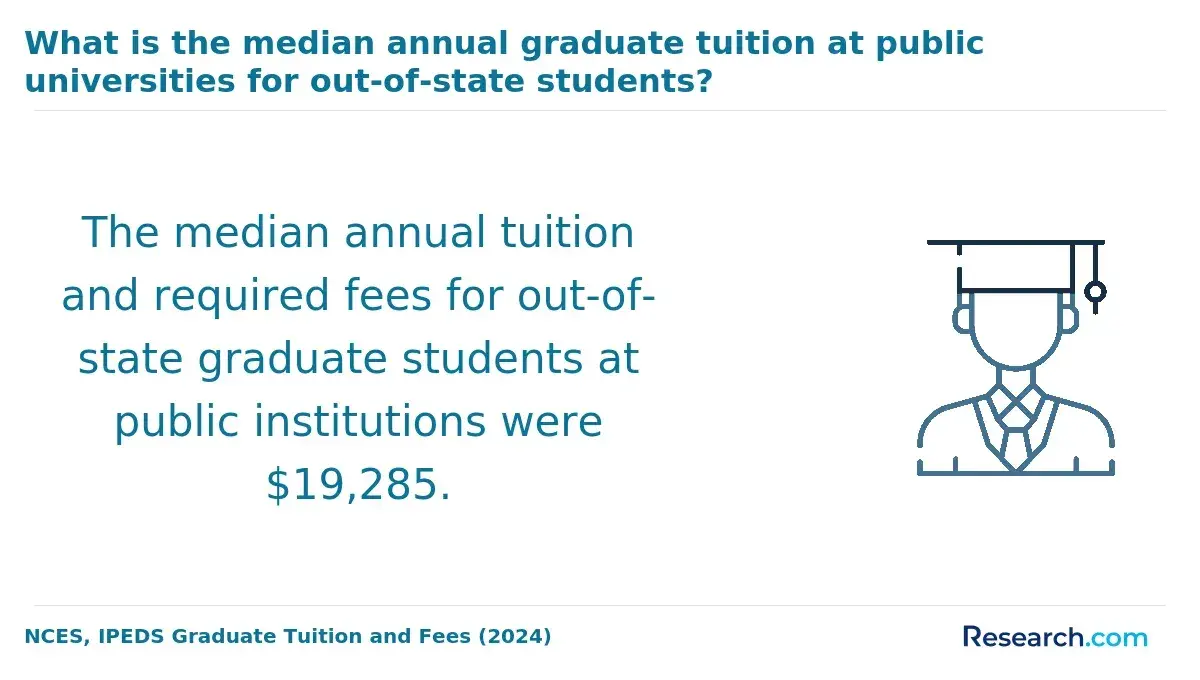
Without a specific school and enrollment plan, there is no responsible single price to quote. Compare total required credits at the applicable tuition rate, mandatory fees, books and software, and any travel for required in-person activities. Ask whether tuition changes by residency status or enrollment pace and whether extra foundation courses add to the bill.
For an affordability comparison, use affordable online MBA programs as a starting point, then obtain a current written cost breakdown from each school. Ask your agency whether its education assistance covers the program, what grades or continued service it requires, and when reimbursement arrives. A lower advertised tuition figure may be less useful than a program whose schedule lets you remain employed and whose costs your employer will partly cover.
Online study is often easier to fit around a government job and can let you apply assignments to current operations. It is the better choice when the course schedule is workable and the program offers meaningful access to faculty, classmates, and relevant projects. Campus study may be preferable if you need regular in-person collaboration or local relationships with nonprofit organizations and public agencies.
Neither format guarantees a stronger network. Compare who is in the cohort, how students work together, whether career services serve online students, and whether projects involve organizations in the sector where you hope to work. If a transition into nonprofit leadership is your goal, those connections may matter more than the delivery label.
With relevant experience, the degree may support movement into program or operations management, nonprofit partnership leadership, grants administration leadership, or broader organizational management. The feasible step depends on what you already do. A government program manager may be able to demonstrate transferable budget and stakeholder skills; someone seeking a senior nonprofit executive role will usually also need substantial sector, fundraising, governance, or people-leadership experience.
The U.S. Bureau of Labor Statistics reports that the median annual wage across all management occupations was $126,520 in May 2025. That figure includes many industries and roles; it does not describe nonprofit managers, public employees, or MBA graduates specifically. For a useful compensation comparison, examine posted pay ranges for the exact roles, employers, and locations you are considering, alongside your agency's promotion rules.
How do you choose an accredited online nonprofit management MBA?
First, verify the university's institutional accreditation through the accreditor or the U.S. Department of Education's accreditation information. Then check whether the business school holds specialized business accreditation, if that matters to you; institutional and business-school accreditation are different claims. Finally, confirm that the online MBA - not just an on-campus program - offers the nonprofit courses you intend to take.
Build a shortlist around your actual constraints: required nonprofit coursework, schedules during peak agency periods, total cost after confirmed employer assistance, and projects you can complete without exposing restricted workplace information. Even a search for low-cost online MBA degrees under $10,000 should end with a direct check of current tuition, fees, and specialization availability. Choose the MBA only if its breadth and workload serve a clearer goal than an MPA, certificate, or targeted employer training.
Other Things You Should Know About MBA
Possibly, but get employer approval before sharing data, documents, or internal decisions. A fictionalized or publicly documented case may be safer.
Not necessarily. Some focus on funding strategy rather than proposal writing. Check syllabi if grant-writing practice is a priority.
Usually not, although individual admissions policies vary. Government experience with community programs or nonprofit partners can provide useful context.
That depends on the university. Ask whether the designation appears on the diploma, transcript, both, or neither before relying on it for a job application.
- Employer-offered educational assistance programs can help pay for college | Internal Revenue Service https://www.irs.gov/newsroom/employer-offered-educational-assistance-programs-can-help-pay-for-college
- Public vs. Nonprofit Sector: How an MPA Prepares You for Leadership in Both | Kent State Online https://onlinedegrees.kent.edu/blog/public-vs-nonprofit-sector-how-an-mpa-prepares-you-for-leadership-in-both
- What is a "LIVE ONLINE" Course? - Faculty & Staff Support https://staffsupport.spcollege.edu/hc/en-us/articles/15871336299547-What-is-a-LIVE-ONLINE-Course
- How Many Hours a Week Does an Online College Take? | University of the People https://www.uopeople.edu/blog/how-many-hours-a-week-does-an-online-college-take/
- What's the Difference Between Asynchronous and Synchronous Learning? | Ohio State Online https://online.osu.edu/content-hub/blogs/whats-the-difference-between-asynchronous-and-synchronous-learning/
- How We Consider Applicants | NYU Wagner https://wagner.nyu.edu/admissions/criteria
- Online MBA in Nonprofit Management | 12-18 Months | murraystate https://onlinedegrees.murraystate.edu/programs/business/mba/nonprofit-leadership/
- How Getting an MPA Will Prepare You for a Career in Nonprofit Management | Cornell Inst. for Public Affairs https://mpastories.publicpolicy.cornell.edu/blog/how-getting-an-mpa-will-prepare-you-for-a-career-in-nonprofit-management
- MBA Nonprofit: Advance Your Impact with a Nonprofit-Focused Graduate Business Program | Antioch University https://commonthread.antioch.edu/mba-nonprofit-advance-your-impact-with-a-nonprofit-focused-graduate-business-program/
- Applying to Grad School - The City University of New York https://www.cuny.edu/admissions/graduate-studies/prepare/