Online MBA in Sustainability: Curriculum and Workload for Working Parents

Co-Founder and Chief Data Scientist
An online sustainability MBA may fit around a job more easily than a campus program, but it still competes with childcare, evenings, and weekends. For working parents, the deciding details are often course pacing, live meetings, and group deadlines - not the word "online."
This guide explains what sustainability-focused MBA students study, how to assess the weekly workload, and which program policies matter when family plans change. It will help you decide whether the degree fits your schedule and career goal, or whether a narrower qualification would be more practical.
Key Things You Should Know
- Curriculum: Expect a general management core plus sustainability electives or a formal concentration; check the required courses before assuming the degree provides technical environmental training.
- Workload: A three-credit semester course implies about nine hours of weekly academic work under the conventional credit-hour benchmark, not a guaranteed schedule. Accelerated courses, team projects, and live sessions can change when that work must happen.
- Fit: For working parents, predictable deadlines, manageable course loads, leave policies, and total household cost matter at least as much as advertised completion speed.
What is an online MBA in sustainability?
An online MBA in sustainability is a graduate business degree that applies management disciplines to issues such as resource use, supply chains, climate-related business risk, and organizational accountability. Depending on the school, sustainability may be a formally named concentration, an elective cluster, or a theme within a general MBA. Those are not interchangeable: a single relevant elective does not establish a concentration.
The MBA usually develops decisions made by managers - for example, weighing a supplier change against its cost and operational risks. It is not, by itself, training to become an environmental engineer, climate scientist, or specialist in every reporting standard. Working parents who want broader leadership responsibilities may value the management core; those seeking one technical skill should compare a specialized course or master's degree before committing to an MBA.
How does an online sustainability MBA compare with a campus-based program?
Online delivery can eliminate a commute, but it does not necessarily eliminate scheduled attendance. A campus MBA may offer more routine in-person contact and easier access to some events; an online MBA may preserve employment and reduce travel while shifting more coordination onto the student. Neither format automatically offers better career access or a lighter workload.
When comparing online MBA programs, with campus options, ask whether career services, employer events, and sustainability projects are open to students in your format. The table separates delivery from the scheduling obligations that affect family life.
| Format feature | Online program | Campus-based program |
| Class attendance | May be recorded, live, or a mix | Usually tied to scheduled campus meetings |
| Teamwork | Often requires coordinating across locations and time zones | May be easier to arrange around shared campus time |
| Travel | Commute may be absent, but residencies may be required | Regular commuting or relocation may be necessary |
| Networking | Depends on deliberate virtual access and any in-person events | Offers more routine face-to-face contact |
A working parent with an unpredictable evening schedule may benefit more from asynchronous courses than from a program that merely labels itself online. Confirm attendance rules and required travel before paying a deposit.
What does the curriculum include in an online sustainability MBA?
Curricula vary, but the distinction is consistent: the MBA core teaches how organizations are run, while sustainability coursework applies those tools to environmental and social business decisions. A school may also offer a capstone, consulting assignment, or elective project; none should be assumed without checking its course catalog.
The following course categories show what to look for in a published curriculum and why the distinction matters.
| Curriculum component | Likely management-level work | Question to check |
| MBA core | Accounting, finance, strategy, operations, leadership, and analytics | Which courses are required, and in what sequence? |
| Sustainability-focused study | Supplier decisions, resource efficiency, business risk, governance, and stakeholder trade-offs | Are these required for a named concentration or merely available as electives? |
| Applied work | Evaluating a business problem and presenting a recommendation | Is a capstone or team project required, and when is it offered? |
For parents, course sequence matters as much as course titles. A finance-heavy core term can require different preparation from a discussion-based sustainability elective, while a final team project may create fixed evening meetings even in an otherwise asynchronous program. Request a sample syllabus and a term-by-term course map.
Plan for a recurring academic commitment, not spare-time reading. As a planning reference, the conventional US credit-hour definition associates a three-credit semester course with about nine hours of instruction and independent work per week. That is a credit-hour benchmark, not a measured workload for a particular online MBA: course design, compressed terms, prior preparation, and assignment deadlines can change the experience substantially.
Ask the program for its expected weekly hours per course and per term, then separate hours you can schedule independently from hours you cannot move. The distinction is especially important when caregiving coverage changes week to week.
| Course pattern | What may be flexible | What may be fixed |
| Asynchronous, one course at a time | When to watch lessons and complete individual work | Weekly deadlines and occasional team meetings |
| Live online sessions | Preparation outside class | Attendance times, potentially in the evening |
| Multiple concurrent or accelerated courses | Some independent study periods | Overlapping deadlines and faster project turnaround |
A useful test is to map a sample course calendar onto a real work-and-childcare week. Include examination windows, group-call availability, and a backup caregiver - not just lecture time. If the schedule works only when nothing unexpected happens, a lighter course load is likely the safer starting point.
Requirements belong to the individual school, not to the sustainability label. Online MBA applications commonly call for evidence of an undergraduate degree, academic records, a résumé, and a statement of goals; schools differ on work experience, recommendations, interviews, testing, and quantitative prerequisites. A nonbusiness bachelor's degree does not automatically rule out admission, though introductory accounting or finance preparation may help.
Explain how your experience connects to the curriculum. A parent who has managed budgets, suppliers, projects, or organizational change can identify those responsibilities without claiming sustainability expertise they have not developed. Ask admissions whether prerequisite work adds courses or cost, and whether the sustainability concentration is available to online students in the terms they expect to enroll.
Working parents with prior military service may also want to compare support and scheduling policies described for online MBA programs and veterans. Eligibility for education benefits should be confirmed with the relevant benefit administrator and school rather than assumed from veteran status.
Completion time depends on required credits, term length, course availability, and how many courses you take at once. Part-time enrollment can leave more room for work and childcare but extends the period over which the family must sustain a study routine. Finish an MBA online faster, accelerated online MBA programs may shorten elapsed time by concentrating work; they do not make the academic requirements disappear.
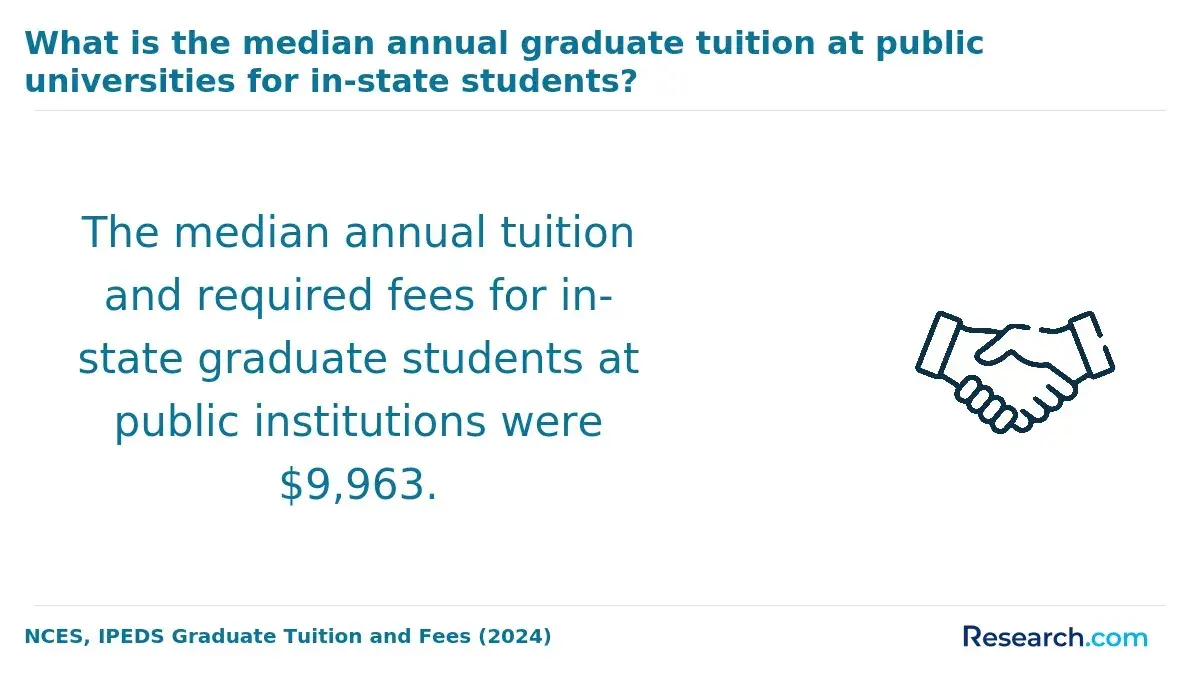
For a realistic household budget, compare total required tuition and mandatory fees - not just a per-credit rate. Add books or software, any required residency travel and childcare, and the financing costs that apply to you. Ask whether a slower pace changes fees, whether employer reimbursement requires a minimum grade or continued employment, and what happens financially if you pause enrollment.
Schools set their own prices and policies, so there is no reliable universal price for a sustainability MBA.
Treat the MBA as a recurring household commitment rather than an activity to fit into leftover time. Before enrolling, agree with anyone sharing caregiving responsibilities on protected study periods and a plan for deadline weeks. Then check whether the program's actual calendar fits that arrangement.
These steps turn a general promise of flexibility into a workable enrollment plan:
- Request a recent syllabus and mark live sessions, team assignments, exams, and major deadlines on your family calendar.
- Start at a course load you can sustain during an ordinary busy workweek, not your quietest week.
- Arrange backup childcare for fixed assessments and group presentations before the term begins.
- Ask about course withdrawals, leaves, reentry, and the effect of a pause on tuition assistance or financial aid.
Senior professionals weighing executive MBA options for senior professionals should scrutinize residencies and cohort meeting schedules as closely as parents considering a conventional online MBA. A predictable but intensive weekend can be harder to accommodate than independent coursework.
First, confirm that the university has recognized institutional accreditation; this matters for the standing of the degree and can affect access to federal student aid. Then check whether the business school holds specialized accreditation, such as AACSB, ACBSP, or IACBE. Institutional accreditation and business-school accreditation assess different things, and specialized accreditation is not the same as a separately accredited sustainability concentration.
Verify the school and business-school status directly with the accreditor and confirm that the online MBA is included where applicable. Accreditation establishes a quality-review framework; it does not tell you whether courses are asynchronous, childcare-friendly, or well matched to your career goal.
Career options depend heavily on what you did before the MBA. Someone with operations or procurement experience may use sustainability coursework to pursue supplier-risk or resource-efficiency responsibilities. A finance professional might apply it to investment or business-risk decisions. Entering a specialized environmental role from an unrelated field may require additional technical experience, not just an MBA concentration.
For salary context, the US Bureau of Labor Statistics reports a $126,520 median annual wage for management occupations in May 2025. That is a broad occupational figure - not the pay of sustainability MBA graduates, a starting salary, or evidence that the degree caused an earnings increase. Compare roles in your target industry and location with your current compensation before making a financial case for enrollment.
If your main goal is leading brand communications rather than managing sustainability operations or strategy, MBA choices for digital marketing leaders may be a more relevant comparison. For either path, ask how online students access career advising, alumni, and employer projects; access may differ from a school's campus MBA experience.
Which certifications and skills complement a sustainability MBA?
Choose complementary training for the work you want to perform, not for the number of credentials you can collect. Sustainability managers may need stronger skills in data interpretation, supplier assessment, financial modeling, and explaining trade-offs to executives. A focused course in greenhouse-gas accounting or sustainability reporting can provide deeper technical practice than a broad MBA elective.
Professional certifications may be useful when a target employer recognizes them and their eligibility rules match your background. Review the issuing organization's current requirements before paying for one; an MBA does not automatically confer a certification or replace required experience. If your goal is primarily technical measurement or reporting, a targeted certificate or specialized master's may be a better use of limited family time than a full MBA.
Other Things You Should Know About MBA
Diploma wording varies by institution. Ask the registrar for the exact wording on the diploma and transcript if that distinction matters to you.
Possibly, if the instructor permits it and your employer approves the use of its information. Check confidentiality rules before sharing company data with classmates.
Ask the school how a leave affects course sequencing, reentry, financial aid, and employer tuition benefits. Get the applicable policies in writing before enrolling.
Some schools allow nondegree enrollment, but admission to a later MBA and transfer of that credit are not automatic. Confirm both policies before paying for the course.
- MBA in Sustainability | bard.edu https://gps.bard.edu/academics/mba-in-sustainability
- What's the Difference Between Asynchronous and Synchronous Learning? | Ohio State Online https://online.osu.edu/content-hub/blogs/whats-the-difference-between-asynchronous-and-synchronous-learning/
- Online MBA in Environmental Social Governance | WP | WPUNJ https://online.wpunj.edu/degrees/business/mba/esg/
- Online Master's of Sustainability Management Program | USC Dornsife https://dornsife.online.usc.edu/sm/program/
- Impact MBA Curriculum | CSU College of Business https://biz.colostate.edu/academics/graduate-programs/mba/impact-mba/curriculum
- How Long Does it Take to Get an M.B.A.? | St. John's University https://www.stjohns.edu/news-media/johnnies-blog/how-long-does-it-take-get-mba
- Professional MBA Online | The MBA at UT Dallas https://mba.utdallas.edu/academics/professional-mba-online/
- What to Expect in Your First Semester of an MBA Program | Carson-Newman University https://www.cn.edu/cps-blog/what-to-expect-in-mba-programs/
- Kogod MBA Courses with Sustainability | American University https://kogod.american.edu/sustainability-at-kogod-mba-course-listing
- How to Rank the Top Sustainability MBA Programs | Bard College https://leadthechange.bard.edu/blog/the-best-way-to-rank-top-sustainability-mbas