Is an Online MBA in Operations Management Worth It for Nonbusiness Bachelor's Graduates?

Co-Founder and Chief Data Scientist
A nonbusiness degree can be an asset in operations management, but it may leave gaps in accounting, finance, and business decision-making. An online MBA could bridge those gaps while you keep working - or cost more than the career move requires.
This guide is for graduates considering operations roles or advancement from fields such as engineering, healthcare, and logistics. It explains what the degree teaches, where experience still matters, and how to compare its cost and career value with more targeted options.
Key Things You Should Know
- Worth it when the goal is broader responsibility: An operations MBA is most useful when you can apply business training to existing industry or process experience; it is not a substitute for that experience.
- A nonbusiness degree is not an automatic barrier: Check each program's foundation courses and quantitative expectations before assuming you need another undergraduate degree.
- Use salary data cautiously: The US Bureau of Labor Statistics (BLS) reports a $126,520 median annual wage for management occupations in May 2025, not a starting salary or an expected return for MBA graduates.
Is an online MBA in operations management worth it for nonbusiness graduates?
Often, but only if the MBA addresses a specific career gap. Operations management concerns how organizations plan resources, improve processes, maintain quality, and deliver products or services. An MBA adds a broad management core to that work; an operations concentration, when formally offered, adds focused study through designated courses or electives.
Your bachelor's field changes the calculation. An engineer may already understand process constraints but need budgeting and people-management skills. A healthcare professional may know clinical workflows but need training in capacity planning and organizational finance. A graduate with little workplace experience may need an entry-level operations role more urgently than a graduate credential.
These paths offer different returns, even when the degree is identical:
| Starting point | Potential MBA value | Main limitation to test |
| Experienced contributor seeking management responsibility | Connects operational expertise with finance, strategy, and leadership | Whether the employer offers a credible promotion path |
| Professional moving from an adjacent function | Builds business fluency for cross-functional work | Whether projects and networking can help establish operations experience |
| Recent graduate seeking a first operations job | Provides management concepts | Whether the job instead calls for hands-on experience or technical training |
Compare the full program cost with a realistic next role, not with an executive salary. Add tuition, required fees, materials, any travel, financing costs, and time taken from other opportunities; then subtract confirmed employer support. If you expect higher pay, estimate payback using a plausible after-tax increase and account for raises you might have earned without the MBA. Promotion, a functional switch, and a switch into an unfamiliar industry have different levels of uncertainty.
If you already have substantial leadership experience, affordable online executive MBA programs may be worth comparing. If your goal is a first operations position, a targeted course, employer training, or relevant work experience may be the lower-risk investment.
What careers can you pursue with an online operations management MBA?
Operations graduates may pursue roles in process improvement, production, service delivery, procurement, or supply chain management. The realistic entry point depends more on prior work than on the concentration label. A logistics coordinator, for example, has a more direct route toward supply chain supervision than a graduate with no logistics experience.
Operations managers oversee staffing, budgets, performance, and day-to-day delivery. Supply chain managers coordinate sourcing and movement across suppliers and customers. Process-improvement roles analyze bottlenecks and implement changes; some are specialist positions rather than management jobs. Employers may also expect sector knowledge, data-analysis ability, or experience supervising teams. An MBA can strengthen an application, but it does not confer managerial responsibility or qualify someone automatically for a senior role.
How much does an online operations management MBA cost?
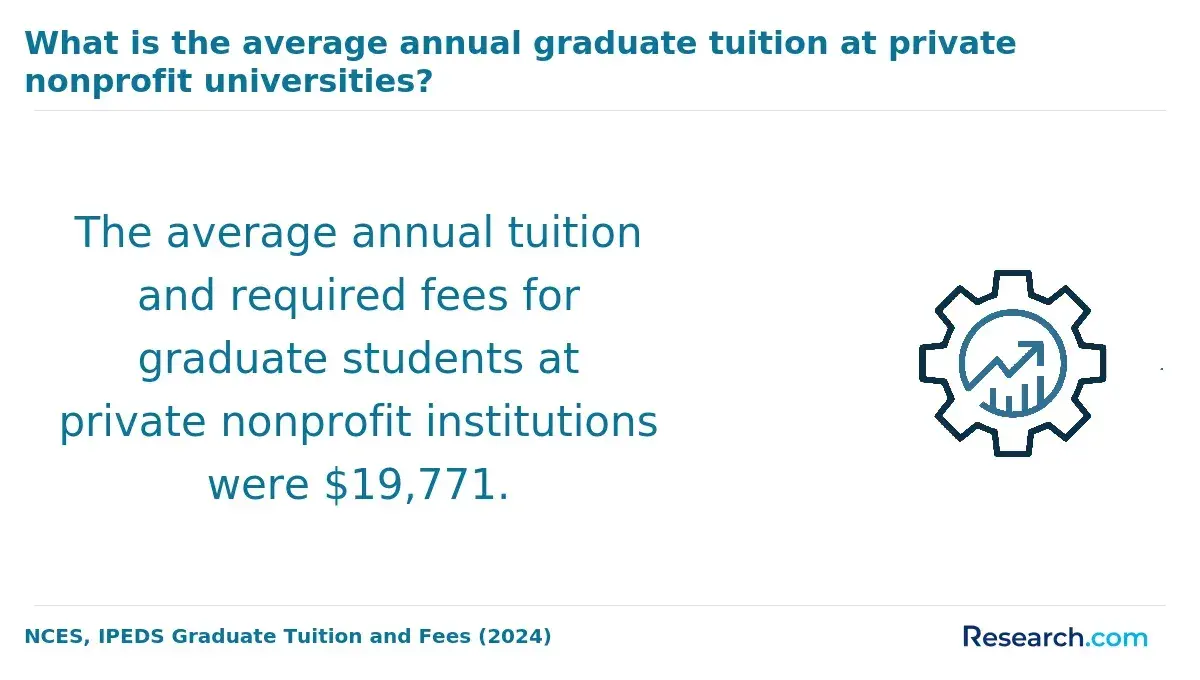
There is no reliable single price for this degree. Schools may charge by credit or term, and the advertised tuition may exclude mandatory fees, textbooks, software, or a required campus visit. A concentration can also affect cost if it adds credits or changes which electives count toward graduation.
Request a written estimate for all credits you must complete, including any foundation work assigned to applicants without business coursework. Ask whether tuition differs by residency, how fees apply to part-time enrollment, and whether employer reimbursement depends on grades or continued employment. When comparing affordable online MBA programs without a GMAT requirement, evaluate the total cost and curriculum as well as the testing policy.
Federal aid eligibility and borrowing terms require a separate check with each school's financial aid office. A lower tuition bill does not necessarily mean a lower total cost if a program requires extra courses or extends the time you borrow.
Yes, if the program accepts your academic background. A nonbusiness bachelor's degree does not by itself rule out an MBA. Schools differ, however, in whether they require accounting, economics, statistics, or other foundation work before or during the program.
Assess preparation by subject rather than degree title. Engineering or science coursework may provide quantitative practice without covering managerial accounting. Experience running a laboratory, coordinating patient flow, or managing a technical project may demonstrate operational judgment without replacing finance fundamentals. Review each school's stated prerequisites and ask how it evaluates prior coursework or professional experience. A guide to online MBA programs that don't require business prerequisites can help you identify policies to verify directly with admissions staff.
Requirements vary by university. Applicants commonly submit evidence of a completed bachelor's degree, transcripts, a résumé, and written statements; some programs also request recommendations, an interview, or a GMAT or GRE score. Work-experience expectations, test waivers, and minimum academic standards are program-specific - not universal requirements of the operations concentration.
Before applying, confirm whether the school assesses foundation courses at admission or after acceptance. Ask whether previously completed graduate business coursework can reduce the credits required; policies covered in guides to online MBA programs that accept transfer credits still need confirmation with the receiving school. In your application, show how your nonbusiness training and work have prepared you to solve operational problems, and explain the business skills you want to gain.
The MBA core usually covers areas such as managerial accounting, finance, organizational behavior, strategy, and business analytics. Operations-focused study may examine process design, quality, capacity, supply chains, and data-informed decisions. The exact mix depends on the school: one program may offer a formal operations concentration, while another offers only a relevant elective.
For a nonbusiness graduate, the distinction matters. A core finance course can help you evaluate the cost of a process change, while an operations course can help you design and measure that change. Neither automatically provides advanced engineering, software, or statistical training. Compare required course descriptions and any applied projects against the skills in your target job postings before choosing a program.
Completion time depends on the school's credit requirements, course sequence, and whether you study full- or part-time. Assigned foundation courses can lengthen the path for some nonbusiness applicants. An accelerated schedule may reduce calendar time while leaving less room to absorb unfamiliar accounting or finance concepts.
Ask for a course-by-course plan based on your transcript. Check whether operations electives run every term, whether group projects require scheduled meetings, and whether live classes or campus visits are mandatory. Online delivery alone does not establish that a program will fit around work or other commitments.
An online MBA can lead to the same type of degree as a campus MBA, but equivalence depends on the institution and program. Verify whether online and campus students follow the same degree requirements, who teaches their courses, and whether both have access to the operations concentration. Also compare career services, employer events, team projects, and internship access rather than assuming those experiences are identical.
Format can be especially important if your work limits travel or fixes your availability. For veterans with nonbusiness degrees, resources on online MBA programs for military members and veterans can provide additional comparison points; scheduling, support, and education-benefit eligibility still require school-specific confirmation.
There is no single salary or employment projection for people holding an operations MBA. BLS reports a $126,520 median annual wage for US management occupations in May 2025. That figure covers workers across many management jobs and career stages; it is neither an operations-specific MBA salary nor a prediction of what a new graduate will earn.
BLS projects management occupations overall to grow faster than the average for all occupations from 2025 to 2035. For a useful personal comparison, look at pay and hiring requirements for the particular occupation, industry, and US location you intend to enter. Compare those requirements with your existing experience before attributing a possible salary increase to the MBA.
Which accreditation and certifications matter in operations management?
First, verify that the university has recognized institutional accreditation. Then check whether its business school holds specialized accreditation, such as AACSB, ACBSP, or IACBE, if that distinction matters to you or a prospective employer. Institutional and business-school accreditation are different; neither confirms that a specific operations concentration is offered online.
Professional credentials can complement, rather than replace, an MBA. Depending on the role, employers may value supply chain certifications from ASCM or process-improvement training such as Lean Six Sigma. Check the issuing organization's eligibility rules and your target employers' preferences before paying for one. If your immediate gap is a specific process or supply chain skill rather than broad management knowledge, targeted training may be the better first step.
Other Things You Should Know About MBA
Not necessarily. Schools differ in whether they record concentrations on the diploma, transcript, or both. Ask the registrar how your completed specialization will be documented.
Possibly, but course availability and degree rules may limit the change. Ask an academic adviser whether credits already taken would still count toward graduation.
Some instructors permit workplace-based projects, subject to course rules and employer confidentiality requirements. Confirm both before sharing company data.
That depends on the expected timing and conditions of the benefit. Compare the funding you could receive with the cost of delaying your career plans, and get the reimbursement policy in writing.
- DAPIP | Homepage - Office of Postsecondary Education (OPE) https://ope.ed.gov/dapip/
- Pathways Internship Programs | state.gov https://careers.state.gov/interns-fellows/pathways-programs/pathways-internship-programs/
- Is Your Degree Worth the Cost? Understanding the ROI of Education in the US - Bay Atlantic University - Washington, D.C. https://bau.edu/blog/understanding-education-roi-in-the-us/
- MBA Career Options: Jobs, Paths & Skills | uttyler https://online.uttyler.edu/degrees/business/mba/general/careers-after-graduation/
- Is an Online MBA Worth It? | Notre Dame de Namur University https://www.ndnu.edu/articles/business-management/is-an-online-mba-worth-It.html
- Master's in Business Administration Requirements | University of North Dakota https://und.edu/programs/business-administration-mba/requirements.html
- The Value of Accreditation | AACSB https://www.aacsb.edu/educators/accreditation/value-of-accreditation
- Master of Business Administration (MBA) | UT San Antonio https://future.utsa.edu/programs/master/mba/
- Is an MBA Worth It? ROI, Pros, Cons and Who Should Enroll | CSP Global Concordia University, ST. Paul https://online.csp.edu/resources/article/is-an-mba-worth-it/
- What Are the Requirements to Get Into Business School Graduate Program? | Freeman News https://freemannews.tulane.edu/2025/01/30/what-are-the-requirements-to-get-into-business-school-graduate-program