Is an Online MBA in Operations Management Worth It for Small Business Owners?

Co-Founder and Chief Data Scientist
When inventory errors, delayed orders, or inconsistent service consume your workday, formal operations training can look appealing. An online MBA in Operations Management may help you redesign those systems while building broader finance and leadership skills - but tuition and study time compete with money and attention your business needs now. This guide helps small business owners assess what the degree teaches, what it may cost, and when a shorter, more targeted option would deliver better value.
Key Things You Should Know
- An operations-focused online MBA is most likely to pay off when you can apply its finance, process, and leadership lessons across a growing business - not just solve one isolated workflow problem.
- Compare the full cost with the value of owner time away from the business; a short course or adviser may be the better investment if you need a specific fix quickly.
- The U.S. Bureau of Labor Statistics reports a $126,520 median annual wage for management occupations in May 2025, but that figure is not an estimate of MBA graduates' earnings or small business owners' income.
Is an online MBA in Operations Management worth it for small business owners?
It can be, if your business has recurring operational problems and you also need stronger general management skills. An MBA is a substantial investment for an owner who must keep serving customers, paying staff, and managing cash flow while studying. Its value depends less on the degree's name than on whether you can put what you learn to work.
The comparison below separates a broad degree from more focused ways to learn. Choose based on the scope of your problem, not the prestige of the credential.
| Option | Best fit for an owner who needs | Main limitation |
| Operations-focused MBA | Coordinated improvement across operations, finance, strategy, and team leadership | Greater cost and sustained study time |
| Targeted course or certificate | Skills in a defined area, such as inventory planning or process improvement | Less breadth in financial and organizational decision-making |
| Mentor, adviser, or consultant | Help diagnosing and fixing a current business problem | May not build the owner's independent management capability as broadly |
An MBA's return may come through fewer errors, better use of working capital, or the ability to delegate - not necessarily a higher salary. Value is uncertain when an owner cannot spare the time to implement changes, or when tuition would strain the cash reserves needed to operate. Sector fit matters too: an owner of a healthcare practice, for example, could compare online MBA programs for healthcare professionals if industry-specific administration is more pressing than general operations.
What does an online MBA in Operations Management teach?
An MBA combines a general management core with operations-focused study. The core typically addresses accounting, finance, marketing, strategy, and leadership. Operations coursework examines how an organization turns labor, materials, information, and capacity into reliable products or services.
For an owner, the connection between those subjects is crucial. A faster process is not automatically a better one if it raises inventory costs, reduces quality, or makes scheduling harder. MBA-level work emphasizes weighing those trade-offs and leading change across a business; it is not necessarily advanced training in industrial engineering or a substitute for hands-on knowledge of your industry. Check whether a school offers a formal Operations Management concentration, a related group of electives, or just one operations course.
How can an Operations Management MBA help small business owners?
The most useful outcome is a better operating decision you can repeat. A retail owner might connect demand forecasts to purchasing and cash flow. A service-business owner might measure where appointments stall, then change staffing or handoffs without sacrificing the customer experience. As the business grows, leadership coursework can help an owner set responsibilities and performance measures instead of approving every decision personally.
Operations improvements also have limits: fixing fulfillment will not create demand for a product customers do not want. If customer acquisition is the larger constraint, compare operations study with online business degrees for marketing careers or a narrower marketing course. Before enrolling, identify a business measure you want to improve and a project you could use to test what you learn.
Course titles and requirements vary. The MBA core commonly covers managerial accounting, finance, marketing, organizational behavior, and strategy; an operations concentration may add supply chain management, quality improvement, project management, analytics, or capacity planning. Some programs allow students to apply these subjects through a capstone or business project.
Read the required-course list, not just the concentration label. If your main challenge is supplier reliability, look for purchasing, logistics, or supply chain content. If it is inconsistent service, quality and process-design courses may be more useful. Ask whether you can study your own business in assignments and whether its data can be handled confidentially.
An online MBA can be effective when its teaching, feedback, and applied work fit the way you learn. Delivery mode alone does not establish quality. For an owner, avoiding a commute may make continued enrollment feasible, while campus study may offer more face-to-face contact. Neither format automatically supplies the network or recruiting access associated with a full-time campus MBA.
Check the actual timetable before assuming "online" means flexible. Live classes, group meetings, exams, and required visits can collide with busy seasons or customer emergencies. Programs with asynchronous classes may offer more control over when you study; compare MBA programs with self-paced learning online MBA programs with asynchronous classes carefully, because asynchronous lessons do not necessarily mean self-paced deadlines.
Requirements differ by school. Applicants generally need a bachelor's degree and may be asked for transcripts, a résumé, recommendations, and a statement of purpose. Schools set their own policies for professional experience, GMAT or GRE scores, interviews, and any foundation coursework. Owning a business can provide strong examples of responsibility, but it does not automatically satisfy every program's experience rules.
A business bachelor's degree is not universally required. Before applying, ask how the school assesses quantitative readiness and whether introductory accounting or statistics work would help you succeed. Use your application to describe a specific operating challenge, the decisions you have made, and why a full MBA is a better fit than shorter training.
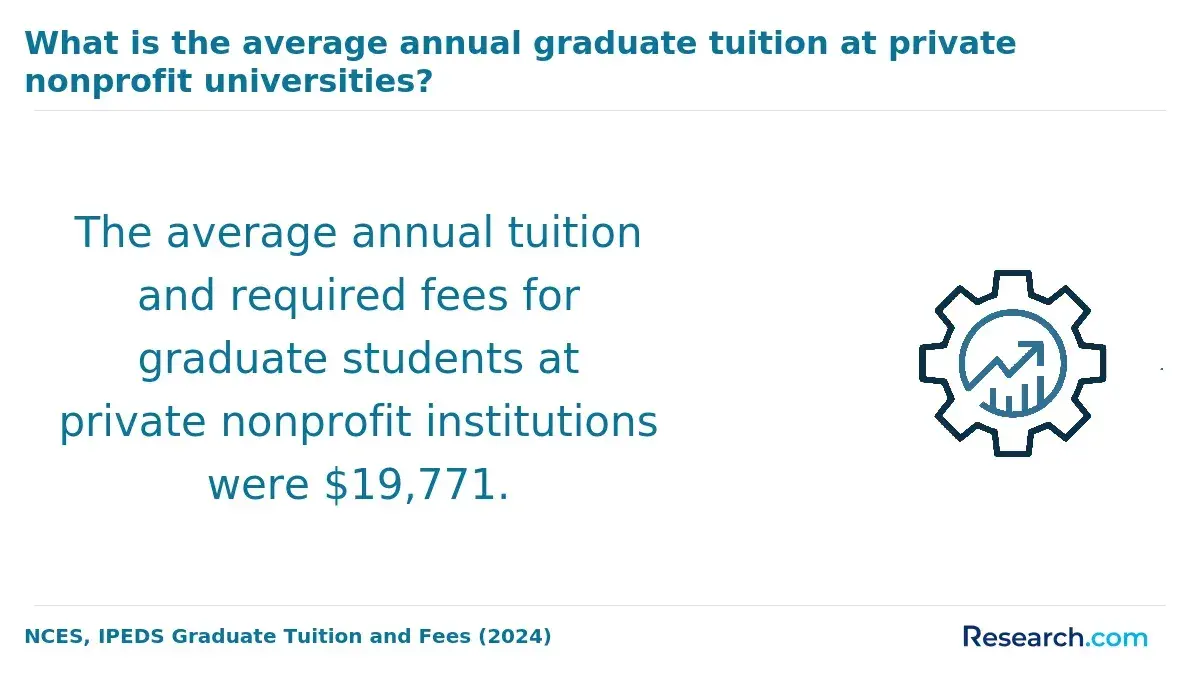
There is no single price: tuition depends on the school, required credits, and how it charges for enrollment. Ask for a written estimate covering tuition, mandatory fees, books and software, and any travel for required visits. Then add financing costs if you would borrow. A published tuition figure alone is not the total cost of attendance.
For an owner, opportunity cost can matter as much as the bill. Estimate which hours you would study, who would cover your work, and whether the business could absorb slower decisions or paid replacement help. Compare that total commitment with a course, coaching, or a staged plan in which you take one graduate course before committing to the degree. When reviewing lists of affordable graduate business education programs online, confirm the subject and full program cost; a healthcare-focused MBA is not a price quote for an operations concentration.
An owner may use the MBA primarily to run an existing company rather than seek a job. If you later move into employment, relevant paths can include operations, supply chain, production, or general management, depending on your industry experience and the size of organizations you target. Employers may value evidence that you have managed budgets, people, suppliers, and measurable process improvements more than the concentration alone.
The U.S. Bureau of Labor Statistics reports a median annual wage of $126,520 for management occupations in May 2025. That broad occupational figure includes workers with many educational backgrounds and levels of experience. It does not predict what a small business owner will earn or show that an MBA caused higher pay. If a career change is part of your plan, compare job requirements in your target industry with the experience you already have.
There is no universal professional certification required to manage operations. Employers may prefer credentials relevant to a particular function - for example, process improvement, supply chain, or project management - but an MBA concentration is not itself one of those certifications.
For an owner, choose a credential only when it addresses a clear capability gap or a requirement in a role you intend to pursue. A focused certification may be more efficient than an MBA if you already handle strategy and finance confidently and mainly need a specific operating method. Check any credential provider's experience, exam, and renewal rules before paying.
How do you choose an accredited online Operations Management MBA?
First, verify that the institution holds recognized institutional accreditation. Then check whether its business school has separate specialized accreditation, if that matters to your goals; the two are not interchangeable. Confirm on the school's current program pages that the MBA is available online and that the operations concentration - not merely an elective - is available in that format.
Next, request the course sequence, complete cost estimate, live-session schedule, and rules for taking a break during a busy season. If you hope to finish an MBA online faster, check whether the accelerated pace leaves enough time to operate your business and apply the coursework. Favor a program whose assignments, schedule, and cost support a realistic business improvement plan over one chosen solely for speed or a ranking.
Other Things You Should Know About MBA
Possibly. Ask the program about project rules and data privacy before sharing customer, employee, or financial information. You may need to anonymize records or use a simulated case.
A degree does not establish loan eligibility. Lenders assess factors such as business finances, repayment capacity, credit, and the proposed use of funds.
It may be able to, but payment and tax treatment are separate questions. Discuss your business structure and the applicable education-expense rules with a qualified tax professional.
Possibly. If that person will lead day-to-day process changes and can share what they learn, their training may have more immediate value. Agree beforehand on responsibilities and how the business will use the coursework.
- Publication 334 (2025), Tax Guide for Small Business | Internal Revenue Service https://www.irs.gov/publications/p334
- Manage your business - Small Business Administration https://www.sba.gov/counseling/manage-your-business/
- What Is MBA Accreditation? • Rollins College https://crummer.rollins.edu/resources/what-is-mba-accreditation/
- What Does an Operations Manager Do? | snhu.edu https://www.snhu.edu/about-us/newsroom/business/what-does-an-operations-manager-do
- Flex MBA Tuition, Scholarships, & Financial Aid | Lehigh Business https://business.lehigh.edu/academics/graduate/mba-programs/flex-mba/tuition-and-financial-aid
- MBA in Organizational Management | Online | $9900 | Eastern University https://www.eastern.edu/academics/graduate-programs/mba-management
- Life Lessons from Operations Management | The University of Chicago Booth School of Business https://www.chicagobooth.edu/review/life-lessons-operations-management
- Tuition and Financial Aid | MIA-BUS https://onlinemba.miami.edu/admissions/tuition/
- Is an Online MBA Worth It? Knowing If It's Right for You | American Public University https://www.apu.apus.edu/area-of-study/business-and-management/resources/is-an-online-mba-worth-it/
- How does the workload of an MBA compare to undergraduate? | Tippie College of Business https://tippie.uiowa.edu/about/who-we-are/advisor/mba/workload-comparison