Online MBA in Information Systems: curriculum and workload for nonbusiness bachelor's graduates

Co-Founder and Chief Data Scientist
An online information systems MBA can help a nonbusiness graduate move toward technology-related management, but the business core may be a bigger adjustment than the technology courses.
Before enrolling, you need to know whether your background meets admissions expectations, how much accounting and finance preparation you may need, and whether the schedule fits your work.
This guide separates typical MBA coursework from information systems study, explains the workload and cost questions to ask, and helps you decide whether an MBA, or a more specialized qualification, better matches your goals.
Key Things You Should Know
- A nonbusiness bachelor's degree does not, by itself, rule out an information systems MBA; foundation requirements and experience expectations vary by school.
- Expect a broad business core alongside courses on managing technology, data, systems, and organizational change, not the technical depth of a computer science degree.
- Check the course schedule before applying: asynchronous delivery does not eliminate deadlines, group projects, or the preparation time you may need for accounting and finance.
What is an online MBA in information systems for nonbusiness graduates?
An online MBA in information systems is a graduate business degree that combines general management education with study of how organizations select, govern, and use information systems.
Schools may call the focus information systems, management information systems, or information technology management. Those labels do not guarantee identical courses or a formally designated concentration.
For a graduate in engineering, humanities, health sciences, or another nonbusiness field, the MBA supplies a business vocabulary for decisions about budgets, people, customers, and strategy.
Prior disciplinary knowledge can remain an asset: an engineer may understand implementation constraints, while a healthcare worker may recognize where a proposed system disrupts clinical workflows.
The degree is most relevant when you want to manage technology-enabled work or make business decisions involving technology. If your goal is to design software or conduct advanced technical research, examine a specialized computing degree instead; an MBA generally emphasizes organizational decisions rather than deep programming or systems engineering.
Can you earn an online information systems MBA without a business degree?
Yes. Many MBA programs consider applicants from a range of undergraduate majors, although each school sets its own eligibility rules. A nonbusiness degree is not the same as a lack of relevant preparation: quantitative research, project work, supervision, or industry experience may already give you a useful starting point.
The likely adjustment is the MBA core. Someone who has managed a technical project may be comfortable with systems concepts but new to financial statements; an economics graduate may face the opposite pattern.
Schools may offer introductory modules or require foundation courses, sometimes before the MBA and sometimes within it. Ask whether those courses add credits, tuition, or time, and whether prior coursework can satisfy them.
Professional experience matters separately from undergraduate major. Some programs welcome early-career applicants; others expect substantial work history because discussions and team assignments draw on it. Check both policies rather than assuming that a strong academic record replaces experience.
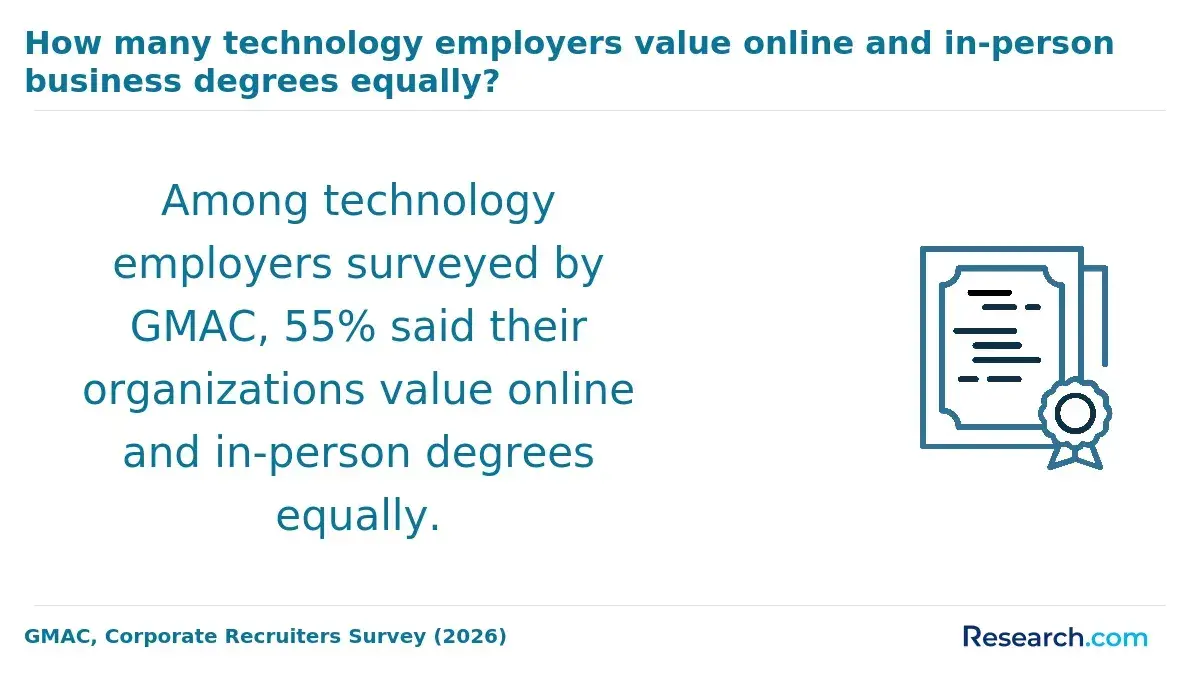
What courses are included in an online MBA in information systems?
There is no universal information systems MBA curriculum. The useful distinction is between the broad MBA core, courses dedicated to technology-related management, optional electives, and applied work.
This table shows what each component commonly contributes, and what to verify in an actual course catalog:
| Curriculum component | Typical subjects | What to check |
| MBA core | Managerial accounting, finance, marketing, operations, organizational behavior, and strategy | Whether introductory business material is built in or required beforehand |
| Information systems focus | IT strategy, systems analysis from a management perspective, data governance, enterprise systems, or digital transformation | Which courses are required and whether the focus appears on the transcript |
| Electives | Business analytics, cybersecurity governance, project management, or related subjects, depending on the school | Whether desired electives are offered online and often enough to fit your schedule |
| Applied work | A strategy capstone, case study, consulting assignment, or employer-based project where offered | Project scope, team requirements, and permission to use workplace information |
At the MBA level, a data course might ask you to interpret analysis and decide how a business should act; a systems course might examine implementation risk and stakeholder adoption.
Neither necessarily teaches you to build the underlying software. Read course descriptions and assignments if technical depth is central to your goal.
For nonbusiness graduates, workload is not just the number of courses. Accounting problem sets may demand more preparation than a familiar technology case, while an information systems project may require coordinating with classmates outside scheduled class time.
If possible, start with a manageable course load and ask for sample syllabi showing deadlines, live meetings, and group deliverables.
Requirements vary, but applicants commonly need a bachelor's degree and may be asked for transcripts, a résumé, a statement of goals, and recommendations. Schools differ on work-experience expectations, interviews, and GMAT or GRE policies. Do not treat a test waiver or an absence of business prerequisites at one university as a policy shared by all programs.
Review the degree and testing rules separately. A program may admit nonbusiness majors yet require foundation study, or waive an admissions test while still expecting evidence of quantitative readiness. If testing is an important constraint, comparisons of affordable online MBA programs can provide a starting point, but confirm each school's current policy and its information systems curriculum.
Before applying, compare your transcript and work history with the courses you would enter. Refresh spreadsheet-based analysis, basic accounting, and finance concepts where needed; describe projects that show you can work across technical and nontechnical teams. These are preparation strategies, not universal admissions requirements.
Completion time depends on required credits, course sequencing, enrollment pace, and any foundation work. A program advertised as accelerated may depend on taking courses continuously; part-time study may be easier to sustain alongside a job but extend the time before you finish. Ask for a course-by-course plan based on your intended pace, not just the shortest advertised timeline.
Published prices also need a common basis for comparison. Determine whether tuition is charged per credit, course, or term, then account for mandatory fees, materials, software, and any required travel.
Foundation courses can change both the total cost and completion date for a nonbusiness graduate. A comparison of low-cost online MBA programs is useful only after you calculate the cost of the specific curriculum you would take.
If your employer offers education assistance, check its eligibility rules, reimbursement timing, and any repayment obligation if you leave. Compare your likely out-of-pocket cost with the value of the skills and opportunities you realistically expect, not with a general MBA salary figure.
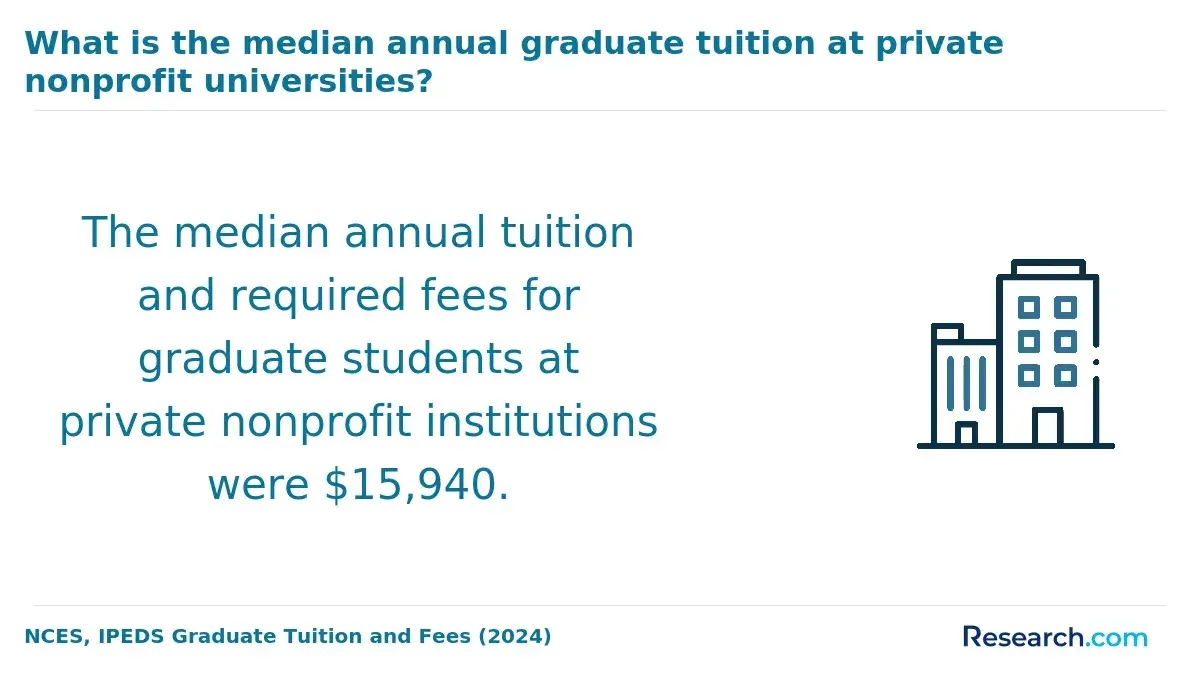
The academic distinction is not simply "online versus in person." Course design, access to classmates and employers, and the amount of control you have over your schedule matter more. The comparison below highlights trade-offs to investigate at each school rather than features guaranteed by either format:
| Factor | Online MBA | Campus-based MBA |
| Scheduling | May offer recorded lessons, but can still require live sessions and fixed deadlines | Typically requires attendance at scheduled campus classes |
| Collaboration | Team projects may require remote meetings across work schedules or time zones | In-person meetings may be easier to arrange near campus but require travel |
| Career access | Career services and recruiting access depend on the specific program | Campus events may be easier to attend, particularly in a full-time program |
| Work continuity | May make it easier to remain employed without relocating | Part-time campus options may also permit continued employment |
Online study can be a strong fit if you want to apply assignments at work while keeping your job. It is a weaker fit if required live meetings conflict with your schedule or you need intensive, in-person recruiting to make a substantial career change.
Compare actual calendars and career-service eligibility. Guides to flexible MBA study formats can help you identify scheduling questions, but "self-paced" should never be assumed from an online label.
The most plausible next step depends on the work you have already done. A systems analyst with project experience might use the MBA to pursue IT project or program management.
A professional with domain expertise might move toward coordinating technology implementation within that industry. An MBA can strengthen business judgment and communication, but it does not substitute for experience managing systems, projects, or people.
Potential paths include technology project management, business systems management, IT operations leadership, and roles connecting technology teams with business units.
Senior IT management positions generally require a record of increasingly responsible work, not just a concentration. For a career changer, a workplace systems project or cross-functional assignment may be a more credible bridge than coursework alone.
Industry context can determine which qualification is most useful. A healthcare professional interested primarily in technology-enabled operations should inspect the systems coursework, while someone pursuing broader service-line leadership may also compare online MBA programs for healthcare professionals.
If your target job is highly technical, a specialized master's degree or technical experience may be a more direct route.
There is no reliable single salary for graduates of this concentration: earnings depend on occupation, location, industry, experience, and responsibility.
For context, the U.S. Bureau of Labor Statistics reports a median annual wage of $126,520 for the broad management occupations group in May 2025. That figure describes employed managers across many fields - not information systems MBA graduates or the raise an MBA might produce.
For a useful personal comparison, look at compensation for the specific roles you could credibly pursue with your current experience and compare it with your present pay.
Ask programs whether their outcomes reports separate online students, information systems students, and career changers. An overall MBA salary figure cannot answer those narrower questions.
The U.S. Bureau of Labor Statistics projects about 1.1 million openings per year, on average, across all management occupations from 2025 to 2035, reflecting growth and replacement needs.
That broad figure indicates opportunities in management generally; it is not a forecast of openings for information systems MBA graduates.
Technology-related management prospects depend on an employer's systems needs and on your ability to lead implementation, manage budgets, and coordinate people with different expertise.
Evaluate postings for your target role and location: requirements for prior IT responsibility, industry knowledge, or staff supervision will tell you more about your immediate prospects than a broad management projection.
How can you choose an accredited online information systems MBA?
First, verify that the university holds recognized institutional accreditation, then check whether the business school also holds specialized business accreditation, such as AACSB, ACBSP, or IACBE accreditation.
These are different checks: institutional accreditation applies to the university, while specialized accreditation evaluates a business unit or its programs. Confirm current status with the accrediting organization rather than relying only on marketing language.
Next, request the online curriculum and map it against your goal. Look for a formally named information systems concentration if that designation matters to you; a general MBA with one technology elective is not equivalent.
Ask which electives are available online, whether foundation courses apply to your record, and what a realistic part-time schedule would look like. If your actual goal is environmental strategy rather than systems leadership, choosing an online MBA in sustainability may be the more relevant comparison.
Finally, compare the total price and the support you can actually use: faculty access, career advising for online students, alumni connections, and opportunities for applied projects. The best fit is a program whose business preparation closes your gaps, whose systems courses match your intended work, and whose deadlines remain feasible alongside your other commitments.
Other Things You Should Know About MBA
Not necessarily. Many information systems MBA courses focus on managing technology rather than writing software. Check prerequisites and assignments for each program, particularly if it includes technical analytics electives.
That depends on the university's credential policy. Ask the registrar what appears on the diploma and transcript if the distinction matters to you.
Possibly, with instructor approval. Check your employer's confidentiality rules before sharing internal data or presenting a workplace project to classmates.
Some do; others use papers, cases, presentations, or projects. Ask for recent syllabi and confirm any exam-time or proctoring requirements before enrolling.
- Full-Time MBA Curriculum and Concentrations | Rutgers Business School-Newark and New Brunswick https://www.business.rutgers.edu/full-time-mba/curriculum
- Online Master's Degree in Business Administration (MBA) | Purdue Global https://www.purdueglobal.edu/degree-programs/business/online-mba-master-business-administration/
- Curriculum - MTSU Online M.B.A. - Flex MBA https://mba.mtsu.edu/curriculum/
- Frequently Asked Questions | Online MBA Degree Program | Ole Miss https://online.olemiss.edu/mba/faq.html
- Course Modes & Definitions - Office of the University Registrar https://registrar.washington.edu/classrooms/course-modes/
- MBA Degree at California Science and Technology University | CSTU.edu https://www.cstu.edu/pages/academic/programs/MBA.html
- Time on Task in Online Courses | RIT https://www.rit.edu/teaching/time-task-online-courses
- How Many Hours of Work Per Online Course Credit | ASU Online https://asuonline.asu.edu/newsroom/online-learning-tips/discover-weekly-number-hours-online-students-study/
- What Degree Do You Need for an MBA? | LSU Online https://online.lsu.edu/newsroom/articles/what-degree-do-you-need-for-an-mba/
- Student Workload in Online Learning | Florida Gulf Coast University https://www.fgcu.edu/digitallearning/online-education/student-workload-in-online-learning