
Best Online MBA in Technology Management Programs for Career Changers

Co-Founder and Chief Data Scientist
Changing into technology management usually means changing responsibilities, not just earning a new credential. A marketer might already understand customers but need experience with software delivery; an engineer might know the product but need finance and leadership skills.
This guide compares online MBA options with technology-focused curricula through that career-change lens. It explains which programs deserve a closer look, what to verify before applying, and when a project, certification, or different degree may be a more direct route.
Key Things You Should Know
- Start with the closest move your experience supports: an industry change may be easier than simultaneously changing industry, function, and seniority.
- Compare the actual technology curriculum and career support, not just the MBA title. An IT-management concentration and a full technology-management MBA are different offerings.
- Budget for the complete program, not tuition alone. The $126,520 median wage for U.S. management occupations in May 2025 is not a forecast of what an MBA graduate will earn.
What is an online MBA in technology management?
An online MBA in technology management combines a general MBA core, typically finance, marketing, operations, strategy, and leadership, with study of how organizations select, deliver, govern, or commercialize technology. Schools package that focus differently: as a degree titled MBA in Technology Management, a formal IT-management concentration, or technology-related electives within a general MBA.
Those labels are not interchangeable. Before comparing schools, check the degree title, the courses required for the technology focus, and whether the designation appears on the transcript. An MBA can prepare someone to make business decisions about technology; it does not, by itself, provide the technical training expected of a software engineer or security practitioner.
Why choose an online MBA in technology management for a career change?
The strongest case is an adjacent transition: building on an existing function while moving toward technology-related decisions. A finance professional could pursue technology budgeting or implementation work; an operations manager could move toward enterprise systems. In each case, MBA coursework fills a management gap while prior experience remains useful to employers.
A more substantial switch, from an unrelated role directly into senior product, engineering, or cybersecurity leadership, is harder. Employers may still expect product launches, technical delivery, or security operations experience. Compare programs by the projects they let you complete, the people you can meet, and whether career services support experienced students changing functions rather than only seeking promotion.
If you already lead teams and mainly want broader executive judgment, leadership-focused executive MBA programs may fit better than a technology concentration. If your main gap is hands-on technical skill, targeted training and relevant work may be the faster first step.
Which online MBA technology management programs are accredited?
An evidence-based shortlist is more useful than declaring a nationwide winner without comparable prices, formats, and career outcomes.
The programs below have identifiable online MBA offerings and named technology-related study; they differ in how prominently technology features in the degree. Treat this as a starting shortlist, not a ranking, and confirm current online availability and curriculum with each school before applying.
The comparison separates a technology-management degree from concentrations. That distinction matters if you want substantial study in the field rather than one or two relevant electives.
| Online MBA option | Technology focus | Potential fit for a career changer | Confirm before applying |
| SUNY Polytechnic Institute | MBA in Technology Management | Someone seeking a degree explicitly organized around managing technology | Current course sequence, online delivery requirements, and business-program accreditation |
| University of Massachusetts Lowell | Online MBA with an Information Technology option | Someone wanting a general MBA with a defined IT-management focus | Required option courses, live or campus obligations, and total fees |
| Florida Institute of Technology | Online MBA in Information Technology Management | Someone comparing a named IT-management pathway with broader technology-management study | Current catalog requirements, career support for online students, and applicable accreditation |
Accreditation requires two checks: verify the institution's recognized accreditation, then check whether the business program has specialized accreditation and whether that accreditation covers the MBA you intend to take. UMass Lowell's Manning School of Business identifies AACSB accreditation.
Do not assume the same accreditor or coverage applies to the other schools simply because all offer MBAs. Confirm status in the relevant accreditor's directory and with the school. Accreditation is a quality screen, not evidence that graduates secure technology-management jobs.
Expect the MBA core to teach how to evaluate a business: read financial results, allocate resources, manage teams, and set strategy. The technology component may address IT strategy, systems, innovation, analytics, or technology projects, depending on the school. Read course descriptions rather than assuming every program teaches coding, advanced data science, or cybersecurity operations.
For a career changer, applied work is the differentiator. A project that evaluates a software investment or plans a technology rollout can demonstrate how you use your previous expertise in a new setting. Ask whether online students can work with external organizations, choose a relevant capstone topic, and show completed work to prospective employers.
A nonbusiness bachelor's degree can be an asset rather than a barrier: an engineer, clinician, or designer may already know the industry or user problem. The preparation gap is individual, particularly in accounting or finance. Comparing online MBA programs for nonbusiness majors can help you assess foundation-course policies alongside the technology curriculum.
Requirements vary by institution and intake. Schools commonly review an accredited bachelor's degree, academic record, résumé, and evidence of professional readiness.
Policies on work experience, essays, recommendations, and GMAT or GRE scores differ. Do not assume that an online format means open admission or that a technology concentration requires an undergraduate technology degree.
Before applying, use your résumé and statement to connect your current work to a specific next role. For example, describe a process improvement, cross-functional project, or budget decision, then identify the technology and management skills you still need. Ask admissions whether foundation courses are required for your background and whether test waivers have conditions.
If admission flexibility is important, compare online MBA programs with accessible admissions for working professionals separately from curriculum fit. A favorable admissions policy does not establish that a program has the technology coursework or recruiting support your switch requires.
Completion time depends on required credits, course sequencing, and whether you study part time or at an accelerated pace. A published minimum timeline may assume continuous enrollment and a course load that is difficult to sustain alongside a job search or a demanding role. Ask for a sample plan based on the number of courses you can actually take each term.
Published prices also need consistent definitions. A per-credit tuition rate is not the total bill; fees, materials, possible travel, and borrowing costs can change the comparison.
No single price reliably represents all three shortlisted programs, so obtain a current written estimate from each school before treating one as the cheaper choice. Affordable online MBA programs offer another comparison point, but affordability should be measured against the full cost and the support your transition needs.
For a personal break-even test, subtract confirmed employer assistance from your expected total cost, then consider the income you might forgo if you reduce work hours. Compare that investment with a realistic next job, not a senior-management salary. If you cannot identify the experience or employer connections needed to reach that job, an inexpensive MBA may still be poor value.
Online study can let you keep earning and use new skills at work. Campus study may be more useful if the career change depends on intensive employer recruiting, internships, or frequent in-person contact.
Neither format guarantees those opportunities. Ask both programs whether career-changing students can access the same recruiting events, coaching, alumni introductions, and experiential projects.
For an online option, confirm when classes meet, whether group work requires evening calls, and whether any residency or campus visit is mandatory. A program described as flexible can still conflict with your work schedule. Conversely, a campus program's recruiting advantage matters less if its target employers do not hire into the function you want.
Some switches call for a different degree altogether. A nurse moving toward healthcare leadership, for example, may want to compare a specialized nursing-and-business route with a technology MBA. The linked one-year MBA program choices resource covers accelerated MSN/MBA dual-degree options, not one-year technology-management MBAs, so it is relevant only to that distinct career goal.
Possible paths include IT project or program management, technology operations, business systems management, technology consulting, and product-related business roles.
The attainable entry point depends heavily on what you have already done. A project manager with software implementations may compete for a technology program role; someone without delivery experience may first need an analyst or coordinator assignment.
Product managers typically prioritize customer needs, business goals, and delivery trade-offs; IT managers oversee systems, teams, vendors, or technology resources. Both roles can require experience that MBA classes cannot replace. Build evidence of the target work through an internal project, a relevant capstone, or a move into a technology-facing team while enrolled.
The U.S. Bureau of Labor Statistics projects about 1.1 million openings annually across all management occupations from 2025 to 2035, including openings caused by workers leaving those occupations. That broad figure signals opportunities across management, not a forecast for technology-MBA graduates or first-time career changers.
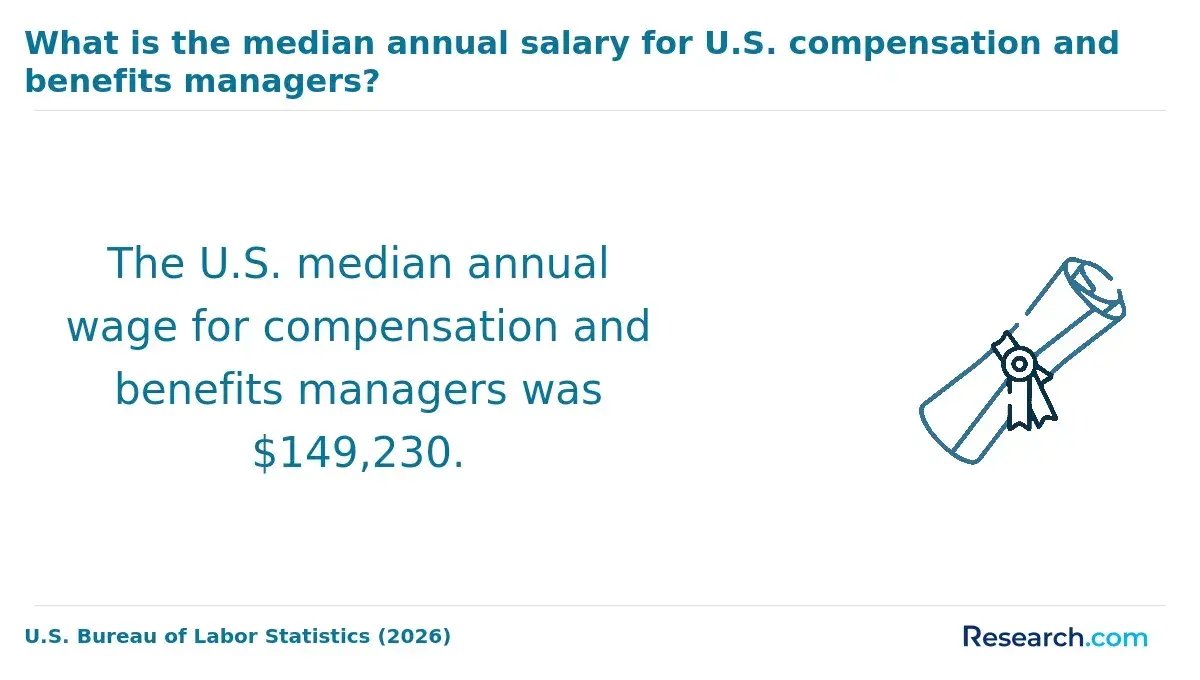
There is no defensible single salary for technology management MBA graduates: pay varies by occupation, location, industry, seniority, and prior experience. The Bureau of Labor Statistics reports a $126,520 median annual wage for U.S. management occupations in May 2025. That median covers a broad occupational group, not new MBA graduates or people entering technology management.
Use compensation for the specific job you could plausibly obtain next, not the job you hope to hold several promotions later, when evaluating tuition or loans. If a school publishes graduate pay, ask whether its figures include online students, career changers, and graduates from the technology pathway, and whether they report salary before or after the MBA.
What certifications help technology management MBA graduates advance?
Choose a certification to close a demonstrable hiring gap, not to accumulate letters after your name. Project-management credentials may support delivery roles; cloud-provider certifications can show familiarity with a platform; security-governance credentials may suit professionals who already have relevant risk or security experience. Each has its own eligibility and examination rules, and none substitutes for leading actual projects or teams.
Review job postings for your target role before paying for training. If employers repeatedly ask for a platform or method you have used, a credential may help document that skill.
If they ask for years of technical ownership you do not have, seek an assignment that builds that experience first. An MBA and a certification answer different questions: one develops broad business judgment; the other may validate a narrower body of knowledge.
Other Things You Should Know About MBA Programs
Only if that is the school's official degree designation. A concentration or option may appear differently on a diploma or transcript; ask the registrar before enrolling if the wording matters to you.
Yes, some business-facing technology roles do not require coding. You still need enough understanding of the product, systems, and delivery process to work credibly with technical teams.
That depends on your relationship and any tuition-assistance terms. If your employer offers relevant internal projects, discussing your interests may create a lower-risk route into the new function.
Request the current degree plan, full cost estimate, online attendance requirements, and a clear account of career services available to online students. Keep written copies so you can compare schools on the same basis.
- General Schedule Qualification Policies | U.S. Office of Personnel Management https://www.opm.gov/policy-data-oversight/classification-qualifications/general-schedule-qualification-policies/
- Cost of Attendance (Budget) | 2025-2026 Federal Student Aid Handbook https://fsapartners.ed.gov/knowledge-center/fsa-handbook/2025-2026/vol3/ch2-cost-attendance-budget
- MBA in IT (Information Technology) Management Degree Online | WGU https://www.wgu.edu/online-business-degrees/mba-masters-business-administration-it-management-program.html
- What Is MBA Accreditation? • Rollins College https://crummer.rollins.edu/resources/what-is-mba-accreditation/
- How to Choose an Online MBA Program - Tips to Consider | UMass Global https://www.umassglobal.edu/blog-news/choose-online-mba-program-tips-consider
- Online MBA in Information Systems at UNCW https://onlinedegree.uncw.edu/programs/business/mba/information-systems/
- Information Technology Management, Master | Wake Forest University Academic Bulletin https://bulletin.wfu.edu/professional-studies/programs/degree-programs/information-technology-management/
- Why Does Accreditation Matter So Much? - UWF Online https://getonline.uwf.edu/business-programs/mba/general/why-does-accreditation-matter-so-much/
- Full-Time MBA Admission Requirements | The University of Chicago Booth School of Business https://www.chicagobooth.edu/mba/full-time/admissions/requirements


