Online MBA in Information Systems: Admissions Guide for Small Business Owners

Co-Founder and Chief Data Scientist
Running a business can give you management experience while exposing gaps in how you choose software, protect customer information, and use data to make decisions. An online MBA in information systems may help, but applying takes time, and the degree competes with more immediate business investments.
This guide explains what admissions committees commonly look for, how to present your ownership experience, and what to verify before applying. It also helps you decide whether a full MBA is a better use of your time and money than targeted training.
Key Things You Should Know
- A business or technology bachelor's degree is not universally required. Schools set their own rules for work experience, tests, prerequisites, and admission to an information systems concentration.
- Show what you have done as an owner: decisions about budgets, customers, staff, processes, or technology are stronger application evidence when you explain their results and limitations.
- Compare the degree with the problem you need to solve. The May 2025 median wage of $126,520 for all US management occupations is not an earnings forecast for MBA graduates or business owners.
What is an online MBA in information systems for small business owners?
It is a graduate business degree that combines an MBA's general management core with coursework focused on how organizations select, govern, and use information systems. Depending on the school, that focus may be a formally designated concentration, a track, or simply a set of electives. Check the credential and course requirements rather than assuming those labels mean the same thing.
For an owner, useful applications might include deciding whether a customer relationship management system is worth adopting, improving inventory data, evaluating a software vendor, or setting responsibilities for data security. The MBA should also strengthen broader decisions about cash flow, marketing, hiring, and growth. If your principal goal is a different specialty, compare its curriculum directly; for example, MBA program choices: online MBA in sustainability may be more relevant to an owner focused on environmental strategy than on technology management.
Is an online MBA in information systems worth it for entrepreneurs?
It can be worthwhile when your business has recurring management and technology decisions, you want a structured education across business functions, and the cost will not deprive the company of needed working capital. It is less compelling if one defined problem - such as configuring a point-of-sale system - can be addressed through a short course, vendor training, or a qualified adviser.
The comparison below separates the breadth of an MBA from narrower options. None substitutes for testing what your business actually needs.
| Option | Potential value for an owner | Main limitation |
| Information systems MBA | Connects technology decisions with finance, operations, strategy, and leadership. | Requires sustained tuition spending and study time; may not teach hands-on implementation. |
| Targeted course or executive education | Addresses a defined skill gap sooner, with a narrower commitment. | May not develop broader management judgment or provide a degree. |
| Mentor, consultant, or vendor training | Can support an immediate business decision or implementation. | Quality and independence vary; learning may be tied to one project or product. |
Estimate the decision against your own cash flow: include tuition, fees, financing costs if applicable, and the value of time taken from customers or operations. Then identify a plausible benefit you can act on, such as reducing a recurring process failure - not an assumed post-MBA salary increase. Owners considering study later in their careers may also find schools offering online MBA programs after 50 useful for weighing the time available to put the degree to work.
What are the admission requirements for an online MBA in information systems?
Requirements belong to individual programs, not to the specialization as a whole. Applicants commonly encounter a bachelor's-degree requirement and requests for transcripts, a résumé, an essay or statement of purpose, and sometimes recommendations, an interview, or a GMAT or GRE score. Schools differ on minimum grades, professional experience, test waivers, deadlines, and whether foundation courses are required. Some admit students to the MBA first and let them select a concentration later.
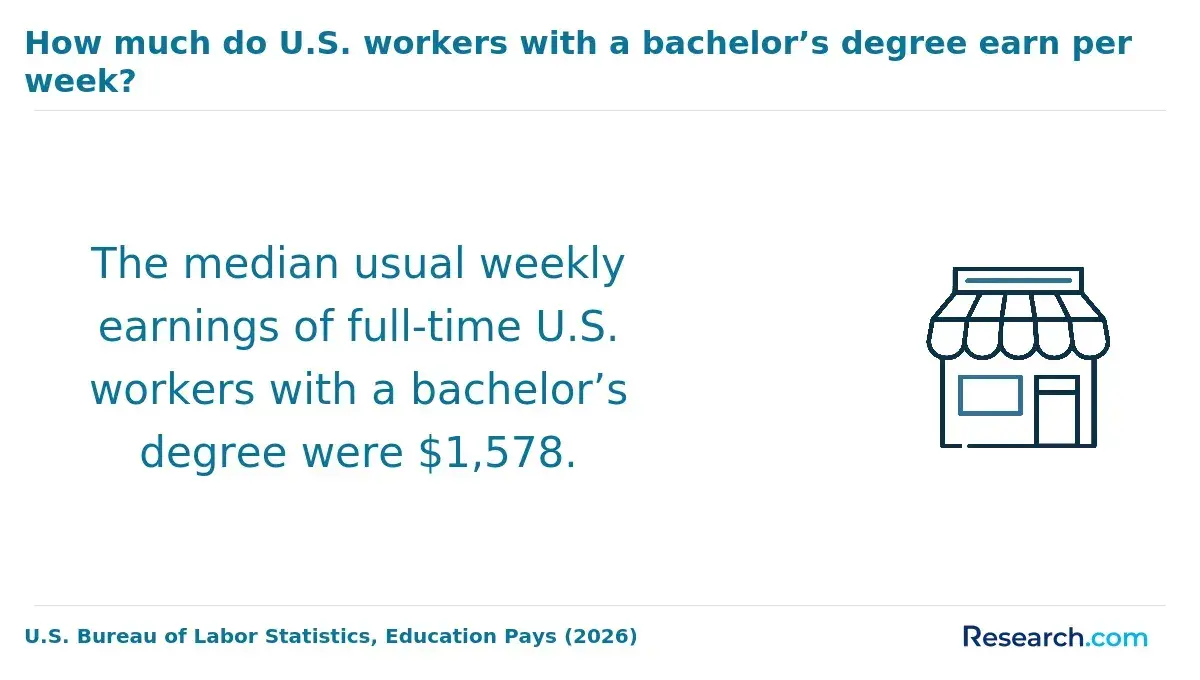
Ownership can demonstrate substantial professional experience, even without a corporate job title. An admissions committee may still need enough detail to understand your responsibilities: business size and stage, your role in financial and personnel decisions, a technology choice you made, and what you learned when a plan did not work. A nonbusiness bachelor's degree need not be a barrier, but review your readiness for accounting, finance, and quantitative coursework.
Use this preparation sequence to turn your operating experience into a clear application without mistaking general advice for a school's official requirements:
- Confirm the school's current degree, transcript, test, experience, and concentration-entry policies, along with its deadline.
- Map specific ownership examples to leadership, budgeting, process improvement, and technology decisions; describe outcomes accurately rather than inflating them.
- Explain why this MBA curriculum addresses a business goal that a shorter course cannot adequately meet.
- Ask recommenders who know your work to discuss your judgment and collaboration; check whether the program accepts clients or advisers as recommenders.
- Identify any gaps in accounting, statistics, or technology fundamentals and ask whether preparatory study is recommended or required.
If a testing requirement or admissions threshold is a concern, online MBA programs with accessible admissions can help you broaden your search. Confirm each school's current policy yourself; accessible admission does not establish curriculum fit.
Online delivery may let an owner remain close to daily operations, but it does not necessarily mean self-paced study. Live classes, team meetings, examinations, and occasional campus visits can still conflict with customer demands or seasonal peaks. Campus programs may make in-person networking easier, but commuting or relocating can impose a larger operational cost.
Ask each program for a sample course schedule, the time zone of live sessions, group-project expectations, residency rules, and its policy on reducing course load or taking leave. Also compare access to faculty, alumni, and career services rather than assuming online and campus students receive identical opportunities. The better format is the one you can complete without routinely leaving the business unsupported.
The MBA core commonly covers subjects such as managerial accounting, finance, marketing, operations, strategy, and organizational behavior. Information systems coursework may examine business analytics, database concepts, technology strategy, digital transformation, systems planning, or information security governance. Exact courses and their depth vary by school; some topics may be electives rather than concentration requirements.
Look for assignments that let you assess a process, build a business case for software, or evaluate data and vendor risks. For an owner, a project involving your own business may be particularly valuable if the school permits it and sensitive information can be protected. If acquiring customers is the more urgent knowledge gap, compare that curriculum with online graduate study in marketing management. An information systems MBA generally teaches managerial decisions about technology; do not assume it will train you to develop software or perform advanced cybersecurity work.
Both depend on the program's required credits, course calendar, enrollment pace, and any foundation courses. Accelerating may shorten the time to graduation but concentrate work during busy trading periods; a slower pace may protect operating hours while extending fees or delaying completion. Get the school's current completion rules before building a schedule around seasonal demand.
For cost, request a written breakdown of tuition, mandatory fees, materials, technology charges, and any required travel. Ask whether the information systems concentration adds courses beyond the standard MBA, whether published tuition is charged per credit or by another method, and whether your planned pace changes the total. Online MBA programs with manageable tuition can provide starting points, but the lowest advertised tuition is not necessarily the lowest total cost for your circumstances.
Set an affordability ceiling that preserves business cash reserves. If you plan to borrow, include repayment in that assessment rather than treating future business growth as certain.
For many owners, the primary outcome is not a new job: it is better oversight of systems, vendors, data, and people within the business. Owners who later seek employment might pursue operations management, technology-project coordination, business-systems management, or digital-transformation roles, depending on their prior responsibilities.
Translate ownership into evidence an employer can assess: budgets managed, teams led, systems introduced, and measurable process changes. An MBA may support a move toward information systems management, but employers may also expect substantial technical or IT leadership experience. The degree alone does not qualify someone to lead a complex engineering or security function.
There is no reliable single salary for graduates of this specialization, particularly owners whose compensation depends on business performance. The US Bureau of Labor Statistics reports a median annual wage of $126,520 for all management occupations in May 2025. That broad occupational figure includes people who do not hold an MBA and does not predict an information systems graduate's pay.
If you intend to seek employment, assess compensation for the specific role, location, industry, and experience level you could credibly enter. If you intend to keep operating your business, a more useful financial measure may be whether better decisions produce durable improvements after education costs and lost operating time.
The BLS projects about 1.1 million openings each year, on average, across all US management occupations from 2025 to 2035, reflecting growth and replacement needs. This is not a forecast of openings specifically for information systems managers or MBA holders, so it should not drive an enrollment decision by itself.
For an owner considering a later move into employment, examine job postings for the technology, team leadership, and industry experience requested in the roles you want. That comparison will show whether an MBA addresses a genuine gap or whether direct systems experience should come first.
How can you choose an accredited online MBA in information systems?
First, verify the university's institutional accreditation through a recognized accreditor. Then check whether its business school holds specialized accreditation, such as AACSB, ACBSP, or IACBE; institutional and business-school accreditation are different claims. Confirm each status with the accreditor and the school rather than relying on an advertisement.
Next, request the current online degree plan and confirm that information systems is an available formal concentration if that designation matters to you. Compare required courses, live attendance, total charges, and the ability to use your business in applied work. Finally, speak with admissions and program staff about how owners handle peak operating periods. A school that fits your calendar, learning goals, and cash-flow limits is more useful than one selected on a ranking alone.
Other Things You Should Know About MBA
Ask the instructor and follow your contracts and privacy obligations. You may need permission, anonymized information, or a different project; enrollment does not override confidentiality duties.
Tax treatment depends on your circumstances and applicable rules. Ask a qualified tax professional before assuming tuition is a deductible business expense.
Possibly. Transfer-credit limits, course equivalency, and recency rules vary by school. Obtain a written evaluation before factoring transferred credits into your cost or timeline.
Diploma wording is set by the institution and may differ from transcript notation. Ask the registrar for the exact wording if it matters to you.
- Accreditation in the U.S. | ed.gov http://www.ed.gov/laws-and-policy/higher-education-laws-and-policy/college-accreditation/accreditation-in-the-us
- Work Experience Requirements for the Wharton MBA | MBA Program https://mba.wharton.upenn.edu/work-experience/
- Why Earn an MBA Focused on MIS? | SIUE https://online.siue.edu/degrees/business/mba/management-information-systems/mba-focused-on-mis/
- AACSB Initial Business Accreditation Process https://www.aacsb.edu/educators/accreditation/accreditation-process/initial-accreditation
- Online MBA in Information Systems at UNCW https://onlinedegree.uncw.edu/programs/business/mba/information-systems/
- Synchronous vs. Asynchronous Learning | Saint Leo University https://www.saintleo.edu/about/stories/blog/synchronous-vs-asynchronous-learning-for-course-delivery
- UC Davis Online MBA Admissions - Deadlines & Requirements https://onlinemba.ucdavis.edu/admissions/
- Admission | MBA Degrees | UIC Business https://businessgraddegrees.uic.edu/admission/
- Asynchronous vs. Synchronous Learning | Unitek College https://www.unitekcollege.edu/blog/asynchronous-vs-synchronous-learning-whats-the-difference-and-which-is-right-for-you/
- What Is An Information System? Definitions & Examples | Pace University New York https://www.pace.edu/news/what-is-information-systems