Online MBA in Healthcare Management: Curriculum and Workload for Small Business Owners

Co-Founder and Chief Data Scientist
For a small healthcare business owner, graduate school competes with payroll, customers, and the work that cannot wait until next week. An online MBA in healthcare management may strengthen financial and operational decisions, but its value depends on what you study and whether the schedule fits your business.
This guide separates the MBA core from healthcare coursework, explains how to assess the real workload, and compares the degree with shorter learning options so you can decide whether to enroll, or invest your time and money elsewhere.
Key Things You Should Know
- A healthcare management MBA combines broad business courses with healthcare-focused study; it does not provide clinical training or a professional license.
- Online does not mean self-paced. Live classes, team projects, and capstones can conflict with an owner's busiest operating hours.
- Judge the degree against a specific business goal and its full cost, including the time you must spend away from running the business.
What is an online MBA in healthcare management?
It is a Master of Business Administration delivered primarily online, with coursework focused on managing healthcare organizations. The MBA core teaches general business functions such as accounting, finance, marketing, operations, and leadership. A healthcare management concentration, when a school formally offers one, adds subjects such as healthcare finance, payment systems, policy, quality, or service delivery. Course names and depth vary by program.
For an owner of a clinic, home care agency, health technology company, or other healthcare-related business, the emphasis is organizational decision-making, not diagnosing patients or qualifying for clinical practice. Check whether "healthcare management" is an official concentration on the transcript, a group of electives, or simply an example of how students can apply a general MBA.
Is an online MBA in healthcare management worth it for small business owners?
It can be worth it when several parts of the business need stronger management at once: cash-flow planning, pricing, staffing, process design, and growth strategy. The strongest case is an owner who can apply coursework to current decisions and can cover essential work while studying. An MBA is less compelling if the immediate problem is narrow, such as learning a particular billing system or fixing one marketing channel.
Assess the return against a concrete objective rather than an assumed salary increase. Estimate the full education expense, financing costs, and the value of time diverted from operations; then identify decisions the degree could realistically improve.
Those benefits may include fewer avoidable mistakes or better capacity to expand, but neither is guaranteed. If your goal is targeted healthcare business training, compare the MBA with mentoring, individual courses, and lower-cost graduate business programs before committing to a full degree.
What does an online MBA in healthcare management curriculum include?
Most programs pair a general MBA core with healthcare-focused courses, although the balance varies. The comparison below shows what each part might help an owner do; it is not a standard course list shared by every school.
| Curriculum component | Typical subject matter | Potential business application |
| MBA core | Managerial accounting, finance, marketing, operations, leadership, and strategy | Read financial statements, assess service-line costs, improve workflows, and plan growth |
| Healthcare-focused courses | Healthcare finance, payment models, policy, quality, and organizational management | Evaluate how reimbursement and care-delivery constraints affect business decisions |
| Electives or applied work | Topics and projects that vary by school, sometimes including a capstone | Test a proposal or analyze an operating problem, subject to course rules and confidentiality requirements |
Expect management-level treatment of healthcare issues, not the depth of a clinical degree or specialized training in coding, law, or information security. Review actual syllabi for how much time is devoted to healthcare rather than assuming that a concentration name signals extensive specialization.
Owners entering graduate business study from another field can also compare online MBA programs for nonbusiness majors, particularly if accounting or finance foundations would help.
There is no reliable universal weekly-hour figure. Workload changes with course design, enrollment pace, your familiarity with the material, and whether assignments involve other students. Recorded lectures may be flexible; scheduled discussions, team meetings, exams, and project deadlines may not be.
For an owner, the constraint is often timing rather than total study time. A live session during patient hours or a team project during a staffing shortage can be harder to manage than independent reading. Before enrolling, request a recent course schedule and assignment calendar, then check these commitments against your operating calendar:
- Identify every required live meeting, its time zone, and whether attendance or a recording satisfies the requirement.
- Ask how often group projects require meetings and whether teams can choose meeting times.
- Check assessment deadlines, term length, required residencies, and policies for slowing down or taking a leave.
- Decide who will handle urgent customer, staff, or vendor issues during your protected study periods.
Starting with a lighter course load may protect the business, though it can extend the degree and change fee or aid arrangements. Ask the program for a representative syllabus rather than relying on "flexible" in its marketing.
Requirements depend on the school. Applicants commonly need a bachelor's degree and may be asked for transcripts, a résumé, recommendations, and a statement of goals. Programs differ on professional experience, interviews, prerequisites, and GMAT or GRE policies; healthcare employment and a business bachelor's degree are not universal requirements.
An owner's application can explain the scale of the business, management responsibilities, and a specific challenge the MBA would help address. If you lack recent quantitative coursework, ask whether the school offers foundation modules or recommends preparation in accounting and statistics.
Verify testing directly with each admissions office: a resource labeled MBA degree options for working adults GMAT required is not a substitute for that school's current GMAT policy.
Both depend on the institution's credit requirements, course sequence, enrollment pace, and whether it accepts prior graduate credit. Accelerated study may shorten calendar time but concentrate deadlines; part-time study may fit an owner's schedule better while extending the commitment. Ask whether healthcare courses are offered every term, since an infrequently offered required course can delay completion.
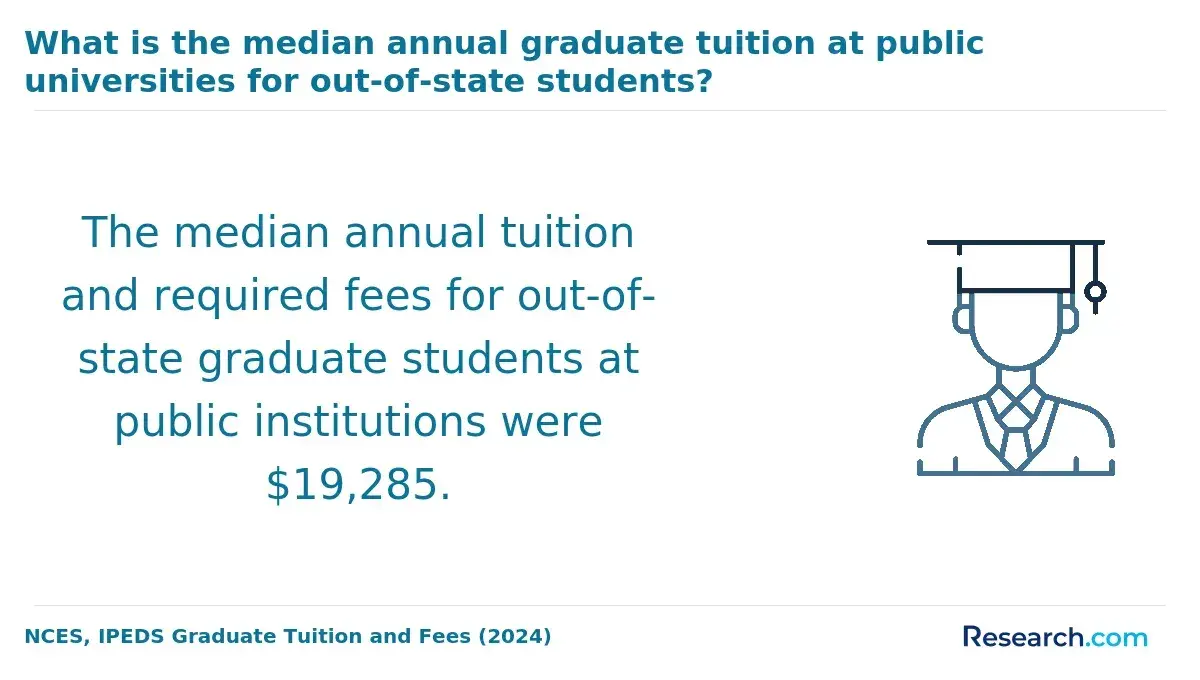
For a meaningful cost comparison, obtain the total required credits and a written estimate covering tuition, mandatory fees, materials, technology, and any travel for required in-person work. Ask whether tuition is charged by credit, course, or term, and what happens to charges if you reduce your course load.
Financing costs and time away from the business matter too. A low advertised tuition figure may exclude expenses or refer to programs with different curricula; use collections of low-cost online MBA programs 10 000 as a starting point, then verify each program's current total cost and healthcare coursework.
Online delivery can remove a regular commute and widen the choice of schools, which matters when an owner cannot leave the business during the day. Campus study may make face-to-face discussions and local networking easier, but it can require more predictable time away.
Neither format is automatically better for academic rigor or career connections: compare the actual faculty access, team-work expectations, career services, and opportunities to work with healthcare organizations.
Also distinguish an online MBA from executive MBA formats. Some executive MBA degree options for working adults are designed around experienced leaders but may include scheduled cohort sessions or travel. Choose by the calendar you can sustain and the learning experience you need, not by the format label alone.
First, confirm that the university holds recognized institutional accreditation. Then check whether its business school or MBA has specialized business accreditation, such as AACSB, ACBSP, or IACBE, if that matters to your goals. Institutional and business-school accreditation are different; neither confirms that a particular healthcare concentration is offered online.
Healthcare-related accreditation requires a separate check. Do not assume an MBA concentration has programmatic healthcare administration accreditation simply because its courses cover healthcare. Verify accreditation status with the accreditor and ask the school exactly which degree, delivery format, and location the designation covers.
For an existing owner, the most direct outcome may be better management of the current business rather than a new job title.
Owners seeking employment could also consider practice operations, service-line management, business development, or healthcare administration roles, depending on their prior experience. Employers may expect demonstrated responsibility for budgets, staff, or healthcare operations; the degree alone does not establish that experience.
For salary context, the U.S. Bureau of Labor Statistics reports a median annual wage of $126,520 for all management occupations in May 2025. That broad figure is not the expected pay of healthcare MBA graduates or the income of small business owners, whose earnings depend heavily on their business and role. Use compensation data for a specific occupation and location, and your own business finances, when evaluating a career change.
Do healthcare management MBA graduates need licenses or certifications?
The MBA itself does not generally require a professional license to use management skills. Licensing depends on the work performed, not the degree: clinical services require the relevant clinical qualifications, and some healthcare leadership roles are regulated at the state level. An MBA does not replace those requirements.
Certifications in areas such as quality, project management, or health information may be useful for particular responsibilities, but eligibility and employer preferences vary. Before choosing one, identify the role or operating problem it would address and check the credential provider's current requirements.
Other Things You Should Know About MBA Programs
Possibly. Ask the instructor whether owner-led projects are allowed and whether a proposed topic meets the assignment requirements before relying on it.
Do not upload identifiable records to a class platform without appropriate authorization and safeguards. Ask the instructor about using fictional, aggregated, or properly de-identified information instead.
Some schools accept eligible transfer credit, while others limit or prohibit it. Request a transcript evaluation and confirm whether transferred courses can satisfy healthcare concentration requirements.
Often, but confirm that the school can enroll students where you live. Check location-based rules before applying, especially if the program includes an in-person or practice-based component.
- Synchronous vs. Asynchronous Learning | Saint Leo University https://www.saintleo.edu/about/stories/blog/synchronous-vs-asynchronous-learning-for-course-delivery
- Accredited Online MBA in Healthcare Management at UIS https://onlinecbm.uis.edu/degrees/business/mba/healthcare-management/
- Online MBA in Healthcare Management at Mount Saint Vincent https://online.mountsaintvincent.edu/degrees/business/mba/healthcare-management/
- FAQ: Earning Your MBA in Healthcare Management Online | Fitchburg State University Online https://online.fitchburgstate.edu/degrees/business/mba/healthcare-management/faq/
- How Long Does It Take to Get an MBA? - Pace Online https://online.pace.edu/articles/business/how-long-does-it-take-to-get-an-mba/
- MBA Course Descriptions - Wharton's Health Care Management https://hcmg.wharton.upenn.edu/programs/mba/course-descriptions/
- MHA vs. MBA: Which Graduate Degree Is Right for You? | Cornell Brooks Public Policy https://publicpolicy.cornell.edu/masters-blog/mha-vs-mba-which-graduate-degree-is-right-for-you/
- Healthcare MBA Curriculum & Skills - Online Programs | Case Western Reserve University MBA https://onlineprograms.case.edu/mba/blog/healthcare-mba-program-online-what-you-learn-and-why/
- What are the challenges of group work and how can I address them? - Eberly Center - Carnegie Mellon University https://www.cmu.edu/teaching/designteach/design/instructionalstrategies/groupprojects/challenges.html
- MHA vs MBA in Healthcare | Online MHA - New York University https://onlinemha.wagner.nyu.edu/insights/comparing-master-health-administration-vs-master-business-administration-healthcare