Online MBA in Sustainability: Curriculum and Workload for Military Veterans

Co-Founder and Chief Data Scientist
A sustainability MBA may help a veteran turn experience in logistics, facilities, procurement, or team leadership into civilian business work. The harder decision is whether its coursework and schedule fit alongside a job, transition planning, and other commitments.
This guide explains what online programs typically teach, where sustainability study differs from the MBA core, and how to test the real weekly workload before enrolling. It also covers the program features, costs, and education-benefit questions that can change whether the degree is worth pursuing.
Key Things You Should Know
- Expect a broad MBA core alongside sustainability-focused courses; check whether the subject is a formal concentration, an elective cluster, or just one course.
- There is no reliable universal weekly-hours figure: course load, live meetings, group projects, and your preparation determine whether an online schedule is manageable.
- GI Bill coverage and housing payments depend on individual eligibility, approved enrollment, course load, and delivery format; confirm the details before using benefits.
What is an online MBA in sustainability for military veterans?
An online sustainability MBA is a graduate management degree that applies business decisions to environmental and, sometimes, broader social challenges. Students generally study how organizations weigh costs, operational performance, risk, and stakeholder expectations when addressing issues such as energy use or supply-chain impacts. Schools may call the subject sustainability, sustainable business, or environmental management; those labels do not establish identical curricula.
For a veteran, the strongest connection may be practical rather than purely environmental. Managing equipment, coordinating suppliers, improving processes, and leading teams can provide useful experience for studying resource efficiency or organizational change. Civilian employers will still expect candidates to explain that experience in business terms and demonstrate any industry-specific knowledge the role requires.
How does an online sustainability MBA compare with a campus-based program?
Online delivery can let veterans remain employed or avoid relocating, but it does not necessarily mean studying whenever they choose. Some programs require live discussions, fixed team meetings, proctored exams, or campus visits. Campus programs may offer easier access to in-person recruiting and peers, although those advantages depend on the particular school and a student's ability to participate.
Compare the flexible online business-school choices against each school's actual calendar, not its marketing description. Ask whether sustainability courses are offered every term, whether they are available online, and whether changing pace would delay completion. Veterans seeking a major career switch should also ask which recruiting events, alumni contacts, and employer projects online students can use.
What does the curriculum cover in an online sustainability MBA?
Most programs build sustainability study on a general MBA foundation, but there is no standard course sequence shared by every school. The distinction matters: a single environmental elective may broaden an MBA, while a formal concentration generally requires a defined set of courses. The table shows how common course categories serve different learning goals; it is not a prescribed curriculum.
| Course category | What students may study | What to check |
| MBA core | Managerial accounting, finance, operations, strategy, and organizational leadership | Whether foundation courses add time or cost for students without business preparation |
| Sustainability-focused study | Sustainable operations, supply chains, energy strategy, environmental risk, or corporate reporting | Which courses are required, offered online, and taught regularly |
| Applied work | A capstone, consulting project, or analysis of an organization's business problem | Whether students can select a relevant project and how much team coordination it requires |
Expect management-level decisions rather than automatic training as an environmental scientist, engineer, or specialist carbon auditor. A veteran interested in reducing supply-chain waste, for example, should look for operations and measurement coursework - not merely a course titled "Sustainability." If your goal is specifically leadership in clinical services, business-school options for online MSN and MBA dual-degree programs address a different objective and generally call for nursing preparation.
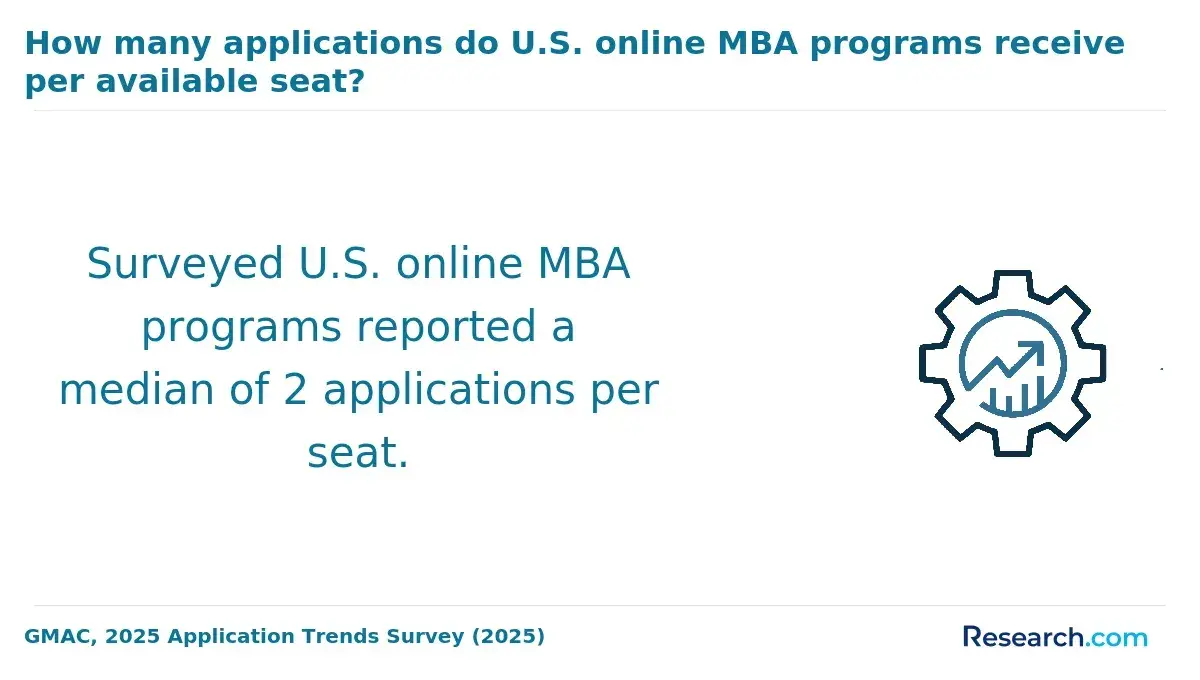
No single weekly-hours estimate applies across online sustainability MBAs. Time depends on how many courses you take, term length, quantitative preparation, assessment design, and the coordination required for team projects. Accelerated terms can compress the same assignments into fewer weeks. An asynchronous lecture also does not make a group deadline asynchronous.
Before committing to a course load, build a realistic weekly calendar around the parts you cannot move:
- Request recent syllabi for an MBA core course and a sustainability course; mark readings, graded work, exams, and live sessions on a sample calendar.
- Ask students or program staff how group meetings are scheduled across time zones and whether evening or weekend attendance is expected.
- Protect time for accounting or statistics review if those subjects are unfamiliar, rather than planning only for scheduled class meetings.
- Ask how a reduced course load or temporary interruption affects course sequencing, tuition, and VA enrollment certification.
Veterans balancing civilian employment, health appointments, or family obligations may find one course at a time more sustainable than the school's fastest advertised path. Check the consequences for benefits before changing enrollment intensity.
Start with institutional accreditation by an accreditor recognized by the U.S. Department of Education. Then check whether the business school or MBA also holds specialized business accreditation, such as AACSB, ACBSP, or IACBE. Institutional accreditation and specialized business accreditation are different; the latter is not proof that a particular sustainability concentration is offered online.
Verify the institution's status through the accreditor or federal accreditation records, and ask the school which accreditation applies to the online MBA. Accreditation alone does not establish VA benefit eligibility: confirm that the specific program is approved for your intended benefits with the school's certifying official and the VA.
Requirements vary by institution. Applicants commonly submit a bachelor's-degree record, résumé, and written statement; some schools also request recommendations, an interview, or GMAT/GRE scores, while others waive or do not require tests. A sustainability concentration does not universally require a science degree or prior environmental work.
Military experience can strengthen an application when it shows the scope and results of leadership, budgeting, logistics, or process-improvement work. Translate rank-specific terminology into responsibilities a civilian reader can assess. If you have not studied accounting or quantitative methods recently, ask whether the program requires foundation work or offers preparation before the MBA core. Treat a school's published admissions policy - not general MBA practice - as the final authority.
Completion time varies with required credits, term structure, course availability, and whether you enroll part time or accelerate. A concentration can also extend the timeline if a required course is offered infrequently. Ask for a term-by-term plan based on your intended pace rather than relying on the shortest advertised completion time.
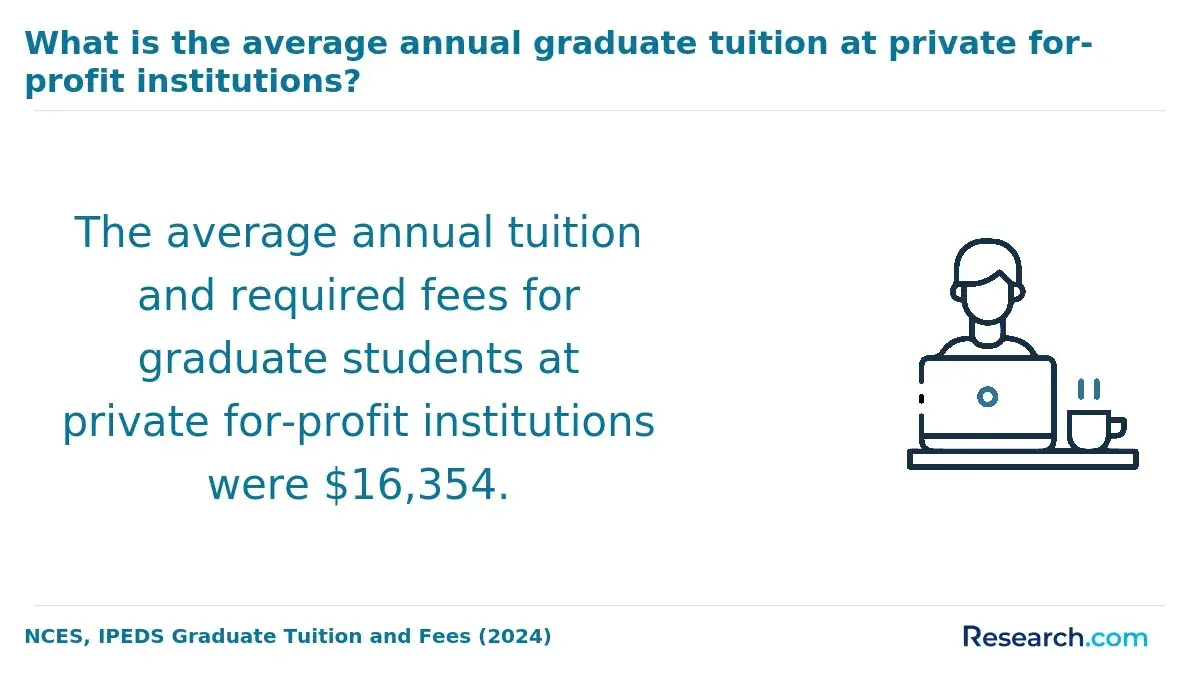
For cost, request an itemized estimate covering tuition, mandatory fees, books and software, and any required travel. Identify whether tuition is charged per credit, course, or term, and whether changing your pace changes the total. The guide to affordable online MBA programs online MBA tuition and total cost provides a broader framework for comparing published prices; your school's written estimate should control your decision. Include the value of time away from paid work and any borrowing costs when comparing options.
Career fit depends more on your prior responsibilities and demonstrated subject knowledge than on the concentration name. A veteran with procurement experience might pursue sustainable sourcing or supplier-management work; a facilities or operations leader might target resource-efficiency initiatives; someone with reporting or finance experience might explore sustainability strategy or risk roles. Employers may use different titles for similar work.
The MBA can help connect those functions to budgets and business strategy, but it does not replace experience with relevant regulations, technical systems, or industry practices. For a transition, seek projects that produce civilian-readable evidence of your skills and ask career services which employers recruit online students. If your goal is enterprise technology management rather than sustainability, comparing MBA program prices and tuition options degree programs in information systems may be useful - but compare the coursework and target jobs as well as price.
There is no single salary or job-growth figure for "sustainability MBA graduate." Compensation depends on the occupation, location, employer, and experience brought to the role. For context, the U.S. Bureau of Labor Statistics reports a $126,520 median annual wage for management occupations in May 2025. That is a broad occupational median, not a starting salary or an earnings outcome attributable to this degree.
BLS projects management occupations overall to grow faster than the average for all occupations from 2025 to 2035. That broad outlook does not forecast demand for a specific sustainability title. Compare openings and pay for the actual roles you want, then assess whether your military experience meets their functional requirements. A move into a new industry may initially be lateral rather than a promotion.
How can veterans use GI Bill benefits for online MBA programs?
Eligible veterans may be able to use Post-9/11 GI Bill benefits for an approved online MBA, but coverage is not automatic. The payable tuition amount depends on the individual's eligibility, the school and program, and applicable VA limits. Monthly housing allowance also depends on factors including rate of pursuit and whether enrollment is solely online; it may differ from the allowance associated with qualifying in-person study. Yellow Ribbon support requires applicable eligibility and a participating school's agreement.
Before enrolling, ask the school's VA certifying official to confirm program approval, how each course format will be certified, and what happens if you reduce your load or withdraw. Check your remaining entitlement and obtain a personalized benefits estimate from the VA. Compare any uncovered balance with other funding options; budget-conscious MBA program choices 10 000 may be a starting point for a price comparison, but a low advertised tuition figure does not establish sustainability-course availability or your final out-of-pocket cost.
Other Things You Should Know About MBA
Diploma wording is set by the institution. Ask the registrar for the exact wording and whether transcripts identify the delivery format.
Possibly, if the instructor approves the topic and you can use information that is appropriate to share. A public or fictionalized case may be safer than restricted operational details.
Not necessarily. If you are changing functions, an internship or employer project may help you show relevant work; check whether the program makes one available to online students.
No. MBA coursework may cover reporting decisions, but technical accounting or assurance work can require additional training and experience. Check the qualifications specified in the jobs you want.
- Semester Course Load and Student Performance - PMC - NIH https://pmc.ncbi.nlm.nih.gov/articles/PMC7568764/
- Education and Training - About This Tool https://www.benefits.va.gov/gibill/comparison_tool/about_this_tool.asp
- USERRA | dol.gov https://www.dol.gov/agencies/vets/programs/userra/USERRA-Pocket-Guide
- Independent Study And Online Learning | Veterans Affairs https://www.va.gov/education/about-gi-bill-benefits/how-to-use-benefits/online-distance-learning/
- Military Training Evaluation Program (MTEP) | dantes.mil https://www.dantes.mil/credit4training/
- Accredited Online Sustainable Management Programs | Anaheim University https://anaheim.edu/sustainable-management-programs/
- Considering Student Workload | CITT - University of Florida https://citt.it.ufl.edu/resources/course-design-basics/develop-and-implement/considering-student-workload/
- Synchronous vs. Asynchronous Learning | Saint Leo University https://www.saintleo.edu/about/stories/blog/synchronous-vs-asynchronous-learning-for-course-delivery
- How Much Should We Assign? Estimating Out of... - Rice CTE https://cte.rice.edu/blog/2016/workload
- What's the Difference Between Asynchronous and Synchronous Learning? | Ohio State Online https://online.osu.edu/content-hub/blogs/whats-the-difference-between-asynchronous-and-synchronous-learning/