Best Online MBA in Information Systems Programs for First-Time Managers

Co-Founder and Chief Data Scientist
Your first management role may require you to defend a technology budget, resolve team conflicts, and explain systems decisions to executives - all while you are still learning to lead. An online MBA in information systems can help connect those responsibilities, but programs differ in specialization, schedule, and cost. This guide compares a focused shortlist and shows first-time managers how to assess curriculum, accreditation, career value, and alternatives before enrolling.
Key Things You Should Know
- Start with the credential: UT Tyler and UT Permian Basin offer online MBA options in management information systems or information systems; WGU's online MBA in IT Management is a related, but differently named, option.
- Choose for the management transition: Compare people leadership, budgeting, applied systems work, and required live participation - not just the number of technology courses.
- Keep salary expectations grounded: The US median for all management occupations was $126,520 in May 2025, according to the Bureau of Labor Statistics (BLS); it is not a starting salary or an MBA-graduate outcome.
What is an online MBA in Information Systems for first-time managers?
It is a graduate business degree that combines an MBA's general management core with study of how organizations select, govern, and use information systems. Depending on the school, the subject may appear as an information systems concentration, a management information systems concentration, or a related IT management degree. Those labels are not interchangeable: check the credential and required courses rather than assuming one technology elective constitutes a concentration.
For a new manager, the value is translating between technical staff and business stakeholders while taking responsibility for budgets, priorities, and people. It is generally less suitable if your main goal is advanced software engineering or hands-on security training. If your intended work is specifically environmental strategy rather than systems leadership, a top online MBA in sustainability may be a better curriculum match.
Which online MBA in Information Systems programs are accredited?
Several schools offer relevant online MBA options, but "accredited" requires two separate checks. Confirm that the university holds recognized institutional accreditation, then check whether its business programs hold specialized accreditation, such as AACSB or ACBSP. Specialized business accreditation is useful evidence of external review; it does not, by itself, establish that a particular concentration is available online.
The comparison below is a fit-based shortlist, not a national ranking. It includes identifiable online MBA offerings with a named information systems option or closely related IT management curriculum. It does not rank schools by price or outcomes, because a comparable, current total-cost and placement dataset is not established here.
Use the distinctions in the table to decide which programs deserve a closer review of their current catalogs, accreditation records, schedules, and tuition disclosures.
| Online MBA option | Specialization distinction | Potential fit for a first-time manager | Confirm before applying |
| University of Texas at Tyler | Online MBA option in management information systems | Managers seeking an explicitly named systems concentration alongside MBA coursework | Current concentration requirements, course rotation, total tuition and fees, and business accreditation status |
| University of Texas Permian Basin | Online MBA option in information systems | Managers who want to compare a named information systems option with its general MBA | Current required courses, online availability, tuition and fees, and business accreditation status |
| Western Governors University | Online MBA in IT Management; a related degree, not an identically named information systems concentration | Working managers who can use a self-paced, competency-based format | Current curriculum, term charges, expected pace, and whether the assessment model suits their learning style |
These are candidates to investigate, not endorsements based on unpublished comparisons. Search the relevant university's accreditation record and the accreditor's directory, then ask the school for a current degree plan showing exactly which courses can be completed online.
How does an online MBA in Information Systems prepare first-time managers?
The most useful preparation combines a general MBA's finance, operations, and organizational behavior with decisions about systems investment and governance. A first-time manager might use managerial accounting to explain a software proposal, organizational behavior to address friction between analysts and users, and information systems coursework to weigh implementation risk against business benefits.
Look for assessed team projects, case discussions, or workplace-based assignments - not simply lectures about leadership. Ask whether you can practice presenting a recommendation to nontechnical stakeholders and whether group work requires meetings outside your available hours. Coursework can strengthen judgment and communication, but a degree alone cannot give you direct-report experience or guarantee a promotion. Seek responsibility for a small budget, project team, or cross-functional initiative while studying.
There is no universal course list. The MBA core commonly addresses accounting or finance, strategy, operations, and leadership; an information systems option may add enterprise systems, data management, business analytics, technology strategy, or IT governance. Titles alone reveal little about depth: a course on analytics for managers is not necessarily training in building production data systems.
For your first management role, inspect the required courses and sample assignments. A useful combination would let you evaluate a systems investment, plan implementation with other departments, and manage the people affected by change. If a catalog shows only one relevant elective, compare it as a general MBA with an elective - not as an information systems concentration.
Requirements vary by program. Applicants commonly need a bachelor's degree and may be asked for transcripts, a résumé, recommendations, or a statement of purpose. Schools set their own work-experience expectations and GMAT or GRE policies; do not assume a test waiver or minimum experience requirement applies across this shortlist. An undergraduate business degree is not universally required.
As a first-time manager, use the application to show what changed when you moved beyond individual contribution: a project you coordinated, a conflict you handled, or a decision you made with incomplete information. If accounting or quantitative work is unfamiliar, ask about foundation coursework before committing. Applicants comparing online MBA programs with accessible admissions should still assess whether the curriculum and workload match their preparation.
Completion time depends on required credits or competencies, transfer policies, course availability, and how much study you can sustain while managing a team. Tuition also varies by pricing model: a per-credit program and a term-based, competency-based program cannot be compared by their advertised rates alone. Without current, program-specific prices and mandatory fees, no defensible cheapest-program ranking is possible.
Request a written estimate for your intended pace. The following checks expose costs and timing that an advertised tuition figure may miss:
- Confirm the full degree requirement, concentration courses, mandatory fees, materials, and any required travel.
- Ask whether tuition changes with enrollment intensity, residency status, or the number of terms needed.
- Check employer reimbursement rules and transfer-credit policies for MBA programs before estimating your out-of-pocket cost.
For value, compare the total you expect to pay with a realistic advancement opportunity - not a published management salary. Employer support and the ability to apply coursework immediately may matter more than finishing at the fastest possible pace.
Neither format is inherently better. Online study can let a new manager keep earning and apply lessons at work, but "online" does not promise asynchronous classes, flexible deadlines, or freedom from group meetings. A campus program may offer more regular in-person contact and recruiting activity; verify the actual services available to online students rather than assuming they are identical.
Choose based on the responsibilities you have now. Ask for a sample course schedule, live-session requirements, group-project expectations, and any campus visits. Also ask how online students access faculty, alumni, and career services. Career-stage advice for online MBA programs after 50 can be useful for experienced applicants, but a first-time manager should give particular weight to opportunities to practice supervising, delegating, and handling conflict.
The most realistic next step usually builds on work you already know. A systems analyst who has started coordinating colleagues might pursue an IT team lead or systems project manager role; an existing IT manager might seek broader responsibility for budgets or enterprise applications. Information systems manager and IT director roles typically call for substantial relevant technical and leadership experience, not just an MBA.
Industry knowledge can change the best route. Someone already supporting hospital systems may find healthcare IT leadership more attainable than an applicant without healthcare experience; business education for healthcare careers provides a sector-specific comparison. Ask employers which responsibilities they expect you to have handled - staff supervision, vendor negotiations, or implementation ownership - then pursue those assignments alongside your studies.
There is no reliable single salary that an information systems manager earns because of an MBA. For context, BLS reports a $126,520 median annual wage for all US management occupations in May 2025. That broad group includes many jobs unrelated to information systems and workers at different career stages, so it should not be treated as an offer, an entry-level benchmark, or a post-MBA earnings figure.
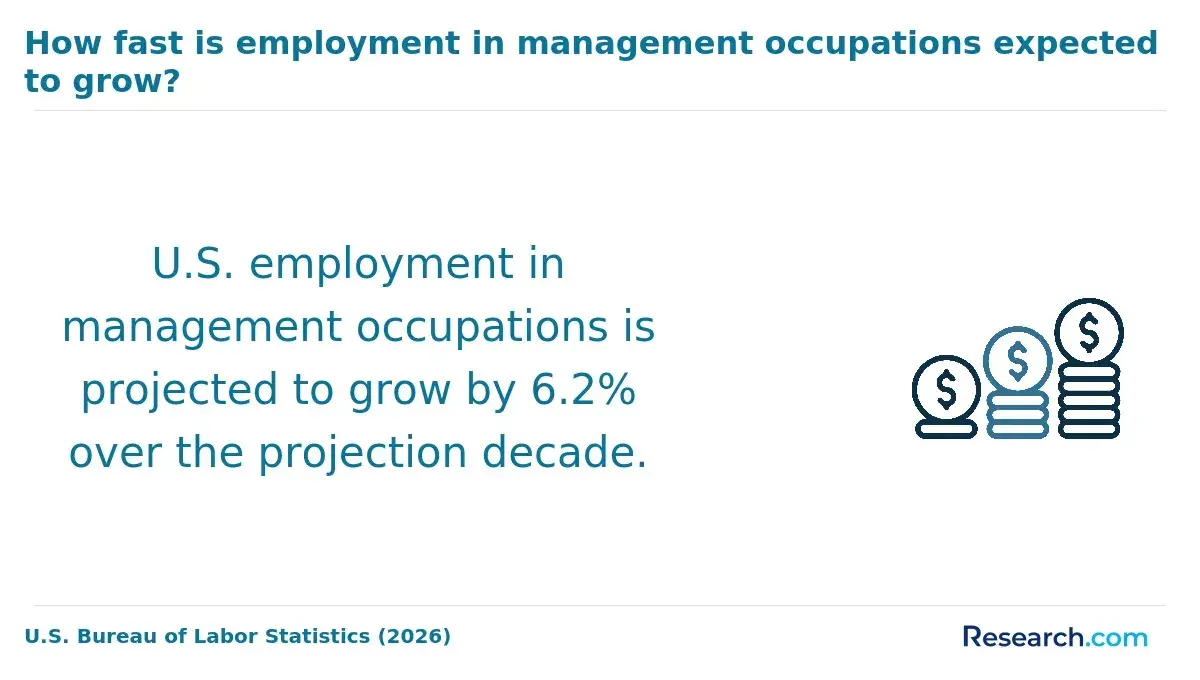
For a personal decision, compare compensation for roles you can plausibly pursue in your location with your current pay, likely education cost, and employer support. A move into management may depend as much on an open position and demonstrated leadership as on the degree. BLS projects overall management employment to grow faster than the average for all occupations from 2025 to 2035, but that broad outlook does not predict openings at a particular employer.
Which certifications support an Information Systems management career?
Certifications can fill a narrower gap than an MBA. Project management credentials may help managers responsible for delivery; security governance credentials may suit managers overseeing risk; and vendor-specific training can help when a team depends on a particular platform. Check each credential's eligibility and experience rules before paying for preparation.
Choose the gap first. If you need to run your first implementation more effectively, a focused course, certification, or employer mentoring may offer a more direct return than a full MBA. If you need broader finance, strategy, and people-management development as well as systems knowledge, the MBA becomes a stronger candidate. Neither route replaces relevant work experience.
Other Things You Should Know About MBA
Either can work, but a new role gives you immediate problems to bring into class. Consider waiting until you understand its workload and whether your employer offers tuition support.
No. Leading a small team or coordinating people across departments can provide useful context. Look for chances to practice delegation and feedback, not just acquire a title.
Possibly. Check school rules and your employer's confidentiality policies before sharing internal data, budgets, or security details.
Ask how often group work required scheduled meetings, whether instructors gave useful feedback on management decisions, and which career resources were accessible to online students.
- Cost of Attendance (Budget) | 2025-2026 Federal Student Aid Handbook https://fsapartners.ed.gov/knowledge-center/fsa-handbook/2025-2026/vol3/ch2-cost-attendance-budget
- Distance Education - University Policy https://universitypolicy.gmu.edu/policies/distance-education/
- How IT MBA Skills Drive Business Decisions and Data-Driven Strategies | University of the Cumberlands https://www.ucumberlands.edu/blog/applying-mba-it-skills-across-enterprises
- Search Accredited Schools | AACSB https://www.aacsb.edu/accredited
- Frequently Asked Questions - Online Programs | Columbia University School of Professional Studies https://sps.columbia.edu/academics/online-learning-sps/frequently-asked-questions-online-programs
- Tuition and Fees Information - Washington, DC | American University https://www.american.edu/finance/studentaccounts/tuition-and-fees-information.cfm
- Cost of Attendance | Office of Student Financial Aid https://financialaid.umd.edu/resources-policies/cost-attendance
- MBA Requirements: What You Need to Apply in 2026 | SCU https://www.scu.edu/business/blog/admissions/mba-requirements/
- Mode of Instruction - Queens College - CUNY https://www.qc.cuny.edu/cetll/mode-of-instruction/
- Online MBA in Information Technology | Emporia State University https://online.emporia.edu/degrees/business/mba/information-systems/