
Careers After an Online MBA in Sustainability for Working Parents

Co-Founder and Chief Data Scientist
An online MBA in sustainability can help a working parent move toward roles that connect business decisions with environmental goals - but the degree alone will not make a career change happen. Your existing experience, the work you want to do, and the program's actual schedule matter as much as its concentration name.
This guide maps realistic career paths, explains salary and hiring evidence, and shows how to assess the cost and family-time trade-offs before enrolling.
Key Things You Should Know
- The most direct path is often an adjacent move: apply sustainability coursework to operations, supply chains, finance, or another function where you already have experience.
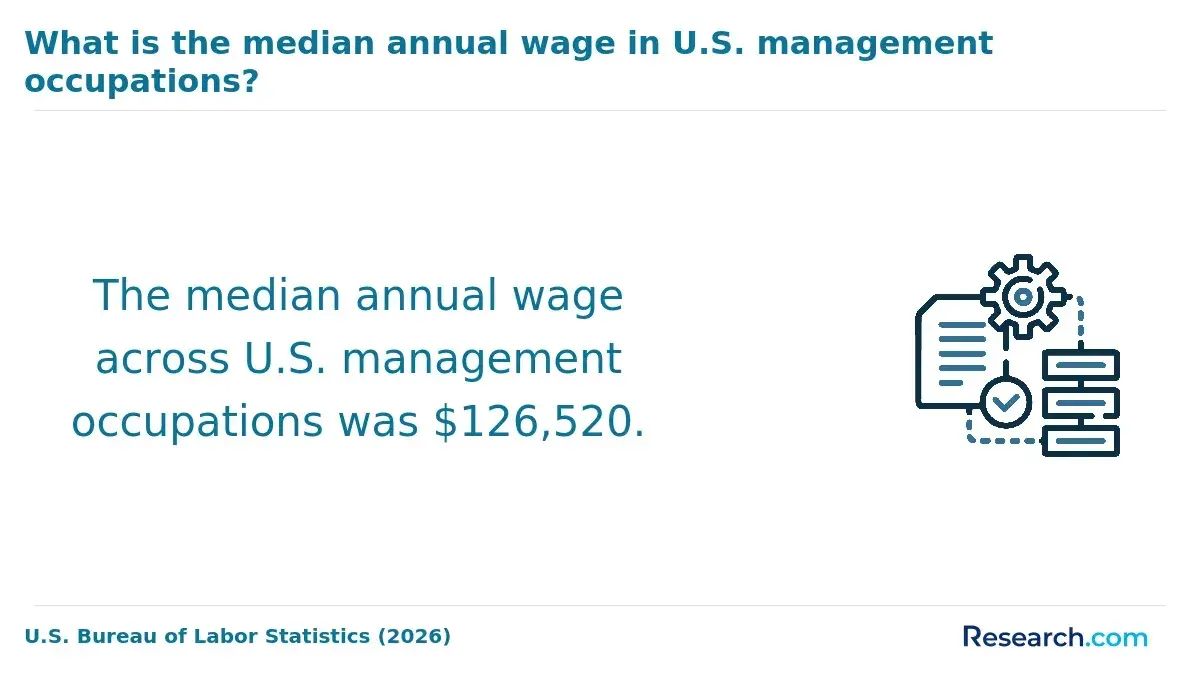
- The Bureau of Labor Statistics reports a $126,520 median annual wage for US management occupations in May 2025; that is not a salary estimate for sustainability MBA graduates.
- Before enrolling, confirm the concentration's courses, live-session and residency requirements, total cost, and career support. An online label alone does not establish family-friendly flexibility.
What careers can you pursue with an online MBA in sustainability?
An MBA in sustainability combines broad business-management study with coursework on environmental and social considerations in business decisions. The strongest career opportunities usually build on a parent's existing function or industry knowledge. A procurement professional, for example, may be better positioned for responsible sourcing than for a technical environmental-science role.
The paths below differ in their day-to-day work and in what an MBA cannot replace.
| Potential path | Typical work | Experience that strengthens the fit |
| Sustainability program manager | Coordinates goals, budgets, reporting, and teams across a business. | Project management, operations, or cross-functional leadership. |
| Responsible sourcing or supply-chain manager | Evaluates suppliers, purchasing risks, and operational changes. | Procurement, logistics, or supplier management. |
| Corporate sustainability analyst or manager | Supports performance measurement, business cases, and disclosures. | Finance, analytics, reporting, or industry-specific knowledge. |
| Environmental or sustainability consultant | Advises clients on strategy and implementation. | Consulting experience or credible technical and sector expertise. |
A parent already managing projects might first seek sustainability responsibilities within their current employer rather than compete immediately for a senior sustainability title elsewhere. Engineers can similarly pair technical credibility with business training; those assessing broader management routes can compare schools for online MBA programs for engineers. Specialized environmental engineering, legal, or assurance work may still require qualifications beyond an MBA.
How much can you earn after an online MBA in sustainability?
There is no single reliable "sustainability MBA salary." Pay depends on the occupation, location, industry, responsibility level, and experience brought to the job. The Bureau of Labor Statistics (BLS) reports that the median annual wage for US management occupations was $126,520 in May 2025. That figure covers managers across many specialties and education backgrounds; it does not describe new sustainability hires or measure the earnings effect of an MBA.
For a useful personal estimate, compare local job postings for roles you could plausibly qualify for before and after the degree. Check whether the higher-paid roles require people management, years of sector experience, technical reporting expertise, or an established professional network. If the likely next step is a lateral move into sustainability, budget for the possibility that compensation will not rise immediately.
What is the job outlook for sustainability MBA careers?
BLS projects that US management occupations overall will grow faster than the average for all occupations from 2025 to 2035, with about 1.1 million openings per year on average from growth and replacement needs. This is broad management-market context - not a forecast for sustainability jobs or for MBA graduates.
Sustainability responsibilities also appear within established functions such as operations, purchasing, and finance, so a search limited to jobs with "sustainability" in the title may miss relevant opportunities. Conversely, employer priorities, reporting requirements, and available budgets can change. Working parents should assess the outlook for their target function and location, then speak with employers or alumni about whether sustainability work is a dedicated position or an added responsibility.
Most MBA programs build a management foundation through subjects such as accounting, finance, strategy, operations, and organizational leadership. A sustainability concentration may add courses on responsible supply chains, environmental strategy, business ethics, or measuring organizational impact. Schools differ: an elective touching on sustainability is not the same as a formally designated concentration, and neither necessarily provides advanced environmental-science training.
Look for an applied project that lets you solve a relevant problem for your employer or a community organization. For a parent with limited time to pursue an internship, a well-supported project can produce concrete work to discuss with hiring managers. Verify project access and group-work expectations rather than assuming every online student has the same options. Nurses considering a broader healthcare-management route can also examine budget-conscious MBA program choices degree programs, but an MSN/MBA dual degree serves different goals and should not be mistaken for sustainability-specific preparation.
Employers need people who can turn a proposed improvement into an operational and financial decision. Useful capabilities include building a business case, evaluating supplier trade-offs, interpreting performance data, managing projects, and explaining costs and risks to stakeholders with different priorities. The exact mix depends on the role: a sourcing manager needs purchasing judgment, while an analyst may need stronger data and reporting skills.
Choose coursework and projects that close a specific gap in your résumé. If you already lead teams, technical measurement or supply-chain knowledge may be the missing piece; if you have technical expertise, budgeting and change management may matter more. An MBA can develop these skills, but employers will still look for evidence that you have applied them.
Many corporate sustainability and responsible-sourcing positions have no universal professional license. Requirements change when a job involves regulated engineering, legal advice, accounting, or other licensed practice; an MBA does not confer those credentials.
Voluntary certifications in areas such as project management, supply chains, or sustainability reporting can help when they match a target employer's work. Before paying for one, review several relevant postings for required versus preferred credentials and check eligibility rules. A focused course or certification may be a more direct, lower-cost step than an MBA if your main gap is a particular reporting method or technical tool.
Completion time and price vary by school, required credits, enrollment pace, and whether the concentration adds courses. A faster schedule can reduce the time spent studying but may increase pressure on evenings and weekends. Parents weighing pace can compare online MBA program length, then confirm the actual course sequence and maximum time allowed at each school.
Compare the full household commitment: tuition and mandatory fees, books or software, possible campus travel, childcare during live sessions, and any reduced work hours. Ask whether employer tuition assistance applies, when reimbursement arrives, and what happens if you pause enrollment. Do not treat a published per-credit tuition rate as the total price. Before borrowing, compare the remaining cost with a realistic next role - not the pay of an established executive.
Requirements are school-specific. Applicants commonly encounter a bachelor's degree requirement and requests for transcripts, a résumé, and written statements; policies on work experience, recommendations, interviews, and GMAT or GRE scores vary. A sustainability concentration does not universally require an environmental-science degree.
Working parents should ask whether admission to the MBA also guarantees access to the desired concentration and whether preparatory business courses add time or cost. In an application, connect prior responsibilities - such as managing suppliers, budgets, teams, or improvement projects - to a specific sustainability career goal. If an undergraduate background is outside business, check the program's actual foundation-course policy rather than assuming either automatic exclusion or automatic exemption.
Online study can eliminate a regular commute and widen the choice of schools, but delivery varies. Some programs allow largely self-paced weekly work; others require scheduled video classes, group meetings, exams, or campus visits. Parents comparing flexible online business-school choices online MBA programs with asynchronous classes should still check deadlines and collaborative-work requirements.
A campus program may make in-person networking and recruiting easier to access, while an online program may let you retain your job and apply lessons at work. Neither format automatically provides an internship, equivalent career services, or a sustainability employer network. Ask each school how part-time online students use its career resources and whether relevant events occur at times you can attend.
How can working parents choose an accredited sustainability MBA program?
Start with institutional accreditation, then check whether the business school or MBA holds specialized business accreditation if that matters to your employer or career goals. These are distinct checks; neither accreditation status nor a prominent concentration name proves that the schedule or coursework fits your needs.
Use the following checks to narrow a shortlist before committing application fees or arranging childcare.
- Confirm the official sustainability concentration, its required courses, and whether every course is available online at your intended pace.
- Request a sample term calendar showing live sessions, group projects, deadlines, and any residencies; ask about leave and re-entry policies.
- Compare total program costs and employer support. Regional price lists, such as those used to compare MBA tuition and fees MBA NC, can help start a comparison but do not replace a school-specific cost estimate.
- Ask career services for evidence relevant to employed online students, including project access, alumni contacts, and support for your target function.
Choose the MBA if its management training and career access address a gap you cannot efficiently close at work or through shorter study. If your goal is one technical sustainability skill, a targeted course, certification, or employer-led project may protect both household finances and family time.
Other Things You Should Know About MBA
Possibly. Ask to support a supplier review, efficiency initiative, or performance-reporting project in your existing function. That can build relevant experience before you seek a new role.
Diploma wording varies by institution. Ask the school for its official diploma and transcript policies rather than assuming online and campus credentials are worded identically.
Not always, but a substantial change is harder without relevant work. If an internship is impractical, look for an employer project or other applied assignment that demonstrates the skills the target role requires.
Ask when they actually studied, how often group work disrupted their schedule, and whether the program helped them make a specific career move. Their experience can reveal constraints that a course catalog does not show.
- Online MBA Guide to Careers, Costs, and Specializations | Concordia University Chicago https://career.cuchicago.edu/online-mba-guide/
- A Guide to Careers in Sustainability | Rutgers Office of Climate Action https://climateaction.rutgers.edu/guide-to-careers-in-sustainability/
- Careers in ESG: Insights from MBA Career Management | Impact, Value, and Sustainable Business Initiative https://impact.wharton.upenn.edu/news/careers-in-esg-insights-from-mba-career-management/
- What Can You Do with an MBA in Sustainability? | Bard College https://leadthechange.bard.edu/blog/can-an-mba-really-help-me-change-the-world
- How to Plan for Online MBA Costs | Colorado Technical University https://www.coloradotech.edu/degrees/studies/business/articles/online-mba-cost-planning-guide
- 18 Careers You Can Pursue with an MBA (Aside from Business) | umn.edu https://online.umn.edu/story/18-careers-you-can-pursue-mba-aside-business
- Navigating MBA Programs While Juggling Work | Northeastern Online https://online.northeastern.edu/resources/how-long-does-it-take-to-do-an-mba-while-working/


