Rice University - Jones Graduate School of Business Online MBA Concentrations: Courses and Career Paths

Co-Founder and Chief Data Scientist
If you are considering Rice University's Jones Graduate School of Business for an online MBA, the concentration you can actually complete matters more than a list of appealing business topics.
A formal concentration, a group of electives, and a single relevant course may lead to different learning experiences - and different claims you can make to employers. This guide separates those possibilities, connects coursework to realistic career paths, and identifies the program details to confirm with Rice before committing your time and money.
Key Things You Should Know
- Do not assume a subject offered elsewhere at Rice is a formal Online MBA concentration; confirm the current online catalog, required courses, and transcript designation.
- Evaluate a proposed focus area by the depth of its available electives and projects, not its name alone. The MBA core provides broad management training rather than a technical or professional qualification.
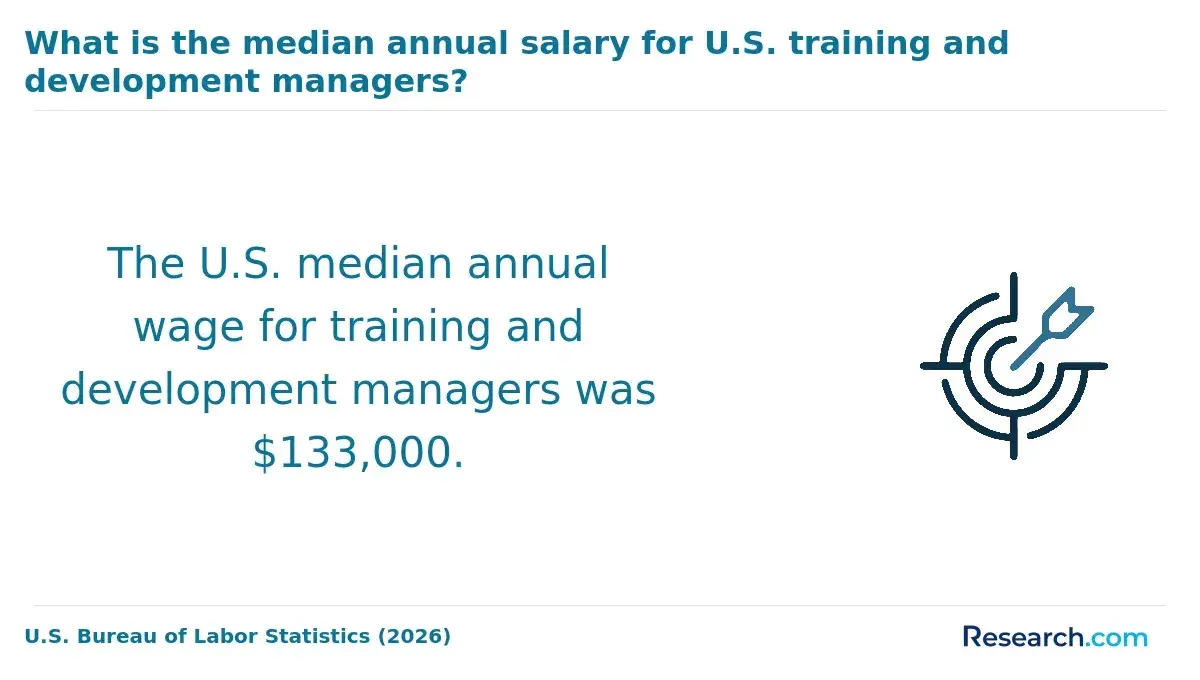
- For career context, the US median wage across management occupations was $126,520 in May 2025; that occupational figure is not a Rice MBA graduate salary or a forecast of your earnings.
What is the Rice Jones Online MBA, and how is it structured?
The Rice Jones Online MBA is a graduate business degree designed to combine broad management study with online delivery. An MBA core develops a common foundation across business functions; electives provide room to pursue a narrower interest. That distinction matters if you want both general management skills and substantial preparation in a particular field.
Online does not necessarily mean self-paced. Before enrolling, request the current academic calendar and a sample course schedule showing live classes, team meetings, assessments, and any required in-person experiences. Those commitments determine whether the program works alongside your job, not the word "online" in its name.
What concentrations and focus areas are available in the Rice Online MBA?
Do not treat a Rice MBA elective or a concentration advertised for another Rice MBA format as an officially available Online MBA concentration. An authoritative list of current, formally designated Online MBA concentrations - and their required courses - is not established here. Rice can change elective schedules and degree rules, so obtain the current Online MBA degree plan and ask whether a chosen concentration appears on the transcript or diploma before relying on its name.
The table is a planning framework, not a list of verified Rice Online MBA concentrations. It shows what academic depth to look for when comparing possible focus areas with your career goal.
| Focus area to investigate | Coursework or experience to seek | When it may be useful |
| Finance | Multiple advanced finance electives, financial modeling, or applied investment and corporate-finance work | Expanding financial decision-making responsibilities in an existing role |
| Marketing | Customer research, pricing, brand or growth strategy, and applied projects | Moving from execution into marketing management |
| Entrepreneurship | Venture evaluation, financing, customer discovery, and practical venture work | Developing a business or working with early-stage companies |
| Healthcare business | Healthcare-specific operations, payment, strategy, or organizational projects | Managing within healthcare alongside existing sector experience |
| Analytics | Decision modeling, data interpretation, and applied analytics electives | Leading data-informed business decisions rather than becoming a specialist data scientist |
Healthcare professionals should compare any Rice healthcare-related coursework against other options for business education for healthcare careers. The decisive question is whether the available courses address the operating and regulatory context of the role you want.
What courses are included in the Rice Jones Online MBA curriculum?
An MBA curriculum ordinarily covers accounting, finance, marketing, operations, strategy, organizational leadership, and quantitative decision-making. These are subject areas to check against Rice's current Online MBA catalog, not a verified list of Rice course titles or a promise that every subject is taught as a separate course.
For a prospective concentration, compare the full sequence rather than one attractive elective. Check which courses are required, which are optional, whether they are offered online often enough to finish on your schedule, and whether a project lets you apply the material. A finance-oriented MBA course may teach managers to evaluate capital decisions, for example, without providing the accounting coursework needed for CPA eligibility. An analytics elective may strengthen your use of evidence without replacing advanced training in statistics or software engineering.
Rice is an established US university, and the Jones Graduate School of Business holds AACSB business-school accreditation. That is distinct from institutional accreditation: each addresses a different level of academic oversight. When checking a specific online offering, confirm that it is an official Rice MBA degree and review Rice's current accreditation information rather than treating a ranking as proof of accreditation.
Accreditation and the Rice name can help establish the degree's legitimacy, but employer recognition is not the same as access to a particular job. Hiring managers will also evaluate your prior experience, demonstrated skills, and fit for the position. Ask career services which resources Online MBA students can use and whether published employment reports describe online students, campus students, or a combined group.
Expect Rice to evaluate academic history, professional experience, and the reasons an MBA fits your goals. Do not assume a specific minimum GPA, number of work-experience years, test policy, or recommendation count without checking the current Online MBA application instructions; those details can change and may differ across Rice MBA formats.
For a useful admissions conversation, prepare your transcripts and résumé, identify examples of leadership or measurable work contributions, and explain why the online format and your intended coursework fit your next step. Ask admissions to confirm current GMAT or GRE rules, required statements and references, interview procedures, deadlines, and any quantitative preparation they recommend. A nonbusiness bachelor's degree should prompt a review of your preparation, not an assumption that you are ineligible.
If prior graduate coursework could reduce your workload, ask Rice whether it accepts credits toward this specific degree and how that affects electives. Comparisons of MBA degree plans with accepted credits can identify alternatives, but another school's transfer policy does not establish Rice's.
Completion time depends on the current degree requirements, course sequence, and your enrollment pace. Obtain a term-by-term plan for your intended start date, especially if a desired elective is not offered every term. Ask what happens to your timeline if you reduce your course load or take a leave.
A reliable cost estimate needs more than a tuition figure. Request Rice's current total program tuition or its per-credit price and required credits, then check mandatory fees, materials, travel for any required in-person activities, and financing costs. Confirm what employer reimbursement or scholarships would actually cover before calculating your out-of-pocket expense.
If price is your main constraint, compare Rice with lower-cost programs using equivalent total-cost assumptions. A list of affordable online MBA programs degree programs focused on information systems may be useful if that field matches your goal; it is not a direct price comparison with Rice without checking each program's current charges and curriculum.
The meaningful distinction is not simply where you watch a lecture. Compare the two formats on course availability, scheduled interaction, access to projects and recruiting, time away from work, and the peer group you would study with. Do not assume a concentration, internship opportunity, or career-service offering in a campus-based Rice MBA automatically extends to the Online MBA.
The online format may suit an employed professional seeking to advance within a familiar field. A campus-based, full-time format may be more useful for a substantial career switch if its recruiting and experiential opportunities match the target role - but that advantage must be checked against the income you would forgo. Request separate degree plans and career-service eligibility details for each format before comparing them.
Nurses considering a combined clinical-leadership and business qualification face a different choice: a comparison of fastest online MBA programs degree programs examines accelerated MSN-MBA dual degrees, not Rice's standalone Online MBA. Compare credentials first, then speed.
A focus area can strengthen a career move when it builds on relevant work; it does not qualify a graduate automatically for a new profession. The paths below are conditional examples tied to areas you might investigate, not verified Rice concentration-to-job outcomes.
Finance coursework can support progression toward financial planning, corporate finance, or business-unit finance leadership for someone with related analytical experience. Marketing study may help a campaign or product professional take on customer strategy and team management. Entrepreneurship courses can support a founder's decisions about markets and financing, but business results depend on execution, resources, and customers.
Healthcare business study is most directly applicable to professionals who already understand clinical, payer, or provider settings; management coursework does not replace clinical credentials. Analytics-oriented study can help a manager commission and interpret analysis, while technical analytics roles may require stronger programming and statistical preparation. For a nursing-specific example of the distinction between clinical and business paths, see career outcomes after business school.
Before selecting electives, read job postings for your target role and separate requirements you already meet from those coursework cannot supply, such as industry experience, technical proficiency, or a professional license. That gap analysis is more useful than choosing a focus solely for its title.
There is no single salary or job-growth rate that describes Rice Online MBA graduates across occupations and career stages. The US Bureau of Labor Statistics reports a $126,520 median annual wage for management occupations in May 2025. This is a benchmark for employed people in those occupations - not an MBA starting salary, a Rice-specific outcome, or an estimate of the pay increase caused by earning the degree.
The BLS projects overall management employment to grow faster than the average for all occupations from 2025 to 2035. That broad outlook does not resolve the prospects for a particular finance, marketing, healthcare, or analytics role. For a personal return-on-investment estimate, compare the program's full cost and your current compensation with pay ranges for the specific jobs you could realistically obtain, accounting for your location and experience.
Do Rice Online MBA graduates need professional licenses or certifications?
Most general business-management jobs do not require a license simply because the worker has an MBA. Requirements attach to the role, not the degree: becoming a CPA, practicing a licensed health profession, or entering certain regulated financial roles involves separate rules. An MBA concentration or related elective should never be assumed to satisfy those requirements.
Optional credentials may still make sense for a specific goal. Compare each credential's eligibility rules and employer demand with the courses you plan to take. If you already have the experience for a targeted role and need only a discrete technical skill, a certification or shorter course may be more efficient than an entire MBA.
Other Things You Should Know About MBA
Do not assume location is unrestricted. Ask Rice whether it can enroll students in your state or country and whether any required in-person activities are feasible from where you live.
Possibly, but course sequencing and availability may limit your options. Ask an academic adviser when you must declare a formal concentration, if one is offered, and whether completed electives would still count.
Only Rice's current degree rules can establish that. Request written confirmation that a proposed course is open to Online MBA students and counts toward graduation.
That depends on whether Rice formally awards and records it. Check the current degree plan and ask the registrar how any concentration would be designated before describing it as an earned credential.
- Online MBA | MBA Programs | School of Business | University of Connecticut https://mba.business.uconn.edu/mba-programs/online-mba/
- Online MBA | School of Business - Mercer University https://business.mercer.edu/programs/mba/online-mba/
- Online MBA Degree - UF Warrington College of Business https://warrington.ufl.edu/graduate/online-mba/
- Curriculum | Online MBA | Freeman School of Business https://online-business.tulane.edu/online-mba/curriculum/
- Online MBA | W. P. Carey School of Business | ASU Online https://asuonline.asu.edu/online-degree-programs/graduate/master-business-administration/
- Full-Time MBA Specializations - Rice Business https://business.rice.edu/rice-mba/full-time-mba/degree-specializations
- What Are the Essential Courses in an Online MBA Program? | Northern Kentucky University Online https://onlinedegrees.nku.edu/programs/business/mba/essential-courses/