Online MBA in Business Analytics: admissions guide for small business owners

Co-Founder and Chief Data Scientist
Running a business gives you decisions to analyze every day: which customers to pursue, where cash is tied up, and when to hire. An online MBA in business analytics could strengthen those decisions, but applying takes time and committing to a full degree takes money away from the business. This guide is for US small business owners weighing that trade-off. It explains what admissions teams may look for, how to present ownership experience, what to verify before applying, and when a shorter course may be the better investment.
Key Things You Should Know
- Business ownership can provide compelling MBA application experience; document your decisions and results, but check each school's specific work-experience, testing, and prerequisite policies.
- Prioritize programs whose analytics courses, schedule, and total cost address a business problem you can name - not simply programs marketed as flexible.
- The US Bureau of Labor Statistics projects about 1.1 million openings annually across management occupations from 2025 to 2035, but that broad figure does not predict an MBA graduate's prospects or the return on a business owner's tuition.
What is an online MBA in business analytics for small business owners?
It is a graduate management degree delivered primarily online that pairs an MBA core - such as accounting, finance, marketing, operations, and leadership - with coursework in using data to make business decisions. Some schools offer a formally named business analytics concentration; others offer relevant electives without a designated concentration. Check the degree requirements rather than relying on a program's marketing language.
For an owner, the useful distinction is between managing with analytics and training to become a technical specialist. An MBA might help you evaluate customer acquisition costs or forecast inventory needs. It may not provide the statistical depth or programming practice of a specialized analytics master's degree. Owners of clinical practices, for example, may also need sector-specific knowledge; online MBA programs for healthcare professionals offer a different curriculum to compare.
Why should small business owners earn an online MBA in business analytics?
The strongest reason is an identifiable management problem that requires both business judgment and better use of data. An owner might need to connect marketing spend to repeat purchases, weigh expansion against cash-flow risk, or decide whether a process change justifies its cost. The MBA's broader coursework can help place those analyses alongside hiring, financing, and strategy decisions.
The degree is less compelling if the immediate need is to learn one tool, clean up bookkeeping, or set up a dashboard. A focused course, accountant, mentor, or consultant may deliver a faster and less expensive result. Owners with substantial leadership experience who chiefly want peer learning may also compare executive MBA formats online executive MBA programs, while checking whether the added scheduling and price commitments fit their business.
What are the admission requirements for an online MBA in business analytics?
Requirements vary by university. Applicants commonly encounter a bachelor's degree requirement and requests for transcripts, a résumé, a statement of purpose, and recommendations. Schools differ on professional experience, interviews, GMAT or GRE scores, test waivers, minimum grades, and application deadlines. A business analytics concentration does not universally require an analytics bachelor's degree or a technical certification.
For an owner, the application challenge is often making self-employment legible to an admissions committee. These preparation steps help distinguish verified program requirements from evidence you can choose to provide:
- Check each school's current application page for degree, testing, recommendation, deadline, and prerequisite rules; ask whether requirements differ for the online concentration.
- Build a résumé that states your role, team and budget responsibilities, and verifiable business results rather than relying on the title "founder."
- Choose examples showing how you made decisions under uncertainty, used financial or customer information, and learned from an outcome; explain your own contribution clearly.
- Ask whether a client, investor, former supervisor, or business partner can recommend you if you do not have a conventional manager; follow the school's recommender policy.
- Refresh spreadsheet skills and basic accounting or statistics if needed, and check whether the school requires foundation courses or merely recommends preparation.
A nonbusiness bachelor's degree need not be a barrier, but preparation gaps differ. An owner who routinely builds forecasts may be ready for quantitative coursework; one who delegates all financial reporting may benefit from preparatory study. Neither situation establishes an admissions requirement unless the school says so.
First, verify that the university has recognized institutional accreditation. Then check whether its business school or MBA holds optional, specialized accreditation, such as AACSB, ACBSP, or IACBE. Institutional accreditation and business-school accreditation are different claims; neither means that every analytics concentration has separate accreditation.
Confirm the school's current status with the accreditor and verify that the online MBA is offered by the accredited institution or business school. Accredited graduate management programs can provide a starting point for comparison, but accreditation alone cannot tell you whether the curriculum or schedule fits your company.
The MBA core typically addresses how to manage an organization, while analytics coursework focuses on interpreting information for decisions. Depending on the school, relevant courses may cover business statistics, data visualization, forecasting, marketing analytics, or operations analytics. A capstone or applied project may connect those subjects, but its availability - and whether you may use your own company as the project site - must be confirmed.
Read course descriptions for the level of technical work expected. A course on presenting dashboard findings to executives serves a different purpose from one requiring substantial programming or predictive modeling. For a small business, a useful curriculum should also address data quality: conclusions drawn from incomplete sales records or poorly defined customer measures can misdirect an otherwise sound strategy.
Completion time depends on required credits, course sequence, enrollment pace, and whether the concentration adds coursework. A part-time schedule may protect operating hours but extend tuition payments; an accelerated schedule may compress coursework into the same weeks your business needs you most. Ask for a term-by-term plan that includes any required foundation courses.
For a meaningful cost comparison, calculate required credits multiplied by the published tuition rate, then add mandatory fees, materials, software, and any required travel. Confirm whether tuition is charged per credit, course, or term and whether rates can change before graduation. Compare the resulting commitment with cash reserves and expected business needs rather than assuming that tuition alone is the full cost. Lists of cost-effective MBA choices can help identify schools to investigate, but you still need a program-specific total.
Opportunity cost matters even when you remain at work: hours spent studying may displace sales, client delivery, or recovery time. Employer tuition assistance may be less straightforward for an owner than for an employee, so confirm any company-funded arrangement with a qualified tax adviser before treating it as a discount.
Online study can reduce commuting and make it easier to remain with your business. It does not necessarily mean self-paced study: live classes, fixed deadlines, group projects, exams, and campus visits can still conflict with customer demands. A campus-based program may offer more routine face-to-face contact, but its travel and class schedule can be harder to absorb.
The practical comparison is not "flexible versus inflexible." Ask each program for its live-session calendar, residency requirements, group-project expectations, leave policy, and access to career services and alumni events. If unpredictable operating hours make team assignments a particular concern, investigate program selection for online MBA programs with limited group work; never assume that online delivery eliminates collaboration.
For many owners, the most relevant outcome is not a new job title. It is stronger oversight of pricing, customer acquisition, cash flow, and operations within the company they already run. An owner who later seeks employment may be able to pursue operations, marketing, or general management roles, particularly when they can demonstrate comparable responsibilities and results.
A move into a dedicated analytics role is a different proposition. Employers may expect hands-on experience with data systems, statistical methods, or programming that a management-focused MBA does not necessarily supply. Before applying with a career change in mind, compare target job descriptions with both your existing work and the program's actual coursework.
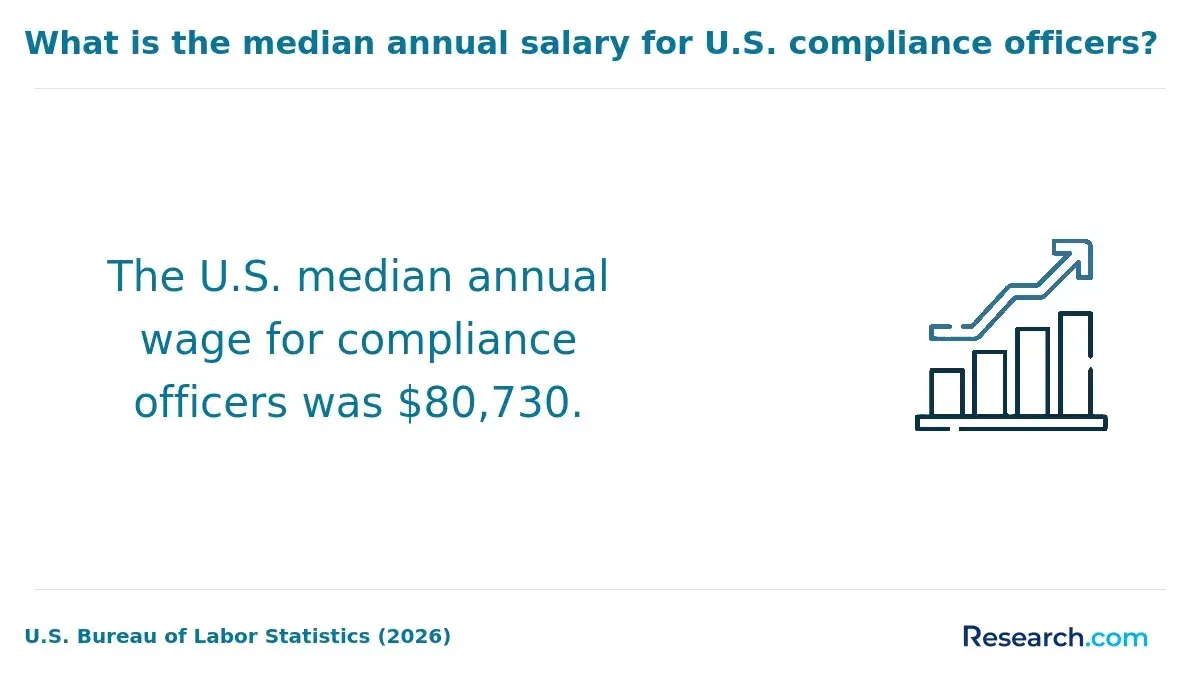
There is no single reliable salary for "business analytics MBA graduates," particularly for owners whose earnings depend on business performance rather than a wage. The US Bureau of Labor Statistics reports a $126,520 median annual wage for management occupations in May 2025. That is an occupational benchmark, not an MBA starting salary or a forecast of what your company will pay you.
The BLS projects management employment to grow faster than the average for all occupations from 2025 to 2035. Owners should not use that outlook as an MBA return-on-investment estimate. A better test is whether the education could improve decisions that matter to your business enough to justify its total cost and the time spent away from operations.
Do business analytics MBA graduates need certifications or licenses?
An MBA in business analytics does not, by itself, require a general business analytics license. Particular industries or occupations may have separate licensing rules, and professional certifications may be useful for specific tools or methods. Those credentials are not interchangeable with an MBA: a software certification can demonstrate tool proficiency, while an MBA is intended to develop broader management judgment.
If your immediate goal is to build reports or analyze customer data yourself, targeted training may be more direct. If your goal is to lead people who perform that work and use their findings across finance, marketing, and operations, the MBA may be more relevant.
Other Things You Should Know About MBA
Diploma wording is school-specific. Ask the registrar for a sample diploma or an explanation of how the degree appears on official records.
Not without checking the program's project rules and your privacy obligations. Ask whether you can use anonymized or synthetic data, especially if records include customer or employee information.
Do not assume it is. US tax treatment depends on your circumstances and applicable rules; consult a qualified tax professional before budgeting for a deduction.
Possibly, but each person generally needs to meet the school's enrollment rules. Ask whether nondegree enrollment or individual graduate courses are available if your cofounder does not want a full MBA.
- Analytics Modules for Business Students - PMC - NIH https://pmc.ncbi.nlm.nih.gov/articles/PMC10150150/
- Accreditation in the U.S. | ed.gov http://www.ed.gov/laws-and-policy/higher-education-laws-and-policy/college-accreditation/accreditation-in-the-us
- MBA Requirements: What You Need to Apply in 2026 | SCU https://www.scu.edu/business/blog/admissions/mba-requirements/
- Graduate Tuition & Scholarships - UofL College of Business | Information Technology Services https://business.louisville.edu/admission/cost-aid/graduate-tuition-scholarships
- Tuition and Financial Aid | MIA-BUS https://onlinemba.miami.edu/admissions/tuition/
- MBA Without a Business Degree? | University of Bridgeport https://www.bridgeport.edu/news/bachelors-in-business-to-get-mba/
- AACSB Global Standards for Business Education https://www.aacsb.edu/educators/global-standards
- Online MBA in Business Analytics | FGCU https://onlinedegree.fgcu.edu/programs/mba-business-analytics/
- Financial Aid & Fees | MBA Programs | School of Business | University of Connecticut https://mba.business.uconn.edu/financial-aid-fees/
- 7 Essential Data Analyst Skills to Advance Your Career | jhu.edu https://ep.jhu.edu/news/7-essential-data-analyst-skills-to-advance-your-career/