
Careers After an Online MBA in Operations Management for International Applicants

Co-Founder and Chief Data Scientist
An online MBA in Operations Management can strengthen your case for managing processes, supply chains, and teams - but it does not create a direct route to a U.S. job. For international applicants, the decision also involves where you can study, where you can legally work, and whether the program offers useful employer connections. This guide connects the degree to realistic career paths, explains the limits of salary and immigration claims, and shows how to judge whether an online MBA is the right investment for your next move.
Key Things You Should Know
- The strongest post-MBA path usually builds on existing experience in operations, engineering, logistics, procurement, or analytics; the degree alone rarely qualifies someone for a senior role.
- The U.S. Bureau of Labor Statistics reports a $126,520 median annual wage for all management occupations in May 2025 - not for operations MBA graduates specifically.
- Enrollment in a U.S. online MBA does not itself provide a U.S. visa, employment authorization, or eligibility for STEM-related work benefits.
What careers can you pursue after an online MBA in Operations Management?
An operations management MBA combines broad business leadership study with coursework on how organizations deliver products or services. Your likely next role depends more on the work you have already done than on the concentration name. A logistics analyst, for example, may be positioned to supervise a distribution team; someone without operations experience may first need a project or analyst role.
The table distinguishes adjacent moves from transitions that typically require more specialized experience. Job titles and responsibilities vary by employer.
| Career path | Typical responsibilities | Most relevant prior experience |
| Operations or production manager | Coordinate staffing, capacity, quality, budgets, and process improvements | Supervising production, service delivery, or operational projects |
| Supply chain or logistics manager | Oversee suppliers, inventory, transportation, and delivery performance | Logistics, planning, procurement, or supplier management |
| Procurement manager | Lead sourcing strategy, negotiations, contracts, and supplier risk management | Purchasing, vendor management, or contract work |
| Operations consultant or process-improvement lead | Diagnose performance problems and implement changes across teams | Measurable improvement projects and stakeholder-facing work |
A common progression is from analyst or specialist to team lead, then to a manager responsible for people and budgets. The MBA can help with that shift by adding financial and strategic judgment, but employers may still expect industry-specific systems knowledge and demonstrated results. Engineers considering this transition can also examine online MBA programs for engineers options when comparing how programs build on technical experience.
How does an online MBA in Operations Management prepare international applicants for U.S. careers?
The most transferable preparation is evidence that you can improve an operation and explain its business impact. MBA work in forecasting, process design, managerial accounting, and leadership can help you connect an operational decision to service, cost, and risk. Projects involving U.S. customers or suppliers may also help you learn market conventions, but coursework is not a substitute for local experience or an employer relationship.
If your goal is U.S. employment, separate career preparation from permission to work. Studying online from abroad does not grant U.S. employment authorization. Ask each school whether students outside the United States may enroll, whether its career services support overseas students, and whether employers recruiting through the program consider candidates who need sponsorship. If you already have U.S. work authorization, evaluate the program against your actual job-search timeline rather than assuming all international applicants face the same constraints.
What salaries can graduates earn in operations management careers?
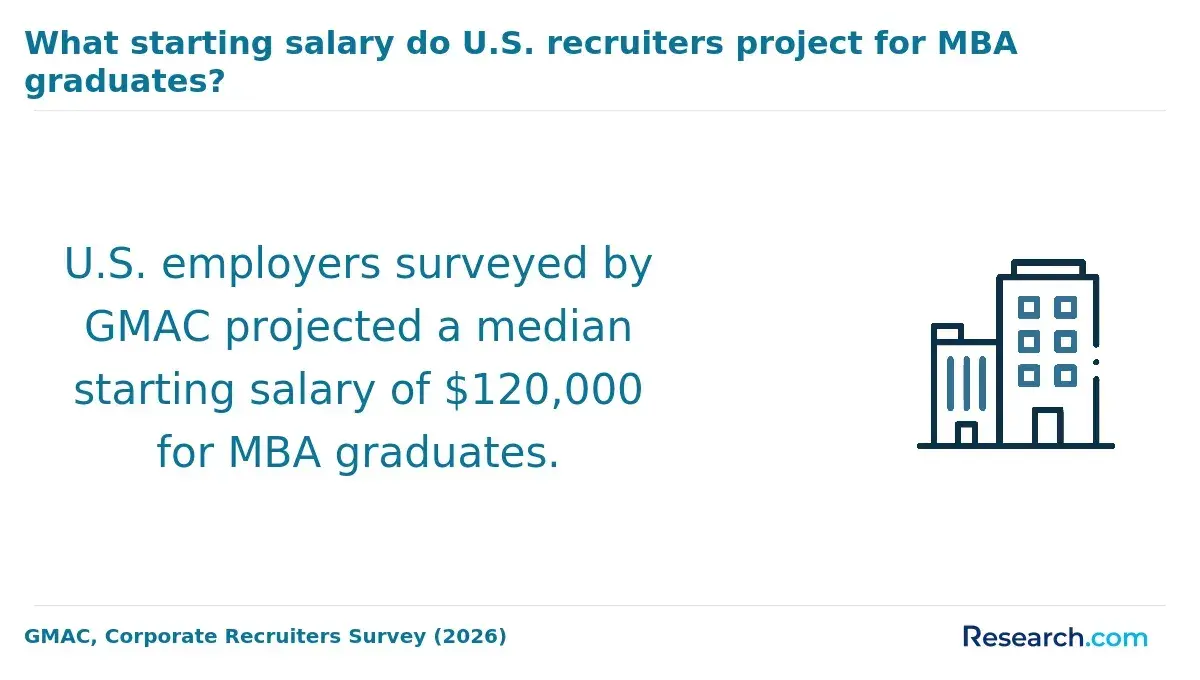
There is no reliable single salary for graduates of online operations MBAs. For context, the U.S. Bureau of Labor Statistics reports a $126,520 median annual wage for management occupations in May 2025. That figure covers managers across many functions, industries, education levels, and career stages; it is not an expected starting salary or an estimate of the MBA's effect on pay.
Compensation depends on location, employer, scope of responsibility, and prior experience. A candidate moving from an analyst role into a first management position should not use an occupation-wide management median as a personal offer forecast. Compare salaries for the specific job title and U.S. market you can realistically enter, then weigh any likely increase against tuition, financing costs, and the possibility that your search will take time.
Most MBAs pair a general management core - such as accounting, finance, strategy, and organizational behavior - with operations-focused courses or electives. Depending on the school, relevant subjects may include supply chain management, forecasting, quality improvement, project management, procurement, and business analytics. Course titles alone do not establish depth: inspect syllabi and the number of required operations courses before treating a program as a formal concentration.
Look for applied work that produces evidence you can discuss with employers, such as a capacity plan, inventory analysis, or process-improvement proposal. If your intended role centers more on enterprise technology and systems than on managing operational processes, compare affordable MBA schools degree programs with an information systems focus as an alternative. Neither path replaces the technical training required for highly specialized engineering or data-science roles.
Requirements vary by university. Common application materials include evidence of a recognized undergraduate degree, academic records, a résumé, essays or statements, and recommendations. Schools set their own policies on professional experience, interviews, and GMAT or GRE scores. Do not assume that a nonbusiness degree rules you out or that an advertised test waiver applies to every applicant.
International applicants may also need an evaluation of overseas credentials, certified translations, and proof of English proficiency when applicable. Before paying an application fee, ask admissions staff which evaluation they accept, whether your country of residence is eligible for online enrollment, and whether live classes, exams, or required visits are feasible from your time zone. These checks can prevent an academically suitable application from becoming an impractical one.
Completion time depends on the program's credit requirements, course sequence, and whether you study at an accelerated or part-time pace. A shorter advertised schedule may require a demanding course load or offer fewer opportunities to pause for work. Compare the actual calendar and attendance requirements, not just the shortest possible completion time. MBA degree pacing options one-year online MBA programs can provide a starting point for evaluating accelerated formats.
For cost, request a written breakdown of tuition and mandatory fees for the entire degree, plus estimates for books, software, payment charges, and any required travel. Ask whether international students pay a different rate or qualify for scholarships and employer reimbursement. Financing may differ substantially from what is available to eligible U.S. students; do not build a budget around U.S. federal student aid unless you have confirmed your eligibility. The useful comparison is total expected cost against a plausible career benefit, not the lowest advertised tuition figure.
Online is often the better fit if you intend to remain employed abroad and can use projects in your current organization. It can reduce relocation costs, but live sessions, group meetings, and recruiting events may fall outside convenient local hours. A campus MBA may be more useful if your goal depends on in-person recruiting, internships, and sustained access to a U.S. employer network - provided the program's immigration arrangements fit your circumstances.
Neither format guarantees U.S. employment. Ask both programs which career events online students can attend, whether services are accessible from abroad, and how students with your experience reach target employers. Career stage matters, too: established managers may value flexibility differently from early-career applicants. Those comparing formats later in their careers may find the considerations in compare schools for online MBA programs after 50 useful, even when age is not the deciding factor.
Check the U.S. institution's recognized institutional accreditation first, then whether its business school holds specialized accreditation, such as AACSB, ACBSP, or IACBE accreditation. These are different claims. If you plan to use the degree outside the United States, ask the relevant employer, professional body, or credential authority how it evaluates U.S. online degrees; recognition rules vary by country and purpose.
A school may describe an MBA or a particular track as STEM-designated, but that label alone does not make an international student eligible for U.S. work authorization. Eligibility for benefits such as STEM OPT depends on the qualifying program's official classification and individual immigration requirements. Studying entirely online from overseas does not, by itself, establish F-1 status or OPT eligibility. Get the specific program classification and a written explanation from the school's international student office before making an immigration-dependent decision.
General operations management roles typically do not have a single profession-wide U.S. license. An employer may nevertheless require credentials for a particular regulated industry, activity, or position. Check the requirements in the state and sector where you intend to work rather than assuming an MBA satisfies them.
Certifications in supply chain management, project management, or process improvement can demonstrate focused knowledge, especially when paired with relevant work. Their eligibility rules and employer value vary. If your gap is a specific method or system - not broader leadership and financial decision-making - a targeted certification or employer training may be more direct and less costly than an MBA.
How can international applicants choose a reputable online MBA program?
Begin with the job you can plausibly pursue next, then test each program against that goal. A reputable program is not necessarily the best fit if its operations coursework is thin, its live schedule conflicts with your workday, or its career support cannot be used from your country.
Use these checks to narrow a shortlist before applying:
- Verify institutional and business-school accreditation, the official concentration name, and the required operations courses.
- Ask for the full degree cost, expected schedule, live-session times, residency requirements, and overseas enrollment policy.
- Confirm whether international online students can access career advising, employer events, alumni contacts, and applied projects.
- Compare the program's strengths with evidence you already have: management results, relevant industry experience, and any authorization needed in your target job market.
Ask schools for outcomes relevant to international online students if they publish them; do not substitute campus MBA placement claims. Experienced executives should also compare a conventional operations MBA with affordable graduate business education affordable online executive MBA programs if peer learning and senior-level scheduling matter more than an operations concentration. Choose the format and credential that address your actual career gap.
Other Things You Should Know About MBA
Use the degree and concentration exactly as the university awards them. Describe relevant projects and results separately; do not claim a formal concentration if you completed only an operations elective.
Include a concise problem statement, your analysis, the recommendation, and any measured result you are authorized to share. A well-explained project is more useful than a collection of unexplained charts.
Look for alumni and practitioners in your target industry, then request a brief conversation about their role and hiring expectations. A specific question about your intended transition is more productive than a general request for a job.
Only with your employer's permission and in line with its confidentiality rules. Ask the instructor whether anonymized, simulated, or publicly available data can meet the assignment requirements.
- Students and Employment | uscis.gov https://www.uscis.gov/working-in-the-united-states/students-and-exchange-visitors/students-and-employment
- Employment | ice.gov https://www.ice.gov/sevis/employment
- Online MBA Career Outcomes [2025] | Jenkins MBA https://mba.ncsu.edu/your-career/career-outcomes/online-mba-career-outcomes-2025/
- Cornell MBA Career Outcomes https://business.cornell.edu/admissions/graduate/mba/career-outcomes/
- U.S. Employer's Guide to Hiring International Students | umich.edu https://careercenter.umich.edu/article/us-employers-guide-hiring-international-students
- The Business School Job Market in 2025 | AACSB https://www.aacsb.edu/insights/articles/2025/10/the-business-school-job-market-in-2025
- MBA Accreditation: Why It Matters (Explained) | allbusinessschools.com https://www.allbusinessschools.com/how-to-get-into-mba-program/accreditation/


